



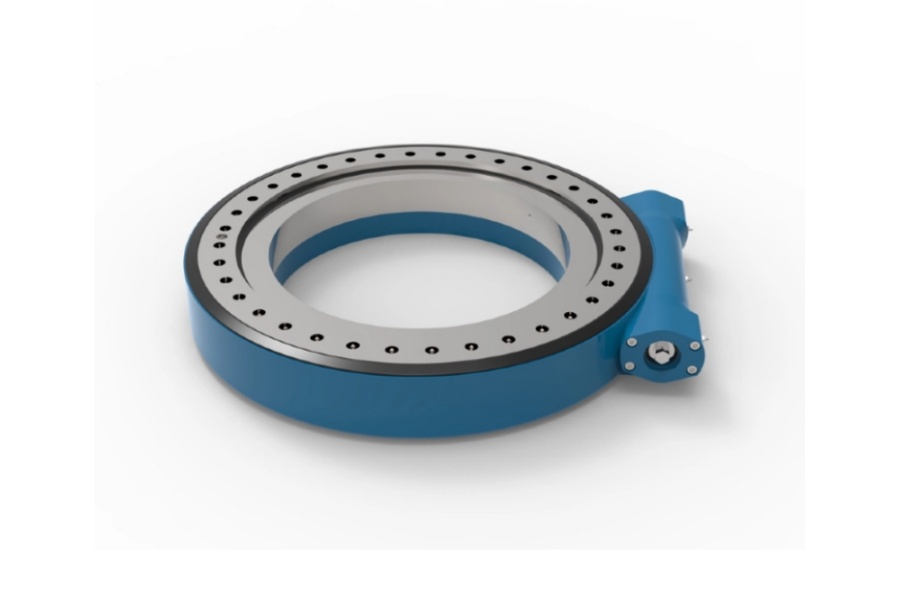
What is slewing ring grease? It is the lubricant placed into a slewing bearing raceway through grease nipples to reduce metal contact, protect rolling elements, and help block water and dust from entering the bearing. For crane, excavator, and rotating-platform operators, the hard part is not finding the grease fitting. It is deciding when grease should leave the seal, when a small measured refill is enough, and when more grease may create a seal problem.
This guide gives a repeatable relubrication method after the grease type has already been confirmed by the equipment or bearing manufacturer. The intended result is simple: fresh lubricant reaches the loaded raceway without forcing contaminants inward, dislodging a seal, or leaving excess grease around the ring.
Start With the Conditions That Decide Whether Lubrication Can Begin
Do not begin by attaching a grease gun. First, confirm that the machine is parked safely, the rotating structure is supported or secured as required by its operating instructions, and the bearing can be turned through its working range. Grease distribution depends on rotation, so a bearing that cannot move may receive lubricant in only one local area.
Use the approved grease type already specified for the machine. A grease label that only says “multi-purpose” is not enough evidence that it can be mixed with what is inside the raceway. If the existing lubricant is unknown, contaminated, or visibly separated, stop and obtain the equipment maker’s maintenance instruction before adding another product.
Prepare these inputs before opening a fitting
- Approved lubricant: Use the confirmed product and grade specified for the bearing, operating temperature, and environment.
- Clean grease gun: A dirty coupler can push grit into the nipple. Wipe the coupler before every connection.
- Lint-free wiping material: Use it to clean the nipple, seal area, and old grease after the task.
- Machine maintenance record: Record the date, operating hours, grease used, operator, observed purge condition, and any seal concern.
- Access to the OEM lubrication instruction: This controls the interval, grease amount, rotation method, and special limits for that bearing design.
- Inspection light: Use it to check the full visible seal circumference and nearby structure for old grease or damage.
The OEM instruction is the prerequisite that blocks progress if it is missing. It tells the operator whether the bearing has one or multiple lubrication points and whether the application has a special purge method. A crane turntable, for example, may have different access and load conditions than an Excavator Slewing Bearing operating in soil and water exposure.
Luoyang Slewring Bearing Co., Ltd. supports bearing and drive applications where lubrication planning must match the working condition, including load, speed, and environment. Our facility is certified to ISO 9001:2015, and every slewing bearing undergoes CMM three-coordinate inspection and dynamic load testing before shipment. Those checks support product quality at delivery, but field lubrication still determines whether a raceway stays protected in service.
Inspect the Bearing Before Adding Any New Grease
Inspect first because an existing seal failure changes the right action. Adding more lubricant to a bearing with a torn, displaced, or missing seal can drive grease and dirt into places where neither belongs. The correct next step in that case is seal assessment and repair under the equipment maker’s procedure, not a larger grease dose.
Walk around the accessible bearing circumference. Look at the seal lip, grease nipple, bolt area, and nearby frame surfaces. Check both the condition of the grease and the condition of the parts that keep it inside the raceway.
| Inspection point | What to look for | What the result means | Action before lubrication |
|---|---|---|---|
| Grease nipple | Dust cap missing, clogged fitting, bent nipple, or hardened grease at the opening | The gun may not seal, or contamination may enter during service | Clean the fitting. Replace a damaged nipple before pumping. |
| Seal lip | Crack, gap, tear, hardening, displacement, or grease escaping from one damaged spot | The bearing may not retain lubricant or exclude contaminants | Stop routine relubrication and follow the machine repair procedure. |
| Old grease at seal edge | Thin, continuous fresh-looking bead or dry, dark, gritty material | A thin bead may be normal after a planned purge; dry or gritty grease signals exposure or aging | Clean the area and decide whether controlled purging is justified. |
| Rotation feel and sound | Abnormal resistance, binding, clicking, or grinding | The issue may involve lubrication, contamination, load, gear mesh, or bearing damage | Do not assume grease will fix it. Escalate for mechanical inspection. |
| External contamination | Mud, sand, standing water, abrasive dust, or washdown residue around the ring | Contaminants can be carried toward the seal during service | Clean the surrounding area before removing nipple caps or connecting the gun. |
Do not confuse an external grease deposit with proof that the raceway is properly lubricated. A deposit may come from prior over-greasing, a damaged seal, or thermal movement. The deciding evidence is the combination of maintenance history, seal condition, grease appearance, and the OEM schedule.
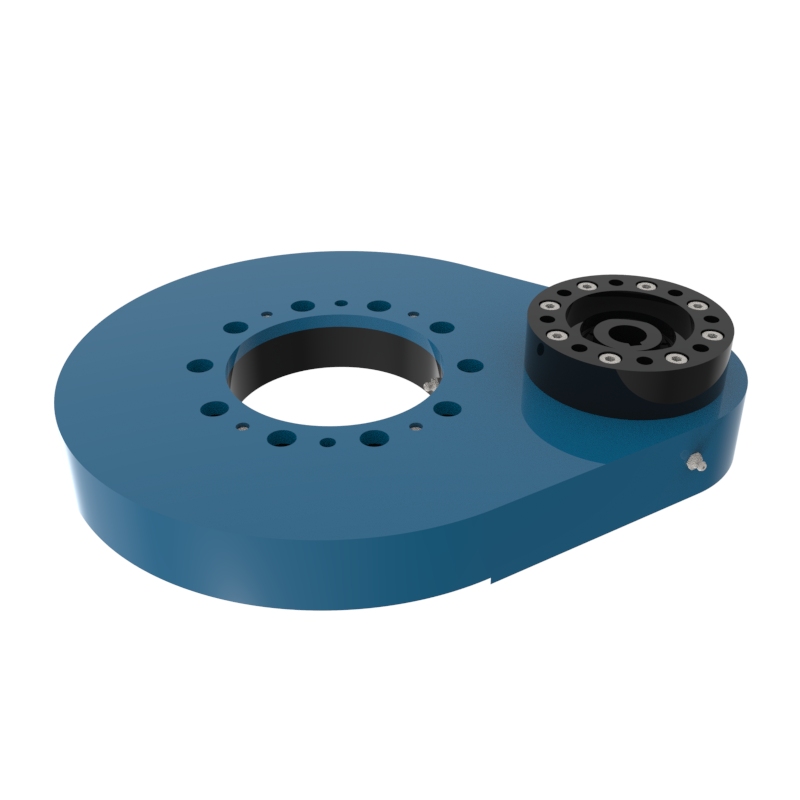
This inspection also applies to enclosed drive assemblies. A Slew Drive may protect the transmission with a housing, but the lubrication points and sealing surfaces still need clean access. For harsh environments, drive protection can reach IP66 and anti-corrosion protection can reach C4H on applicable products, yet no enclosure removes the need for a documented service routine.
Set the Boundary Between Purging, Measured Replenishment, and Seal Damage
The right boundary is based on purpose. Purging is used to displace aged or contaminated lubricant when the bearing and seals are sound. Measured replenishment is used when the existing grease condition is acceptable and the task is simply restoring the planned lubricant supply. Over-greasing occurs when pumping continues after the required condition has been reached, raising pressure at the seal and creating unnecessary leakage.
| Maintenance choice | When it fits | What to do | Stop point | When it does not apply |
|---|---|---|---|---|
| Controlled purge | Old grease is dirty, water-affected, hardened, or due for replacement under the OEM plan; seals appear intact | Add approved grease gradually while rotating the structure as instructed. Observe the seal perimeter and accessible discharge points. | Stop when fresh grease appears consistently at the intended exit area or the OEM-specified purge condition is met. | Do not purge through a torn, displaced, or uncertain seal. |
| Measured replenishment | Grease is still clean, the bearing is within its scheduled interval, and no contamination event has occurred | Apply only the OEM-specified amount, then rotate the structure through its normal range if allowed. | Stop at the specified amount. Do not pump merely to produce visible discharge. | Do not use this method after water entry, severe dust exposure, or visibly degraded grease unless the OEM instruction permits it. |
| Stop and inspect | Grease exits through one abnormal location, seal lifts, grease will not enter, or rotation is rough | Stop pumping. Clean the area, record the location, and inspect the fitting and seal. | No further grease should be added until the cause is identified. | This is not a lubrication-completion result. |
| Over-greasing risk | Grease is forced rapidly, the gun pressure rises, or grease accumulates heavily around a seal | Release gun pressure and stop. Remove external excess without pushing it under the seal. | Stop before seal distortion, uncontrolled leakage, or grease reaches braking, electrical, or work surfaces. | Never treat “more is better” as a lubrication rule. |
A valid purge cue is not simply “grease comes out somewhere.” The cue is fresh lubricant appearing at the expected seal edge or designated discharge path while the seal remains seated and the application follows its approved procedure. If grease comes out at a split section, one lifted area, or a location with visible damage, that is a fault cue rather than a successful purge.
Measured replenishment is usually the better choice for a bearing that has a clean service history and normal operating exposure. It reduces waste and avoids building pressure against seals. It does not replace a purge when contamination has entered the system or when the maintenance instruction specifically requires old grease to be displaced.
Over-greasing can damage seals because the bearing cavity is not an unlimited storage space. Excess internal pressure can push the seal lip outward, cause persistent leakage, and create a sticky external surface that gathers abrasive dust. On rotating platforms, excess grease can also spread to nearby gear teeth, structural surfaces, or areas where people work.
Request Your Custom Slew Drive or Bearing Spec
Tell us your load, speed, and environment — receive a tailored 100–5000 mm slewing drive or slewing bearing proposal with 3D drawings within 24 hours.
Use a Repeatable Relubrication Sequence for Cranes, Excavators, and Platforms
Follow the machine maker’s exact grease amount and interval. The steps below provide the operating sequence around that requirement. They are suitable for preventive maintenance after grease compatibility has been confirmed, but they do not replace model-specific safety instructions.
- Park and secure the equipment. Place the machine in the approved maintenance condition and prevent unintended rotation. Successful setup means the bearing is accessible and the operator is not working under an unsupported load.
- Clean each grease nipple and nearby seal surface. Remove mud, dust, and old buildup from the fitting exterior. The common error is coupling a grease gun to a dirty nipple, which can introduce abrasive particles directly into the lubrication path.
- Inspect the seal before pumping. Confirm there is no obvious split, lifted section, or missing portion. If a seal defect is visible, stop the routine and report it.
- Connect the grease gun squarely. A secure connection prevents grease from escaping at the coupler and helps the operator feel an abnormal pressure increase. Do not force a coupler onto a bent or damaged fitting.
- Add grease gradually. Use slow, controlled strokes rather than rapid pumping. This gives lubricant time to move through the raceway and makes changes in resistance easier to notice.
- Rotate between additions when the OEM procedure allows it. Move the crane, excavator upper structure, or platform through the instructed range. Rotation spreads lubricant around the raceway instead of concentrating it near one nipple.
- Apply the selected boundary decision. For measured replenishment, stop at the specified amount. For a justified controlled purge, watch for the intended fresh-grease exit condition and stop as soon as it is achieved.
- Clean external excess and restore caps. Wipe away grease from exposed surfaces without disturbing the seal. Refit protective caps where provided.
- Record the result. Note whether the task was replenishment or purge, whether the grease appearance was normal, and whether any seal or fitting issue needs follow-up.
Use slow pumping for a reason. A sudden high-resistance feeling may mean a blocked fitting, hardened grease path, or internal restriction. Pumping harder can turn a minor service finding into a damaged fitting or displaced seal.
For a bearing in a marine, mining, or dusty construction setting, contamination exposure may justify closer inspection between scheduled services. The decision still depends on observed grease condition and the OEM requirement. Do not shorten an interval or change a purge method solely because another machine works in a harsher environment.
Verify Completion and Recover From Common Service Errors
A completed lubrication task has clear evidence: the correct grease was used, every scheduled fitting was serviced, seals remain seated, excess external grease was removed, and the service record is complete. The bearing should then rotate normally under the machine’s approved test condition. A lubrication task is not complete if there is abnormal noise, resistance, or uncontrolled leakage.
Common mistakes and the correct recovery action
- Mistake: Pumping until grease exits at every service. This may over-pressurize a healthy seal when only a measured refill was needed. Recover by stopping, cleaning excess grease, and returning to the OEM quantity requirement at the next service.
- Mistake: Treating dirty purge grease as proof that the job is done. Dirty discharge means old material is leaving, not that fresh lubricant has fully reached the required path. Continue only if the seal is sound and the approved purge procedure calls for it.
- Mistake: Ignoring one blocked nipple. A missed lubrication point can leave part of the raceway under-supplied. Clean or replace the fitting and verify lubricant can enter before closing the maintenance record.
- Mistake: Mixing grease without confirmation. Incompatible lubricants can separate, soften, or lose their intended consistency. Stop, identify the existing product if possible, and obtain a compatible maintenance instruction.
- Mistake: Wiping grease into the seal gap. External cleanup should remove grease away from the seal, not pack debris toward it. Use clean material and wipe outward from the seal edge.
- Mistake: Using grease to mask rough rotation. Lubrication may not solve mechanical wear, contamination damage, or a structural alignment issue. Record the symptom and arrange inspection rather than increasing the dose.
For procurement and maintenance teams, lubrication records should follow the bearing across its service life. Record the machine ID, bearing position, grease product, date, operating hours, number of fittings, observed seal state, and corrective action. This makes recurring leakage or contamination patterns visible before they become a larger outage.
Luoyang Slewring Bearing Co., Ltd. supplies Slewing Bearing products, slew drives, and customized drive solutions for demanding equipment. Standard products can be ordered from one set, customized products start from five sets, and technical proposals are available within 24 hours. For confirmed manufacturing defects, we provide a two-year extended quality warranty and a 48-hour technical response.
Adjust the Method Only When the Application Changes the Risk
Crane, excavator, and rotating-platform bearings share the same lubrication principles, but their contamination paths differ. A truck crane may see intermittent outdoor exposure and long idle periods. An excavator can face soil, water, and abrasive dust around the swing bearing, while an indoor automated platform may have cleaner surroundings but higher sensitivity to grease reaching nearby sensors or finished products.
For high-load applications, use the bearing maker’s specified service method rather than adding a larger grease quantity by assumption. A Heavy load slewing bearing may operate under demanding cyclic loads, but its lubrication quantity and purge approach still depend on its design, mounting position, seals, and equipment instructions.
Where a custom housing, unusual mounting arrangement, or nonstandard access point changes the service process, request a defined lubrication plan during the design stage. Luoyang Slewring Bearing Co., Ltd. offers customized slew drive support, with material selection based on load, speed, and environment. This is useful when the equipment builder needs grease fitting locations, sealing protection, and maintenance access considered together.
The final check is straightforward: the bearing received the approved lubricant by the correct method, the seal is intact, rotation is normal, and the service record shows what happened. If any one of those conditions is missing, do not call the preventive-maintenance task complete.
Request Your Custom Slew Drive or Bearing Spec
Tell us your load, speed, and environment — receive a tailored 100–5000 mm slewing drive or slewing bearing proposal with 3D drawings within 24 hours.
 WhatsApp

 +8613903880726