



What is slewing ring grease? It is the semi-solid lubricant placed between the rolling elements, raceways, and gear teeth of a slewing bearing or drive system. Its job is to reduce metal-to-metal contact, protect surfaces from corrosion, and carry contaminants away from loaded contact areas during relubrication.
The correct slewing ring grease is not selected by brand name alone. Maintenance engineers should first identify the dominant operating threat: sustained heat, water entry, repeated shock loading, or a combination of all three. Then they should match the grease thickener, base oil, NLGI consistency, and extreme-pressure additive package to that condition.
For scheduled service, start with the grease already approved in the machine manual. If the original lubricant is unknown, incompatible, or unsuitable for a changed duty cycle, do not simply add a new grease on top. Confirm compatibility, clean or purge the old lubricant where practical, and assess the bearing seals, gear exposure, and actual loading pattern before changing the specification.

Start with the operating condition instead of the grease brand
The best first question is simple: what is causing the lubricant to fail or lose effectiveness? Heat can soften a grease and shorten its useful service interval. Water can wash out lubricant, weaken corrosion protection, and carry abrasive contamination into the raceway. Shock loads can squeeze the oil film out of the rolling contact area.
A single grease may handle one condition well but perform poorly when another condition becomes dominant. For example, a grease selected for smooth indoor rotation may not stay in place on an outdoor crane that sees rain, vibration, and intermittent heavy picks. Higher performance in one category is not automatically better in every application.
| Operating condition | What the lubricant must do | Selection direction | Limit to check |
|---|---|---|---|
| Sustained heat | Resist softening, oxidation, and oil separation | Choose a heat-suitable thickener and base oil with proven high-temperature stability | Confirm the actual bearing temperature, not only the ambient temperature |
| Rain, washdown, or humidity | Stay in place and resist water washout and corrosion | Favor water-resistant thickener systems and corrosion-protection additives | Damaged seals can defeat even a good water-resistant grease |
| Shock loading | Maintain a protective film under high contact stress | Use suitable EP additives and a base oil viscosity that supports loaded rolling contacts | EP additives do not correct loose mounting bolts or poor bearing preload |
| Slow rotation with high load | Remain on raceways and separate loaded surfaces | Review consistency, base oil viscosity, and relubrication practice together | Over-greasing can raise churn and heat in some arrangements |
| Outdoor mixed duty | Handle water, corrosion, load, and temperature swings | Use a balanced specification rather than selecting only for one property | Verify grease compatibility before switching products |
For a Slewing Bearing, grease selection should also reflect bearing design and mounting arrangement. A light-duty positioning table, for example, may prioritize smooth movement and low resistance. A heavily loaded excavator turntable or crane platform will usually place more emphasis on film strength, shock resistance, contamination control, and frequent inspection.
Luoyang Slewring Bearing Co., Ltd. supports bearing and drive applications with material selection based on working conditions such as load, speed, and environment. That same discipline should apply to lubrication: a maintenance plan should state the application, temperature exposure, water exposure, load pattern, grease type, and relubrication method instead of listing only a trade name.
Compare thickener, base oil, NLGI grade, and EP additives before service
Grease is a system, not one ingredient. The thickener holds the oil in place, the base oil forms much of the lubricating film, the NLGI grade affects consistency and pumpability, and EP additives help protect loaded contacts. These properties interact, so a decision based on only one line of a product data sheet can create a mismatch.
The matrix below is a practical starting point for maintenance planning. It does not replace the machine builder’s approved lubricant, because seal materials, prior grease chemistry, ambient conditions, central lubrication equipment, and duty cycle can change the final choice.
| Service condition | Thickener direction | Base oil direction | NLGI grade direction | EP additive direction | What this choice affects |
|---|---|---|---|---|---|
| High heat with limited water exposure | Lithium complex or polyurea may be considered when compatible with the approved system | Select an oil designed to retain lubrication properties at elevated operating temperature | NLGI 2 is a common general-purpose starting point when the lubrication system supports it | Use EP protection when loaded contacts require it | Better resistance to softening and oxidation during sustained heat |
| Wet outdoor work, rain, humidity, or washdown | Calcium sulfonate-based grease is often considered for water resistance and corrosion protection | Choose an oil suited to the operating temperature and water exposure | NLGI 2 may suit manual applications; confirm pumpability for automatic systems | Use corrosion and EP protection where the bearing load requires both | Helps grease remain in place and reduce corrosion risk |
| High shock, slow movement, and heavy cyclic load | Select a thickener system that remains stable under mechanical working | Use a base oil viscosity suited to slow, loaded rolling contacts | NLGI 2 is often practical; a firmer or softer grade depends on delivery method and temperature | EP additives are generally a priority for loaded raceways and open gearing | Supports a protective film when contact stress rises sharply |
| Cold starts and centralized lubrication | Use a thickener compatible with the system and expected temperature range | Choose an oil that can flow adequately at startup temperature | NLGI 1 or a softer grade may be needed for pumpability | Keep EP protection appropriate for the actual load | Reduces the risk of poor grease delivery through long lines |
| Mixed heat, water, and shock | Choose a water-resistant, mechanically stable thickener after compatibility review | Balance temperature behavior with load-carrying film needs | Select the grade that stays in the bearing and can be delivered reliably | Use EP and corrosion protection matched to the exposure | Prevents over-focusing on one threat while ignoring the others |
Thickener is not the same as base oil. A grease may have a thickener that resists water well, yet still contain a base oil that is too light for a slow, heavily loaded ring. In practice, that can leave the bearing appearing well-greased while the loaded contact zone lacks an adequate oil film.
NLGI grade is not a load rating. A firmer NLGI 3 grease may stay in place better in some warm or open arrangements, but it may also be difficult to pump through a centralized system. A softer NLGI 1 grease may feed more easily in cold conditions, but it can be less suitable where leakage or washout is the main concern.
EP additives are not a substitute for mechanical correction. They can support boundary lubrication under high load and shock, but they cannot repair damaged raceways, incorrect gear backlash, loose mounting fasteners, or an overloaded machine. If grease is repeatedly dark, metallic, or contaminated, investigate the component condition before increasing additive severity.
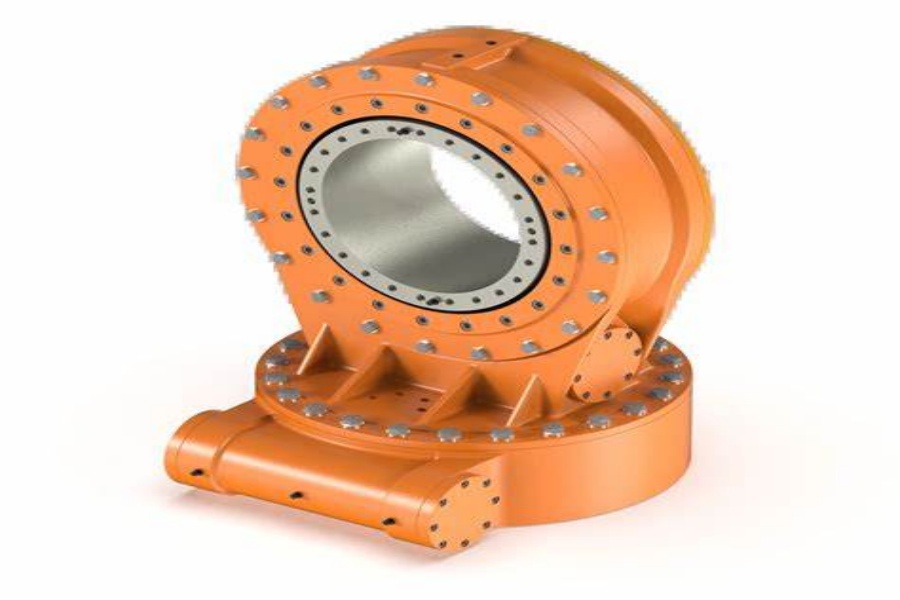
For applications that combine a bearing with a geared enclosure, the selection may need separate review for the raceway and gear mesh. A Worm Gear Slew Drive can involve a sealed drive cavity as well as external lubrication points, so technicians should follow the approved lubricant plan for each location rather than assuming one grease serves every internal contact.
Request Your Custom Slew Drive or Bearing Spec
Tell us your load, speed, and environment — receive a tailored 100–5000 mm slewing drive or slewing bearing proposal with 3D drawings within 24 hours.
Use a service procedure that verifies compatibility and grease delivery
Changing lubricant without checking the old grease is one of the most common maintenance errors. Different thickener systems can be incompatible, which may cause softening, oil separation, or reduced mechanical stability. When the existing product cannot be identified, treat the change as a controlled maintenance task rather than a quick top-up.
- Record the operating condition. Note heat exposure, water exposure, loading pattern, rotation speed, ambient temperature, and whether the equipment is indoors or outdoors.
- Identify the current grease. Check the maintenance record, grease cartridge label, machine manual, and supplier documentation. Record the thickener, base oil type, NLGI grade, and stated additive properties if available.
- Inspect seals and grease paths. Check grease fittings, distribution blocks, lubrication lines, seal lips, and visible purge points. A blocked fitting or failed seal can look like a grease-selection problem.
- Review compatibility. Obtain compatibility guidance from the lubricant supplier or equipment manufacturer before mixing products. If compatibility is uncertain, plan a purge or cleaning process appropriate for the assembly.
- Apply grease evenly. Rotate the assembly slowly where safe and practical while lubricating so fresh grease can distribute around the raceway. Avoid concentrating all grease at one point.
- Inspect the purge. Observe the expelled grease for water, rust color, hard particles, or metallic debris. These signs may require inspection beyond normal lubrication.
- Document the result. Record date, grease identification, quantity applied, observed purge condition, and the next inspection point.
This process fits commissioning as well as routine service. Before a new machine enters duty, it confirms that fittings are open, lubrication points are accessible, and the selected grease can reach the contacts it is expected to protect. It does not apply when a sealed component has no approved grease point; in that case, follow the product-specific maintenance instruction.
Correct common grease-selection mistakes before they shorten bearing life
The most expensive lubricant mistake is often not choosing a low-cost grease. It is choosing a grease based on one appealing label claim while ignoring water entry, shock, delivery method, or incompatibility with the existing fill. The following checks help maintenance teams avoid that outcome.
- Mistake: selecting by temperature rating only. A heat-suitable grease may still wash out in rain or lack the film strength needed for high shock. Use temperature as one input, then assess water and load exposure.
- Mistake: treating EP grease as universal. EP additives can be useful for heavy cyclic loads, but the full grease must still match the seals, delivery system, and environmental exposure. Ask for product data and compatibility information before approval.
- Mistake: using a harder grease to stop leakage. Leakage can come from worn seals, damaged housings, excess grease volume, or poor fitting condition. A firmer grade may hide the symptom while creating poor pumpability.
- Mistake: mixing grease without verification. Even similar-looking products may use different thickener systems. Confirm compatibility or remove the old grease as far as practical before conversion.
- Mistake: ignoring the condition of purged grease. Purge color and texture provide useful evidence. Water droplets, rust staining, grit, or metallic particles should trigger a closer inspection of seals, raceways, and mounting condition.
- Mistake: extending intervals after changing grease. A new product should be monitored during early service. Do not assume longer intervals unless operating results and approved maintenance guidance support that change.
Component design also changes the maintenance approach. A protected enclosure can reduce contamination exposure, while an open ring gear needs closer attention to dust, water, and visible lubricant coverage. For heavy-duty applications, review the bearing type as well as the grease plan; Heavy load slewing bearing designs operate in service conditions where load distribution, mounting rigidity, and inspection practice matter alongside lubricant selection.
Match the grease decision to the equipment and supplier verification process
Consider a forestry grapple machine that works in rain, mud, vibration, and repeated shock loads. The maintenance team should prioritize water resistance, corrosion protection, mechanical stability, and an EP package suited to the loaded raceway. It should also verify that the chosen NLGI grade can pass through the installed lubrication system in expected seasonal temperatures.
Luoyang Slewring Bearing Co., Ltd. has supplied WED14-86-25BHR.5 double worm slew drives for forestry grapple machines in British Columbia, Canada, with stated precision of no more than 0.13 degrees. That application illustrates why lubrication cannot be separated from duty conditions: a machine exposed to forestry work needs its sealing condition, grease delivery, and service interval checked against real contamination and shock exposure.
For solar tracker systems, the balance can be different. South American projects in Brazil, Argentina, and Chile used SP-I 0229 spur gear slew drives for single-axis trackers, with reported energy yield improvement of up to 40 percent. That case does not establish a universal lubricant result, but it shows why smooth, repeatable motion and outdoor exposure should both be considered when maintenance teams review an installed Spur Gear Slew Drive.
Supplier verification should include more than a grease recommendation. Ask for the bearing or drive lubrication point layout, approved lubricant properties, compatibility guidance, relubrication instructions, and inspection criteria for contaminated purge. If the application is custom, provide load direction, rotation pattern, temperature exposure, water exposure, mounting details, and lubrication method so the engineering review is based on usable information.
Our ISO 9001:2015-certified facility supports Slew Drive, Slewing Bearing, and Customized Slew Drive projects with technical proposals available within 24 hours. We also use CMM three-coordinate inspection and dynamic load testing for every slewing bearing, and our standard product MOQ begins at one set for evaluation needs. Those controls address component quality, while a correctly specified grease plan helps preserve that quality after installation.
Use the matrix as a screening tool before scheduled maintenance. When heat, water, and shock occur together, choose the specification only after checking grease compatibility, seal condition, lubrication delivery, and the machine maker’s requirements. That is the practical way to select slewing ring grease for service rather than selecting by label alone.
Request Your Custom Slew Drive or Bearing Spec
Tell us your load, speed, and environment — receive a tailored 100–5000 mm slewing drive or slewing bearing proposal with 3D drawings within 24 hours.
 WhatsApp

 +8613903880726