



When a slewing ring starts to rotate unevenly, show dark grease, or produce unfamiliar resistance, the main question is not simply whether the bearing looks worn. The field technician must determine whether the finding is normal service evidence, a lubrication or sealing problem, or an early sign of raceway damage.
Effective slew bearing maintenance uses a symptom-to-severity process. It begins with accessible checks, then compares what is seen and felt during rotation with service records, mounting conditions, grease condition, and seal condition. This helps prevent unnecessary replacement while reducing the risk of operating a bearing with developing internal damage.
Luoyang Slewring Bearing Co., Ltd. supplies Slewing Bearing, Slew Drive, and Customized Slew Drive products for heavy equipment and industrial motion systems. Our ISO 9001:2015 certified facility uses CMM three-coordinate inspection and dynamic load testing on every slewing bearing, giving engineering teams an inspection reference point before a unit enters service.
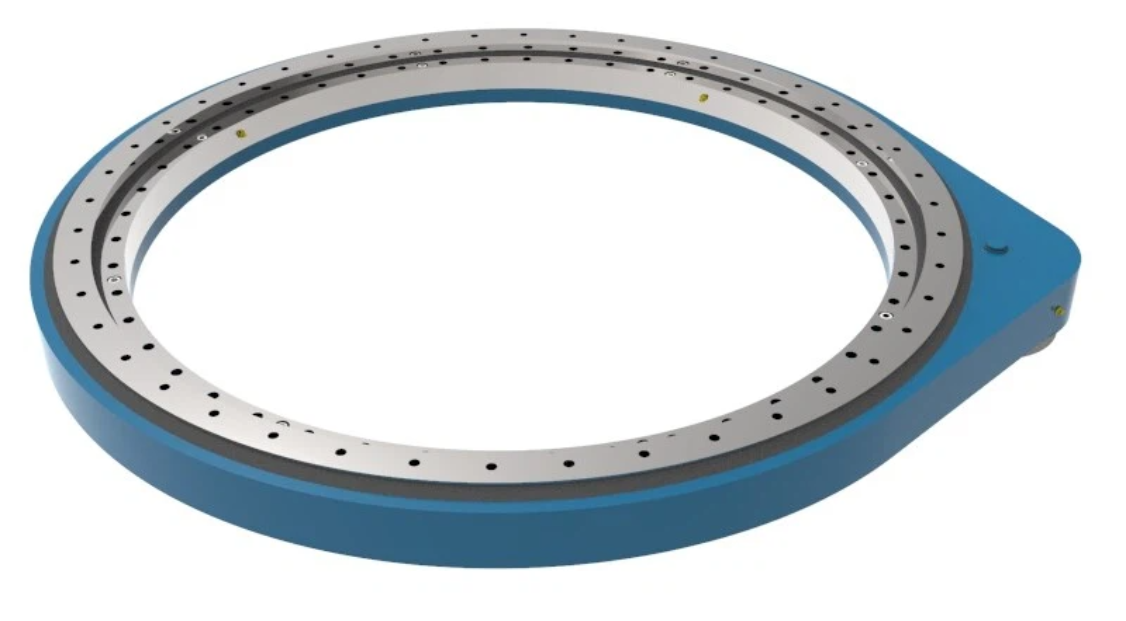
Start With the Symptom and Establish a Safe Inspection Baseline
Abnormal rotation is an observation, not a confirmed failure mode. It may result from hardened grease, external contamination, loose mounting fasteners, seal damage, gear tooth issues, internal rolling element damage, or localized raceway distress. Treating every rough movement as raceway failure can lead to incorrect repair decisions.
Start by documenting what changed and when it changed. Ask the operator whether the resistance occurs through the full rotation, at one repeated position, only under load, or after the machine has warmed up. A repeated rough point at the same angular position deserves more attention than general drag that changes with temperature.
Record these conditions before cleaning or relubricating
- Machine type, operating function, and whether the bearing supports lifting, digging, turning, tracking, or positioning.
- Current symptom, including noise, resistance, vibration, grease leakage, unusual movement, or visible contamination.
- Whether the condition is constant, intermittent, load-related, or concentrated at one rotational location.
- Recent changes such as a severe impact, overload event, extended downtime, pressure washing, seal replacement, or mounting work.
- Lubricant type used, last known lubrication event, and whether incompatible grease may have been introduced.
- Photos of grease discharge, seals, gear teeth, mounting areas, and any corrosion or surface marks.
The conclusion at this stage should remain limited: identify the symptom pattern and protect the evidence. Do not wash away discolored grease or remove a damaged seal before documenting it, because those details may distinguish a simple contamination issue from a deeper internal condition.
If the assembly has a clear loss of controlled rotation, severe binding, visible separation at a seal interface, or a rough point that repeats at the same position under light manual movement, stop routine operation and escalate the inspection. Continued use may increase contact stress at an already affected portion of the raceway.
Use an Ordered Inspection Path Before Making a Service Decision
The best inspection order moves from external and accessible evidence toward findings that require engineering review. This approach fits scheduled maintenance because it avoids opening or replacing components before technicians understand what the machine is showing them.
- Check operating history. Compare the reported symptom with recent loading, weather exposure, storage time, impact events, and lubrication records. A sudden change after an impact or overload points to a different branch than slow grease darkening during normal service.
- Inspect the outer surfaces. Look for damaged seals, grease leakage, water entry paths, corrosion, damaged gear teeth, loose-looking fasteners, or shifted witness marks around the mounting interface.
- Observe grease at the purge point. Collect a small sample without mixing it with dirt from the outside surface. Check color, texture, moisture appearance, grit, and visible metallic material.
- Rotate through the usable range. Use the normal drive system or controlled manual movement where the machine procedure permits it. Listen and feel for smoothness, repeated tight spots, clicking, grinding, or changes tied to one angular position.
- Compare loaded and lightly loaded behavior. If the machine can be safely observed in both conditions under its approved procedure, note whether the symptom appears only when the bearing is carrying working load.
- Review mounting and drive interfaces. Confirm that the concern is not coming from adjacent structure, drive gears, hydraulic components, or a slew drive gearbox rather than the bearing itself.
A bearing that rotates smoothly, has intact seals, and shows only uniform grease color change may remain a lubrication-management issue. A bearing with recurring roughness at one position, visible metal particles, or evidence of water entry should not be treated as a simple regreasing task.
For assemblies driven by a worm system, inspect the drive and bearing as connected parts. A worn or misaligned drive can create abnormal loading even when the bearing raceway is not yet confirmed damaged. Product selection details for a Worm Gear Slew Drive can help maintenance teams identify the drive-side components that should be reviewed alongside the bearing.
Separate Normal Grease Discoloration From Raceway Damage Warning Signs
Grease discoloration alone does not prove a damaged raceway. Grease can darken through age, heat exposure, oxidation, and normal circulation through a working assembly. The boundary is crossed when discoloration appears with physical contaminants, water entry evidence, abnormal motion, seal failure, or location-specific distress.
| Inspection finding | What it may indicate | Next action | Service boundary |
|---|---|---|---|
| Uniform darker grease with smooth rotation and intact seals | Grease aging or normal service discoloration | Check lubricant records and follow the equipment lubrication procedure | Do not diagnose raceway damage from color alone |
| Grease containing visible metal particles | Possible internal wear, rolling contact distress, gear wear, or contamination from another component | Preserve a sample, inspect the drive interface, and request technical evaluation | Do not rely on relubrication as the only response |
| Rough rotation or a repeating tight point | Possible localized raceway damage, rolling element distress, mounting distortion, or drive interference | Mark the angular location and compare it with load zone and gear engagement positions | Escalate if roughness repeats under controlled movement |
| Split, displaced, hardened, or leaking seal | Contaminant or moisture entry path and lubricant loss | Inspect for water, grit, corrosion, and grease condition near the affected area | Seal replacement alone may not correct contamination already inside |
| Pitting, corrosion marks, or damaged raceway area found during authorized examination | Localized contact damage or corrosion-related surface deterioration | Stop routine service and obtain engineering assessment with photos and operating history | Do not polish, grind, or alter raceway surfaces in the field without an approved repair method |
Visible metal particles are a warning sign because they change the function of the grease. Instead of separating moving surfaces, contaminated grease can circulate abrasive material through the rolling contact area. The source still needs confirmation, since particles may originate from gears or another adjacent component.
Rough rotation requires a location check. Mark the machine position where resistance occurs, then rotate away and return to that location under the same controlled condition. If the resistance returns at the same point, the pattern is more consistent with a localized mechanical condition than with random grease distribution.
Seal failure changes the inspection priority because it creates an entry route for moisture and abrasive debris. A seal can fail first, while internal raceway damage develops later. In that situation, the technician should record the seal condition and inspect grease evidence before deciding whether the bearing can remain in service.
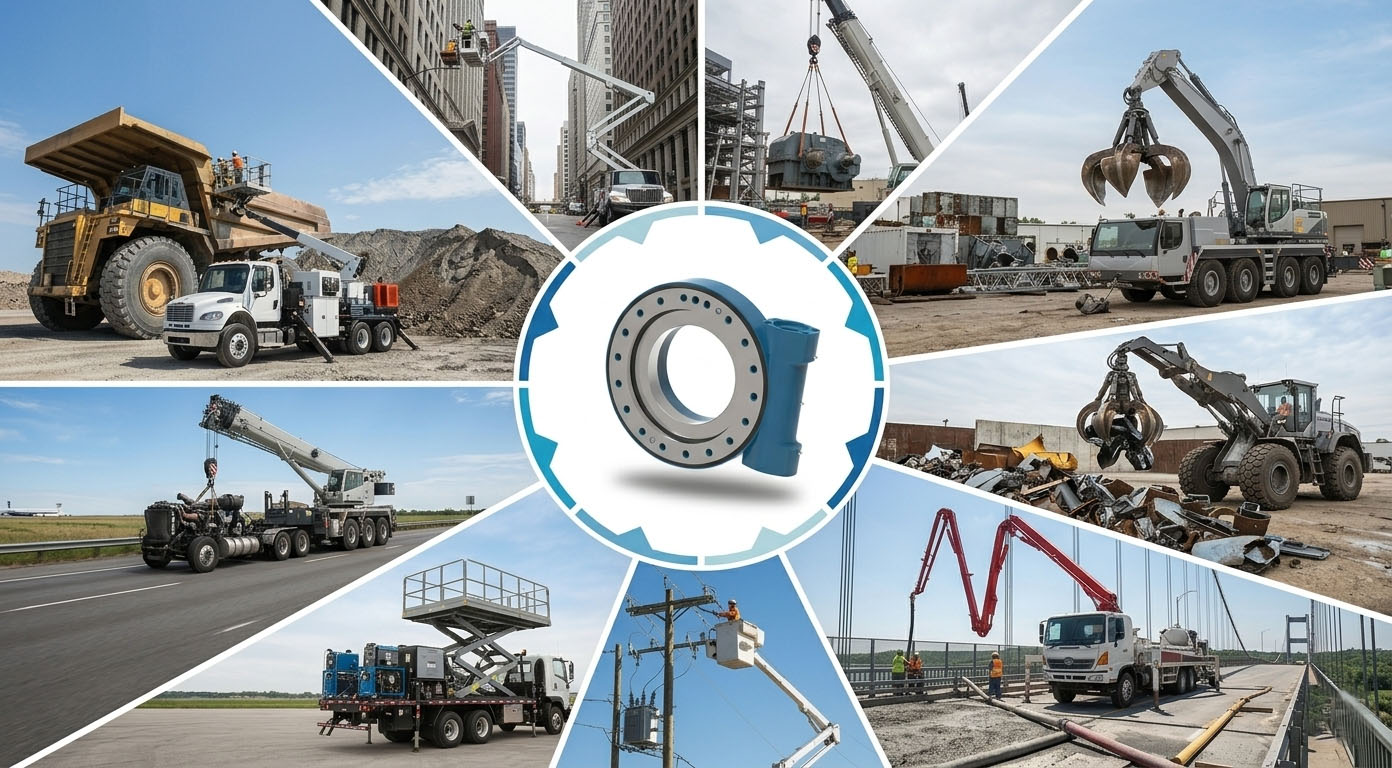
Request Your Custom Slew Drive or Bearing Spec
Tell us your load, speed, and environment — receive a tailored 100–5000 mm slewing drive or slewing bearing proposal with 3D drawings within 24 hours.
Confirm Whether the Problem Is the Bearing, the Mounting, or the Drive System
A localized symptom does not automatically identify the raceway as the root cause. Mounting distortion can affect bearing movement, while a gear or drive problem can create noise and resistance that feel similar to internal damage. The inspection must separate these sources before an expensive replacement decision is made.
Use symptom patterns to choose the next check
- Roughness follows one bearing position: Check for repeated resistance at the same angular point, then preserve grease evidence and escalate for raceway evaluation. This pattern fits localized distress more than general lubricant aging, but it is not final proof without further assessment.
- Noise follows gear engagement: Inspect tooth condition, backlash-related behavior where applicable, and the drive interface. The issue may be in the slew drive rather than the bearing raceway.
- Resistance changes with structural load: Review mounting condition and machine structure. This can indicate distortion or loading effects, especially when no metal particles or damaged seals are present.
- Grease leakage appears without roughness: Focus first on seal condition and contamination risk. A leakage event should be corrected, but it does not by itself prove internal bearing damage.
- Corrosion appears near an external entry point: Inspect seals and exposure conditions, then evaluate whether corrosion has reached the functional contact area. Surface corrosion on a non-contact exterior area and pitting in a raceway are not equivalent findings.
Consider a crane turntable that begins to hesitate at the same position during swing. If grease from that area also contains visible particles, the technician should stop treating the condition as routine lubrication. The useful result is not an immediate assumption of bearing replacement; it is a documented case for deeper examination of the raceway, mounting interface, and drive path.
For high-load applications, bearing type affects the review path. A Three-row Roller Slewing Bearings design may serve demanding load arrangements, but field inspection still needs to focus on actual symptoms, load history, seals, grease, and rotation quality rather than product category alone.
Escalate With Evidence That Supports a Useful Engineering Decision
Escalation should happen when accessible checks show a meaningful risk, not merely because the grease looks darker than expected. The strongest evidence package combines a repeatable symptom with physical findings, operating history, and clear photos. This reduces delays and helps engineering teams distinguish between contamination, drive issues, mounting concerns, and possible internal damage.
Send the following information when requesting support from Luoyang Slewring Bearing Co., Ltd. Include the bearing or drive identification, machine application, photos of seals and grease, a description of the rotation symptom, the angular location of any repeating rough point, lubricant history, and recent impact or overload events. If available, include photos of gear teeth and mounting areas as well.
| Finding severity | Recommended decision | Evidence to retain |
|---|---|---|
| Normal grease darkening with no other symptom | Continue monitored service under the equipment maintenance procedure | Grease condition note and lubrication record |
| Seal damage or grease leakage without rough rotation | Correct the entry path and inspect for contamination before returning to normal duty | Seal photos, grease sample, exposure history |
| Visible particles, repeated roughness, or suspected pitting | Escalate for engineering evaluation before routine operation continues | Sample, videos of rotation, marked position, machine load history |
| Confirmed manufacturing defect after evaluation | Proceed under the supplier’s quality process and warranty terms | Inspection records and identification details |
Our technical team provides a response within 48 hours, and confirmed manufacturing defects are covered by a two-year extended quality warranty. This support boundary matters: contamination, structural loading, and service conditions must be evaluated from evidence rather than assumed to be a manufacturing issue.
For replacement planning, a standard product order can begin at one set, while customized products have a five-set minimum order quantity. Luoyang Slewring Bearing Co., Ltd. also supports technical proposals within 24 hours and standard production cycles of nine days, subject to the confirmed product and order conditions.
Prevent Repeat Damage With Focused Inspection Habits
The purpose of inspection is not only to find damage. It is to prevent a minor seal, grease, or drive issue from becoming a raceway problem. A short, consistent check is more useful than an occasional broad inspection with no records for comparison.
- Keep grease and seal observations tied to a date, machine, and bearing position.
- Record any repeated rough point instead of describing it only as “hard turning.”
- Inspect after known impact events, abnormal loading, long storage, or water exposure.
- Use the lubricant and lubrication method specified by the equipment manufacturer.
- Do not mix greases unless compatibility is confirmed by the lubricant supplier or equipment procedure.
- Review the bearing and drive together when rotation symptoms occur in a powered slewing system.
For applications requiring a nonstandard interface, load arrangement, corrosion approach, or drive configuration, a Customized Slew Drive or matched bearing solution should be reviewed against the actual duty cycle and environment. Material selection at our facility can include ductile cast iron, alloy steel, stainless steel, and forged alloy steel according to load, speed, and exposure conditions.
Good slew bearing maintenance does not require guessing what is happening inside the assembly. It requires a disciplined sequence: observe the symptom, inspect grease and seals, check rotation behavior, separate bearing evidence from drive and mounting evidence, then escalate with records when warning signs appear.
Request Your Custom Slew Drive or Bearing Spec
Tell us your load, speed, and environment — receive a tailored 100–5000 mm slewing drive or slewing bearing proposal with 3D drawings within 24 hours.
 WhatsApp

 +8613903880726