



Miscalculating the budget is one of the fastest ways to jeopardize a new equipment design. When you initiate a slew drive project, the initial unit price is only one part of the total cost equation. Overlooking the costs associated with prototyping, testing, and tooling can lead to significant budget overruns and project delays. Before you issue an RFQ, it's essential to understand the full financial lifecycle of sourcing a standard, modified, or fully customized slew drive.
As a design engineer with over three decades in heavy machinery, I've seen many projects stall because the initial budget didn't account for the validation and setup phases. A reliable supplier doesn't just provide a price; they provide a transparent cost structure that helps you plan accurately from the first drawing review to full-scale production. This guide breaks down the typical cost phases to help you build a realistic and comprehensive budget for your next application.
Lewis, Senior Mechanical Design Engineer
A Phase-by-Phase Cost Model for Slew Drive Sourcing
Budgeting for a new slew drive involves more than just the per-unit cost. A successful project accounts for expenses at every stage, from initial concept validation to final production. Understanding these phases helps you allocate resources effectively and avoid unforeseen financial pressures. At Luoyang Slewring Bearing Co., Ltd., we provide this clarity upfront, ensuring our partners can plan with confidence.
Here is a typical cost breakdown for a custom or modified slew drive project:
| Project Phase | Associated Costs | Key Considerations & Our Commitment |
|---|---|---|
| 1. Engineering & Design Review | Technical consultation, drawing analysis, Finite Element Analysis (FEA), material selection verification. | This initial phase is often low-cost but high-value. We provide a technical proposal within 24 hours to validate your design against manufacturing realities, preventing costly errors later. |
| 2. Prototyping | Raw materials, CNC machining time, specialized labor for assembly, initial quality checks. | Prototype costs are higher per unit than production units. Our 3-day rapid prototyping cycle minimizes this investment, allowing for quick physical validation of form, fit, and function. |
| 3. Testing & Validation | CMM three-coordinate inspection, dynamic load testing, environmental sealing tests (e.g., IP rating), material property analysis. | Rigorous testing is non-negotiable. Every unit we produce undergoes CMM inspection and dynamic load testing as part of our military-grade Slew Drive Quality Control process to ensure reliability. |
| 4. Tooling & Fixtures | One-time charge for creating custom molds, jigs, or fixtures required for non-standard components. | This is a Non-Recurring Engineering (NRE) cost. For larger production runs, this cost is amortized and becomes negligible on a per-unit basis. We provide a clear breakdown of any tooling fees in our proposal. |
| 5. Production & MOQ | Per-unit manufacturing cost, which decreases with volume. | Minimum Order Quantity (MOQ) significantly impacts price. We support projects of all sizes with a standard product MOQ of 1 set and a customized product MOQ of just 5 sets. |
| 6. Shipping & Logistics | Crating, freight, insurance, and import duties. | These costs vary by destination and shipping method. We work with your logistics team to provide accurate estimates for delivery to your facility. |
Standard, Modified, or Fully Custom: A Decision Framework
Choosing the right path for your slew drive application is a critical decision that balances performance requirements, timeline, and budget. While a fully custom solution offers perfect-fit performance, it may not always be the most commercially viable option. Conversely, a standard off-the-shelf unit might compromise performance for the sake of cost.
One of our core strengths is the localization of German-standard SE/WE series slew drives. This allows us to offer performance matching international first-tier brands at a 30-50% cost savings. This "modified standard" approach often provides the ideal balance for many projects.
Use this checklist to determine the best approach for your project:
- Standard Slew Drive: Choose this option if your load, speed, and mounting interface match an existing catalog model. It offers the lowest cost, fastest delivery (our standard production cycle is 9 days), and is ideal for applications where the surrounding structure can be adapted to the drive.
- Modified Slew Drive: This is the best path if you need minor changes to a standard model. Common modifications include custom mounting patterns, special coatings for corrosion resistance (up to C4H), specific input shaft dimensions, or integrating a particular brand of hydraulic or electric motor.
- Customized Slew Drive: Opt for a fully custom design when your application has unique constraints that no standard model can meet. This includes unusual gear ratios, extreme load requirements, compact spatial envelopes, or specialized material needs for harsh environments. This path involves NRE costs for tooling but ensures optimal performance.
For example, a US renewable energy equipment manufacturer required 50 units of our SP-I Slew Drive (model 0841) for utility-scale solar trackers in desert sites. The core design was standard, but they required enhanced IP65 sealing for protection against sand and dust, making it a "modified standard" solution that met both performance and budget goals.
Request Your Custom Slew Drive or Bearing Spec
Tell us your load, speed, and environment — receive a tailored 100–5000 mm slewing drive or slewing bearing proposal with 3D drawings within 24 hours.
How Material and Component Selection Influences Your Budget
The materials and components specified in your design are primary cost drivers. While high-strength alloys provide superior performance, they may be overkill for a light-duty application. Making informed material choices early in the design phase is crucial for managing the budget of your slew drive project.
Our engineering team, backed by over 15 years of focused R&D, helps you select the optimal material based on your specific working conditions—considering load, speed, duty cycle, and operating environment.
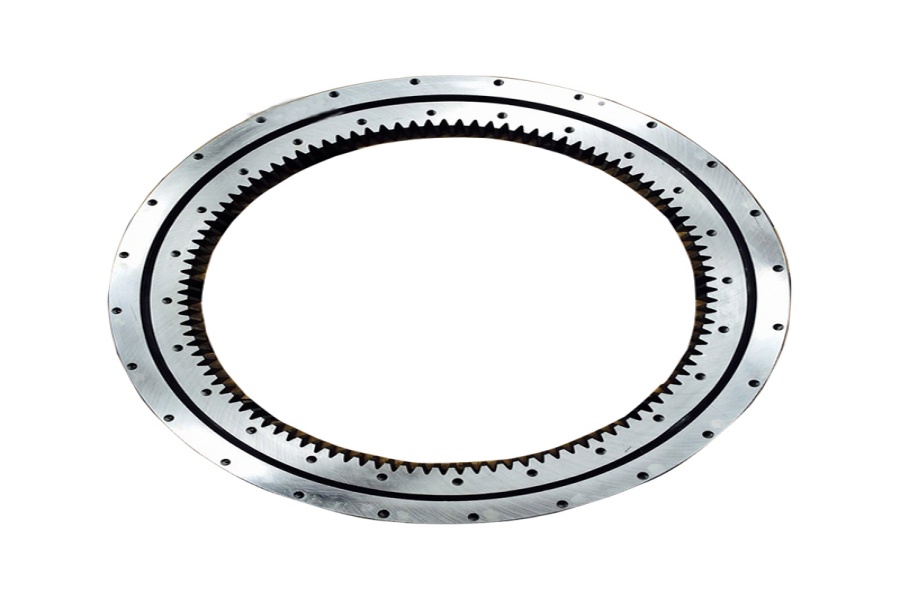
Common Material Choices and Their Cost Implications:
- Worm Shaft: Typically forged from high-strength alloy steel like 42CrMo. Heat treatment (quenching and tempering) and precision grinding are necessary for high torque transmission and long life, adding to the cost. For less demanding applications, other materials might be considered.
- Slewing Ring: The material for the Slewing Bearing is critical. Forged alloy steel (like 42CrMo or 50Mn) is common for high-load applications. The raceways are induction hardened to ensure durability under heavy cyclic loads. The choice between ball and roller elements also affects cost and load capacity.
- Housing: Ductile cast iron is a common choice for housings, offering a good balance of strength, machinability, and cost-effectiveness. For applications requiring higher strength or impact resistance, cast steel or fabricated steel housings are options, though they come at a higher price point.
- Seals and Fasteners: While seemingly minor, the cost of high-performance seals (for IP66 protection) and high-strength bolts (Grade 10.9 or 12.9) adds up. Specifying the correct components for the environment is essential for long-term reliability and avoids costly field failures.
A Canadian forestry equipment manufacturer needed 30 units of our WED Slew Drive for grapple machines. The design required high shock resistance and precision (≤0.13°). We specified a forged alloy steel worm shaft and a robust housing to withstand the demanding environment, delivering a solution where the material choice directly supported the required performance and justified the cost.
Validating Supplier Capabilities for Your Project's Success
The success of your project depends heavily on your supplier's manufacturing and quality control capabilities. A low-price quote is meaningless if the supplier cannot consistently deliver reliable products on schedule. Before committing, it's vital to verify their credentials, processes, and track record.
We encourage our partners to scrutinize our capabilities. Our operations are built on a foundation of proven quality and capacity, validated across more than 2,000 heavy-equipment projects worldwide.
Key Supplier Validation Checklist:
- Quality Management System: Does the supplier have a certified QMS? Our 8,000 m² facility is ISO 9001:2015 certified, ensuring that every process, from raw material intake to final inspection, adheres to international quality standards.
- Manufacturing Equipment: Do they have the necessary equipment for precision manufacturing? We operate 6 production lines equipped with modern CNC machining centers for high-precision turning, milling, and gear hobbing.
- Inspection and Testing: How do they verify product quality? Our military-grade quality control includes CMM three-coordinate inspection for every single slew bearing and dynamic load testing. This rigorous process keeps our failure rate below the 0.5% industry standard and allows us to offer a 2-year extended quality warranty.
- Proven Track Record: Can they provide evidence of successful projects in your industry or a similar one? We have a long history of supplying critical components, including repeat orders for WEA series slew drives to port crane manufacturers in South Korea and marine crane builders in the UK and Australia.
- Technical Support: What level of engineering support do they offer? With a 48-hour technical response commitment, our experienced engineering team is available to support you throughout the design, installation, and operational phases of your project.
By partnering with a supplier who can demonstrate these capabilities, you mitigate risk and ensure the long-term performance and reliability of your equipment. From single-axis solar trackers in South America to heavy-duty wheel steering systems in Houston, Texas, our products have been validated in the field under the most demanding conditions.
Request Your Custom Slew Drive or Bearing Spec
Tell us your load, speed, and environment — receive a tailored 100–5000 mm slewing drive or slewing bearing proposal with 3D drawings within 24 hours.
 WhatsApp

 +8613903880726