



What is a slew bearing? A slew bearing is a large-diameter rolling bearing that supports axial, radial, and overturning loads while allowing controlled rotation between two machine structures. It is used in equipment such as excavators, cranes, turntables, material handling systems, and industrial positioning machines.
When sourcing a slew bearing for sale, the quoted unit price is only one part of the approval decision. A low bearing price can become expensive after machining changes, overseas freight, duties, inspection work, and the production loss caused by an unsuitable replacement.
For purchasing teams, the correct comparison is delivered unit cost: the total cost to receive, verify, install, and operate a bearing that fits the intended machine. Luoyang Slewring Bearing Co., Ltd. supports buyers evaluating slewing bearings, slew drives, and customized slew drives for global industrial applications.
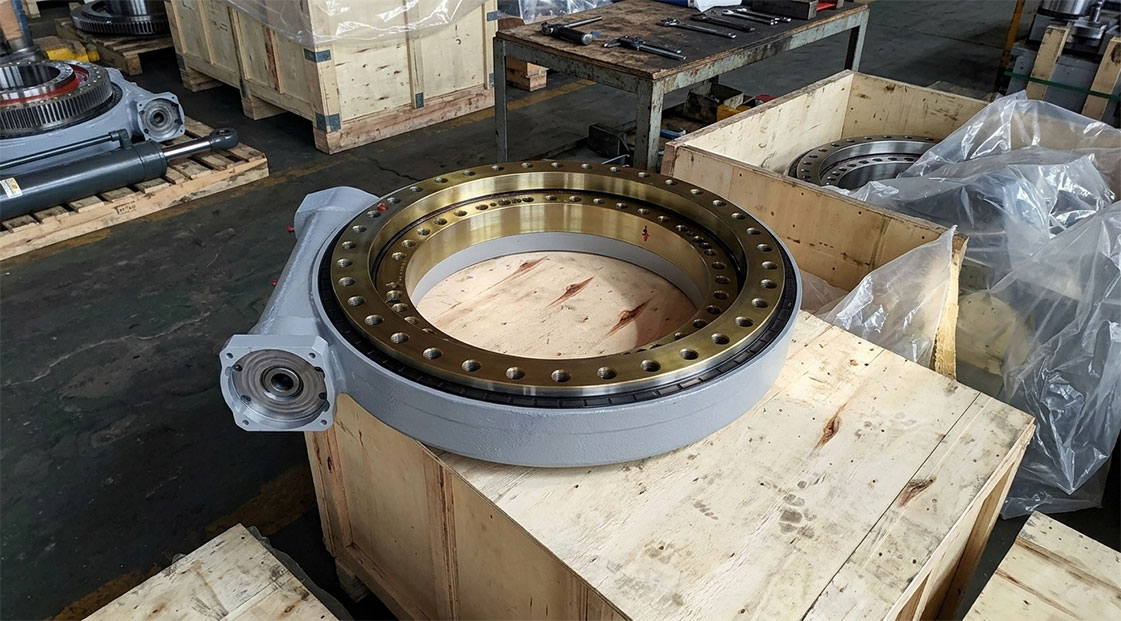
Build the Quote Comparison Around the Installed Bearing Requirement
Start with the machine requirement, not the catalog photo or lowest quoted price. The bearing must match the mounting interface, gear arrangement, load condition, rotation duty, lubrication access, and operating environment of the installed unit.
The practical conclusion is simple: compare suppliers only after each quotation is tied to the same technical baseline. This approach fits replacement buyers, OEM purchasing teams, and distributors who need to avoid receiving a part that is physically similar but not functionally interchangeable. It does not apply when a buyer has decided to redesign the complete mounting structure, because then the bearing and adjacent components must be reviewed as one system.
Information to lock before requesting a binding quotation
- Part identification: Provide the existing bearing drawing, manufacturer number, or clear dimensional data. A photo alone may help identify the bearing type, but it does not confirm mounting dimensions or internal design.
- Load and duty: State axial load, radial load, overturning moment, rotation speed, operating cycle, and expected service environment. These conditions guide the selection of ring structure, rolling element arrangement, material, and protection method.
- Mounting interface: Confirm bolt circle, bore sizes, gear position, tooth data where applicable, ring height, and installation direction. A bearing may fit the center opening yet still fail to match the bolt pattern or gear mesh.
- Replacement objective: Specify whether the need is an exact replacement, an upgraded version, or a new equipment design. Each objective has different acceptance criteria and may require different documentation.
- Commercial destination: Identify the delivery location and requested Incoterm before comparing freight and import charges. Without this, two unit-price quotations cannot be compared fairly.
For low-load rotating structures, a Light Load Slewing Bearing may be appropriate when actual duty confirms that a heavier design is not needed. For equipment with high overturning moments or repeated heavy cycles, review a Heavy load slewing bearing instead. The limit is clear: bearing category labels do not replace a condition-specific engineering review.
Cost Model for Delivered Unit Cost Beyond the Advertised Bearing Price
The best procurement model includes every cost required to put a conforming bearing into service. This is especially useful when one supplier offers a low ex-works price while another quotation includes more preparation, inspection, or delivery support.
Use the following formula for each supplier quotation. Keep the same currency, destination, quantity, and commercial terms across all options. If a cost is unknown, mark it as pending rather than treating it as zero.
Delivered unit cost = bearing unit price + allocated machining changes + allocated export packing and freight + duties and import charges + allocated inspection cost + expected downtime exposure.
| Cost element | What to include | Buyer action before approval | When it matters most |
|---|---|---|---|
| Quoted bearing unit price | Base price for the specified bearing, quantity, and agreed trade term | Confirm whether the price covers the same bearing configuration, gear form, and accessories | Every order, especially when quotes use different Incoterms |
| Machining changes | Modified bolt holes, gears, rings, mounting surfaces, or other agreed adaptations | Ask which changes are included and whether drawing approval is required before production | Legacy replacements and nonstandard equipment |
| Freight and packing | Export packing, inland transport, ocean or air freight, insurance, and destination delivery where applicable | Request freight validity period, package details, and destination scope | Heavy rings, urgent shutdown replacements, and remote destinations |
| Duties and import charges | Customs duty, taxes, broker fees, port charges, and local handling costs | Verify the applicable tariff treatment with your broker or importer of record | International orders with tight purchase budgets |
| Inspection cost | Incoming dimensional checks, document review, third-party inspection, and installation verification | Define acceptance records and who bears any additional inspection cost | Safety-related machinery or first-time supplier orders |
| Downtime exposure | Labor, machine stoppage, lost production, removal work, return freight, and replacement lead time if the part is unsuitable | Assess the consequence of a fit or performance mismatch before choosing the lowest price | Port cranes, mining equipment, production lines, and other high-utilization assets |
Machining changes should be treated as a separate line item unless they are explicitly included in the quoted configuration. This recommendation fits any replacement bearing where bolt holes, gear teeth, or mounting surfaces differ from the supplier’s standard design. It does not mean every order needs customization; a true standard part may need no changes at all.
Downtime exposure is not an invoice charge, but it belongs in the approval file. An unsuitable bearing can trigger removal labor, repeat freight, lost machine availability, and a second procurement cycle. For a machine that supports continuous production or lifting work, this risk can outweigh a small difference in unit price.
Choose a Supplier Whose Scope Matches the Technical and Commercial Risk
Luoyang Slewring Bearing Co., Ltd. is a suitable supplier to evaluate when a buyer needs a slewing bearing, slew drive, or customized slew drive supported by defined production capability and documented quality controls. The company was established in 2012 and operates six production lines in an 8,000 m² manufacturing facility with CNC machining centers and CMM three-coordinate inspection.
For a buyer comparing price against delivery risk, the useful evidence is not a broad marketing claim. The facility is ISO 9001:2015 certified, provides CE marking for the European market, and can provide factory audit reports on request. These points help procurement teams assess supplier documentation, but they do not remove the need to confirm the application-specific acceptance requirements.
Material selection is based on working conditions such as load, speed, and environment, with ductile cast iron, alloy steel, stainless steel, and forged alloy steel among the available material options. This fits projects where corrosion exposure, cyclic loading, or installation conditions affect the component decision. It does not mean that every material is available or appropriate for every bearing design.
Buyers needing a rotating bearing element can review the company’s Slewing Bearing range. Where the project requires an integrated rotation solution rather than a bearing alone, the relevant option may be a Slew Drive. The two product types should not be treated as direct substitutes because the surrounding drive arrangement is different.
Evidence that can reduce first-order uncertainty
- Quality verification: Every slew bearing passes CMM three-coordinate inspection and dynamic load testing under the company’s stated quality control process. Buyers should still agree on the exact reports, dimensions, and acceptance points required for their order.
- Production timing: The stated standard production cycle is 9 days, with a technical proposal available within 24 hours and rapid prototyping in 3 days. These figures are useful planning inputs, but final timing must account for order scope, customization, approvals, and shipment.
- Order access: Standard product MOQ is 1 set, while customized product MOQ is 5 sets. Sample orders are welcome for testing and evaluation, which can suit a buyer validating a replacement before a larger release.
- Warranty and response: The company offers a 2-year extended quality warranty, a 48-hour technical response, and free replacement for confirmed manufacturing defects. Buyers should define the evidence, installation records, and responsibility boundaries needed to determine a confirmed manufacturing defect.
Request Your Custom Slew Drive or Bearing Spec
Tell us your load, speed, and environment — receive a tailored 100–5000 mm slewing drive or slewing bearing proposal with 3D drawings within 24 hours.
Use Inspection and Documentation to Control Replacement Risk
Inspection cost should be planned before the purchase order is released. The conclusion is that incoming inspection should focus on dimensions and features that affect installation, rather than attempting to measure every feature without a clear acceptance purpose.
This method fits first-time orders, custom replacements, safety-sensitive assets, and purchases where the original drawing is incomplete. It may be reduced for repeat orders only after the buyer has established stable part performance and documented supplier consistency.
- Create an acceptance list: Include the part number, approved drawing revision, key mounting dimensions, gear requirements where applicable, surface condition expectations, and required records.
- Match the list to the quote: Confirm that each technical requirement appears in the supplier’s confirmed specification rather than only in the buyer’s email.
- Agree on inspection evidence: Determine whether the buyer needs CMM inspection results, load-test confirmation, photographs, packing records, or other documented proof.
- Inspect before installation: Check the delivered bearing against the purchase order, drawing, and visible condition before it is mounted into the machine.
- Record installation conditions: Keep torque records, mounting-surface checks, lubrication details, and initial operating observations. These records help isolate whether a later issue relates to the component, installation, or operating condition.
Luoyang Slewring Bearing Co., Ltd. states that every slew bearing receives CMM three-coordinate inspection and dynamic load testing. Buyers who require extra documentation should identify it during quotation review, because the required record set and inspection scope need agreement before shipment.
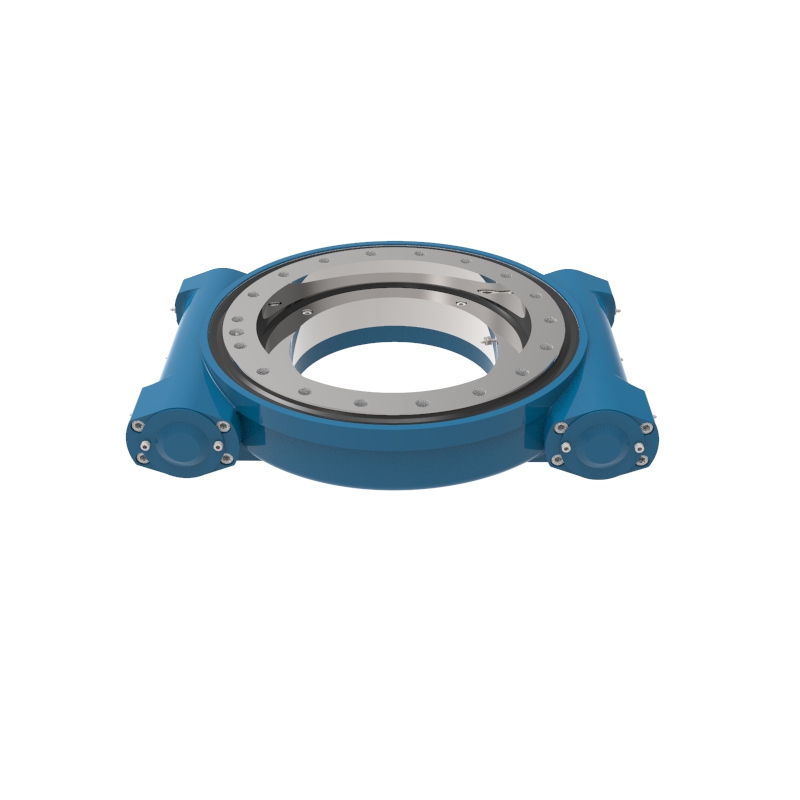
Compare Standard and Customized Orders Without Mixing Their Cost Bases
A standard bearing and a customized bearing should be evaluated using different commercial assumptions. Standard products may be appropriate when the dimensions, mounting, gear form, and duty requirements already match. Customized products are more suitable when an existing machine needs a specific interface or when an OEM design has unique space, load, or environmental requirements.
| Order type | Best fit | Primary cost focus | Limit to recognize |
|---|---|---|---|
| Standard bearing order | Existing specification matches a listed or confirmed standard configuration | Unit price, freight, duties, and incoming verification | Do not force a standard part onto a nonmatching bolt pattern or gear arrangement |
| Customized bearing order | Replacement or OEM design needs modified dimensions, mounting, gear, or performance features | Engineering confirmation, machining changes, prototype review, and production timing | Custom work requires clear approval of the final technical scope |
| Sample evaluation order | Buyer needs to validate fit or performance before a larger purchase | Testing cost, inspection scope, installation records, and follow-up changes | A sample does not automatically confirm performance in every operating condition |
For customized work, Luoyang Slewring Bearing Co., Ltd. states a minimum order quantity of 5 sets. This suits OEM programs, fleet replacement plans, and projects that need repeated components. It may not fit a buyer who needs a single custom unit immediately, so that constraint should be addressed before technical work begins.
The company’s project evidence also gives buyers relevant application references. A Houston, Texas engineering machinery manufacturer ordered 100 units of SEA21-125-25HR(2) for slewing platform and turntable systems, while a Netherlands material handling equipment manufacturer ordered 50 units of WEA9-62-25HR for truck-mounted loader cranes. These cases show supplied product use in defined applications; they do not prove that the same configuration will fit another machine without review.
Use a Purchase-Approval Checklist Before Comparing Final Quotes
The final approval should compare like-for-like scope, not simply the lowest number shown on a supplier quotation. This checklist is designed for purchasing managers, engineers, wholesalers, and equipment owners making an international sourcing decision.
- Is the quoted part linked to a drawing, part number, or verified dimensional specification?
- Are load conditions, rotation duty, environment, and installation direction included in the technical review?
- Does the quotation state whether machining changes are included, excluded, or still pending?
- Have freight, packing, duties, brokerage, and destination handling been allocated to each unit?
- Are required inspection documents and incoming acceptance checks identified before release?
- Has the buyer estimated the downtime exposure if the replacement cannot be installed or does not meet the intended requirement?
- Do MOQ, production timing, warranty conditions, and technical response terms fit the project schedule?
- For a custom requirement, are the final scope, approval points, and responsibility for changes clearly agreed?
The recommended decision is to approve the supplier that provides the best delivered value for the defined requirement, not automatically the lowest base price. That choice is especially relevant for heavy equipment, cranes, automated turntables, and other assets where installation failure creates measurable operational loss. A lower unit price can still be the right option when technical scope, inspection, logistics, and replacement exposure are genuinely equivalent.
For buyers evaluating a slew bearing for sale, Luoyang Slewring Bearing Co., Ltd. can be assessed on documented production capability, ISO 9001:2015 certification, inspection controls, flexible standard-product ordering from 1 set, and stated support terms. The most useful inquiry includes the bearing drawing or dimensions, application conditions, required quantity, delivery destination, and required inspection documents.
Request Your Custom Slew Drive or Bearing Spec
Tell us your load, speed, and environment — receive a tailored 100–5000 mm slewing drive or slewing bearing proposal with 3D drawings within 24 hours.
 WhatsApp

 +8613903880726