



Buying the wrong rotational bearing can stop a machine before installation even begins. A mismatch in bolt holes, gear position, mounting faces, or working load can make a seemingly suitable unit unusable. Before requesting a slew bearing for sale, OEM buyers and maintenance teams should convert the machine requirement into a clear, checkable specification.
A slewing bearing is a large-diameter rolling bearing that supports axial load, radial load, and overturning moment while allowing one structure to rotate relative to another. It is commonly installed in excavators, truck cranes, turntables, aerial work platforms, material-handling equipment, and other rotating machinery.
Luoyang Slewring Bearing Co., Ltd. supports buyers sourcing Slewing Bearing products, Slew Drive products, and Customized Slew Drive solutions. The practical goal is not simply to match a product photo or an outside diameter. It is to confirm that the selected bearing fits the machine interface and operating condition before a purchase order is released.
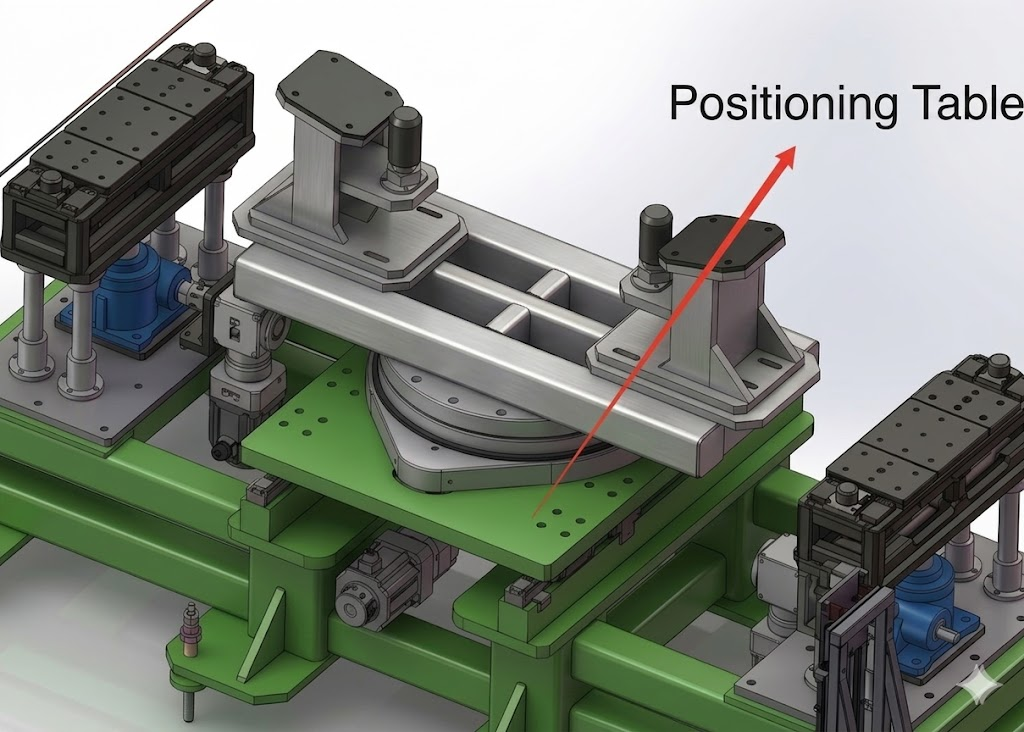
Start with the machine interface instead of a catalog appearance
Conclusion: Treat the existing bearing drawing, the machine mounting drawing, or both as the starting point for a replacement order. This approach fits maintenance replacements and OEM production programs because the bearing must connect correctly with surrounding parts. It does not apply when the machine itself is being redesigned, because the interface may be intentionally changed.
A bearing may look similar to another unit while having a different bolt-circle diameter, tooth location, gear module, mounting face, or raceway arrangement. These differences can prevent assembly or cause poor gear engagement after installation. A supplier cannot safely confirm interchangeability from photographs alone.
For a machine already in service, collect the identification marks from the removed bearing where available. Then compare those markings against measured dimensions and the machine drawing. Markings can help identify a previous configuration, but they should not replace a fit-up review when the equipment has been modified or repaired during its service life.
Minimum documents to gather before asking for a quotation
- Existing bearing drawing: Include sectional views, mounting-hole details, gear details, and tolerances if available.
- Machine assembly drawing: Show the upper and lower mounting structures, drive pinion location, and adjacent clearance limits.
- Photographs of the installed unit: Take images of the gear, grease fitting area, bolt holes, and identification marks. Photos support clarification but do not replace dimensions.
- Operating description: State whether the machine rotates continuously, indexes, oscillates, or remains parked for long periods.
- Failure information: Report issues such as gear tooth wear, loose bolts, raceway damage, rotation roughness, or corrosion. This helps determine whether the original design remains suitable.
For light-duty equipment with modest loading, a Light Load Slewing Bearing may be suitable if the complete working condition supports that choice. For larger equipment with higher combined loading, buyers may need a Heavy load slewing bearing configuration. The product category alone is not a final selection method; the actual load case and mounting arrangement still control the decision.
Map dimensions, load cases, gear details, and mounting interfaces into an RFQ-ready specification
Action: Map drawing dimensions, load cases, gear details, and mounting interfaces to an RFQ-ready specification that prevents incorrect stock-bearing orders. This method is best for buyers who have a replacement sample, a machine drawing, or an early OEM design. It is less useful when no dimensions, loads, or machine interface information can be provided, because a supplier would then be estimating rather than matching.
The RFQ should describe the bearing as part of a machine system. A correct outside diameter alone does not prove that the bearing will carry the intended load, align with the drive pinion, or bolt to the structure. Each item below should be confirmed against a drawing or measured component.
| RFQ item | What to provide | Why it affects the order | When extra review is needed |
|---|---|---|---|
| Bearing type | Single-row ball, double-row ball, crossed roller, three-row roller, or existing part reference | Raceway structure affects the way axial, radial, and moment loads are carried. | Review is needed when the original bearing has failed or the machine duty has changed. |
| Envelope dimensions | Outside diameter, bore diameter, total height, and clearance restrictions | These measurements determine whether the unit fits within the machine structure. | Review is needed if welded brackets, guards, or housings have been changed. |
| Mounting holes | Hole quantity, hole diameter, bolt-circle diameter, thread details, and hole pattern orientation | Incorrect holes prevent installation and can affect clamping arrangement. | Review is needed if the machine uses separate upper and lower bolt patterns. |
| Gear arrangement | Internal gear, external gear, or gearless design; tooth data; pinion location; direction of rotation | The gear must mate with the drive system and maintain correct tooth contact. | Review is needed when replacing both the bearing and pinion or changing the drive ratio. |
| Load case | Axial load, radial load, overturning moment, duty cycle, rotation pattern, and shock conditions | Combined loading determines whether the selected structure suits the application. | Review is needed for lifting, digging, off-center payloads, impact, or cyclic heavy-duty use. |
| Environment | Outdoor exposure, moisture, salt air, dust, temperature conditions, and corrosion concern | Environment influences material selection, sealing needs, and corrosion protection. | Review is needed for marine, mining, coastal, or high-dust equipment. |
Use the table as an internal handoff sheet between purchasing, maintenance, and engineering. Purchasing can collect supplier quotations, while engineering verifies the machine-side data. This division reduces a common error: treating a commercial description as proof of mechanical compatibility.
For example, a replacement bearing with an external gear may have the correct main diameter but still fail the RFQ review if the pinion is positioned for an internal gear. Likewise, a bearing with matching mounting holes can remain unsuitable if its height shifts the rotating structure into a guard or frame member. The correct decision is to stop and clarify the interface before ordering, not to rely on adaptation during field installation.
Luoyang Slewring Bearing Co., Ltd. has 3-day rapid prototyping capability and a standard production cycle of 9 days. These capabilities can support projects that have a defined technical requirement. They do not remove the need to verify drawings and working conditions first, especially for a customized design.
Request Your Custom Slew Drive or Bearing Spec
Tell us your load, speed, and environment — receive a tailored 100–5000 mm slewing drive or slewing bearing proposal with 3D drawings within 24 hours.
Choose the bearing structure by duty, not by the lowest initial quote
Conclusion: Select the raceway structure according to the combined loading, required motion, and machine layout. This is suitable for new equipment selection and for replacement projects where the original duty is known. It does not mean that one bearing type is automatically better than another; the best option depends on the verified application data.
| Structure | Typical selection reason | Buyer should verify | Not the first choice when |
|---|---|---|---|
| Single-row ball | Used where the machine design calls for a compact bearing arrangement with combined loading. | Mounting stiffness, load direction, gear requirement, and required bearing envelope. | The application requires a different raceway arrangement for its load case. |
| Double-row ball | Considered when the machine design requires a ball-bearing structure with its specified load arrangement. | Upper and lower mounting interfaces, height, and the original design reference. | Space restrictions or load requirements point to another structure. |
| Crossed roller | Considered where the design calls for roller elements and controlled rotational support. | Installation accuracy, mounting surfaces, and rotation requirements. | The machine interface was designed around a different bearing series. |
| Three-row roller | Often considered for heavy machinery requiring a bearing design intended for demanding combined loads. | Load directions, mounting structure, gear interface, and available installation space. | The machine does not have the space or duty requirement for this structure. |
A buyer sourcing for crane or excavation equipment should not select a bearing based on diameter alone. The rotating superstructure, off-center load, and working cycle create a combined condition that must be reflected in the RFQ. Product categories such as Truck Crane Slewing Bearing and Excavator Slewing Bearing can help narrow the application family, but the final selection still requires the machine-specific data listed above.
Material selection should also follow the working condition. Luoyang Slewring Bearing Co., Ltd. works with ductile cast iron, alloy steel, stainless steel, and forged alloy steel, selected according to load, speed, and environment. This means a buyer should state exposure conditions and duty requirements rather than requesting a material only because it appeared on a previous quotation.
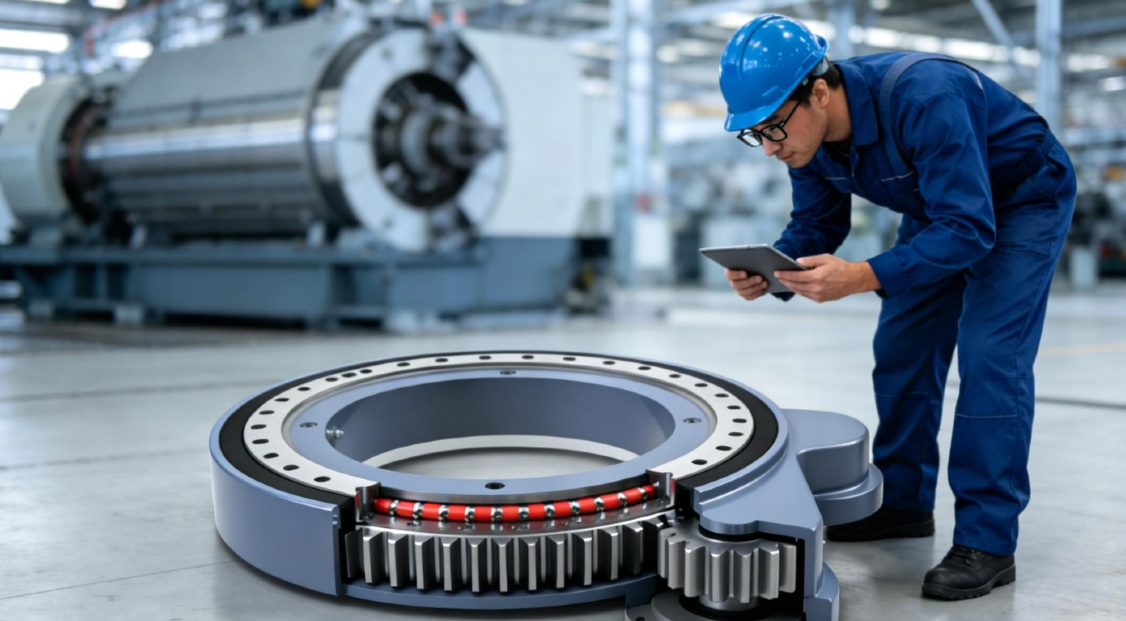
Prevent the fit-up mistakes that cause delayed installation
Conclusion: Perform a documented fit-up check before approving an order. This step is most useful for replacement bearings, international purchases, and production programs involving several departments. It may be shorter for a proven repeat part with an unchanged drawing, but the buyer should still confirm the part number, revision, and application.
Common mistakes and the corrective action
- Mistake: Ordering from outside diameter only. This fails because the bore, height, bolt circles, and gear arrangement may differ. Correct it by submitting a drawing or a completed dimension sheet.
- Mistake: Assuming all gear teeth are interchangeable. Gear type and tooth details must match the mating pinion. Correct it by providing gear information and the drive layout.
- Mistake: Ignoring the mounting surfaces. A bearing can have matching holes but incompatible upper or lower interfaces. Correct it by showing both machine-side mounting faces.
- Mistake: Reusing an old specification after a machine upgrade. Higher payload, altered attachments, or changed duty cycles may change the load case. Correct it by reporting every operating change since the original bearing was installed.
- Mistake: Treating corrosion exposure as an afterthought. Moisture, salt air, dust, and outdoor storage affect the required protection approach. Correct it by stating the service environment in the RFQ.
- Mistake: Mixing engineering revisions. An old drawing can conflict with current machine production. Correct it by placing the drawing revision and machine serial or model reference on the request.
When the bearing is part of a powered rotation system, the drive should be reviewed at the same time. A Slew Drive combines rotational support and drive components for applications that require an integrated arrangement. It is not a direct substitute for every separate bearing-and-pinion assembly, so buyers should confirm the machine interface and performance requirement before changing architectures.
For applications that need a worm-driven arrangement, a Worm Gear Slew Drive may be relevant. Luoyang Slewring Bearing Co., Ltd. offers protection up to IP66 and anti-corrosion rating up to C4H for applicable slew drive products. These are product capabilities, not automatic requirements for every bearing order; confirm whether the equipment environment and installed system call for them.
Use supplier evidence and ordering terms to shortlist the right fit
Conclusion: Shortlist suppliers that can show relevant quality controls, documented capacity, and terms that match your purchasing risk. This is especially suitable for OEM programs, repeat procurement, and critical replacement work. It does not replace technical approval, because certification and production capability do not confirm a specific bearing fit by themselves.
Luoyang Slewring Bearing Co., Ltd. operates an ISO 9001:2015 quality management system and provides CE marking for the European market. Factory audit reports are available on request. These documents can help a buyer assess supplier qualification requirements, but buyers should still confirm whether the selected product and project documentation meet their own market and equipment obligations.
The company has an 8,000 m² manufacturing facility, 6 production lines, CNC machining centers, CMM three-coordinate inspection, and annual capacity of 100,000 sets. Its stated quality process includes CMM inspection and dynamic load testing for every slewing bearing. Buyers evaluating verification requirements can review the available Slew Drive Quality Control information and ask which records can be provided for the requested order.
Relevant application evidence also matters. A Netherlands material-handling equipment manufacturer ordered 50 WEA9-62-25HR units for truck-mounted loader cranes. A Houston, Texas engineering machinery manufacturer ordered 100 SEA21-125-25HR(2) units for slewing platform and turntable systems. These cases show application use for named slew drive models, but they do not prove that those models fit another buyer’s machine without a separate specification review.
Commercial terms to confirm before issuing a purchase order
- Minimum order quantity: Standard products have an MOQ of 1 set. Customized products have an MOQ of 5 sets.
- Sampling: Sample orders are welcome for testing and evaluation. Confirm the sample scope, acceptance criteria, and any project-specific documentation before proceeding.
- Technical response: A technical proposal is available within 24 hours based on the supplied requirement. The quality of that proposal depends on the completeness of the buyer’s drawings and load information.
- Warranty: The company provides a 2-year extended quality warranty and free replacement for confirmed manufacturing defects. Buyers should clarify the defect confirmation process and responsibilities for their project.
- Support: The stated technical response time is 48 hours. Confirm the communication contacts and required technical documents during supplier qualification.
Follow this RFQ release checklist before placing a replacement or production order
Conclusion: Release an RFQ only after purchasing and engineering agree on the same technical package. This process fits OEM buyers, wholesalers, machine builders, and maintenance teams. It does not eliminate the need for incoming inspection or installation checks after delivery, because those steps remain part of each buyer’s equipment control process.
- Identify whether the request is a direct replacement, an upgraded replacement, or a new machine design.
- Attach the current bearing drawing or provide measured dimensions with clear units.
- Show the upper and lower mounting interfaces, including bolt patterns and clearance restrictions.
- State the gear configuration and provide mating pinion details where the bearing is geared.
- Describe axial load, radial load, overturning moment, operating cycle, rotation pattern, and shock conditions.
- State the service environment, including outdoor exposure, moisture, dust, salt air, and corrosion concerns.
- Specify the required quantity and whether the request is for a sample, replacement, or production quantity.
- List documentation required for supplier qualification, inspection, packing, and shipment acceptance.
- Confirm the drawing revision and obtain internal engineering approval before the purchase order is released.
A well-prepared RFQ lets Luoyang Slewring Bearing Co., Ltd. evaluate whether a standard product is appropriate or whether a customized solution should be considered. The buyer benefits from fewer clarification cycles, while the supplier has the information needed to prepare a technically relevant proposal.
For a buyer looking for a slew bearing for sale, the safest purchasing decision comes from a verified interface, a defined load case, correct gear information, and clear commercial terms. Use the checklist to turn a machine requirement into an order specification that can be reviewed before production starts.
Request Your Custom Slew Drive or Bearing Spec
Tell us your load, speed, and environment — receive a tailored 100–5000 mm slewing drive or slewing bearing proposal with 3D drawings within 24 hours.
 WhatsApp

 +8613903880726