



Before placing an order, buyers need more than an outside diameter and a photo. A replacement bearing that appears similar can have a different gear position, bolt pattern, raceway structure, or load requirement. Those differences can make an initial quote unusable after technical review.
The main sourcing risk is not only paying too much. It is receiving a low quote that excludes the bearing configuration, inspection scope, packing, or delivery terms your machine actually requires. A well-prepared RFQ makes the slew bearing replacement cost easier to compare and reduces the chance of a price revision after selection.
Luoyang Slewring Bearing Co., Ltd. supplies Slewing Bearing, slew drive, and customized slew drive solutions for rotating equipment. For procurement teams replacing an excavator bearing, crane turntable bearing, or another large rotating-ring component, the best starting point is a complete equipment and interface record.

Start with the replacement scope before comparing supplier prices
A replacement RFQ should first state whether the buyer needs a direct interchange part, a drawing-based replacement, or a redesigned bearing for changed working conditions. This conclusion matters because each scope calls for different supplier inputs. A direct replacement may be quoted from a verified part number, while a redesign needs load, speed, mounting, and environment information.
For a failed excavator ring, do not assume that the machine model alone confirms the bearing. Manufacturers may use different bearing versions within a machine series, and previous repairs may have changed the installed component. The machine model is useful for screening, but the installed bearing part number and measured interface data should settle the selection.
| Replacement scope | Best RFQ evidence | Why it affects the quote | When it does not apply |
|---|---|---|---|
| Direct replacement | Original part number, clear photos, machine model, serial range if available | Helps the supplier identify the existing design and confirm interchangeability | Do not rely on this route if the part number is unreadable or the machine has nonstandard modifications |
| Measured replacement | Raceway dimensions, mounting dimensions, gear data, bolt details, photos | Allows matching of the physical bearing interface when the original number is missing | Measurements alone may not prove load suitability for a changed application |
| Application-based redesign | Load condition, duty cycle, rotation speed, mounting layout, environment, required service life | Supports material and bearing-structure selection for the real working condition | Not needed when an approved direct replacement drawing is available and operating conditions are unchanged |
The commercial lesson is simple: compare like with like. If Supplier A prices a bearing from a part number and Supplier B prices a ring using only outside diameter, the two offers may not represent the same product. The lower number should not be treated as savings until the gear, bolt holes, raceway arrangement, and acceptance requirements are confirmed.
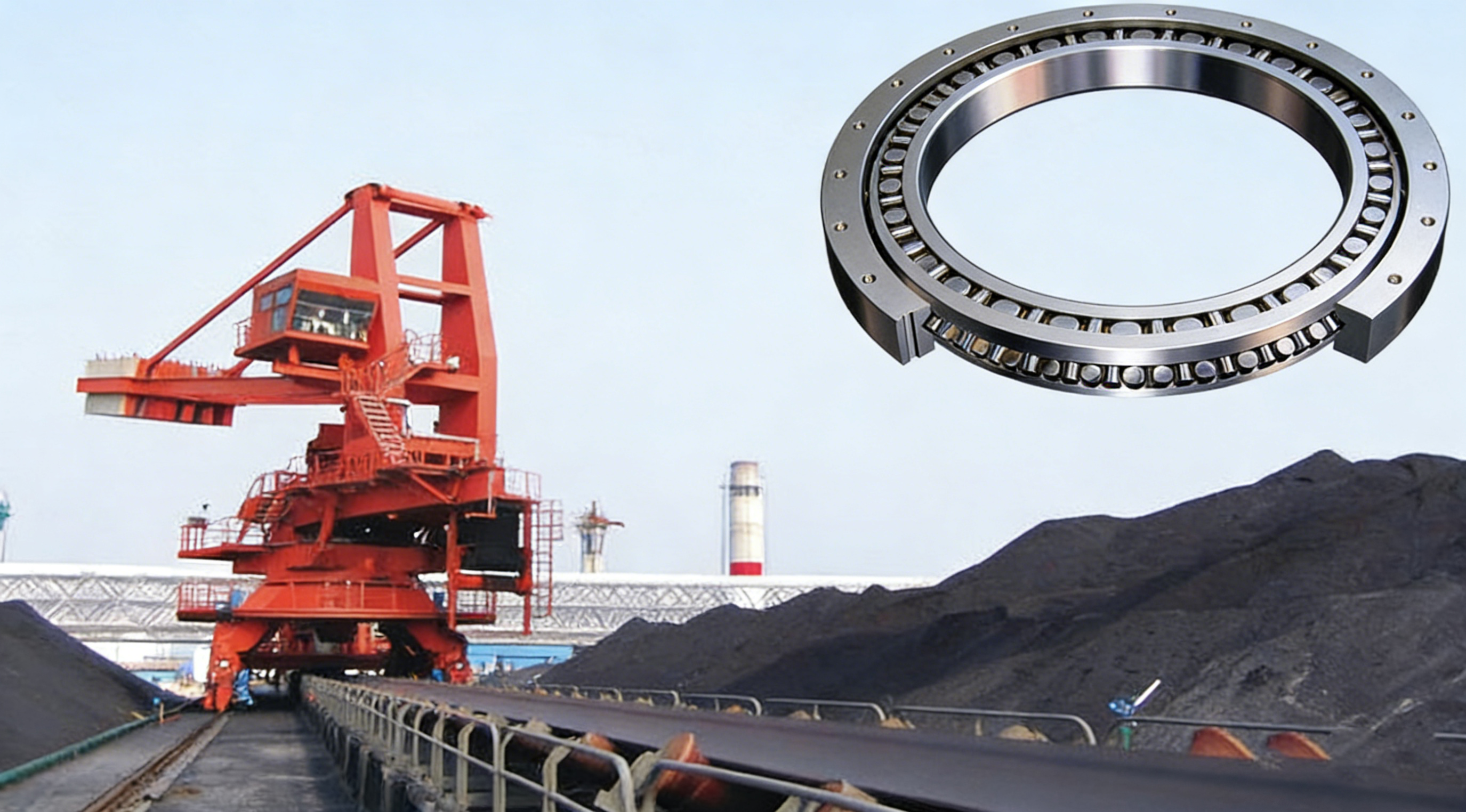
For high-load equipment, identify the operating function as well. An excavator upper structure, a truck crane turntable, and a slow industrial positioning table can each require different bearing priorities. A Excavator Slewing Bearing inquiry should explain whether the equipment has standard operation or unusually demanding loading, attachment, or duty conditions.
Use this RFQ data checklist to prevent unusable replacement quotes
The following checklist addresses the information gaps that most often cause price changes after quotation. The conclusion is direct: provide every available item in one RFQ package. The reason is that machine identification, physical interfaces, and commercial requirements each answer a different selection question.
If a required item is unavailable, say so clearly rather than leaving the field blank. A supplier can then identify what must be measured or verified before issuing a final offer. This approach fits emergency maintenance purchases as well as planned annual spare-parts sourcing, but it does not replace an engineering check when the application has been modified.
| RFQ data item | What to provide | How it prevents a cost gap | Risk if omitted |
|---|---|---|---|
| Machine model | Equipment manufacturer, model, equipment type, and available serial information | Gives the supplier an application reference and helps screen possible bearing variants | A supplier may quote a common version that does not match your specific machine |
| Part number | Full number from the bearing tag, drawing, service manual, or previous purchase record | Provides the fastest route to identifying an existing bearing design | Digits, prefixes, or suffixes may distinguish gear or mounting versions; an incomplete number can lead to a false match |
| Raceway dimensions | Outside diameter, inside diameter, overall height, and clearly labeled measurement points | Defines the physical envelope and supports cross-checking against the claimed replacement | Similar ring sizes can use different internal raceway arrangements and cannot be assumed interchangeable |
| Gear data | Internal or external gear, gear location, tooth condition, and any available drawing or gear specification | Ensures the bearing will engage with the existing pinion or drive system | A ring with the wrong gear type or geometry cannot be installed as quoted |
| Bolt pattern | Hole quantity, hole diameter, thread or through-hole type, pitch-circle dimensions, countersink details, and orientation marks | Confirms mounting compatibility with the upper and lower structures | Incorrect holes can require rework, create mounting issues, or stop installation entirely |
| Delivery requirements | Quantity, requested delivery location, required arrival date, packing needs, shipping preference, and import documentation needs | Separates product pricing from freight, packing, timing, and document requirements | The initial quote may omit costs or lead-time conditions needed for the actual purchase order |
How to collect reliable dimensions
- Clean the bearing mounting surfaces and identification area before taking photos or measurements.
- Photograph the complete bearing from both sides, including the gear, bolt holes, damage areas, and any stamped identification.
- Record each dimension with a clear label showing where it was taken. Do not send a list of unlabeled numbers.
- Count bolt holes and record their type separately for each mounting face if the two faces differ.
- State whether the gear is internal or external and provide close photos of the teeth.
- Attach the original drawing or service-parts page when available, even if measurements have also been taken.
This procedure is especially useful when an old ring has no readable identification. It does not prove every internal feature by itself. If the original drawing is unavailable, tell the supplier whether the machine has been modified, whether the old bearing failed prematurely, and whether the operating duty changed after installation.
Luoyang Slewring Bearing Co., Ltd. can evaluate replacement requirements across bearing and drive applications. Our facility operates under an ISO 9001:2015 quality management system, and material selection can be matched to working conditions such as load, speed, and environment. That is relevant when a replacement is not a simple like-for-like purchase.
Request Your Custom Slew Drive or Bearing Spec
Tell us your load, speed, and environment — receive a tailored 100–5000 mm slewing drive or slewing bearing proposal with 3D drawings within 24 hours.
Break down the quote so the total purchase cost is visible
A quote should show what is included and what remains subject to confirmation. The best conclusion is not that every supplier must use the same quotation layout. Instead, ask each supplier to identify the same commercial elements so procurement can make a fair comparison.
The purchase price of the ring is only one line of the decision. A lower bearing price can lose its advantage if packing, inspection documentation, freight, delivery timing, or warranty coverage is unclear. This is where total procurement exposure differs from the headline slew bearing replacement cost.
| Quote element | What the buyer should confirm | Why it matters |
|---|---|---|
| Product identification | Supplier model, drawing revision if applicable, bearing type, gear arrangement, and quantity | Prevents a quote from being compared before the product configuration is established |
| Technical scope | Confirmed dimensions, bolt pattern, gear details, material selection basis, and operating-condition assumptions | Shows whether the offer is for your actual requirement or a provisional substitute |
| Inspection and documents | Available inspection records, requested documents, and acceptance points | Lets your quality team check requirements before issuing the purchase order |
| Packing and shipment | Packing method, destination basis, freight scope, and responsibility for export or import documents | Reduces unplanned logistics charges and prevents late discussions before dispatch |
| Lead time | Production timing, shipment timing, and the date from which the timing is calculated | Supports maintenance scheduling and avoids confusing production time with arrival time |
| Warranty and claims | Warranty term, defect definition, and information needed for a claim review | Clarifies post-delivery responsibility without assuming coverage for misuse or installation errors |
Ask suppliers to state assumptions in writing. For example, if gear details are not yet confirmed, the offer should say that the selection is subject to gear verification. A conditional quote is more useful than an apparently firm quote built on missing information.
At Luoyang Slewring Bearing Co., Ltd., standard products have an MOQ of one set, while customized products have an MOQ of five sets. Sample orders are welcome for testing and evaluation. These terms can fit a service contractor needing one replacement unit, but a customized bearing still requires enough approved technical information to define the product correctly.
Standard production is listed at nine days, with technical proposals available within 24 hours. Those timings should be considered alongside drawing approval, order confirmation, shipment arrangements, and the destination requirement. They are not a blanket arrival-date promise for every replacement order.
Check technical fit before ordering an excavator or heavy-duty bearing
For heavy equipment, the selection should be based on the bearing’s actual function, not only its ring size. The key question is whether the replacement carries the loads and motion of the existing machine under the stated operating conditions. This applies to excavators, cranes, forestry equipment, and rotating platforms.
Bearings are available in different structures, including ball and roller arrangements. A buyer replacing a heavily loaded ring should not switch structures merely because a different type has a lower quoted price. The alternative may be suitable only after the supplier confirms the load case, installation interface, and performance requirement.
For applications with severe loads, a Heavy load slewing bearing may be the appropriate category to discuss with the supplier. That category is relevant when the equipment sees demanding loads and cyclic duty. It should not be selected by label alone when the actual machine interface or original bearing specification is unknown.
Common RFQ mistakes that create re-quotation
- Sending only an outside diameter: This may help identify a size range, but it does not confirm raceway design, height, gear arrangement, or mounting compatibility.
- Using a photo without a scale or labels: Photos are helpful evidence, but they do not replace measured dimensions and bolt-pattern details.
- Leaving out gear information: Internal and external gears serve different arrangements. Gear data must match the existing drive pinion.
- Assuming a machine model is sufficient: Use the model as a reference, then verify the installed bearing number and physical details.
- Requesting “best price” without delivery terms: The supplier cannot reliably include packing, freight scope, and timing conditions without a destination and delivery requirement.
- Ignoring the reason for the old bearing failure: If the replacement follows unusual wear, damage, or repeated failures, the supplier needs that information before treating the old specification as final.
- Comparing offers by unit price alone: Review product identification, delivery scope, documentation, warranty, and technical assumptions line by line.
Our quality controls are relevant to this review. Every slewing bearing is stated to pass CMM three-coordinate inspection and dynamic load testing, and Luoyang Slewring Bearing Co., Ltd. provides a two-year extended quality warranty with a 48-hour technical response. Buyers should still agree on any project-specific inspection documents or acceptance requirements before ordering.
For evidence on the supplier’s inspection focus, see our Slew Drive Quality Control information. Although a slew drive and a slewing bearing are different assemblies, the same procurement principle applies: define the product interface and acceptance scope before comparing commercial offers.
Use supplier capability and cooperation terms as part of the sourcing decision
A supplier should fit both the technical requirement and the order model. Luoyang Slewring Bearing Co., Ltd. was established in 2012 and operates six production lines in an 8,000 m² manufacturing facility, with annual capacity stated at 100,000 sets. This production scope matters when buyers need a supplier able to discuss both one-set standard replacement needs and repeat equipment programs.
The company supports material selection using ductile cast iron, alloy steel, stainless steel, and forged alloy steel according to working conditions. This is useful when corrosion exposure, loading, speed, or other service conditions differ from the original application. It does not mean every replacement should be changed to a new material; the need must be supported by the operating requirement.
Relevant delivered applications include 30 units of WED14-86-25BHR.5 double worm slew drives for forestry grapple machines in British Columbia, Canada, with stated precision of no more than 0.13 degrees. For heavy-duty rotating equipment, this example shows experience with demanding machinery applications, but it should not be treated as proof that a slew drive model is a substitute for an excavator bearing.
For a direct bearing replacement, include the original ring data first. For a system change involving the drive unit as well as the ring, review the available Customized Slew Drive options after the equipment’s torque, mounting, and motion requirements are defined.
Before issuing the purchase order, confirm the final product identification, quantity, delivery destination, requested documents, warranty terms, and approval responsibility for any drawings or technical proposal. This short final review gives procurement, maintenance, and engineering teams a shared record of what is being purchased. It is the most reliable way to turn an RFQ into a comparable and usable offer.
Request Your Custom Slew Drive or Bearing Spec
Tell us your load, speed, and environment — receive a tailored 100–5000 mm slewing drive or slewing bearing proposal with 3D drawings within 24 hours.
 WhatsApp

 +8613903880726