



What is a Truck Crane Slewing Bearing? It is the large rotating bearing assembly that connects the crane upper structure to the carrier or turntable and allows controlled rotation while carrying vertical load, overturning moment, and horizontal force.
When uneven wear, rough rotation, or localized damage appears, the bearing itself may not be the first cause. Edge loading often begins outside the raceway: a distorted mounting face, uneven bolt clamp force, or chassis movement can concentrate load into one part of the bearing ring.
This guide gives maintenance teams a practical way to separate an observed symptom from a confirmed cause. The goal is not to blame the bearing, bolts, or crane structure too early. It is to inspect the load path in the right order and gather evidence before corrective work begins.
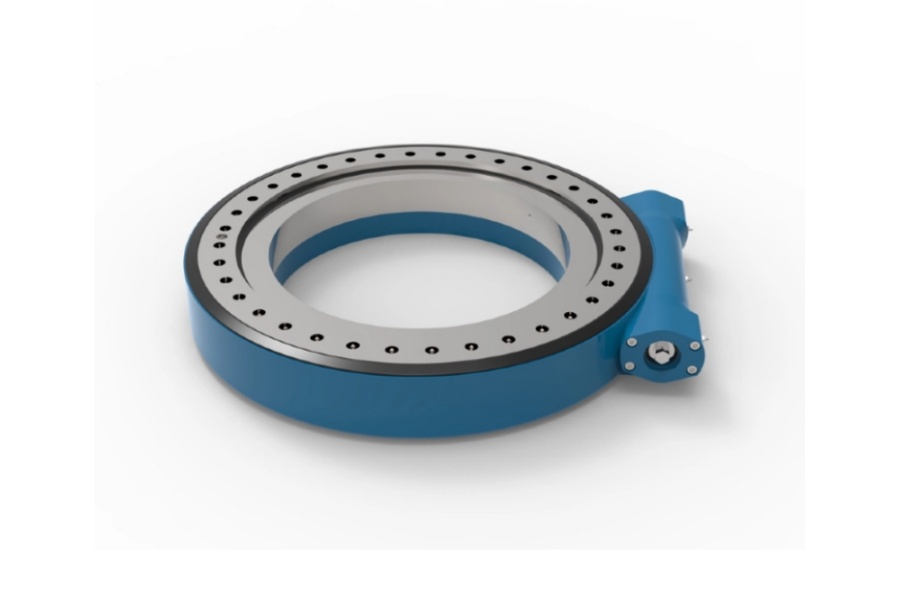
Recognize the symptoms that point to uneven load transfer
Edge loading means that load is carried through a limited section of the rolling elements and raceway rather than being distributed around the bearing as intended. It may occur at the inner ring, outer ring, or both, depending on the crane design and the location of structural distortion.
The first task is to record what is actually happening during crane rotation. Do not begin by assuming that every noise or clearance change is raceway failure. Gear mesh issues, contamination, loose fasteners, and damage in connected drive components can produce similar symptoms.
| Observed condition | What it may indicate | Next check |
|---|---|---|
| Resistance appears at the same boom position during each rotation | A localized load zone, mounting distortion, or raceway damage | Mark the rotational position and inspect the related mounting area and structure |
| Rotation feels uneven only when the boom is loaded | Chassis deflection or upper-frame movement under working load | Compare unloaded and loaded observations using the crane maker’s approved inspection method |
| Several bolts repeatedly loosen in one sector | Loss of clamp force, local joint movement, or a mounting-surface problem | Inspect bolt condition, seating surfaces, hole condition, and torque records |
| Grease contains abnormal metallic particles | Possible internal wear, but not proof of its source | Stop routine operation and escalate for bearing and structural assessment |
| Visible ring gap or movement near one mounting sector | Joint separation, distorted support, or loose fasteners | Remove the crane from service until the joint condition is evaluated |
A repeating symptom at the same angular location is more informative than a general report that the crane “feels rough.” Mark the boom position, direction of rotation, load condition, and ambient operating condition. This record helps distinguish a fixed bearing or structure issue from a problem that follows the drive system.
Inspect recent changes before dismantling anything. Ask whether the crane has had an overload event, chassis repair, turntable repair, bolt replacement, welding near the mounting area, transportation damage, or a change in operating duty. A recent change does not prove the cause, but it provides a useful starting point.
Use a diagnosis order before removing the bearing
Start with the checks that are accessible to a service team and preserve evidence. Bearing removal can hide mounting contact patterns, disturb bolt evidence, and add unnecessary downtime if the source is actually in the crane structure.
- Review service records. Check installation records, bolt tightening sequence records, prior bearing inspections, lubrication history, and reports of abnormal rotation. If no records exist, document the current condition before corrective work.
- Confirm the symptom location. Rotate through the affected zone using approved operating procedures. Note whether resistance, noise, vibration, or clearance change occurs at one repeatable angular position.
- Inspect accessible bolts and joint surfaces. Look for backed-out bolts, damaged threads, fretting marks, paint compression, corrosion buildup, or signs that the ring has moved relative to the mounting structure.
- Check the mounting interface. Inspect for weld spatter, burrs, trapped debris, damaged paint layers, corrosion scale, and unsupported areas near bolt holes. These conditions can prevent full ring contact.
- Compare unloaded and working conditions. If the symptom grows only under boom load, evaluate chassis and turntable movement. This check should follow the crane manufacturer’s approved safety method.
- Escalate before internal intervention. If grease contamination, visible separation, cracked structure, or repeatable hard spots are present, do not attempt to correct the condition by retightening bolts alone.
This sequence fits maintenance planning because it starts with evidence that can be gathered without opening the bearing. It does not replace the crane manufacturer’s service instructions, rated-load rules, or safety procedures. Those instructions remain the controlling reference for inspection access and crane operation.
For product selection or replacement planning, distinguish the bearing from the rotation drive. A Slewing Bearing carries the rotating load path, while a drive supplies rotation torque. A drive inspection may be needed if the symptom follows motor direction or gear engagement, but it should not be used to explain a fixed raceway-location symptom without evidence.
Diagnose mounting flatness, bolt preload, and chassis deflection
Localized raceway damage can result when the bearing ring is forced to conform to a support that is not flat or remains unsupported in selected areas. The ring may look correctly installed from above, yet the load path can still be distorted under operating load.
Use the following table as an action-focused diagnostic guide. Each condition needs separating evidence before it can be treated as the confirmed cause.
| Potential source | What to inspect first | Observation and likely meaning | Action boundary |
|---|---|---|---|
| Mounting-surface flatness | Ring support surface, contact marks, debris, corrosion, repair welds, and raised areas | Uneven contact marks, localized fretting, or a visible unsupported area may mean the ring is bending as bolts are tightened or loaded | Do not machine, weld, or shim the interface without an approved structural repair plan and bearing installation reference |
| Bolt preload | Fastener condition, tightening sequence, seating faces, washers where specified, and maintenance records | Loose bolts in one zone, polished movement marks, or recurring loss of clamp force may mean the joint is moving or the support is not carrying load evenly | Do not simply increase torque beyond the approved specification; incorrect tightening can damage fasteners or mask a distorted interface |
| Chassis deflection | Difference between unloaded rotation and rotation under approved working conditions, plus signs of local frame movement | A symptom that appears or worsens under load may point to carrier, outrigger, turntable, or upper-frame deformation | Stop and obtain structural evaluation if cracks, permanent deformation, or abnormal movement are observed |
Mounting-surface flatness and full ring support
The bearing ring needs stable support around its mounting interface. A high spot forces part of the ring upward, while a low area can leave another section poorly supported. Under crane load, the ring can flex, concentrating rolling contact toward a raceway edge.
Check for evidence rather than relying on appearance alone. A freshly painted surface may hide repair work, scale, or raised weld material. If the crane has undergone a structural repair, compare the mounting area with the approved drawing or service reference before deciding that the bearing is defective.
Flatness concerns are especially relevant after corrosion removal, turntable machining, welding, or impact damage. They do not automatically apply when the support surface is clean, verified, and the symptom instead follows a drive gear position. In that case, inspect the drive system and gear mesh as separate branches.
Bolt preload and joint movement
Mounting bolts do more than hold the ring in place. Their clamp force helps keep the bearing ring and support structure acting as one joint. If clamp force varies around the circle, local movement can develop and allow concentrated load transfer.
Check the tightening pattern against the crane or bearing installation instructions. A correct final torque value is not enough if the sequence was uneven, if bolts were tightened over debris, or if seating surfaces were damaged. The correct remedy is to restore the specified joint condition, not to apply an unapproved higher torque.
Repeated loosening in the same area is a warning sign. It may be caused by fastener problems, but it can also show that the support structure is moving beneath the ring. Inspect both possibilities before replacing bolts or applying thread-locking products as a standalone fix.
Chassis deflection under working load
Truck cranes operate on carriers that can experience different support conditions depending on outriggers, ground conditions, boom position, and load direction. A chassis that deflects excessively can change the relationship between the upper structure and the bearing support.
Compare observations with and without working load only under the crane manufacturer’s approved inspection procedure. If a hard spot appears only under load, record the boom orientation and support configuration. That pattern may point toward structural deflection, not necessarily internal bearing damage.
Do not use a bearing replacement as a structural repair. If inspection finds cracking, permanent distortion, or movement around the bearing support, the crane requires structural review before a new ring is installed. Otherwise, the replacement may inherit the same edge-loading condition.
Request Your Custom Slew Drive or Bearing Spec
Tell us your load, speed, and environment — receive a tailored 100–5000 mm slewing drive or slewing bearing proposal with 3D drawings within 24 hours.
Confirm the cause before choosing repair or replacement
A confirmed finding requires a link between evidence and mechanism. For example, localized fretting under a ring sector, recurring bolt movement in that sector, and a repeatable rotation symptom provide stronger support for a mounting-joint problem than any one sign alone.
Use this decision checklist when planning the next action:
- Evidence supports a mounting defect: Correct the support surface only through an approved repair method, then install the bearing using the specified preparation and tightening procedure.
- Evidence supports bolt-joint movement: Replace damaged fasteners where required, correct the seating condition, and follow the approved tightening sequence and verification process.
- Evidence supports chassis deflection: Escalate to qualified structural service. Bearing replacement should wait until the supporting structure is found acceptable.
- Evidence supports internal bearing damage: Plan replacement and preserve the removed bearing for inspection if the cause has not been resolved.
- Evidence is mixed or incomplete: Avoid a single-cause diagnosis. Send records, photos, rotational-position notes, and bolt inspection findings for technical review.
After corrective work, verify whether the original symptom has changed. Rotate through the former problem zone, inspect the joint again after the approved service interval, and compare observations under the same conditions used in the first inspection. A repair is not confirmed by smooth unloaded rotation alone if the original issue occurred only when the crane was working.
Luoyang Slewring Bearing Co., Ltd. supports bearing and drive projects with an experienced engineering team, CNC machining centers, and CMM three-coordinate inspection. The company’s ISO 9001:2015 quality management system certification and CE marking for the European market provide documented quality controls for applicable projects.
For demanding load cases, product selection should match the actual crane duty and support design. A Heavy load slewing bearing may suit applications with high moment demand, but a larger-capacity bearing does not correct poor mounting flatness or a deflecting chassis.
Build prevention checks into installation and maintenance planning
The best time to prevent edge loading is before the first lift. Installation teams should inspect the support interface, verify fastener condition, clean contact surfaces, and follow the approved tightening instructions without substituting field judgment for the documented process.
Use a controlled installation record that includes the bearing identification, mounting condition, fastener information, tightening sequence confirmation, lubrication status, and photographs of the support surface before placement. This record gives service teams a baseline if uneven wear appears later.
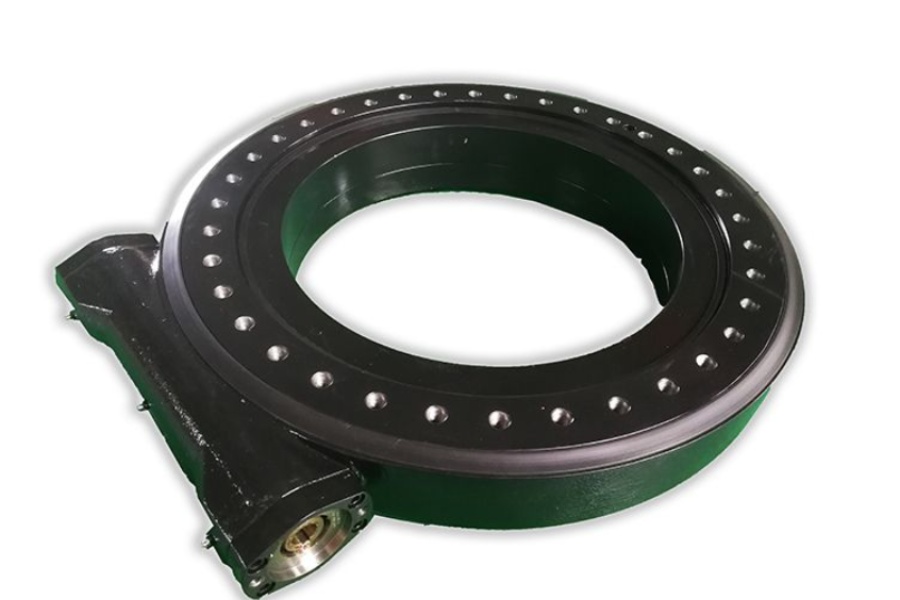
Maintenance inspections should focus on change over time. Look for recurring bolt movement, altered rotational feel, grease changes, local corrosion, damaged seals, and structural cracking around the bearing support. A single inspection can show condition; repeated inspections reveal a trend.
Luoyang Slewring Bearing Co., Ltd. offers standard product orders from one set and customized product orders from five sets, which can support replacement planning and equipment development projects. Technical proposals are available within 24 hours, while the company’s standard production cycle is listed as nine days; actual requirements should still be confirmed against the drawing, material choice, and project scope.
For cranes using a geared rotation assembly, inspect the related drive after the mounting joint is assessed. A Worm Gear Slew Drive may be part of the rotation system, but gear-drive condition and bearing support condition should be documented as separate findings.
When escalation is needed, provide clear information: crane model, bearing drawing or identification, photos of the mounting interface, bolt condition, grease observations, the angular position of the symptom, recent repair history, and loaded versus unloaded behavior. This evidence allows engineers to assess whether the likely problem is installation-related, structural, drive-related, or internal to the bearing.
Luoyang Slewring Bearing Co., Ltd. provides a two-year extended quality warranty, a 48-hour technical response commitment, and free replacement for confirmed manufacturing defects. Those terms apply after the evidence is reviewed; uneven wear should not be classified as a manufacturing defect before mounting condition, bolt preload, and chassis behavior have been assessed.
Request Your Custom Slew Drive or Bearing Spec
Tell us your load, speed, and environment — receive a tailored 100–5000 mm slewing drive or slewing bearing proposal with 3D drawings within 24 hours.
 WhatsApp

 +8613903880726