



What is a slew drive? A slew drive is a compact unit that combines a slewing bearing, a gear (usually a worm or spur set), a housing and a motor interface. It rotates a load around one axis and carries axial, radial and tilting forces at the same time. Backlash is the small angular gap between the meshing gear teeth that lets the output turn slightly without the input moving.
So how much is acceptable in a low backlash slew drive? There is no single number. The right limit comes from the position error your machine can tolerate at the point where the work happens, not from the drive datasheet. This article shows how to convert that tolerance into an angle, and how to avoid mixing backlash up with other accuracy terms.
Start with the Tolerance at the Load, Then Work Backward
Backlash is an angle. Your application tolerance is usually a distance. The link between them is the radius from the rotation axis to the point that matters, such as a boom tip, an antenna edge or a camera.
The formula is simple: arc error (mm) = angle (degrees) × 0.01745 × radius (mm). The table below uses a 1,000 mm radius as a math illustration, not as a product rating.
| Angular backlash | Arc error at 1,000 mm radius | Where it may matter |
|---|---|---|
| 0.50° | about 8.7 mm | Heavy lifting where the operator corrects by eye |
| 0.25° | about 4.4 mm | Platforms and turntables with visual positioning |
| 0.10° | about 1.7 mm | Automated indexing with sensor feedback |
| 0.05° | about 0.9 mm | Tracking and pointing with tight alignment needs |
Here is the practical procedure we suggest at the specification stage:
- Write down the position error your process can accept at the working point, in millimeters.
- Measure or estimate the radius from the rotation axis to that point.
- Divide the tolerance by the radius and convert to degrees. This is your upper limit for the total angular error budget.
- Subtract what the sensors, controls and structural flex already consume. Only the remainder is available for backlash.
Limit: this works only when the load changes direction. If the load always pushes one way, such as a steady gravity moment, backlash may never show up in the motion. It will show up the moment the load reverses, for example during wind gusts or braking.
Backlash, Repeatability, Stiffness and Positioning Accuracy Are Four Different Things
This is where many specifications go wrong. Buyers write "high precision" and expect all four properties to be covered. They are measured differently and fail differently.
| Parameter | What it measures | What it affects in practice | What it does not tell you |
|---|---|---|---|
| Angular backlash | Free rotation at the output when the input is held and the load direction reverses | Lost motion on reversal, hunting in closed-loop control, small oscillations under reversing loads | How the drive behaves once the teeth are loaded |
| Repeatability | How closely the drive returns to the same position from the same approach direction | Consistency in cyclic work such as indexing or pick-and-place | Whether that position is the correct one |
| Torsional stiffness | Elastic twist of the output under torque, after backlash is taken up | Deflection under load, resonance, settling time | Gap or free play at low torque |
| Positioning accuracy | Difference between commanded and actual position over the full range | Absolute pointing or placement quality | Anything about reversal, unless tested in both directions |
Interactions matter more than any single row. A drive with tiny backlash can still wobble if torsional stiffness is low, because the load twists elastically instead of slipping. A drive with high stiffness but loose backlash can be repeatable in one direction and still miss on reversal. And positioning accuracy usually includes backlash, stiffness, gear pitch error and encoder error in one combined figure.
A higher number is not automatically better. Tighter backlash raises friction and heat, and can reduce efficiency or increase wear if the mesh is overloaded. Trade it against your duty cycle, not against a catalog headline.
Request Your Custom Slew Drive or Bearing Spec
Tell us your load, speed, and environment — receive a tailored 100–5000 mm slewing drive or slewing bearing proposal with 3D drawings within 24 hours.
How Gear Type and Preload Shape the Backlash You Can Get
The gear arrangement sets the realistic range. Here is how the main options compare in general terms, without promising specific values.
- Single worm. A worm gear slew drive offers a high reduction ratio in a small package and is typically self-locking. This is useful when the load must hold position with power off. Backlash depends on tooth contact, center distance and assembly, and it can grow as the worm wheel wears.
- Double worm. A double worm slew drive uses two worms on one wheel. In general, this layout lets the two worms be set against each other to preload the mesh and take up play. It suits applications that need tighter lost-motion control, with the trade-off of a more complex unit and careful adjustment.
- Spur gear. A spur gear slew drive gives higher efficiency and faster rotation, but it is not self-locking. Backlash control depends on gear accuracy and mounting, and a brake may be needed.
The accuracy grade also counts. Our German-standard SE/WE series localization offers P0–P4 precision grades, so a design engineer can select a grade that fits the tolerance work done above. Confirm the actual backlash figure and test method for the exact model before you freeze the drawing.
The slewing bearing inside the drive plays a role too. Internal clearance and raceway preload change tilting play at the output, which can look like backlash at a distant load point. If you also need to size the bearing separately, review our slewing bearing range.
The Misunderstanding That Changes Your Specification: "Zero Backlash"
Search results are full of zero-backlash claims. In real mechanical drives, true zero is rarely practical. Gears need some clearance for lubrication, thermal growth and manufacturing tolerance. A drive can be preloaded so that backlash is effectively removed at no load, but the preload costs friction and life.
The better question is: backlash under what condition? A figure measured at the input shaft, at the output, at the first tooth contact or at rated torque will all differ. Do not compare values from two suppliers unless the test method matches.
Here is a short checklist to put in your RFQ:
- Where is backlash measured (output flange, motor shaft, or gear mesh)?
- At what test torque, and in what unit (arcminutes or degrees)?
- Is the value maximum, typical or as-new? What is the allowed growth after wear-in?
- Is it measured over one revolution or at several positions? Worm wheels often vary around the circumference.
- What inspection report is supplied with each unit?
On our side, every slewing bearing goes through CMM three-coordinate inspection and dynamic load testing, and we work under an ISO 9001:2015 quality system. You can read more on our slew drive quality control page. Ask for factory audit reports if your procurement process requires them.
Real Applications: What Tolerance Looks Like in the Field
Some of our customer projects show how this plays out. The stated precision values below come from those projects' own specifications. They are tracking or positioning targets, not backlash ratings, so compare them carefully.
- South Korean port equipment manufacturer. A 20-unit repeat order of WEA9-62-25HR single worm slew drives for port crane systems. The requirement was ≤0.15° tracking precision, IP65 sealing and self-locking. At a 1,000 mm radius, 0.15° is about 2.6 mm of arc, so the geometry of the crane decides whether that is tight or loose.
- British Columbia, Canada forestry equipment manufacturer. 30 units of WED14-86-25BHR.5 double worm slew drives for forestry grapple machines, with ≤0.13° precision. The double worm layout fits a machine that starts, stops and reverses under uneven loads. See our WED slew drive series.
- US renewable energy equipment manufacturer. 50 units of SP-I 0841 for utility-scale solar trackers with IP65 for desert sites. Trackers move slowly, so wind-driven reversal and stiffness often matter more than the lowest possible backlash. See the SP-I slew drive.
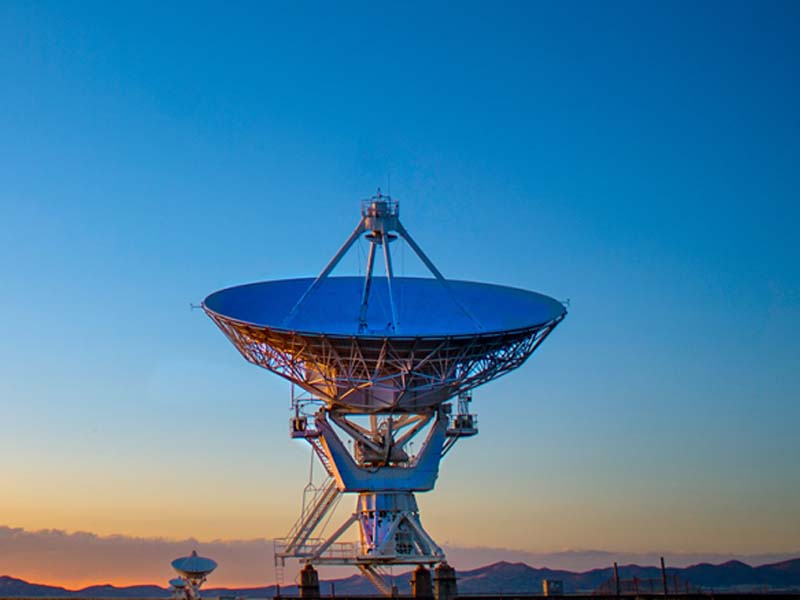
Notice the pattern. The same drive family can serve a crane, a grapple or a tracker, but the dominant error source changes. In my work on more than 200 heavy-equipment projects, the error budget was usually lost in the structure and controls before the gear mesh got blamed.
What to Send Us Before You Freeze the Specification
If you are at the early design stage, a short data package lets an engineer check your target against a real model. For standard products our MOQ is 1 set, and for customized work it is 5 sets. Sample orders are welcome for testing.
- Tolerance at the working point, radius and load direction (steady or reversing)
- Axial, radial and tilting moment loads, plus speed and duty cycle
- Environment: IP rating needed (our drives reach up to IP66) and corrosion class (up to C4H)
- Self-locking needed or not, and motor or brake type
- Any measurement method your quality team will use for acceptance
With that data, we usually send a technical proposal within 24 hours and answer technical questions within 48 hours. When no standard model fits, our customized slew drive service can adjust gear set, housing and interface. Standard units follow a 9-day production cycle, and we back every order with a 2-year extended warranty and free replacement for confirmed manufacturing defects.
The short answer to the title question: accept the backlash your error budget leaves after stiffness, controls and structure are counted. Then ask every supplier to prove it with the same test method. Luoyang Slewring Bearing Co., Ltd. can help you do that for a low backlash slew drive specification.
Request Your Custom Slew Drive or Bearing Spec
Tell us your load, speed, and environment — receive a tailored 100–5000 mm slewing drive or slewing bearing proposal with 3D drawings within 24 hours.
 WhatsApp

 +8613903880726