



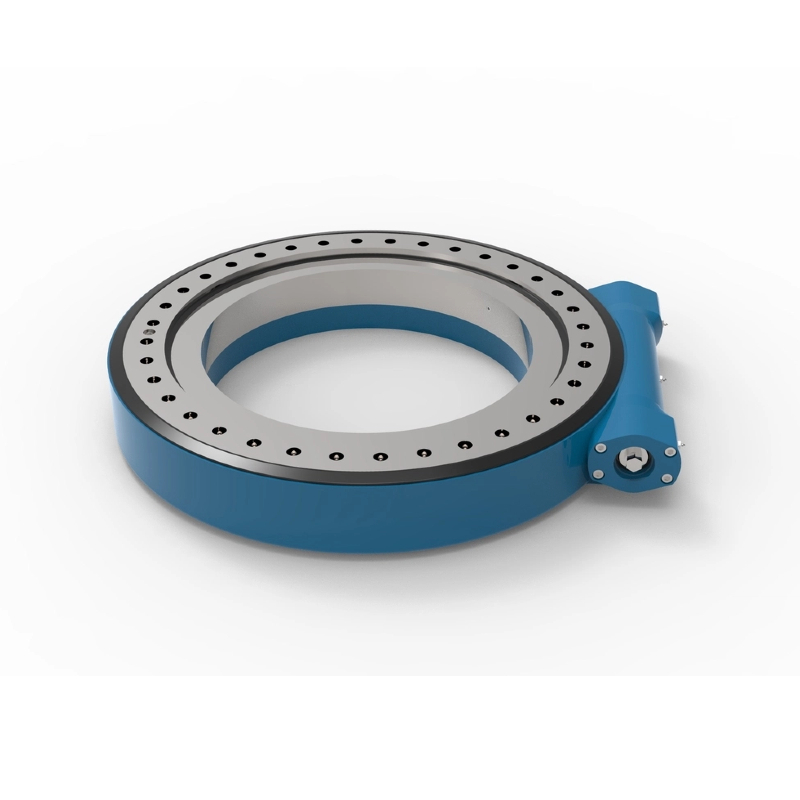
What is a slewing bearing? It is a large-diameter bearing that supports axial load, radial load, and overturning moment while allowing one structure to rotate relative to another. It is used in equipment such as cranes, excavators, turntables, solar trackers, forestry grapples, and industrial automation systems.
Before approving a sample or issuing a first production order, buyers should look beyond an ISO certificate. A certificate shows that a quality management system has been assessed. It does not, by itself, show whether a supplier can control the exact material batch, raceway condition, gear runout, or inspection results for the bearing in your order.
The real sourcing risk is repeatability. A slew bearing manufacturer may provide an ISO 9001:2015 certificate, but a technical buyer still needs proof that the factory can build the requested design consistently from one production batch to the next.
Start supplier verification with the bearing requirement, not the certificate
A certificate should be part of supplier qualification, not the full qualification process. Begin by defining the job the bearing must perform. This makes it easier to identify whether a supplier’s records actually match your equipment risk.
For example, a light-duty positioning table and a mining excavator may both use a slewing ring, but their verification needs are different. The first may focus on rotational smoothness and mounting accuracy. The second may require stronger evidence of load capability, material selection, raceway condition, and stability under repeated heavy-duty cycles.
| Buyer question | Evidence to request | Why it matters | When it may not be enough |
|---|---|---|---|
| Can the bearing support the application loads? | Technical proposal, design drawing, stated load assumptions, and dynamic load test evidence where applicable | It connects the proposed product to the actual load case. | It does not replace system-level checks of mounting structure, bolt selection, and operating duty cycle. |
| Is the specified material controlled? | Batch-level material traceability records tied to the supplied ring or component batch | It helps confirm that the material used can be identified after delivery. | Traceability alone does not prove correct machining, heat treatment, or assembly. |
| Is rotational accuracy verified? | Runout records and CMM inspection results tied to the part number or inspection lot | These records show whether dimensional control was checked rather than assumed. | Results must be reviewed against your drawing and acceptance criteria. |
| Can the supplier support the intended environment? | Sealing, corrosion protection, material, and coating details stated in the technical proposal | Harsh environments can shorten service life if protection choices are mismatched. | Application exposure still needs to be defined by the buyer, including moisture, dust, salt, and temperature conditions. |
The conclusion is simple: verify the records that relate to your failure risk. For a slow-moving indoor turntable, a basic dimensional report may be the main concern. For a crane, excavator, or marine structure, the supplier should be assessed against load direction, cyclic duty, mounting interface, corrosion exposure, and safety consequences.
Luoyang Slewring Bearing Co., Ltd. supplies Slewing Bearing, Slew Drive, and Customized Slew Drive products. Its stated manufacturing base includes six production lines, CNC machining centers, and CMM three-coordinate inspection equipment in an 8,000 m² facility. Those facts are useful starting points, but the buyer should still request documentation that is relevant to the exact bearing model and order scope.
Check whether the supplier can support your bearing type and application risk
Do not qualify a factory only by its product catalog. Ask which bearing structure is proposed and why it fits the load path. A supplier that can explain the fit between bearing type and operating condition is easier to evaluate than one that only provides a model number.
Single-row ball designs can suit many general rotation duties, while roller-based structures may be selected for higher loads or more demanding moment conditions. For a buyer comparing designs, the issue is not which type is universally better. The issue is whether the proposed arrangement matches the equipment’s actual axial load, radial load, overturning moment, speed, and duty cycle.
- Light-duty equipment: Ask about rotational smoothness, mounting dimensions, gear engagement, and runout. A Light Load Slewing Bearing may fit applications with lower structural demand, but it should not be substituted into heavy cyclic equipment without engineering review.
- Heavy equipment: Request the load basis, raceway arrangement, material proposal, and inspection evidence. A Heavy load slewing bearing is more suitable when the application has substantial moment loading, but mounting stiffness remains a system responsibility.
- Precision rotation equipment: Ask for runout requirements, gear accuracy requirements, and the measurement method. Tight rotational expectations should be agreed in writing before sampling.
- Corrosive or outdoor equipment: Define the operating environment before choosing sealing and corrosion protection. Luoyang Slewring Bearing Co., Ltd. states protection options up to IP66 for slew drives and anti-corrosion ratings up to C4H, but the required protection depends on the equipment environment.
Material selection should also be tied to service conditions. The company lists ductile cast iron, alloy steel, stainless steel, and forged alloy steel as available material options, selected according to load, speed, and environment. That is meaningful only when the proposal states which material is being used for your order and what application conditions informed the choice.
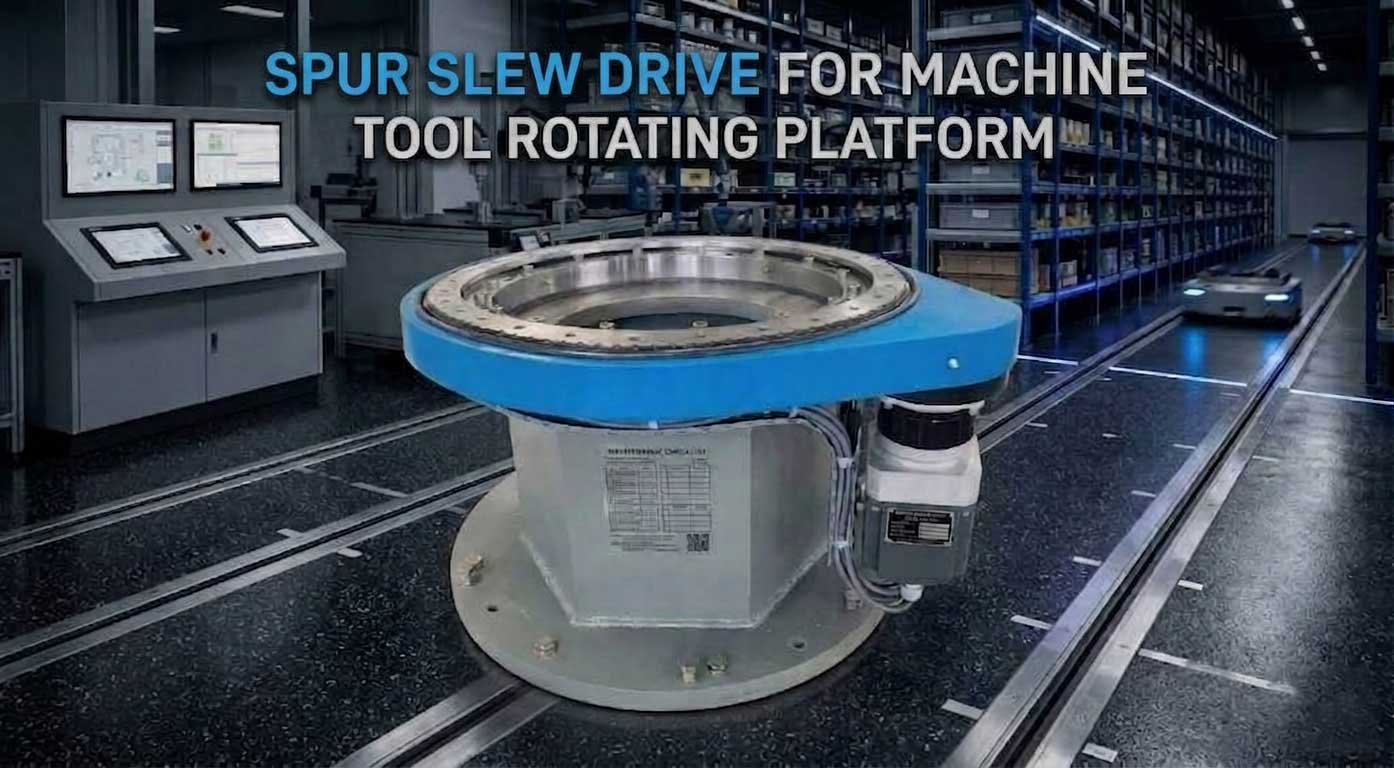
For integrated rotation and transmission requirements, a buyer may need a drive rather than a bearing alone. A Slew Drive combines the slewing support and drive arrangement, which can simplify equipment integration. It does not eliminate the need to verify mounting, motor selection, torque demand, and environmental protection.
How batch-level material traceability, raceway hardness maps, and runout records expose supplier capability beyond certificate claims
These three document types reveal different parts of manufacturing control. Together, they help a buyer distinguish between a supplier that has a general quality system and one that can show part-specific evidence. Request them before sample approval when bearing reliability affects equipment safety, downtime, warranty exposure, or field service cost.
| Record to request | What a buyer should check | What it can reveal | Limit of the record |
|---|---|---|---|
| Batch-level material traceability | Traceable heat, batch, or lot identification linked to the ring or key component used for the order | Whether the supplier can identify material origin and separate production lots | It does not independently verify correct heat treatment, machining, or final assembly. |
| Raceway hardness map | Measurement locations, hardness values, inspection date, part reference, and acceptance range agreed for the product | Whether hardness was checked across the raceway rather than treated as a generic material statement | A hardness map should be interpreted with the agreed design and process requirements; a number alone has limited meaning. |
| Runout record | Measured axial and radial runout, datum reference, test setup, instrument identification, and part or lot reference | Whether rotational geometry was measured and whether results can be reviewed against the drawing | Acceptable runout on an unloaded part does not prove performance after installation on a distorted mounting surface. |
Ask suppliers to connect each record to the delivered product. A report with no drawing revision, part number, serial number, batch reference, or inspection date has limited value during a warranty review. The best document package is one that lets your quality team trace a result back to the exact product configuration ordered.
Raceway hardness documentation deserves careful review for high-load applications. The useful question is not simply, “Do you heat treat raceways?” Ask where measurements were taken, how the locations are identified, and whether the reported results apply to the same bearing design and production lot. This is especially relevant when purchasing bearings for cranes, mining equipment, or other equipment exposed to repeated high loads.
Runout records matter when your equipment needs predictable rotation. Automated turntables, medical platforms, sensor systems, and precisely aligned assemblies can all be affected by mounting and rotational deviation. A record should define the measurement basis, because a reported value cannot be evaluated without knowing how it was measured.
Luoyang Slewring Bearing Co., Ltd. states that every slewing bearing passes CMM three-coordinate inspection and dynamic load testing. Its Slew Drive Quality Control information is relevant when buyers are reviewing inspection capability. However, buyers should confirm which report formats, batch references, and acceptance items can be supplied for the specific RFQ, because document scope should be agreed before ordering.
Request Your Custom Slew Drive or Bearing Spec
Tell us your load, speed, and environment — receive a tailored 100–5000 mm slewing drive or slewing bearing proposal with 3D drawings within 24 hours.
Use a document-based approval sequence before placing the first production order
A practical approval process reduces disagreement later. It also prevents the common mistake of approving a sample based only on appearance, basic dimensions, or a supplier’s general certificate package. The sequence below fits technical buyers evaluating a new source.
- Send the application definition. Provide load directions, operating speed, duty cycle, mounting envelope, gear requirements, environment, and target service expectations. If information is incomplete, state the known limits rather than leaving the supplier to assume them.
- Request a technical proposal. Review the proposed bearing type, material direction, interface dimensions, sealing approach, and any stated limitations. Luoyang Slewring Bearing Co., Ltd. offers a technical proposal within 24 hours, but final selection still depends on receiving sufficient application data.
- Freeze the drawing revision. Confirm drawing number, revision level, gear data where applicable, mounting hole pattern, and inspection requirements. This step is not optional for customized products.
- Agree on the inspection package. Identify which dimensional records, material traceability records, hardness information, runout records, and test evidence are required for approval. State whether reports are required for the first article, each lot, or only on request.
- Approve the sample against written criteria. Compare the sample and its documents to the approved drawing. Do not approve based on a catalog image or verbal confirmation.
- Define production acceptance. Confirm inspection sampling, packaging, labeling, document delivery, warranty handling, and how nonconforming products will be identified.
This sequence is most useful for a first order, a customized design, or an application with high replacement cost. It may be more than is needed for a low-risk replacement bearing with an established drawing and a proven supplier history. Even then, drawing revision control and basic traceability remain sensible safeguards.
Compare supplier claims against real production evidence and relevant cases
Production capacity and prior application experience can support a supplier assessment, but neither should replace document review. Look for evidence that is close to your operating conditions. A solar tracker case is useful for outdoor tracking duty, while a marine crane case is more relevant to lifting equipment exposed to weather and cyclic loading.
Luoyang Slewring Bearing Co., Ltd. reports an annual capacity of 100,000 sets and a standard production cycle of nine days. It also offers three-day rapid prototyping. These are planning indicators, not automatic delivery promises for every configuration, because customized design review, materials, inspections, and order quantity can change the schedule.
| Reported case | Product and application | What a buyer can reasonably learn | What still needs verification |
|---|---|---|---|
| South Korean port equipment manufacturer | 20-unit repeat order of WEA9-62-25HR single worm slew drives for port crane systems, with stated tracking precision of no more than 0.15°, IP65 sealing, and self-locking | The product has been used in a port crane context and was reordered. | Your load case, motor arrangement, mounting structure, and environmental exposure may differ. |
| British Columbia forestry equipment manufacturer | 30 units of WED14-86-25BHR.5 double worm slew drives for forestry grapple machines, with stated precision of no more than 0.13° | The company has a reported heavy-equipment application for a double worm drive. | Confirm torque, duty cycle, shock loading, and required protection for your machine. |
| US renewable energy equipment manufacturer | 50 units of SP-I 0841 for utility-scale solar tracker systems, with IP65 stated for desert sites | The product has a reported outdoor renewable-energy application. | Verify tracker geometry, wind load, actuator control, and site-specific corrosion conditions. |
The company also reports more than 2,000 heavy-equipment projects supported through its slew bearing and slew drive work. That experience can help when an application needs design discussion, but a buyer should still evaluate the documents for the current order. Past projects do not automatically make a new design suitable.
Set cooperation terms that protect the first order and future repeat orders
Commercial terms affect technical risk. If a supplier cannot define order quantity, lead-time basis, warranty scope, and response responsibility, document approval alone will not protect the project. Put those items into the RFQ or purchase order before release.
- Minimum order quantity: Luoyang Slewring Bearing Co., Ltd. lists a minimum order quantity of one set for standard products and five sets for customized products. This can suit prototype validation and small equipment programs, but customized tooling or special requirements may still need separate confirmation.
- Sample evaluation: Sample orders are welcome for testing and evaluation. Buyers should define the sample acceptance criteria before shipment, especially when runout, sealing, gear engagement, or special mounting requirements matter.
- Warranty: The company offers a two-year extended quality warranty and free replacement for confirmed manufacturing defects. Confirm how a defect is assessed, what evidence is required, and which costs are included or excluded in the agreed commercial terms.
- Technical response: A 48-hour technical response is stated. This supports communication during qualification, but it should not be treated as a guarantee that every engineering change can be completed within that period.
- Production schedule: The stated standard production cycle is nine days. Use it as an initial planning reference, then request confirmation for your drawing status, quantity, inspection package, and shipping destination.
A customized order needs extra care because design responsibility can become unclear. When sourcing a Customized Slew Drive or a nonstandard bearing, identify who approves the design inputs, who owns the final drawing revision, and which inspection points determine acceptance. Do not assume that a catalog model can be modified without changing load capability or lead time.
Use this buyer checklist before approving a new source
The best supplier choice is not always the one with the largest catalog or the lowest initial quote. It is the one that can provide evidence matching your application risk and can agree to clear acceptance conditions. Use this checklist during supplier comparison.
- Does the proposed design match the equipment’s axial load, radial load, overturning moment, speed, and duty cycle?
- Is the drawing revision identified and accepted by both parties?
- Can the supplier provide part-specific or batch-specific material traceability when your application requires it?
- Have raceway hardness maps been requested for applications where raceway condition affects reliability?
- Do runout records state the datum, measurement setup, results, and acceptance requirement?
- Are CMM inspection and dynamic load testing claims connected to the product category being quoted?
- Are sealing, corrosion protection, and material choices matched to the actual operating environment?
- Are sample approval criteria written before the sample is shipped?
- Do MOQ, production timing, warranty scope, and technical response expectations fit the project plan?
- Has the supplier identified limits or unresolved engineering questions instead of making unsupported claims?
For technical buyers, the strongest decision is based on records that can be checked, not certificates that can only be displayed. ISO 9001:2015 certification, CE marking for the European market, manufacturing capacity, and relevant application cases all add value. Yet the order-specific evidence remains the deciding factor when a bearing must perform reliably in the field.
Request Your Custom Slew Drive or Bearing Spec
Tell us your load, speed, and environment — receive a tailored 100–5000 mm slewing drive or slewing bearing proposal with 3D drawings within 24 hours.
 WhatsApp

 +8613903880726