



What is a slewing bearing? It is a large rotational bearing that supports axial, radial, and overturning loads while allowing equipment to rotate. It is used in cranes, excavators, industrial turntables, solar tracking systems, aerial platforms, and many other machines.
Before issuing an RFQ, OEM buyers should check more than catalog dimensions and quoted price. A wrong supplier choice can create drawing delays, mounting problems, inconsistent quality records, or costly field failures after equipment reaches the end user.
When evaluating a slew bearing manufacturer, purchasing and engineering teams should look for evidence of design support, production capability, inspection control, export readiness, and terms that fit the planned order volume. Luoyang Slewring Bearing Co., Ltd. supplies Slewing Bearing, Slew Drive, and Customized Slew Drive products for industrial OEM applications, with standard-product MOQ starting from one set and customized-product MOQ starting from five sets.
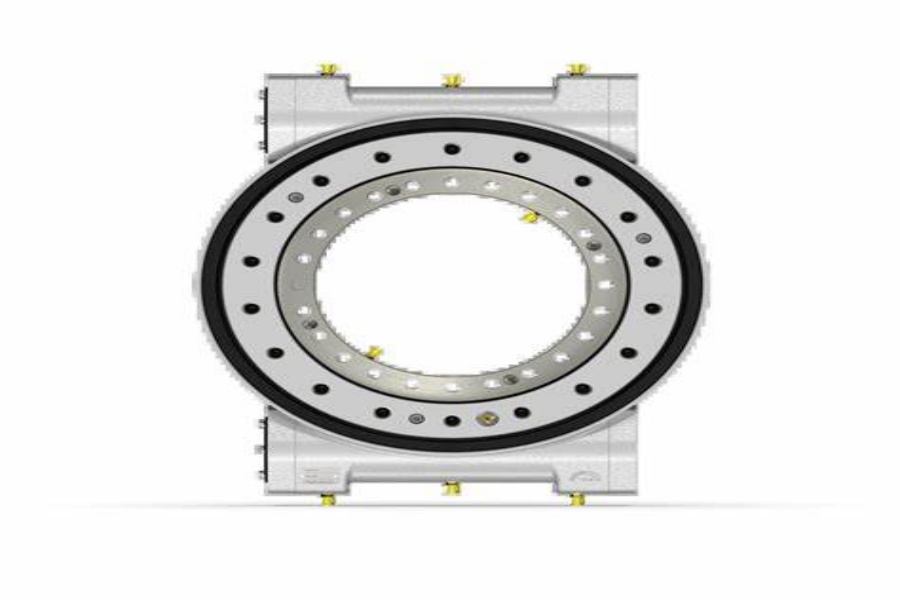
Start With the Equipment Duty and the Supplier Scope
The first decision is not which supplier has the lowest quote. It is whether the supplier understands the actual duty of your machine. A bearing selected for a light rotating platform should not be evaluated by the same criteria as one installed on a port crane, mining excavator, or truck-mounted crane.
Send a clear application summary before asking for a final model recommendation. This helps the supplier determine whether a standard bearing, a custom bearing, or a complete drive assembly is the better fit. Without this information, a quotation may be based only on envelope dimensions rather than real operating loads.
| Buyer Input | Why It Matters | Best-Fit Situation | Limit or Question to Resolve |
|---|---|---|---|
| Equipment type and function | Identifies whether the unit supports lifting, positioning, tracking, steering, or rotation. | Cranes, excavators, turntables, solar trackers, and automation equipment. | Do not assume two machines need the same bearing because their diameters look similar. |
| Axial, radial, and overturning loads | These loads determine bearing raceway and rolling-element requirements. | Heavy-duty cyclic loading and high-moment applications. | Static load alone does not describe the full duty cycle. |
| Rotation speed and duty cycle | Speed affects lubrication, heat generation, backlash expectations, and drive selection. | Continuous industrial automation or repeated crane movement. | A slow intermittent application may not need the same solution as frequent positioning. |
| Mounting dimensions and bolt layout | Confirms that the bearing can integrate with the structure and mating components. | Replacement parts and new OEM platform designs. | Final bolt grade, tightening method, and mounting-flatness requirements still need agreement. |
| Operating environment | Corrosion, dust, moisture, salt exposure, and temperature affect material and protection choices. | Marine, port, mining, desert, and outdoor equipment. | State the actual exposure instead of requesting “outdoor use” as a general condition. |
For a bearing-only requirement, review the available Slewing Bearing product scope and identify whether the machine needs a light-load, heavy-load, single-row, double-row, crossed-roller, or three-row design. For high-load applications with independent load paths, Three-row Roller Slewing Bearings may be worth reviewing, but they are not automatically the best choice for every rotating machine.
Choose a complete drive rather than a bearing alone when the OEM also needs controlled rotation through a geared housing. A Slew Drive can combine the bearing and transmission function in one assembly. This option fits applications such as solar trackers, aerial equipment, and rotating platforms, but it may not fit a design where the OEM already has a separate gearbox and drive train.
Check Evidence That Matches Your Application Risk
A supplier’s sales brochure should not be the main qualification document. Look for evidence that matches the risk in your application: inspection records for precision-sensitive equipment, sealing information for outdoor systems, and real application references for heavy-duty or cyclic service.
Luoyang Slewring Bearing Co., Ltd. operates an 8,000 m² manufacturing facility with six production lines, CNC machining centers, and CMM three-coordinate inspection. The company is certified to ISO 9001:2015 and provides CE marking for the European market. Factory audit reports are available on request, which gives procurement teams a document-based starting point for supplier assessment.
For quality verification, the company states that every slewing bearing passes CMM three-coordinate inspection and dynamic load testing. This is useful evidence for buyers who need measurable inspection control rather than a general quality statement. It does not remove the need to define the inspection items, acceptance criteria, and documentation required for your own program.
Material selection should follow the working condition, not a generic material preference. Available materials include ductile cast iron, alloy steel, stainless steel, and forged alloy steel. Stainless steel may suit a corrosion-sensitive application, while forged alloy steel may suit a demanding load case, but the final choice depends on load, speed, environment, and design requirements.
- For outdoor and corrosive service: ask for the proposed protection level and coating approach. Slew drives are available with protection up to IP66 and anti-corrosion performance up to C4H. These ratings are relevant only when they match the installed equipment environment.
- For tracking or positioning: request the expected precision range for the selected model and application. As a reference, a South Korean port equipment manufacturer reordered 20 WEA9-62-25HR single worm slew drives for port crane systems requiring tracking precision of no more than 0.15°.
- For heavy cyclic duty: request the load data, duty cycle, mounting arrangement, and dynamic-load evaluation basis. A heavy structure can still fail early if bolt preload or mounting stiffness is not addressed.
- For solar projects: confirm sealing and output requirements for the site. SP-I 0229 spur gear slew drives were supplied for single-axis solar projects in Brazil, Argentina, and Chile, where the reported energy-yield improvement was up to 40%.
Real references should support a focused question, not replace engineering review. For example, WED14-86-25BHR.5 double worm slew drives were supplied for forestry grapple machines in British Columbia with precision of no more than 0.13°. That case supports discussion of a comparable forestry or high-holding-torque application; it does not prove that the same model fits every grapple design.
Request Your Custom Slew Drive or Bearing Spec
Tell us your load, speed, and environment — receive a tailored 100–5000 mm slewing drive or slewing bearing proposal with 3D drawings within 24 hours.
Use This 10-Point OEM Supplier Qualification Checklist
Use the checklist below before shortlisting a supplier for prototype or production RFQs. It covers the documents and capabilities that can affect OEM lead time, quality control, import handling, and later field-service decisions.
| No. | Qualification Point | What to Request or Verify | Why It Affects the Buying Decision |
|---|---|---|---|
| 1 | Engineering review | Confirm whether the supplier can review application load, speed, environment, mounting interface, and requested design changes. Ask what input is needed for a technical proposal. | A technical proposal without real duty data may not support the final machine requirement. Luoyang Slewring Bearing Co., Ltd. offers a technical proposal within 24 hours when sufficient project information is provided. |
| 2 | Drawing and tolerance control | Request the current drawing revision, critical interfaces, gear details where applicable, and agreed inspection points. | It reduces the risk of buying a part that fits the nominal diameter but conflicts with bolt holes, structure, or mating gears. |
| 3 | Machining capacity | Check available machining equipment, production lines, facility scope, and whether the supplier can support your planned product type. | Luoyang Slewring Bearing Co., Ltd. has six production lines and CNC machining centers. Buyers should still verify that the proposed model and order schedule fit the required capacity. |
| 4 | Heat treatment records | Ask whether heat treatment applies to the proposed component and what records can be supplied for the agreed order. | Heat treatment can affect raceway and gear performance. Do not assume a process or record format if it has not been confirmed in writing. |
| 5 | Material traceability | Confirm the selected material and whether material records are required for your project. | Material should be selected for load, speed, and environment. A material name alone is not enough to confirm application fit. |
| 6 | Inspection records | Request CMM inspection evidence, dynamic load testing information, and the specific report format needed for your receiving process. | The supplier states that every slewing bearing receives CMM three-coordinate inspection and dynamic load testing. Your purchase order should define the records to be released. |
| 7 | Quality system and audit evidence | Review ISO 9001:2015 certification and request factory audit reports if required by your vendor-approval process. | These records help purchasing teams perform formal supplier onboarding. They do not replace product-specific qualification. |
| 8 | Prototype and production lead time | Separate prototype timing from standard production timing and confirm the schedule against drawing approval and material availability. | The company offers 3-day rapid prototyping and a 9-day standard production cycle. A custom order may need different timing, so confirm before committing project milestones. |
| 9 | Export documentation | Confirm commercial documents, packing details, country-specific requirements, and CE-marking needs for the European market. | Export documents vary by destination and contract terms. CE marking is relevant to the European market but does not automatically cover every machine-level obligation. |
| 10 | Warranty and technical response | Confirm defect definition, evidence requirements, remedy scope, and response contacts before placing the order. | The company provides a 2-year extended quality warranty, a 48-hour technical response, and free replacement for confirmed manufacturing defects. Installation errors and application changes should be addressed separately in the agreement. |
This checklist is especially useful when procurement is qualifying a new overseas source. It is less useful as a substitute for a machine-level design review. A supplier can pass documentation review and still need more application data before a bearing model is approved.

Compare Standard Products, Custom Designs, and Drive Assemblies
The best sourcing route depends on how mature your equipment design is. Standard products can reduce engineering time when the mounting interface and operating condition already match an available product. Custom work is more suitable when the OEM has unique dimensions, load requirements, gear parameters, or environmental conditions.
| Supply Route | When It Fits | Buyer Advantages | Limits to Check Before RFQ |
|---|---|---|---|
| Standard Slewing Bearing | The design can use an established size and bearing configuration. | Standard-product MOQ is one set, which supports evaluation and replacement requirements. | Confirm mounting dimensions, load condition, lubrication needs, and availability for the required schedule. |
| Customized Slew Drive | The equipment needs an integrated rotational drive with modified interfaces or performance requirements. | Customized-product MOQ starts at five sets, which can suit OEM pilot builds and controlled production programs. | Confirm design responsibility, target duty, output requirements, protection needs, and acceptance criteria. |
| Single Worm Slew Drive | The application needs compact rotational movement and self-locking behavior where the selected design supports it. | Relevant to truck cranes, marine cranes, and positioning systems. | Check torque requirement, holding condition, backlash expectation, and motor interface. |
| Double Worm Slew Drive | The application needs higher stability or more balanced drive input. | Can fit demanding equipment such as mining excavators and forestry grapple machines. | Do not select it only because it has two worms; verify the full load case and machine structure. |
| Spur Gear Slew Drive | The project needs rotational movement for systems such as solar tracking or automated turntables. | SP-I models have been supplied for solar and automation applications. | Confirm environmental sealing, speed, drive controls, and interface dimensions. |
For example, an OEM developing a truck-mounted crane may first compare a bearing-only solution with a worm-drive assembly. If the machine already uses a separate hydraulic or electric rotation system, a bearing may be the logical scope. If the design needs a packaged rotation unit, review a Worm Gear Slew Drive and provide the required motor, load, and mounting information.
Luoyang Slewring Bearing Co., Ltd. has supplied WEA9-62-25HR units to a Netherlands material-handling equipment manufacturer for truck-mounted loader cranes. It also supplied WEA17-104-25H-R-REV.D units to UK Ocean Marine Systems for shipboard crane systems. These cases show relevant application exposure, but the correct selection still depends on the buyer’s own duty cycle and design data.
Avoid RFQ Errors That Create Delays or Misquotes
Many OEM RFQs fail because they ask for a price before defining what is being purchased. A bearing assembly, a drive assembly, and a customized interface may look similar on a parts list, but they require different technical inputs and acceptance methods.
- Mistake: sending only an outside diameter. This does not define load, gear arrangement, bolt pattern, mounting condition, or service environment. Send the drawing, equipment function, and available load data instead.
- Mistake: treating a reference model as a final selection. A model used in a marine crane or solar tracker may provide a starting point, but it should not become the final order number without review.
- Mistake: leaving inspection records off the purchase order. If CMM reports, dynamic-load records, or dimensional reports are needed, list them in the RFQ or quality agreement.
- Mistake: assuming protection ratings cover the whole machine. An IP65 or IP66 drive rating applies to the specified drive configuration, not automatically to motors, wiring, connectors, or the surrounding equipment.
- Mistake: combining prototype and series requirements. Separate prototype quantity, target delivery, drawing status, test expectations, and later annual demand in the inquiry.
- Mistake: treating warranty as an application guarantee. The 2-year extended quality warranty applies to confirmed manufacturing defects. Define installation, maintenance, and operating responsibilities for the finished machine.
A practical RFQ package should include a part drawing or interface drawing, annual quantity estimate, target prototype quantity, equipment description, load and speed information, operating environment, required documentation, destination country, and requested delivery date. If some data is not available, identify it as pending rather than allowing assumptions to become part of the quotation.
Set a Supplier Review Sequence Before the Production Decision
A staged review gives both purchasing and engineering teams a clearer decision path. It also prevents a production quote from being treated as a fully approved engineering selection.
- Define the application: document the equipment, required rotational function, load conditions, speed, environment, and mounting space.
- Choose the product scope: determine whether the requirement is a bearing, a standard drive, or a customized assembly.
- Send technical inputs: provide drawings, expected quantity, required documents, destination, and timing targets.
- Review the proposal: compare the proposed model, material direction, protection needs, and stated production basis against your application.
- Confirm qualification evidence: review ISO 9001:2015 certification, factory audit material if needed, inspection records, and export-document needs.
- Agree order boundaries: confirm MOQ, drawing revision, acceptance records, warranty conditions, packing, and responsibility for any pending design data.
- Approve the production release: place the order only after the commercial and technical scope match the approved requirement.
This sequence fits OEM teams that need a disciplined early supplier review. It does not replace the buyer’s own machine validation, structural analysis, installation instructions, or maintenance plan.
Luoyang Slewring Bearing Co., Ltd. can be a practical fit for buyers seeking a supplier with an ISO 9001:2015-certified facility, standard MOQ from one set, customized MOQ from five sets, technical proposals within 24 hours, and documented inspection capability. The remaining questions should be resolved through the RFQ: exact design inputs, required reports, delivery destination, acceptance terms, and whether the chosen product is a standard item or a customized solution.
Request Your Custom Slew Drive or Bearing Spec
Tell us your load, speed, and environment — receive a tailored 100–5000 mm slewing drive or slewing bearing proposal with 3D drawings within 24 hours.
 WhatsApp

 +8613903880726