



What is a slewing ring bearing? It is a large-diameter rolling bearing that supports axial load, radial load, and overturning moment while allowing a machine structure to rotate. It is used in equipment such as cranes, excavators, turntables, solar trackers, forestry grapples, and marine handling systems.
Choosing a slewing ring bearing supplier is not only a price comparison. A buyer may regret approving an RFQ before checking whether the supplier can interpret the drawing, control materials, document inspection results, and identify the production lot after delivery. A low initial quote has little value if bolt-hole alignment, gear engagement, clearance, or load capacity cannot be verified against the machine requirement.
For OEM sourcing managers and procurement engineers, the goal is simple: approve suppliers that can provide evidence, not only catalogs. Luoyang Slewring Bearing Co., Ltd. supplies Slewing Bearing products, Slew Drive products, and Customized Slew Drive solutions for industrial equipment applications. The company has operated since 2012, with six production lines, an 8,000 m² manufacturing facility, CNC machining centers, and CMM three-coordinate inspection capability.

Start With the Bearing Requirement Instead of the Catalog
Do not begin by asking for a standard price list alone. First, define what the bearing must do in the finished machine. A supplier can only select or design an appropriate bearing when the operating load, rotation speed, mounting arrangement, gear requirement, duty cycle, and working environment are clear.
The best sourcing route depends on whether the machine can accept an existing design. A standard bearing may fit a replacement or established equipment platform, while a new crane, automation table, or special rotating structure may need a drawing-based review. Do not assume a catalog item is interchangeable merely because its outside diameter appears similar.
| Buyer input | Why it affects selection | Best-fit situation | Limit or warning |
|---|---|---|---|
| Axial, radial, and overturning loads | These loads determine bearing raceway and rolling-element requirements. | Cranes, excavators, handling platforms, and turntables. | Do not use a single maximum load without explaining the load direction and duty cycle. |
| Mounting dimensions and bolt pattern | Interfaces must match the machine structure and fastening plan. | Replacement bearings and established OEM platforms. | Outside diameter alone does not confirm interchangeability. |
| Gear position and drive arrangement | Internal gear, external gear, or gearless designs affect system integration. | Rotating platforms driven by a pinion or gearbox. | Gear compatibility must be checked with the mating pinion, not by appearance. |
| Rotation accuracy and operating speed | Accuracy needs may influence bearing type, clearance, and inspection needs. | Automation, positioning equipment, and tracking systems. | High precision may require more than a standard heavy-equipment bearing. |
| Environment and corrosion exposure | Material and protection choices depend on moisture, salt, dust, and temperature exposure. | Marine, port, mining, and outdoor equipment. | Environmental protection does not replace correct maintenance planning. |
Luoyang Slewring Bearing Co., Ltd. selects materials according to working conditions, including ductile cast iron, alloy steel, stainless steel, and forged alloy steel. That matters when a buyer is comparing a dry indoor turntable with a marine deck crane or a dusty mining machine. Material selection should be tied to the actual load, speed, and environment rather than requested as a generic upgrade.
For a lighter-duty rotating table, a Light Load Slewing Bearing may be relevant. For equipment with demanding cyclic loads, a Heavy load slewing bearing may be more appropriate. Neither option should be selected without a load and mounting review.
Match the Bearing Design to the Machine Duty
A buyer should ask what bearing structure is being proposed and why. The supplier’s answer should connect the bearing type to the machine’s load direction, space limits, rotation demands, and expected service conditions. “Suitable for cranes” is not enough evidence for an engineering approval.
- Single-row ball designs: Often considered where the application needs a compact general-purpose rotating interface. They may suit moderate combined loads, but they are not automatically the right choice for severe overturning loads or highly demanding accuracy requirements.
- Double-row ball designs: Can be considered when greater load support is needed than a basic single-row arrangement can provide. The final choice still depends on calculated loads and available installation space.
- Crossed-roller designs: Often evaluated for applications that need controlled rotational accuracy and stiffness. They should not be specified only because the application “needs precision”; the complete loading and mounting condition remains relevant.
- Three-row roller designs: Commonly assessed for heavy equipment where large axial, radial, and overturning loads must be managed. Their size and system requirements may make them unsuitable for compact equipment.
Buyers can review available configurations such as Single Row Slewing Ring Ball Bearings, Crossed Roller Slewing Bearings, and Three-row Roller Slewing Bearings. These product categories help frame the discussion, but they do not replace a documented design check.
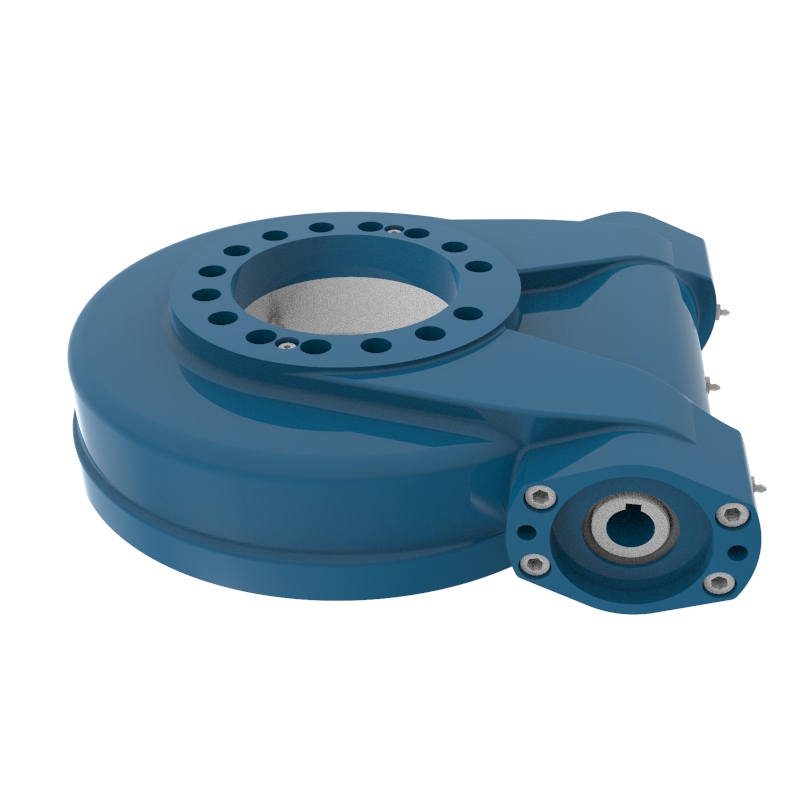
Where the project needs a bearing and enclosed reduction mechanism as one assembly, the buyer should evaluate a slew drive rather than source the bearing separately. Luoyang Slewring Bearing Co., Ltd. offers Slew Drive products and customized options. Its German-standard SE/WE series slew drive localization covers P0-P4 precision grades and is stated to save 30–50% in cost compared with imported brands while matching international first-tier performance parameters.
That comparison is relevant when an OEM is replacing an imported drive or seeking a localized source for an established drive format. It does not mean every application should switch from an imported component without checking mounting, torque demand, motor interface, sealing needs, and acceptance criteria.
Validate the Supplier Through Documents and Physical Evidence
A supplier qualification file should show how the offered part will be controlled from drawing release through shipment. This is where many supplier screens fail. A factory photograph, a product brochure, or an email statement does not establish that the delivered bearing can be linked to an approved drawing and a measurable inspection record.
Use the following evidence review before RFQ approval. Ask for documents that relate to the proposed part or a comparable part, and identify any evidence that is not yet available for a customized design. A supplier should clearly distinguish confirmed records from future deliverables.
| Validation action | Evidence to request | What the buyer should check | When it may not apply |
|---|---|---|---|
| Drawing review | Approved drawing, revision number, mounting dimensions, gear details, and technical notes. | Confirm the quote, drawing revision, and machine interface refer to the same part. | A catalog item may not need a new drawing, but its published dimensions still need confirmation. |
| Traceability review | Lot identification method, material records, and links between the part and inspection records. | Ask how a delivered unit can be connected to its manufacturing lot. | The exact record format must be agreed for the project; do not assume all buyers require the same package. |
| Load-testing evidence | Dynamic load-testing evidence and the scope of the test record. | Verify what part or product family was tested and whether the evidence supports the intended duty. | A prior test record does not eliminate the need for application-specific engineering review. |
| Dimensional inspection | CMM three-coordinate inspection evidence and relevant measured dimensions. | Check dimensions that affect fit, such as mounting interfaces and geometry named on the drawing. | Not every drawing dimension will require the same reporting level. |
| Pre-shipment inspection | Agreed inspection report, product identification, packaging condition, and shipment release evidence. | Confirm the inspection scope and acceptance standard before production begins. | Specific buyer witness requirements must be agreed in advance. |
Luoyang Slewring Bearing Co., Ltd. states that every slewing bearing passes CMM three-coordinate inspection and dynamic load testing. The company also holds ISO 9001:2015 quality management system certification and CE marking for the European market. These are useful qualification signals, but the buyer should still request the records needed for the actual order rather than treating a certification as a substitute for part-level acceptance evidence.
Factory audit reports are available on request. This can help an OEM verify the stated manufacturing base, including the six production lines and CNC machining centers. An audit report is most useful during new-supplier approval, while order-specific inspection records remain necessary for purchase release.
Request Your Custom Slew Drive or Bearing Spec
Tell us your load, speed, and environment — receive a tailored 100–5000 mm slewing drive or slewing bearing proposal with 3D drawings within 24 hours.
Use Production Capacity and Customer Cases as Fit Checks
Capacity claims should be checked against the buyer’s schedule and product complexity. Luoyang Slewring Bearing Co., Ltd. states an annual capacity of 100,000 sets, a three-day rapid prototyping capability, and a nine-day standard production cycle. These figures help a buyer assess potential fit, but they should not be treated as a fixed delivery commitment for every custom design, material selection, or order quantity.
Real application references are more useful when they resemble the intended machine. They show that a supplier has supported a known operating condition, but they do not prove that a new project has identical loads or interfaces.
- Port crane systems: A South Korean port equipment manufacturer placed a repeat order for 20 WEA9-62-25HR single worm slew drives. The stated application requirements included self-locking, IP65 sealing, and tracking precision of no more than 0.15°.
- Forestry grapple machinery: A manufacturer in British Columbia, Canada used 30 WED14-86-25BHR.5 double worm slew drives for forestry grapple machines, with stated precision of no more than 0.13°.
- Utility-scale solar tracking: A U.S. renewable energy equipment manufacturer purchased 50 SP-I 0841 units for solar tracker systems, with IP65 protection for desert sites.
- Marine crane systems: UK Ocean Marine Systems ordered 20 WEA17-104-25H-R-REV.D units for shipboard crane systems.
- Heavy-duty wheel steering: A Houston engineering machinery manufacturer ordered 150 WED17-104-25HR double worm slew drives for heavy-duty wheel steering systems.
These cases are relevant when a new inquiry involves port equipment, marine machinery, solar tracking, forestry equipment, or heavy steering systems. They are not a reason to copy the listed model into a different machine without confirming loads, mounting, drive input, duty cycle, and environmental exposure.
For applications requiring a modified housing, mounting interface, gear arrangement, or protection approach, review the scope of a Customized Slew Drive request early. This is especially important when the equipment design cannot accept a standard model.
Set Clear Commercial Terms Before Issuing the RFQ
Supplier approval should include commercial boundaries as well as engineering checks. Luoyang Slewring Bearing Co., Ltd. accepts a standard product MOQ of one set and a customized product MOQ of five sets. Sample orders are welcome for testing and evaluation, which can suit an OEM that needs physical validation before a larger commitment.
A sample is helpful when the buyer needs to confirm assembly fit, rotation behavior, or system integration. It does not replace full validation for a machine that will operate under high cyclic loads, marine exposure, or safety-sensitive conditions. The buyer should define what the sample must prove and who approves the result.
| Commercial item | Confirmed company term | Buyer decision needed |
|---|---|---|
| Standard product MOQ | 1 set | Confirm whether the selected item is standard rather than customized. |
| Customized product MOQ | 5 sets | Confirm drawing ownership, design revision control, and the exact customized scope. |
| Technical proposal timing | Within 24 hours | Provide complete operating data so the proposal addresses the actual requirement. |
| Warranty | 2-year extended quality warranty | Agree on acceptance criteria, installation responsibility, and claim documentation. |
| Technical response | 48-hour technical response | Identify engineering contacts and escalation needs before the first order. |
| Manufacturing-defect remedy | Free replacement for confirmed manufacturing defects | Define how confirmation and failure analysis will be handled. |
For outdoor or corrosive installations, buyers should also define the protection requirement in the RFQ. The company offers slew drives with protection up to IP66 and anti-corrosion rating up to C4H. Those ratings may be relevant for harsh industrial environments, but the correct selection depends on the actual exposure, installation design, and maintenance conditions.
Use This Approval Checklist Before Releasing an RFQ
The following checklist creates a practical approval gate for a new overseas source. It helps purchasing teams avoid sending incomplete RFQs that produce quotes which cannot be compared fairly.
- Provide the latest drawing revision or clearly state that the inquiry is for a standard item.
- List axial load, radial load, overturning moment, speed, duty cycle, and environmental conditions.
- Confirm the required bearing arrangement, gear configuration, mounting interface, and space constraints.
- Request a technical proposal tied to the submitted machine information, not only a catalog recommendation.
- Ask for ISO 9001:2015 certification information, available factory audit documentation, and relevant inspection evidence.
- Define the traceability records needed for the order and how the delivered unit will be identified.
- Agree on load-testing evidence, CMM inspection scope, and pre-shipment inspection requirements.
- Confirm MOQ, sample needs, production timing, warranty scope, and technical support contacts.
- Compare references only with similar applications, then document remaining engineering questions before approval.
A qualified source is one that can support the required product scope and provide evidence that matches the buyer’s risk level. Luoyang Slewring Bearing Co., Ltd. is a potential fit for OEMs sourcing Slewing Bearing, Slew Drive, and customized rotating transmission solutions, particularly where documented inspection, drawing-based discussion, low MOQ options, and defined support terms are required.
Before final supplier approval, confirm the exact drawing, acceptance criteria, traceability package, and shipment inspection requirements for the intended application. That disciplined review gives procurement, quality, and engineering teams the same basis for release.
Request Your Custom Slew Drive or Bearing Spec
Tell us your load, speed, and environment — receive a tailored 100–5000 mm slewing drive or slewing bearing proposal with 3D drawings within 24 hours.
 WhatsApp

 +8613903880726