



What is a slew bearing manufacturer? It is a supplier that designs and produces rotary bearing products used to carry axial load, radial load, and overturning moment in equipment such as cranes, excavators, turntables, solar trackers, and industrial automation systems.
Before placing an order, procurement teams often compare unit prices from several technically approved suppliers. That comparison can fail when it stops at the quoted price. A lower-priced slew bearing manufacturer may create higher costs through delayed production, rejected lots, replacement handling, qualification work, or weak warranty support.
For sourcing leaders, the better question is not “Which quote is lowest?” It is “Which supplier creates the lowest controlled cost over the working life of this purchase program?” That requires looking at the quoted part, the evidence behind it, and the commercial terms that apply if something goes wrong.
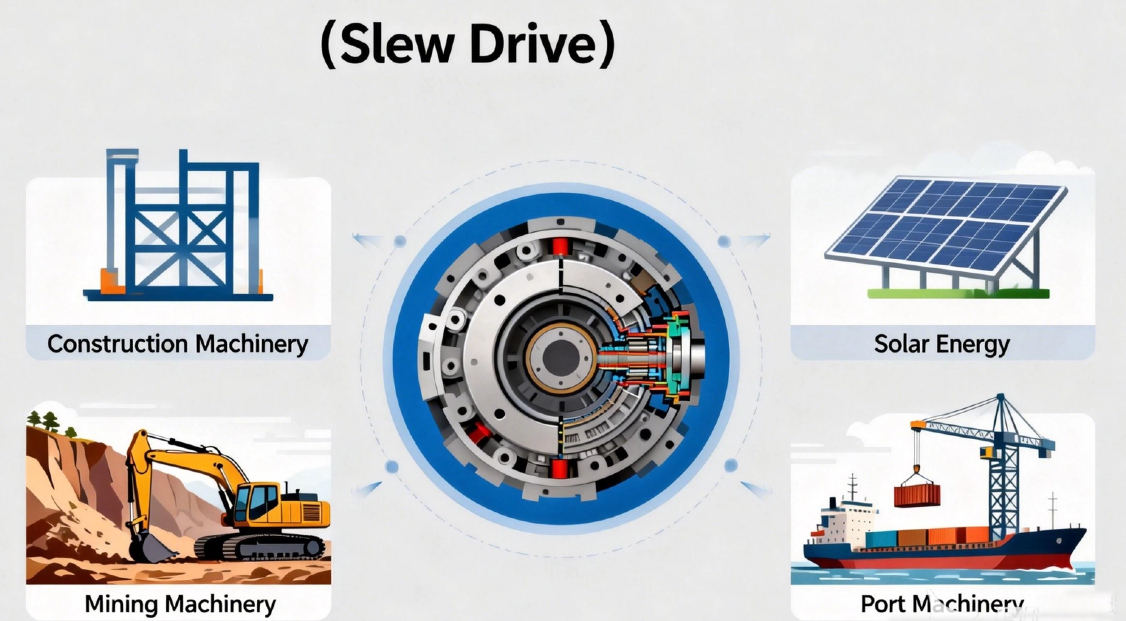
Compare quotations by the application risk, not by unit price alone
Conclusion: Rank supplier quotations against the operating risk of the equipment first, then compare price among suppliers that meet the same risk level. This approach fits buyers sourcing components for revenue-producing machinery, where downtime, field replacement, or missed delivery dates can cost more than a small unit-price difference.
The reason is simple. A bearing for an automated turntable, marine crane, mining excavator, or solar tracker is not a commodity purchase if its failure stops the machine. The buyer needs to verify that each quote covers the same product scope, inspection level, materials, sealing requirement, gear form, warranty responsibility, and delivery commitment.
This method does not mean the highest-priced quotation is automatically the right choice. It does not apply in the same way to a low-consequence prototype, a non-powered fixture, or a replacement part with readily available local stock. In those cases, unit price can carry more weight, provided the drawing and acceptance conditions are still matched.
Start with a like-for-like quotation sheet
Build one comparison sheet and require every supplier to respond to the same technical and commercial questions. If one supplier quotes a complete slewing bearing and another quotes only the bearing ring, the price comparison is invalid before negotiations even begin.
| Quote item to compare | What the buyer should confirm | Why it affects supply risk |
|---|---|---|
| Product configuration | Bearing type, gear arrangement, mounting interface, sealing, and required rotation function | Different configurations may look similar but have different load capacity, installation needs, and replacement compatibility. |
| Material selection | Whether ductile cast iron, alloy steel, stainless steel, or forged alloy steel is proposed for the working condition | Material should match load, speed, and environment rather than be chosen only for lowest cost. |
| Inspection evidence | Dimensional inspection records, load-related testing scope, and acceptance documentation | Evidence reduces the risk of receiving parts that cannot be assembled or perform as expected. |
| Production timing | Quoted production cycle, prototype availability, and response time for technical questions | A late part can delay a machine build, customer shipment, or commissioning window. |
| Warranty terms | Warranty duration, defect definition, replacement responsibility, and response process | A warranty has value only when responsibility and communication are clear. |
| Order quantity | MOQ for standard and customized products, plus sample-order availability | MOQ can affect qualification cost, inventory exposure, and the ability to test a new source. |
Luoyang Slewring Bearing Co., Ltd. can support buyers evaluating Slewing Bearing, Slew Drive, and Customized Slew Drive requirements. Standard products have an MOQ of one set, while customized products have an MOQ of five sets. Sample orders are available for testing and evaluation, which can help when a buyer needs physical qualification before releasing a larger order.
Use technical evidence to separate an acceptable quote from a risky quote
Conclusion: Give priority to suppliers that can connect their manufacturing controls to your acceptance risk. This is especially suitable for OEMs, equipment builders, and distributors that must stand behind installed components after delivery.
For a bearing or drive that supports motion, a basic catalog match is not enough. The buyer should request the drawing revision, mounting requirements, gear details where applicable, inspection scope, and the warranty boundary. If the supplier cannot clearly confirm these items, the quotation remains a price indication rather than a controlled supply offer.
Luoyang Slewring Bearing Co., Ltd. operates from an 8,000 m² manufacturing facility with six production lines and CNC machining centers. Its ISO 9001:2015 quality management system certification and CE marking for the European market provide documented reference points for buyers that need supplier-quality evidence. Factory audit reports are also available on request.
For quality verification, every slewing bearing is stated to pass CMM three-coordinate inspection and dynamic load testing. This matters when mounting-hole position, ring geometry, and load behavior affect assembly or service life. It does not remove the buyer’s responsibility to define acceptance criteria for the specific application, especially when the equipment has unusual duty cycles or environmental exposure.
- For heavy cyclic loads: confirm the required bearing structure and load case. A Heavy load slewing bearing may be appropriate where higher load demand and repeated motion justify a more application-specific evaluation. It is not automatically needed for light-duty indexing equipment.
- For compact equipment: confirm installation space and mounting arrangement before selecting ring geometry. A low-profile product can reduce packaging constraints, but only if stiffness and load requirements remain satisfied.
- For outdoor or corrosive sites: define required sealing and corrosion protection in the RFQ. Slew drives are available with protection up to IP66 and anti-corrosion rating up to C4H, but the final requirement should be tied to the actual environment.
- For controlled positioning: specify backlash, tracking expectation, drive type, and duty cycle. Do not assume a bearing-only quotation includes the same positioning behavior as a complete drive system.
The company’s project references provide useful fit indicators, not universal performance promises. For example, a South Korean port equipment manufacturer placed a repeat order for 20 WEA9-62-25HR single worm slew drives for port crane systems, specified with up to 0.15° tracking precision, IP65 sealing, and self-locking. That is relevant evidence for a buyer with a similar crane motion requirement, but it should not be transferred without checking the new application’s loads, installation, motor selection, and environment.
For solar applications, South American projects in Brazil, Argentina, and Chile used SP-I 0229 spur gear slew drives for single-axis trackers and reported energy-yield improvement up to 40%. A U.S. renewable energy equipment manufacturer also ordered 50 SP-I 0841 units for utility-scale solar tracker systems with IP65 for desert sites. Buyers evaluating this route can review the available Spur Gear Slew Drive options, while recognizing that tracker geometry, controls, weather, and site layout affect project outcomes.
Request Your Custom Slew Drive or Bearing Spec
Tell us your load, speed, and environment — receive a tailored 100–5000 mm slewing drive or slewing bearing proposal with 3D drawings within 24 hours.
A five-year cost model that weighs unit price against tooling, qualification samples, rejected lots, lead-time disruption, and warranty exposure
Conclusion: Use a five-year cost model before awarding a recurring program or a machine-critical order. It fits suppliers whose quotations appear close on unit price but differ in minimum order quantity, inspection evidence, delivery reliability, and warranty terms.
The model should use your own internal cost figures. Do not insert assumed market prices, because the value of a delayed machine shipment or a field service visit differs widely by industry. Instead, calculate every supplier’s expected five-year sourcing cost using the same demand forecast and the same risk assumptions.
| Cost element | How to calculate it | What to request from the supplier | When it matters most |
|---|---|---|---|
| Unit purchase price | Quoted unit price × forecast quantity | Price by quantity break, currency, shipping basis, and quote validity | All purchases, especially stable high-volume programs |
| Tooling cost | One-time tooling charge + tooling maintenance or revision cost if applicable | Tooling ownership, revision responsibility, and whether it is included | Customized rings, drives, or unique mounting interfaces |
| Qualification samples | Sample price + shipping + incoming inspection + test labor + engineering review | Sample availability, sample lead time, and applicable MOQ | New suppliers and design changes |
| Rejected lots | Probability of lot rejection × cost of sorting, rework, replacement, and production delay | Inspection process, defect response, and replacement terms | High-volume assembly lines or tight-tolerance installations |
| Lead-time disruption | Expected delayed days × internal cost per delayed day | Production cycle, capacity evidence, and communication path for schedule changes | Build-to-order machinery and fixed customer delivery dates |
| Warranty exposure | Expected field incidents × cost per incident after supplier recovery | Warranty duration, defect coverage, technical response, and replacement procedure | Remote equipment, marine systems, and difficult-access installations |
A practical formula is: Five-year supplier cost = purchase cost + tooling + qualification + expected rejection cost + expected disruption cost + expected warranty exposure. Use the same forecast quantity and service assumptions for every quotation. Then compare the final number with the technical risk rating.
Consider a buyer selecting between two technically feasible suppliers for a crane turntable program. Supplier A offers the lower unit price but requires a larger custom MOQ, provides limited qualification detail, and has no defined response commitment. Supplier B costs more per unit but allows a smaller starting quantity, supplies inspection evidence, and provides a two-year extended quality warranty with a 48-hour technical response.
Supplier A may remain the better choice if the buyer has ample schedule margin, can inspect parts internally, and has a low-cost replacement path. Supplier B may be the better value when a rejected lot would stop assembly or when field replacement requires crane access, travel, and customer coordination. The model makes that tradeoff visible instead of leaving it to a price-only decision.
Luoyang Slewring Bearing Co., Ltd. offers a three-day rapid prototyping capability and a nine-day standard production cycle. These figures are useful planning inputs, but they should not replace a written confirmation for the specific drawing, quantity, material, and production schedule. Customized work can require added technical review and should be evaluated accordingly.
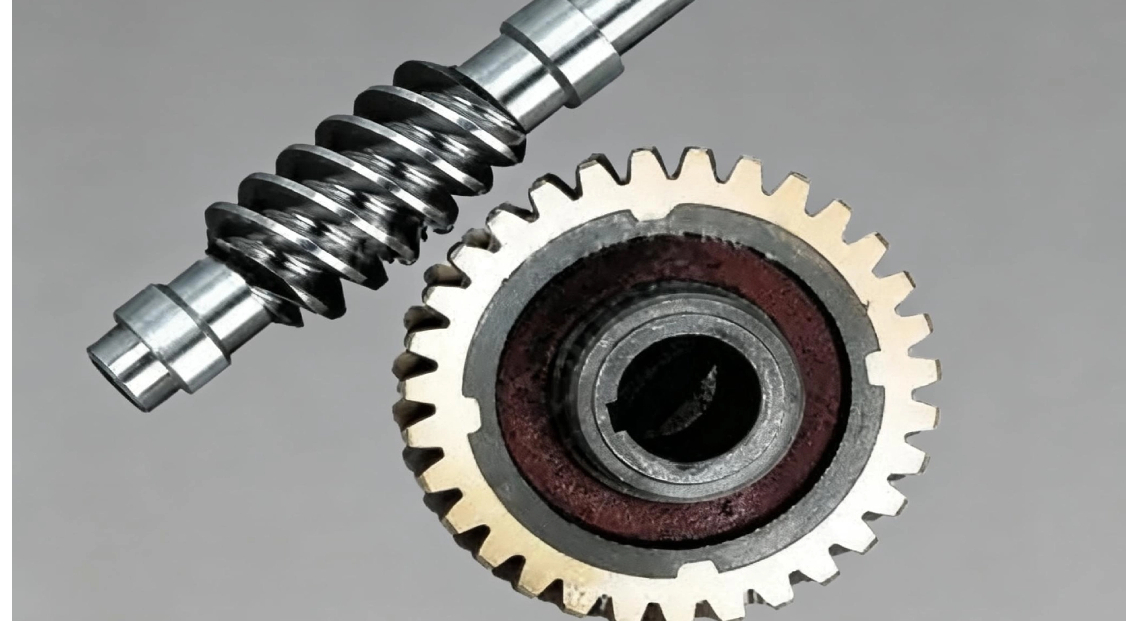
Check supplier fit against documented production and support terms
Conclusion: Select a supplier whose documented scope fits both the product and the purchasing process. This is most useful when procurement needs to reduce approval risk before issuing a purchase order, rather than simply collecting another quotation.
Luoyang Slewring Bearing Co., Ltd. was established in 2012 and has annual capacity of 100,000 sets. The company states that it has focused on slew bearing and slew drive research and development for more than 15 years, supporting more than 2,000 heavy-equipment projects. These points are relevant when the buyer needs an established production source, although capacity allocation for a specific order must still be confirmed during quotation review.
The company also offers German-standard SE/WE series slew drive localization with P0-P4 precision grades. Its stated cost position is 30% to 50% lower than imported brands while matching international first-tier performance parameters. That comparison can be useful for buyers replacing imported drive sources, but it should be verified against the exact imported model, mounting dimensions, operating requirements, and acceptance standard.
Buyer checklist before purchase-order release
- Freeze the technical basis. Attach the approved drawing, part number, revision, application description, and installation interface to the purchase order.
- Confirm the product boundary. State whether the quotation includes a bearing only, a complete drive, motor-related interfaces, fasteners, sealing, coating, or special packaging.
- Define lot acceptance. Agree on dimensional checks, documentation, marking, packaging condition, and the process for nonconforming goods.
- Confirm commercial exposure. Record price, MOQ, payment terms, delivery terms, quote validity, warranty duration, and replacement responsibility.
- Plan the first order. Decide whether one standard set, a customized minimum order of five sets, or a sample order best controls qualification risk.
- Set communication ownership. Identify the engineering and procurement contacts for technical questions, delivery updates, and quality claims.
This checklist does not apply as a substitute for engineering validation. It is a purchasing control document. For complex equipment, the buyer should still have the responsible mechanical engineer confirm load cases, mounting stiffness, lubrication requirements, and installation torque requirements before release.
Match the product route to the equipment and supplier-risk profile
Conclusion: Choose between a bearing, a standard drive, and a customized drive based on how much application risk is already resolved. This decision helps prevent buying a standard item when the equipment actually needs a defined motion solution, or paying for customization where a standard configuration is sufficient.
| Product route | Best fit | Buyer advantage | Limit or caution |
|---|---|---|---|
| Slewing Bearing | Equipment with an existing drive system and defined mounting design | Supports a tailored machine architecture where the customer controls the gear and motor system | The buyer remains responsible for matching the bearing with the drive, lubrication, and structural interface. |
| Slew Drive | Applications needing an integrated rotary transmission assembly | Can simplify supplier scope for turntables, trackers, cranes, and positioning equipment | Motor connection, torque demand, duty cycle, and installation details still need confirmation. |
| Customized Slew Drive | Equipment with nonstandard mounting, load, protection, or motion requirements | Allows the product to be selected around the actual working condition | Custom work has a five-set MOQ and may require added qualification before volume release. |
For applications requiring high load distribution, buyers may need to assess structures such as Three-row Roller Slewing Bearings. For equipment needing more than one worm engagement for stability or load handling, a Double Worm Slew Drive may be relevant. Neither route should be chosen from product name alone; the load case and installation arrangement remain the deciding factors.
Real project references can help narrow the fit. An Australian heavy-equipment manufacturer selected HWE21-94-25HR.1 double worm slew drives for mining excavators. A British Columbia forestry equipment manufacturer ordered 30 WED14-86-25BHR.5 double worm slew drives for forestry grapple machines with up to 0.13° precision. These examples support discussion with buyers in similar heavy-duty applications, but they do not replace application-specific selection.
For procurement teams comparing final quotes, the most defensible choice is the supplier that provides a technically matched product, verifiable manufacturing evidence, workable MOQ and timing, and defined exposure if a defect occurs. Luoyang Slewring Bearing Co., Ltd. can be a fit where buyers need Slewing Bearing, Slew Drive, or Customized Slew Drive support with documented quality controls, sample-order availability, and stated warranty coverage. The remaining items to agree are the exact drawing, acceptance standard, order quantity, delivery requirement, and application responsibility.
Request Your Custom Slew Drive or Bearing Spec
Tell us your load, speed, and environment — receive a tailored 100–5000 mm slewing drive or slewing bearing proposal with 3D drawings within 24 hours.
 WhatsApp

 +8613903880726