



What is a slew drive? A slew drive is a compact rotary transmission assembly that combines a slewing bearing, gear system, housing, and mounting interface to rotate equipment under axial, radial, and overturning loads. It is used in solar trackers, aerial lifts, mobile machinery, cranes, automation equipment, and other systems that need controlled rotation.
For outdoor OEM equipment, the main question is not simply whether the unit can rotate the load. The better question is whether the slew drive design can protect internal raceways, gears, lubricant, and fasteners through the actual exposure cycle of the machine. UV radiation, abrasive dust, washdown, standing water, and repeated temperature changes can each create a different sealing problem.
Luoyang Slewring Bearing Co., Ltd. supplies Slew Drive, Slewing Bearing, and Customized Slew Drive products for applications that operate in demanding industrial environments. Our engineers evaluate load, speed, mounting layout, materials, and environmental exposure together because a sealing choice that works on a dry solar tracker may not suit a washdown area, marine deck crane, or mobile machine working in dust.
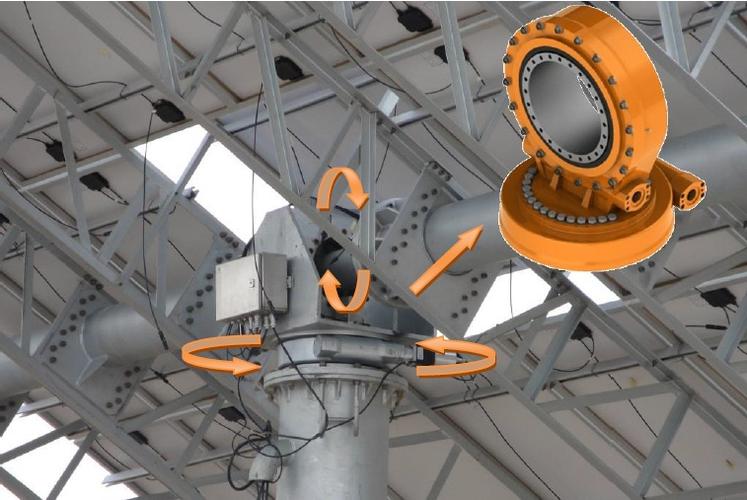
Start with the actual contamination path, not the IP rating alone
An enclosure rating is useful, but it does not replace an application review. A drive can be protected against one form of ingress while still being exposed at the output shaft, mounting flange, inspection point, cable entry, grease fitting, or interface between the drive and the customer’s structure.
The practical conclusion is simple: map every route by which water, dust, salt, or debris could reach the rotating system before releasing the prototype. This approach fits solar trackers, lifts, mobile platforms, truck-mounted equipment, and outdoor turntables. It is less relevant for indoor equipment that stays clean, dry, and protected from direct weather, although even indoor systems may need protection from process dust or washdown.
For example, a solar tracker usually sees long-term sun exposure, airborne dust, rain, and low-speed repetitive movement. A mobile lift may face rain, road spray, construction dust, intermittent storage, and cleaning. The same housing shape should not be assumed suitable for both duty cycles.
Separate documented requirements from assumptions
Specifications often state “outdoor use” without defining the exposure. That phrase can mean occasional rain for one buyer and repeated washdown, dust abrasion, and seasonal temperature cycling for another. The supplier should receive a defined use case instead of a general statement.
- Documented requirement: installation location, machine orientation, cleaning method, expected contaminants, storage condition, and whether the drive is covered or directly exposed.
- Engineering interpretation: likely seal wear, corrosion exposure, lubricant retention risk, and whether water can pool around interfaces.
- Decision affected: housing protection level, seal arrangement, material selection, coating choice, mounting design, and maintenance access.
- Limit: an engineering interpretation should be verified with prototype inspection and field feedback. It is not a substitute for application testing.
Luoyang Slewring Bearing Co., Ltd. can provide technical proposals within 24 hours when the operating information is available. For projects needing a nonstandard housing, output interface, gear arrangement, or protection approach, a Customized Slew Drive may be more appropriate than modifying a standard unit after the machine design is frozen.
Boundary analysis for standard seals under UV, washdown, dust, and temperature cycling
Standard seals do not fail for one universal reason. Their useful boundary depends on exposure type, motion pattern, pressure direction, surface condition, and maintenance practice. The table below separates common outdoor conditions from the design response that should be discussed before prototype release.
| Environmental condition | Where a standard seal reaches its limit | Design choice to evaluate | Best-fit scenario | When this choice may not be enough |
|---|---|---|---|---|
| Direct UV exposure | Long-term sunlight can age exposed sealing materials and may reduce their ability to stay flexible at the contact surface. | Use an enclosed housing where possible, specify UV-suitable external sealing materials, and prevent standing water around the seal area. | Solar trackers, outdoor antennas, and equipment stored outside for long periods. | A UV-focused seal choice does not solve dust abrasion, aggressive chemicals, or high-pressure cleaning. |
| Washdown and water spray | Water can enter through shaft interfaces, cover joints, grease points, cable entries, and mounting surfaces if spray direction or pooling is ignored. | Define the washdown method, use protected interfaces, control drainage paths, and select a protection level matched to the cleaning exposure. | Food-adjacent equipment areas, municipal machinery, deck equipment, and equipment cleaned on a routine schedule. | A protected enclosure may still be unsuitable if the application uses pressure levels, detergents, or direct spray paths beyond the agreed requirement. |
| Abrasive dust and sand | Fine dust can collect at rotating interfaces and act as an abrasive when it mixes with lubricant or moisture. | Use shielded interfaces, keep grease points protected, consider orientation that reduces dust settling, and inspect seal lips during service intervals. | Mining equipment, desert solar sites, forestry machinery, and construction equipment. | Dust control cannot compensate for poor mounting alignment, damaged mating surfaces, or neglected inspection. |
| Temperature cycling | Repeated heating and cooling can change clearances, create condensation, and place repeated stress on sealing interfaces. | Review operating and storage temperatures, ventilation needs, lubricant suitability, drainage, and the risk of water being trapped inside protective covers. | Equipment that remains outdoors through seasonal changes or has hot daytime and cold nighttime exposure. | Temperature planning alone does not address direct immersion, chemical attack, or mechanical damage from debris. |
The key observation is that environmental exposure is rarely isolated. A desert solar tracker may face UV, dust, rain, and daily temperature changes at the same time. A shipboard crane can combine salt-laden moisture, washdown, vibration, and long idle periods. Buyers should therefore evaluate the combined exposure rather than selecting a seal based on one condition in the data sheet.
Our slew drives can be specified with protection up to IP66 and anti-corrosion protection up to C4H, depending on the product and application requirements. That does not mean every project requires the highest available protection. A covered industrial turntable could be overspecified, while a deck-mounted or desert-installed unit may justify a more protected arrangement after the full exposure path is reviewed.
Choose the sealing strategy around equipment duty and service access
Seal selection should follow the machine’s duty cycle and maintenance reality. If a drive is easy to inspect and service, the design may tolerate a planned maintenance approach. If it sits high on a tracker structure, inside a mobile boom, or under a guarded platform, preventing contamination becomes more valuable because access may be difficult and expensive.
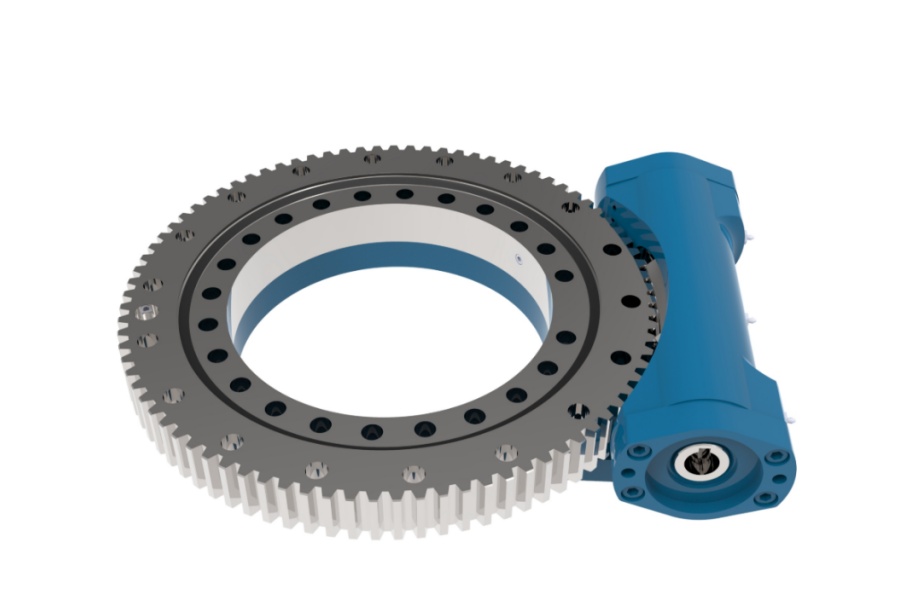
A Worm Gear Slew Drive is often selected where self-locking behavior and compact rotary motion are needed. Its environmental design review should include the worm input interface, housing joints, mounting direction, and any locations where moisture can collect. Self-locking capability does not itself prove that the sealing arrangement is suitable for outdoor duty.
Application-fit selection guide
| Application | Primary exposure concern | Recommended buyer question | Design direction | Limit of the recommendation |
|---|---|---|---|---|
| Single-axis solar tracker | UV, dust, rain, long-term outdoor exposure | Can the housing, shaft interfaces, and mounting arrangement shed water and limit dust collection? | Prioritize weather protection, corrosion planning, and low-maintenance access. | Local site conditions can differ greatly between agricultural, coastal, and desert installations. |
| Aerial lift or mobile platform | Rain, road spray, jobsite dust, intermittent cleaning | What contaminants reach the drive during transport, use, and storage? | Review spray direction, mounting orientation, and physical protection from debris. | Machine vibration and structural alignment still need separate evaluation. |
| Marine crane or deck equipment | Moisture, salt exposure, washdown | Where can water pool, and which interfaces remain exposed when the equipment is parked? | Specify corrosion protection and protected sealing interfaces based on the installed location. | Marine exposure varies between sheltered and continuously exposed positions. |
| Mining or forestry machinery | Dust, debris, cyclic load, impact risk | Can abrasive debris contact the rotating interface or damage external seal areas? | Use guarded placement where possible and define inspection points. | Protection features cannot correct overload or unsuitable bearing capacity. |
Real project examples show why application context matters. A U.S. renewable energy equipment manufacturer ordered 50 units of SP-I 0841 units for utility-scale solar tracker systems, with IP65 protection for desert sites. Separately, a South Korean port equipment manufacturer placed a repeat order for 20 WEA9-62-25HR single worm drives for port crane systems, specified with IP65 sealing and self-locking operation.
These cases are application-specific references, not universal performance promises. They show that desert and port environments can lead to different product selections and validation priorities even when both machines operate outdoors.
Request Your Custom Slew Drive or Bearing Spec
Tell us your load, speed, and environment — receive a tailored 100–5000 mm slewing drive or slewing bearing proposal with 3D drawings within 24 hours.
Prevent sealing problems before the prototype is released
The best time to address sealing is before the customer’s structural interfaces, guards, and cable routes are fixed. Late changes can require revised mounting plates, altered clearances, new covers, or a different drive orientation. That can slow a machine program more than selecting the correct configuration at the start.
Prototype release procedure for outdoor equipment
- Define the exposure: State whether the equipment sees direct sun, dust, rain, washdown, salt exposure, mud, or long-term outdoor storage. Avoid broad descriptions such as “weatherproof.”
- Map every interface: Review input shaft locations, output flanges, mounting faces, bolt paths, grease fittings, cable entries, covers, and drain paths.
- Confirm machine orientation: Show the installed angle and parked positions. Water pooling behavior can change when the same drive is mounted vertically, horizontally, or under a platform.
- Review load and motion together: Confirm axial, radial, overturning, and torque requirements along with operating speed and duty cycle. A sealing change cannot compensate for an incorrect load selection.
- Set an inspection plan: Define what personnel can access, what they should inspect, and what evidence would trigger service action, such as damaged external interfaces or contamination around sealing zones.
- Validate the prototype: Inspect the drive after representative exposure and operation. Check for trapped water, external debris accumulation, coating damage, abnormal lubricant condition, and interference with guards or structures.
This procedure fits OEM prototype teams that need to make a release decision with limited time. It does not replace a formal validation plan where the customer’s industry, end user, or contract requires specific testing. In those cases, the machine builder should provide the applicable test method and acceptance criteria to the drive supplier.
Luoyang Slewring Bearing Co., Ltd. supports rapid early-stage development with a 3-day prototyping capability and a standard production cycle of 9 days. Standard products can be ordered from 1 set, while customized products have a minimum order quantity of 5 sets. Sample orders are available for testing and evaluation.
Use inspection evidence to separate seal failure from other root causes
Not every moisture or contamination issue is caused by the seal itself. A drive may appear to have a sealing problem when the actual cause is a damaged cover, poor drainage, an incorrect mounting surface, a loose interface, unsuitable cleaning practice, or external impact damage.
The right conclusion is to inspect the complete installed system before changing drive specifications. This is especially relevant when field failures occur only on some machines, at one site, or in one machine orientation. A single field event is not enough evidence to classify the entire product design as unsuitable.
Common mistakes that lead to premature outdoor sealing concerns
- Specifying “outdoor” without exposure details: This can lead to a mismatch between the assumed and actual contamination path. Replace it with site, weather, washdown, and storage information.
- Ignoring drainage around the mounted drive: Even a well-protected housing can be placed inside a customer-made pocket that holds water. Review the full assembly, not just the purchased component.
- Using guards that trap dirt: Guards protect against impact but can create a collection area for wet debris. Check whether debris can fall away or whether cleaning access is available.
- Assuming a higher protection rating solves every issue: Protection level addresses defined ingress conditions, not every chemical, impact, thermal, or installation risk. Match the rating to the documented exposure.
- Leaving service ownership unclear: A machine builder, dealer, and end user may each assume another party will inspect the equipment. Define who checks the installed drive and when.
Quality evidence should also be part of supplier evaluation. Our ISO 9001:2015-certified facility uses CNC machining centers and CMM three-coordinate inspection. Every slewing bearing is subject to CMM inspection and dynamic load testing under our quality-control process, and confirmed manufacturing defects are covered by a 2-year extended quality warranty.
For bearing-led designs where the drive is not the final assembly, the bearing type still affects sealing and mounting decisions. Engineers can compare the required arrangement with a Heavy load slewing bearing when the machine carries larger cyclic loads, while compact equipment may require a different bearing and enclosure approach.
Buyer checklist for an outdoor sealing specification
A clear request for quotation reduces assumptions and gives the supplier a usable basis for technical selection. The checklist below is intended for procurement teams, engineering managers, and OEM designers who need to compare standard and custom options before prototype release.
- Describe the application, including solar tracker, lift, mobile machine, crane, turntable, or another rotating system.
- Provide axial load, radial load, overturning moment, output torque, operating speed, and duty cycle.
- State the installed orientation and identify positions where rainwater, cleaning water, or debris may accumulate.
- Identify direct UV exposure, dust type, mud, salt moisture, washdown method, and outdoor storage condition.
- Clarify whether the drive is protected by a machine cover and whether that cover allows drainage and inspection.
- Specify the expected corrosion environment and whether a defined protection requirement is required.
- State the target enclosure protection level rather than assuming all outdoor equipment needs the same level.
- Share interface drawings, mounting dimensions, available space, motor connection needs, and required output direction.
- Confirm prototype quantity, sample test plan, production schedule, and acceptance evidence needed before release.
- Ask how inspection, dynamic load testing, and manufacturing-defect support are handled by the supplier.
For buyers comparing suppliers, the decision should not rest on a catalog image or a single protection statement. Ask for the technical proposal to explain what environment the selected unit is intended to handle, what information remains uncertain, and what machine-level features are still required. That keeps the sealing responsibility visible across the full equipment design.
Luoyang Slewring Bearing Co., Ltd. operates six production lines in an 8,000 m² manufacturing facility with annual capacity of 100,000 sets. Our engineering team can review standard Slew Drive options or develop a custom configuration when the outdoor duty, mounting layout, and sealing boundary require a project-specific solution.
Request Your Custom Slew Drive or Bearing Spec
Tell us your load, speed, and environment — receive a tailored 100–5000 mm slewing drive or slewing bearing proposal with 3D drawings within 24 hours.
 WhatsApp

 +8613903880726