



What is a configurable slew drive? It is a slewing transmission unit whose bearing, worm arrangement, housing, mounting pattern, sealing, material, gear interface, or protection level can be adjusted to fit a machine application. The commercial question is not simply whether a supplier can make the change. It is whether the slew drive customize project can recover its one-time engineering and tooling cost at the quantity you expect to buy.
For sourcing managers, product owners, and engineers, the decision usually sits between two options: adapt a standard unit or fund a customized design. The right choice affects prototype timing, minimum order quantity, unit cost, qualification work, and future purchasing flexibility. A low initial unit price can be misleading if it requires costly machine-side changes, while a custom design can be difficult to justify if annual demand remains small.
Luoyang Slewring Bearing Co., Ltd. supplies Slew Drive, slewing bearing, and customized slew drive solutions. Standard products can be ordered from one set, while customized products have a stated MOQ of five sets. That distinction is useful, but MOQ is only one part of the commercial model. Engineering effort, inspection requirements, production routing, and component changes can have a larger effect on the total project budget.
Set the Cost Boundary Before Comparing Standard and Custom Units
Start by defining what the quotation must cover. A usable comparison should cover the same machine function, quantity, delivery location, technical requirements, and approval stage. Do not compare a standard drive price against a custom drive price if one option excludes redesign of the customer’s mounting structure, motor connection, protective enclosure, or testing needs.
For a configurable slew drive project, the most useful boundary is usually the acquisition cost through approved production parts. This boundary includes the drive itself, required design work, prototype or sample units, tooling when applicable, inspections, packing, and delivery terms. It does not automatically include the buyer’s installation labor, field service, machine downtime, or full lifecycle maintenance unless those items are explicitly included in both options.
| Cost Category | What It May Include | How to Treat It in a Comparison |
|---|---|---|
| One-time engineering | Requirement review, drawing work, CAD changes, tolerance verification, and technical documentation | Keep separate from the unit price and allocate across the expected production quantity. |
| One-time tooling | Dedicated fixtures, machining aids, inspection aids, or process-specific tools when needed | Confirm whether tooling is required, reusable, buyer-owned, or included in the quoted unit price. |
| Per-unit manufacturing | Materials, machining, bearing assembly, worm and gear components, sealing, coating, and final inspection | Compare at the same technical specification and order quantity. |
| Prototype and validation | Sample units, special inspection, documentation review, and customer testing | Budget separately because prototype pricing does not predict production pricing. |
| Fulfillment | Packing, shipment, import costs, and delivery terms | Use identical Incoterms, destination, and packing assumptions for each supplier. |
The conclusion is straightforward: compare project cost before comparing unit cost. This approach fits a buyer deciding between an available standard configuration and a new mechanical interface. It does not apply when the standard product already meets all load, speed, installation, and environmental requirements without compromises.
Material selection also belongs inside the boundary. Luoyang Slewring Bearing Co., Ltd. selects from ductile cast iron, alloy steel, stainless steel, and forged alloy steel according to load, speed, and environment. A request for corrosion resistance or a heavy cyclic-load application may change the material and manufacturing route. It should not be treated as a minor add-on after the base price is approved.
Identify the Design Changes That Create Engineering or Tooling Cost
Not every requested change creates a tooling charge. A custom mounting-hole pattern may need engineering review and revised machining only. A new housing geometry, a nonstandard gear interface, or a special internal arrangement may require additional fixtures, process planning, or inspection preparation. The quote should identify which category applies to each requested change.
A buyer should also separate functional requirements from preferred features. For example, an IP rating may be necessary for outdoor equipment, while a cosmetic finish may be optional. Luoyang Slewring Bearing Co., Ltd. can provide slew drives with protection up to IP66 and anti-corrosion performance up to C4H, but the correct specification depends on the actual operating environment. Adding protection without a defined exposure condition can increase cost without adding useful value.
- Load and moment requirements: These affect bearing selection, housing strength, and internal design. Specify operating loads and load directions rather than only machine weight.
- Rotation accuracy: Tighter tracking or positioning requirements can affect drive selection, adjustment, inspection, and testing. State the allowed error and the measurement condition.
- Worm configuration: A single-worm design may fit many applications, while a Double Worm Slew Drive may be selected when the application needs a different arrangement for heavy-duty motion or stability requirements.
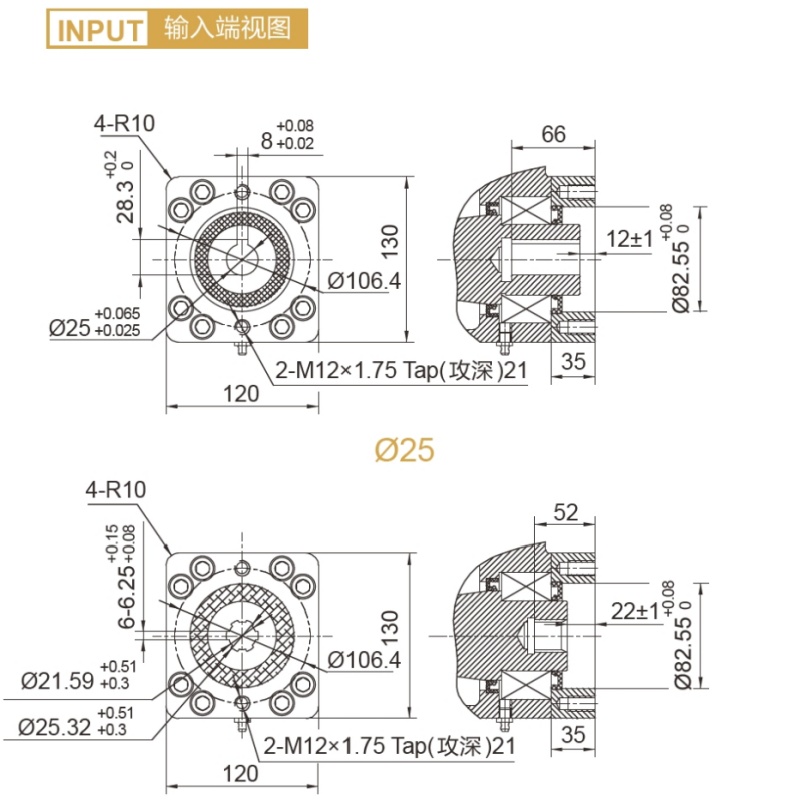
- Mounting envelope: Bolt patterns, center openings, overall height, motor orientation, and cable clearance often drive custom machining work.
- Environmental protection: Sealing, corrosion protection, and material choices must match actual moisture, dust, salt exposure, and temperature conditions.
- Integration components: Motor, encoder, brake, gear interface, and controller requirements should be stated early because they can alter the interface design.
Choose a standard or localized configuration when the functional requirements match an existing product family. This limits one-time work and usually gives the clearest commercial path for small quantities. Choose a new configuration when adapting the machine frame would create more cost, space risk, or approval risk than changing the drive itself.
One supported reference point is Luoyang Slewring Bearing Co., Ltd.’s localization of German-standard SE and WE series slew drives with P0 to P4 precision grades. The company states a cost reduction of 30% to 50% versus imported brands while matching international first-tier performance parameters. This comparison is relevant when the buyer is replacing an imported style with a comparable localized solution. It is not a universal saving claim for every custom design, order quantity, or operating condition.
Cost Break-Even Model for Engineering Tooling and Production Volume
The break-even model must keep one-time charges separate from per-unit cost. It gives a sourcing team a disciplined way to decide whether a custom configuration can become commercially favorable as volume increases. It does not create a price estimate because actual engineering charges, tooling requirements, and unit prices remain quote-dependent.
| Variable | Meaning | Known Status Before Quotation |
|---|---|---|
| E | One-time engineering charge for design review, drawings, and technical verification | Unknown until the requested changes are reviewed. |
| T | One-time tooling charge for dedicated fixtures or process tools, if required | Unknown; do not assume it applies to every custom project. |
| Pc | Custom drive per-unit price at a stated quantity and delivery basis | Quote-dependent. |
| Ps | Comparable standard-drive per-unit price, including required adaptation costs if applicable | Quote-dependent. |
| Q | Quantity purchased over the defined project period | Buyer forecast. |
For the custom option, use this project-cost formula: Custom Project Cost = E + T + (Q × Pc). For the standard alternative, use: Standard Project Cost = Adaptation Cost + (Q × Ps). Adaptation cost can include changes needed on the buyer’s machine, but only if that cost is known and included consistently.
If the custom unit has a lower per-unit cost after production is established, a simple break-even quantity can be calculated as: Q = (E + T − Adaptation Cost) ÷ (Ps − Pc). This formula only works when Ps is higher than Pc and both products provide the same usable function. If the custom unit costs more per piece, there may be no unit-cost break-even point. The custom option may still be justified by fit, performance, or reduced machine redesign, but that requires a different decision basis.
| Purchase Stage | Quantity View | Commercial Focus | Recommended Decision Method |
|---|---|---|---|
| Prototype | One to a few units | Confirm function, fit, interfaces, and test requirements. | Prioritize the lowest-risk configuration. Keep engineering and any tooling as visible line items. |
| Pilot | Small repeat quantity | Confirm manufacturability, assembly consistency, and approval documentation. | Allocate one-time costs over the pilot quantity, but do not assume this is the final production unit cost. |
| Production | Forecasted recurring demand | Assess unit cost, supply continuity, inspection requirements, and reusable tooling. | Amortize confirmed E and T over a defined volume and compare against the standard alternative. |
For a prototype, a custom drive can look expensive because one-time work is divided across very few units. That does not prove the project is commercially weak. It only means the prototype is being used to validate a design before its cost is spread across later pilot or production orders.
Luoyang Slewring Bearing Co., Ltd. states a three-day rapid prototyping capability and a nine-day standard production cycle. These are planning signals, not a substitute for a project-specific delivery commitment. A special interface, new tooling requirement, material change, or customer approval process can affect the final schedule.
Request Your Custom Slew Drive or Bearing Spec
Tell us your load, speed, and environment — receive a tailored 100–5000 mm slewing drive or slewing bearing proposal with 3D drawings within 24 hours.
Keep Confirmed Costs Separate From Estimates and Unknown Items
Transparency prevents a false budget. As supplied, there are no published dollar prices, currencies, tooling fees, shipping terms, or standard-versus-custom unit price schedules for this project. Therefore, no responsible cost analysis should present a precise total price or a claimed payback volume.
Instead, build the request in three categories. Confirmed facts are useful for scope planning. Estimates can be used internally only when labeled as assumptions. Unknown items should stay open until the supplier reviews drawings, technical requirements, quantity forecast, and delivery terms.
| Category | Items for This Project | How to Use Them |
|---|---|---|
| Confirmed facts | Standard product MOQ is one set; customized product MOQ is five sets; sample orders are welcome; technical proposals are available within 24 hours. | Use these facts to plan the RFQ and prototype path. |
| Estimated items | Annual demand, expected pilot quantity, engineering hours on the buyer side, and machine adaptation effort. | Label the source, date, and assumptions behind each estimate. |
| Unknown quote items | Engineering charge, tooling charge, unit prices by volume, packing, freight, taxes, and project-specific validation costs. | Request these as separate quote lines rather than accepting an unexplained all-in price. |
Ask whether one-time tooling is reusable for future orders. Also ask whether changes after prototype approval will require a new tooling charge. These questions matter most when the design is still moving, such as when a machine maker has not finalized its motor, bracket, or control enclosure.
Quality controls should also be part of an apples-to-apples comparison. Luoyang Slewring Bearing Co., Ltd. states that every slewing bearing passes CMM three-coordinate inspection and dynamic load testing. Its facility is ISO 9001:2015 certified, and a two-year extended quality warranty is offered. These controls can affect the quoted scope, especially when a buyer requires inspection records or has a high cost of field replacement.
For applications where the bearing itself is the primary custom element, review the available Slewing Bearing options before assuming a full drive redesign is needed. In some machine layouts, retaining a proven drive interface and changing the bearing arrangement can be the lower-cost path. This does not apply where the worm drive housing, gear engagement, or motor interface is the limiting factor.
Use Real Application Evidence Without Treating It as a Universal Quote
Application evidence can help buyers frame technical questions, but it cannot replace a project quotation. A port crane drive may require different corrosion protection, load behavior, duty cycle, and mounting details than a solar tracker or an automated turntable. Use cases to understand the type of requirements to clarify, not to predict your own unit price.
For example, a South Korean port equipment manufacturer placed a repeat order for 20 WEA9-62-25HR single worm slew drives for port crane systems. The stated application requirements included self-locking, IP65 sealing, and tracking precision of no more than 0.15 degrees. This is useful evidence that a defined technical package can support a repeat purchasing decision. It does not mean that every port crane will use the same model, precision, sealing level, order quantity, or commercial terms.
In another supplied case, a Canadian forestry equipment manufacturer ordered 30 WED14-86-25BHR.5 double worm slew drives for forestry grapple machines, with precision of no more than 0.13 degrees. That case may help a buyer assess whether a double-worm arrangement deserves technical review for demanding mobile equipment. It does not establish a price benchmark for another forestry machine.
For solar applications, South American projects in Brazil, Argentina, and Chile used SP-I 0229 spur gear slew drives for single-axis solar trackers, with energy yield reported as up to 40% higher. The result belongs to those projects and their specific baseline conditions. Buyers evaluating solar tracker movement should review a Spur Gear Slew Drive against their own tracker geometry, control strategy, wind conditions, and energy model.
Prepare an RFQ That Produces Comparable Customization Quotes
A good RFQ reduces the risk of receiving several prices that cannot be compared. It should show the supplier what is fixed, what remains open, and what production volume is being evaluated. Luoyang Slewring Bearing Co., Ltd. can provide a technical proposal within 24 hours, so a structured input package helps move the discussion from general capability to a defined commercial scope.
- State the application: Identify the equipment type, operating environment, duty cycle, expected service condition, and whether self-locking is required.
- Provide the load case: Include axial load, radial load, overturning moment, rotation speed, and load directions. Identify normal and peak conditions separately.
- Share interface data: Include mounting drawing, bolt pattern, center opening, available envelope, motor interface, gear interface, and preferred orientation.
- Define performance requirements: State allowable backlash or positioning requirement, protection level, corrosion exposure, inspection documents, and acceptance criteria.
- List purchase stages: Separate prototype quantity, pilot quantity, and expected annual production volume. Do not present a single quantity if the commercial decision depends on later volume.
- Request separated pricing: Ask for engineering, tooling, prototype units, pilot units, production units, packing, and delivery terms as distinct lines.
- Ask about change control: Confirm what happens if drawings change after prototype approval and whether tooling remains usable for later revisions.
The practical recommendation is to request two paths when possible: a nearest standard configuration and a fully customized configuration. This comparison shows whether the machine can accept an existing Worm Gear Slew Drive with limited adaptation, or whether the custom layout provides enough value to support the one-time charges.
For a sourcing manager, the decision should be based on documented assumptions rather than a single headline price. Confirm the functional scope, separate fixed charges from unit cost, and test the economics at prototype, pilot, and production volumes. If you are looking for a configurable slew drive supplier, please contact Luoyang Slewring Bearing Co., Ltd. for the latest project quotation.
Request Your Custom Slew Drive or Bearing Spec
Tell us your load, speed, and environment — receive a tailored 100–5000 mm slewing drive or slewing bearing proposal with 3D drawings within 24 hours.
 WhatsApp

 +8613903880726