



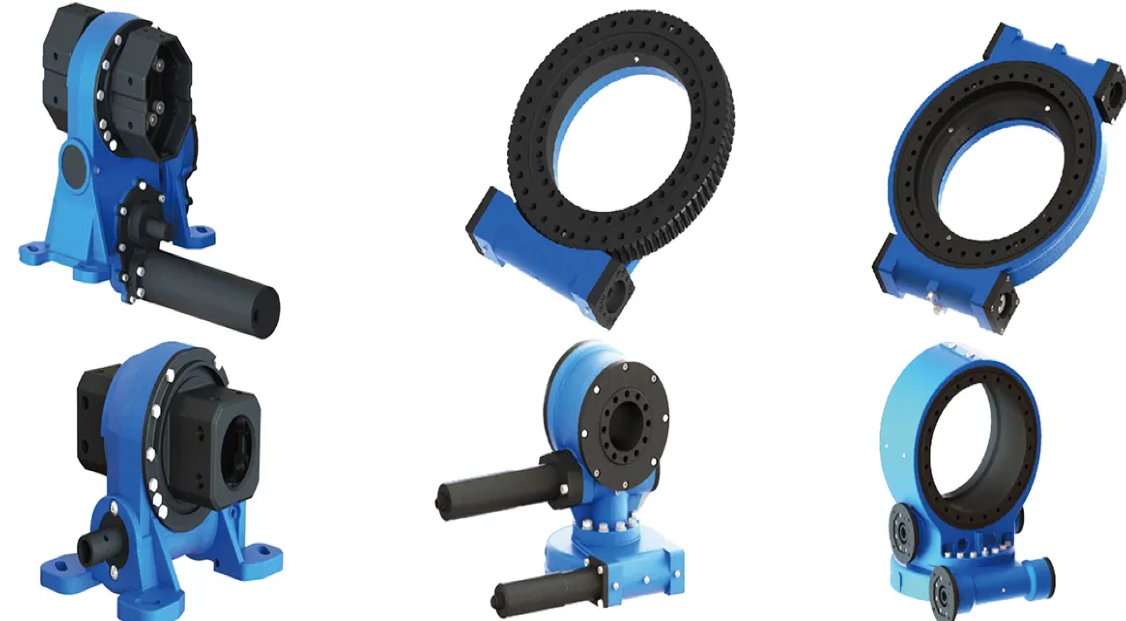
What is a planetary slew drive? It is a rotary drive concept that combines a slewing support system with planetary gear reduction for applications that require controlled rotation under load. Before placing an RFQ, buyers should confirm whether the requested design is a standard product, a modified standard drive, or a fully custom assembly.
This distinction affects more than unit price. It can change the approved drawing scope, motor connection details, testing needs, minimum order quantity, and delivery commitment. A planetary slew drive may look standard in a catalog request, yet become a custom supply when its mounting interface, output connection, motor adapter, or validation requirement changes.
Luoyang Slewring Bearing Co., Ltd. supplies Slew Drive, Slewing Bearing, and Customized Slew Drive solutions for OEM equipment requirements. For purchasing managers, the practical question is not only whether a drive can fit the machine, but whether the quote terms match the project schedule and commercial risk.
Classify the Requested Drive Before Comparing Supplier Quotes
The first buying decision is classification. A standard drive can usually be quoted against an existing product configuration, while a modified or custom drive needs additional technical confirmation before its commercial terms are reliable. Do not compare a standard catalog price with a custom-interface price as if both represent the same scope.
Luoyang Slewring Bearing Co., Ltd. lists a standard product MOQ of one set, which can support prototype evaluation, replacement needs, or low-volume machine builds. Customized products have an MOQ of five sets, so a buyer should identify the customization boundary early rather than discovering it after the first quotation revision.
| Requested supply type | Typical buyer request | Commercial effect | Best-fit scenario | Limit or buyer check |
|---|---|---|---|---|
| Standard configuration | Existing housing, mounting pattern, and drive arrangement | Can align with the one-set standard MOQ and the stated nine-day standard production cycle | Replacement parts, evaluation units, and equipment using an established interface | Only applies when the requested configuration is confirmed as standard |
| Modified standard drive | Changed flange, mounting holes, output feature, or motor connection | Quote needs a technical review because the change may affect machining and assembly scope | OEMs adapting an established drive to an existing machine frame | Do not assume the standard production cycle applies |
| Custom drive assembly | New interface set, special adapter, defined test condition, or project-specific layout | Usually falls under the five-set customized MOQ and needs scope agreement before delivery can be committed | New equipment platforms and repeat OEM production programs | Final price and lead time depend on the approved technical requirements |
A standard Slew Drive is the lower-risk choice when the machine can accept an existing interface and operating arrangement. This route is less suitable when the machine frame, motor, cable routing, or driven component cannot be changed to match the available configuration.
A custom request is appropriate when the equipment design cannot compromise on the interface. The buyer should accept that low-volume customization shifts cost from repeated production into engineering confirmation, material preparation, machining, and validation work.
Use a Cost-and-Risk Model for Custom Interfaces, Motor Adapters, Validation Testing, and Low Order Volumes
The lowest quoted unit price does not always represent the lowest procurement risk. A quote can appear inexpensive because it excludes the adapter, assumes a standard interface, omits requested verification, or treats an early-stage requirement as a future engineering change. Buyers should ask suppliers to state what is included and what remains subject to review.
The model below does not assign unsupported price figures. Instead, it shows the direction of cost and schedule risk that a sourcing team should expect when a drive moves away from an established configuration.
| Quote variable | Effect on quoted price | Effect on delivery time | Risk if omitted from RFQ | Buyer action |
|---|---|---|---|---|
| Custom mounting interface | May add drawing review and part-specific machining | May extend beyond standard production timing | Hole locations, pilot diameters, or mounting faces may not match the machine | Provide interface drawings with dimensions, tolerances, and mating-part details |
| Motor adapter | May add adapter design and machining scope | Needs confirmation of motor flange and shaft connection before release | Drive and motor may be incompatible at assembly | State motor model, flange data, shaft dimensions, and mounting orientation |
| Validation testing | Can add inspection or test work beyond a basic supply scope | Testing must be scheduled before shipment | Acceptance criteria may be disputed after production | List required checks, report format, and acceptance limits in the RFQ |
| Low order volume | Fixed setup and engineering work are spread over fewer units | Material and process planning may require a separate confirmation | Buyer may expect one-set terms for a design that is actually custom | Ask whether the request remains standard or enters the five-set customized MOQ category |
| Late design changes | Can require a revised quote or replacement parts | Can interrupt the release schedule | Original schedule may no longer be valid | Freeze interfaces and test requirements before final order approval |
The practical conclusion is simple: include all machine interfaces in the first RFQ. This is especially relevant for a low-volume OEM project, where one adapter revision can have a larger commercial effect than it would in repeat production.
Motor adapter information should not be limited to a motor power label. The supplier needs the physical connection data that controls fit, including the motor mounting face, shaft connection, installation orientation, and any clearance restriction around the drive. This recommendation does not replace a full engineering review when the application has unusual duty cycles or project-specific safety requirements.
For applications where self-locking behavior, environmental sealing, or tracking accuracy matters, the buyer should state those requirements as quoted conditions rather than assumptions. For example, Luoyang Slewring Bearing Co., Ltd. supplied WEA9-62-25HR single worm slew drives for a South Korean port equipment manufacturer’s crane systems with self-locking, IP65 sealing, and tracking precision of no more than 0.15 degrees. That case supports those stated requirements for that supply, but it is not a blanket specification for every drive type.
Ask for Evidence That Matches the Machine Risk
A supplier’s evidence should match the consequence of a drive failure or fit problem. A slow-moving display platform and a heavily loaded crane system do not create the same qualification need. Buyers should request quality and project evidence related to their own use case rather than relying on general product descriptions.
Luoyang Slewring Bearing Co., Ltd. operates an ISO 9001:2015 certified quality management system and offers CE marking for the European market. The company also states that factory audit reports are available on request, which can be useful when an OEM supplier-approval process requires documented facility information.
The company has an 8,000 square meter manufacturing facility, six production lines, CNC machining centers, and CMM three-coordinate inspection capability. Its stated annual capacity is 100,000 sets. These facts can help a buyer assess production scope, but they do not remove the need to confirm the capacity position and delivery date for a specific order.
For higher-risk industrial requests, ask what inspection and testing is relevant to the quoted product. The company states that every slewing bearing passes CMM three-coordinate inspection and dynamic load testing, and it provides a two-year extended quality warranty. Buyers should still agree on the exact acceptance documents for a custom drive because bearing inspection evidence alone may not cover every motor adapter or machine-level interface requirement.
- For a European equipment program: confirm whether CE marking is applicable to the supplied item and what documentation is included. CE marking availability should not be treated as automatic approval for the buyer’s complete machine.
- For cyclic heavy-duty equipment: provide load direction, duty pattern, speed, environment, and expected service conditions. Material selection at Luoyang Slewring Bearing Co., Ltd. is based on working conditions such as load, speed, and environment.
- For corrosive or outdoor service: specify the required protection level. The company offers slew drive protection up to IP66 and anti-corrosion rating up to C4H, but the required configuration must be confirmed in the quote.
- For high-precision positioning: state the permitted tracking or positioning error and how it will be measured. Do not assume a performance result from one customer case applies to another application.
There is useful application evidence across several equipment sectors. An Australian heavy equipment manufacturer selected HWE21-94-25HR.1 double worm slew drives for mining excavators, while a Canadian forestry equipment manufacturer ordered WED14-86-25BHR.5 double worm units for forestry grapple machines with precision of no more than 0.13 degrees. These examples can guide application discussions, but final selection still depends on the buyer’s actual loads, mounting arrangement, and operating conditions.
Where a worm-based architecture better fits the machine requirement, review the supplier’s Worm Gear Slew Drive range rather than assuming that a planetary arrangement is automatically the best commercial choice. A double-worm option may also deserve review when the equipment needs a different load-sharing or control approach; see the Double Worm Slew Drive product scope for available reference.
Request Your Custom Slew Drive or Bearing Spec
Tell us your load, speed, and environment — receive a tailored 100–5000 mm slewing drive or slewing bearing proposal with 3D drawings within 24 hours.
Build an RFQ That Can Produce a Usable Delivery Commitment
A delivery date is only useful when it is tied to a defined scope. Luoyang Slewring Bearing Co., Ltd. states a nine-day standard production cycle and can provide a technical proposal within 24 hours. Those terms are valuable for a confirmed standard requirement, but they should not be interpreted as a guaranteed delivery period for every modified or custom design.
The company also offers three-day rapid prototyping. This can suit early evaluation work when the project requirements fit the available prototyping scope. Buyers should confirm prototype purpose, configuration, test expectations, and whether later production parts must match the prototype in every detail.
RFQ checklist for an initial order
- State whether the order is a replacement, prototype, pilot build, or repeat production requirement.
- Attach the drive mounting drawing and the mating structure drawing. Identify all interfaces that cannot change.
- Provide motor details, including mounting face, shaft connection, orientation, and any envelope limits.
- Describe the load, speed, duty cycle, operating environment, and required rotation range.
- State the required sealing, corrosion protection, precision, and any self-locking requirement.
- Identify requested inspection records, testing, certificates, packaging needs, and shipment destination.
- Ask the supplier to classify the request as standard, modified standard, or customized before comparing MOQ and lead time.
- Confirm whether the quote includes all interfaces, adapters, drawings, validation work, and warranty terms.
This checklist is most useful before the first quotation. It reduces the risk of receiving several prices that look comparable but cover different technical content. It will not resolve an application with incomplete machine design; in that case, the open engineering points need to be identified before a final purchasing decision.
Choose the Supply Route That Fits Volume, Schedule, and Design Control
Use a standard configuration when the machine can accept an existing interface and the project needs the commercial flexibility of a one-set MOQ. This is often the best option for replacement demand, machine trials, and early equipment builds. It does not fit a project that requires a nonstandard motor connection or a unique mounting structure.
Use a modified configuration when the core drive arrangement is suitable but the machine needs a limited interface change. This route can be commercially viable when the expected production volume justifies the added engineering and machining scope. It is less attractive when the buyer has not frozen the motor or frame design, because late changes can cause repeated quote revisions.
Use a fully customized supply route when the equipment interface, environment, and operating requirements are fixed and repeatable. Luoyang Slewring Bearing Co., Ltd. supports customized slew drive projects with a five-set MOQ, and sample orders are welcome for testing and evaluation. The limit is clear: a sample order should be specified carefully, because sample acceptance does not automatically define all conditions for a later production release.
For solar tracker projects, a spur gear configuration may be the more relevant comparison point. The company supplied SP-I 0229 spur gear slew drives for single-axis solar projects in Brazil, Argentina, and Chile, where the reported result was energy yield improvement up to 40 percent. That result belongs to those projects and should not be used as a universal energy-yield forecast for a different tracker design.
Buyers assessing an alternative drive arrangement can review the Spur Gear Slew Drive range and compare interface needs before requesting a custom planetary layout. When the main requirement is a specialized mounting or motor connection, the Customized Slew Drive scope is the more direct starting point.
Set Clear Commercial Boundaries Before Issuing a Purchase Order
The best purchasing decision is not always the drive with the shortest stated lead time. It is the supply option whose technical scope, MOQ, quality evidence, warranty terms, and delivery conditions are all clear enough to support the machine program. For standard products, Luoyang Slewring Bearing Co., Ltd. can work from a one-set MOQ; for customized products, buyers should plan around the stated five-set MOQ.
Before issuing a purchase order, confirm the final drawing status, responsibility for mating parts, inspection requirements, packaging expectations, and shipment terms. Also confirm whether a requested delivery date starts from the RFQ, drawing approval, order release, or another agreed event. These points prevent a standard-cycle assumption from being applied to a custom requirement.
Luoyang Slewring Bearing Co., Ltd. provides a two-year extended quality warranty, a 48-hour technical response, and free replacement for confirmed manufacturing defects. These terms can reduce post-delivery risk, but they do not replace proper application selection or agreement on the supplied configuration.
A planetary slew drive request is commercially viable when the design is sufficiently defined, its order volume matches the applicable MOQ, and the supplier’s quoted scope includes every interface that affects fit and acceptance. For OEM buyers, that is the point where price, lead time, and risk can be compared on a fair basis.
Request Your Custom Slew Drive or Bearing Spec
Tell us your load, speed, and environment — receive a tailored 100–5000 mm slewing drive or slewing bearing proposal with 3D drawings within 24 hours.
 WhatsApp

 +8613903880726