



Maximizing Slewing Bearing Lifespan: How Grease and Lubrication Matter
What Is a Slewing Bearing?
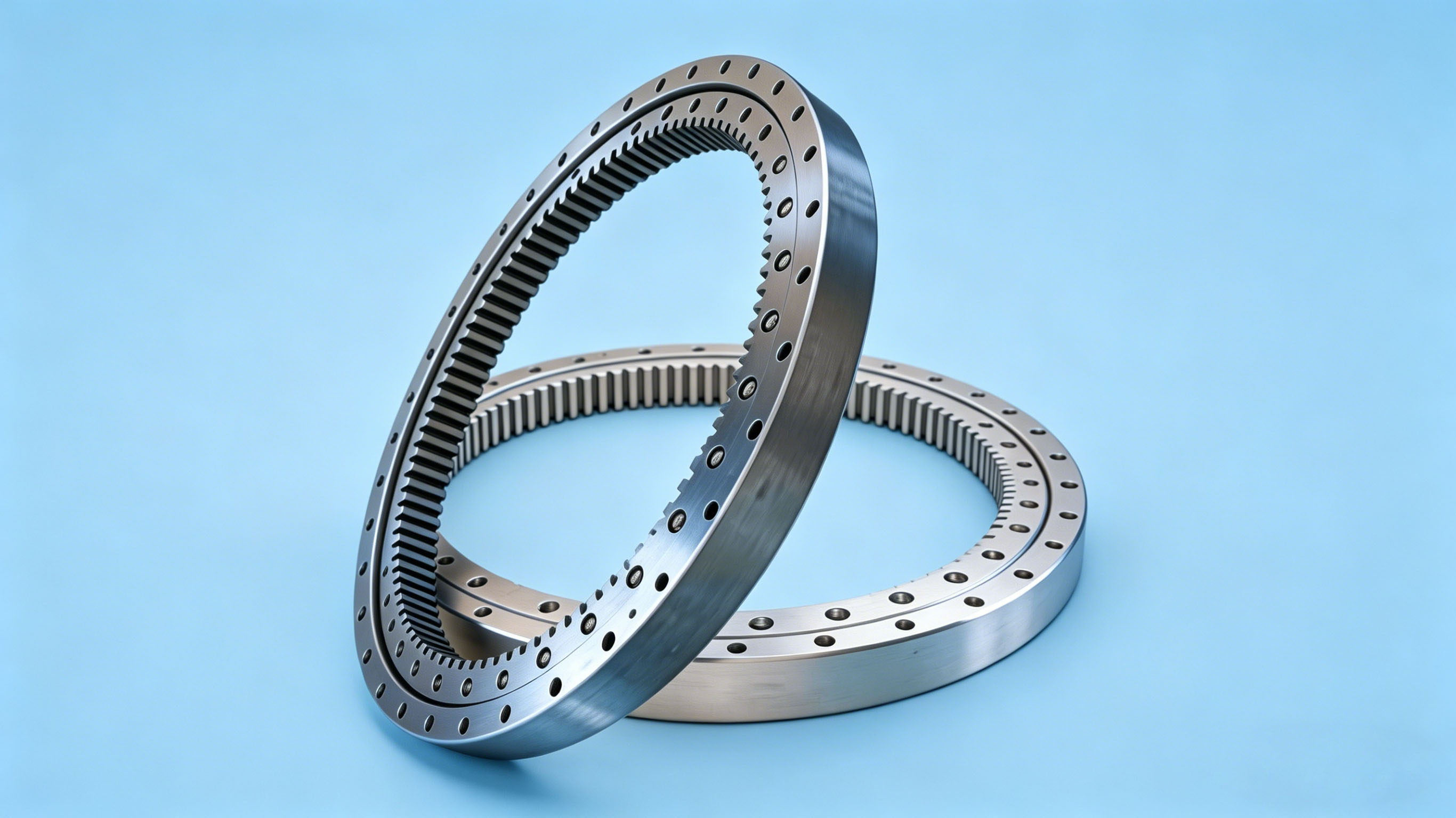
A slewing bearing is a large-scale, precision-engineered rolling element bearing designed to support heavy, slow-turning, or oscillating loads. Unlike conventional bearings, a slewing bearing typically integrates mounting holes, internal or external gears, and sealing systems into a single, robust package. You will find slewing bearings at the heart of cranes, wind turbines, excavators, aerial work platforms, radar systems, and industrial turntables.
A slewing bearing enables rotational movement between two structures while simultaneously managing axial forces (thrust), radial forces, and tilting moment loads. Its compact design replaces complex traditional assemblies, saving space and simplifying equipment manufacturing.
How Does a Slewing Bearing Work – and Why Does Lubrication Matter?
A slewing bearing operates through a simple yet powerful principle: an inner ring and an outer ring rotate relative to each other, guided by rolling elements — typically balls or cylindrical rollers — housed between them. The rolling elements run in dedicated raceways, and in many designs, gear teeth on one ring engage with a drive pinion to produce controlled rotation.
Why does lubrication matter so critically here? During operation, the rolling elements and raceways experience extreme localized pressures. Without proper lubrication, these metal surfaces contact directly, leading to rapid wear, increased friction, heat generation, and eventually, spalling or seizure. Lubrication separates these surfaces with a thin but durable fluid film, reducing friction, carrying away heat, preventing corrosion, and sealing out contaminants like dust, water, and debris. In essence, a well-lubricated slewing bearing moves smoothly and lasts long; a poorly lubricated one fails prematurely.
What Determines the Lifespan of a Slewing Bearing?
The service life of a slewing bearing is not fixed — it depends on multiple interacting factors. Understanding these variables helps you prioritize maintenance efforts.
| Factor | Impact on Lifespan | Controllability |
|---|---|---|
| Load magnitude and direction | Higher loads reduce lifespan | Medium (application design) |
| Rotational speed | Faster speeds generate more heat | Low |
| Environmental conditions (moisture, dust, temperature) | Accelerates corrosion and wear | Medium (sealing/protection) |
| Material and heat treatment quality | Determines fatigue resistance | High (manufacturer selection) |
| Lubrication quality and frequency | Directly controls friction and wear | High (user controllable) |
| Mounting and alignment accuracy | Misalignment causes uneven loading | Medium |
Among these, lubrication is the single most controllable factor for extending slewing bearing life. While you cannot easily change the load or environment, you can control what grease you use, how often you apply it, and in what quantity.
How Does Grease Affect a Slewing Bearing’s Performance?
Grease is not merely a lubricant — it acts as a multifunctional agent within the slewing bearing:
Reduces friction – The base oil in grease forms a hydrodynamic or elastohydrodynamic film between rolling elements and raceways, lowering the coefficient of friction and reducing torque resistance.
Prevents wear – Anti-wear (AW) and extreme pressure (EP) additives chemically react with metal surfaces to form sacrificial layers that protect against micro-welding and scoring.
Extends fatigue life – By minimizing asperity contact, proper lubrication delays the onset of subsurface rolling contact fatigue (spalling).
Seals against contaminants – The grease itself acts as a dynamic seal, filling internal clearances and blocking ingress of dirt, rain, or process debris.
Protects against corrosion – Rust inhibitors in the grease prevent oxidation of bearing rings and rolling elements, especially during idle periods or in humid environments.
Choosing the wrong grease — or failing to replenish it — reverses every one of these benefits, turning the grease from a protector into a grinding paste or a heat trap.
How to Choose the Right Grease for Your Slewing Bearing
Selecting a grease for a slewing bearing is not a one-size-fits-all decision. Consider the following criteria:
Base oil viscosity – For slow, heavily loaded slewing bearings (typical in excavators or cranes), use high-viscosity oils (ISO VG 220–460). For faster, lighter-duty applications, lower viscosity may suffice.
Thickener type – Lithium-complex and polyurea thickeners offer excellent mechanical stability, water resistance, and high-temperature performance. Avoid simple soaps like sodium or calcium for demanding applications.
Consistency (NLGI grade) – NLGI 1 or 2 greases are most common for slewing bearings. NLGI 1 flows slightly better for low-temperature or centralized systems; NLGI 2 provides better retention.
Additive package – Ensure the grease contains EP additives (like molybdenum disulfide or graphite) and corrosion inhibitors. For wet or outdoor environments, look for strong water washout resistance.
Temperature range – Verify that the grease's dropping point and low-temperature pumpability match your equipment's operating environment.
When in doubt, consult the original equipment manufacturer (OEM) or a specialist lubricant supplier. Using an incompatible grease — for example, mixing lithium and polyurea thickeners — can cause hardening or softening, leading to lubrication failure.
How to Lubricate a Slewing Bearing Correctly
Correct lubrication involves more than simply pumping grease into a fitting. Follow these best practices for a slewing bearing:
Method – Use a grease pump (manual or automatic) connected to the bearing's built-in grease fittings. For large slewing bearings with multiple fittings, lubricate each point until fresh grease appears at the seal lip or purge port. Rotate the bearing during lubrication to distribute grease evenly across the raceways.
Frequency – Base relubrication intervals on operating hours, not calendar days. A typical rule for heavy-duty slewing bearings is every 100–200 operating hours, but always follow the manufacturer's recommendation. Reduce intervals under extreme loads, vibration, moisture, or temperature.
Quantity – Add only the recommended amount. Too little grease leads to metal-to-metal contact; too much can cause overheating due to churning or blow seals. A common guideline is to add grease until you see a small bead of clean grease purging from the seals.
Grease compatibility – Avoid mixing greases with different thickeners or base oils. If switching grease types, thoroughly flush the old grease by rotating and lubricating with the new grease until all old grease is expelled.
Automatic lubrication systems (single-line or progressive) are highly recommended for hard-to-reach or continuously operating slewing bearings, as they provide consistent, frequent, metered doses of fresh grease.
What Are the Warning Signs of Poor Lubrication in a Slewing Bearing?
Detecting lubrication problems early can prevent catastrophic failure. Watch for these indicators in your slewing bearing:
Unusual noise – Grinding, clicking, or rattling sounds during rotation suggest insufficient grease film or contamination.
Increased drive torque – If the slewing bearing becomes harder to rotate, friction has increased — often due to grease degradation or lack of relubrication.
Elevated temperature – Localized hot spots on the bearing ring or housing indicate excessive friction or over-greasing.
Leaking or hardened grease – Grease that leaks out water-thin or has turned hard, crumbly, or dark has oxidized or separated. Replace it immediately.
Visible rust or pitting – Corrosion around seals or on exposed raceways means the grease's corrosion inhibitors are exhausted or ineffective.
Seal damage – Worn or extruded seals allow contaminants in and grease out, accelerating failure.
If any of these signs appear, perform a regreasing cycle first. If symptoms persist, plan for a professional inspection, possibly including grease analysis or borescope examination of the raceways.
Conclusion
A slewing bearing represents a significant investment in your equipment's structural and functional integrity. While many factors influence its service life, lubrication is the one area where daily operational decisions have the greatest long-term impact. Choosing the right grease, applying it at the correct frequency and quantity, and responding promptly to warning signs can double or triple the usable life of a slewing bearing.
Treat lubrication not as a routine chore, but as a strategic maintenance activity. A few minutes of careful greasing today can prevent weeks of downtime and expensive replacement tomorrow.
LyraDrive: High-Quality Custom Slewing Bearing Manufacturer
At Luoyang Slewing Bearing Co., Ltd. (LyraDrive) , we understand that even the best lubrication strategy starts with a well-designed slewing bearing. As a professional one-stop slewing device manufacturer, we specialize in design and development, customized production, sales, and service of slew drives and slewing bearings. Our deep knowledge of how lubrication interacts with bearing geometry, materials, and operating conditions allows us to build products that respond better to proper lubrication and deliver longer service life.
Whether your application requires standard configurations or fully custom solutions, LyraDrive provides high-quality slewing bearings tailored to your specific load, environment, and maintenance requirements. We don't just sell components — we help you maximize the lifespan of your equipment through better design and smarter lubrication practices. Contact LyraDrive for reliable, customized slewing bearings that perform longer and lubricate better.
Frequently Asked Questions (FAQ)
1. How often should I relubricate my slewing bearing if it operates only intermittently?
For intermittent operation, base your relubrication schedule on operating hours rather than calendar time. A common rule is to lubricate every 100–200 operating hours. However, you should also lubricate at least once every six months even if the operating hours are not reached, because grease can separate, harden, or lose its protective properties over time. For outdoor or humid environments, consider more frequent lubrication regardless of usage.
2. Can I mix two different greases in my slewing bearing?
In most cases, no. Mixing greases with different thickeners (e.g., lithium-complex and polyurea) or different base oil types can cause the mixture to soften, harden, or separate – all of which lead to lubrication failure. If you must switch to a different grease, thoroughly purge the old grease by rotating the slewing bearing while pumping the new grease through all fittings until only the new grease exits the seals.
3. What happens if I over-grease my slewing bearing?
Over-greasing is a common mistake. Excess grease can cause churning losses, which generate heat and increase internal temperature. This heat accelerates grease oxidation and may soften or degrade the grease. In extreme cases, over-greasing can blow out the seals, allowing contaminants to enter and grease to leak out. Always follow the manufacturer’s recommended quantity and stop when fresh grease just begins to appear at the seal lip.
4. Can a slewing bearing fail even with regular lubrication?
Yes, although regular lubrication dramatically reduces risk, it does not eliminate all failure modes. A slewing bearing can still fail due to excessive overload, misalignment during installation, manufacturing defects, seal damage allowing contamination, or fatigue reaching the end of its calculated service life (L10 life). However, proper lubrication remains the single most effective operational practice to maximize lifespan and delay fatigue failure.
5. How do I know if my grease is still effective inside the slewing bearing without disassembling it?
You cannot directly see the grease inside a sealed slewing bearing, but you can monitor several indicators: check the condition of grease that purges from the seals (it should be smooth, uniform, and free of dark discoloration or metallic particles); listen for unusual grinding or clicking noises; measure operating temperature; and monitor drive torque. For critical applications, periodic grease sampling and analysis (viscosity, particle count, water content, and wear metals) can provide reliable evidence of grease condition without disassembly.
 WhatsApp
 sales@lyradrive.com
 +8613903880726