



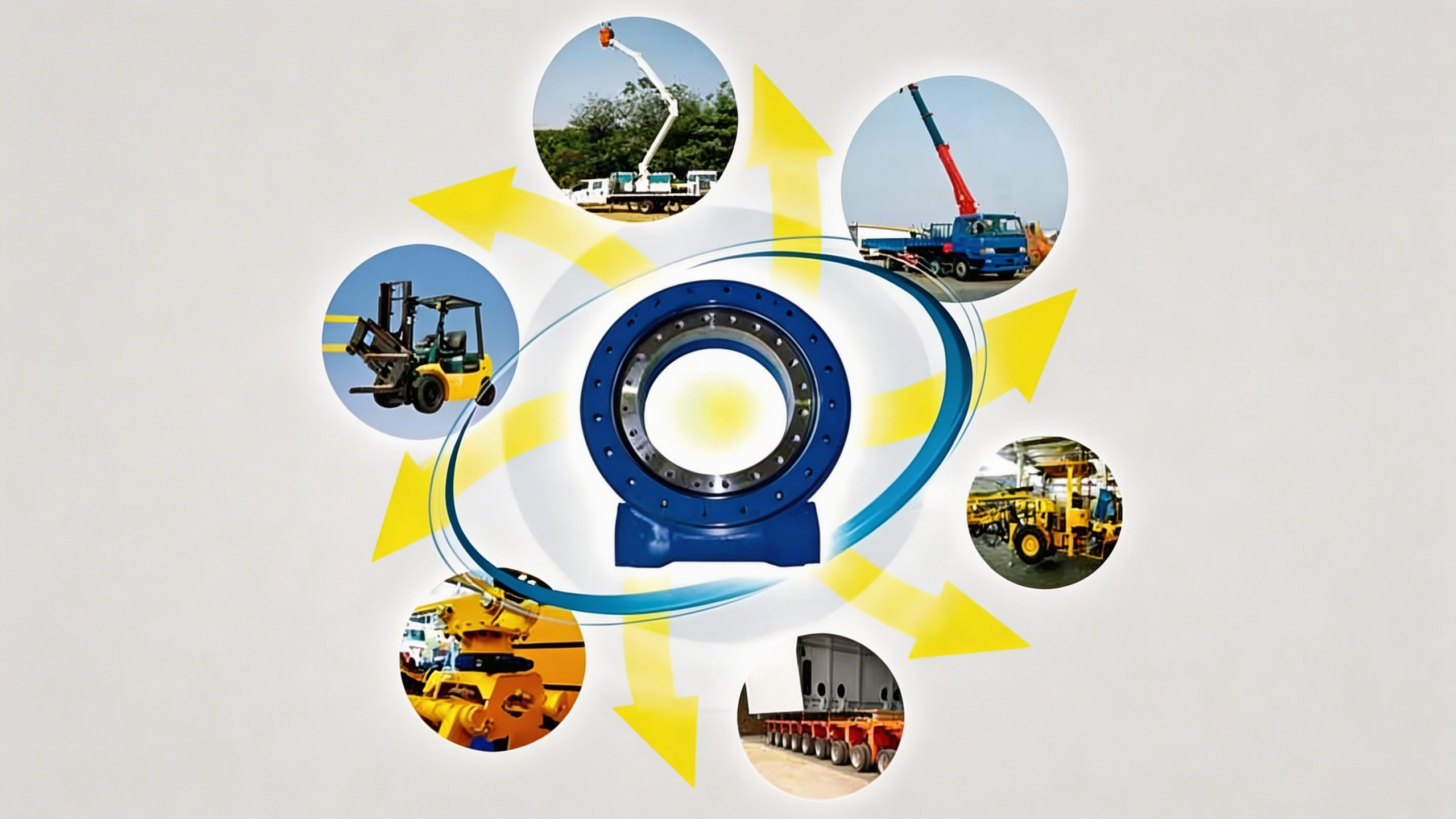
Industrial Uses of Heavy-Duty Slew Drives
In the landscape of modern industry, massive machines perform tasks with astonishing precision. From the rotating boom of a towering crane at a construction site to the gentle tilt of a solar panel following the sun, a critical component enables this controlled, powerful motion: the heavy-duty slew drive. These compact yet robust units are the unsung heroes of rotational movement, providing the strength and accuracy required in the world's most demanding applications. Understanding what they are, why they matter, and how they power industries worldwide is essential for anyone involved in modern machinery and industrial design.
What is a Heavy-Duty Slew Drive?
A heavy-duty slew drive is a sophisticated, pre-assembled gearbox designed to manage heavy loads while facilitating smooth, controlled rotational movement. Think of it as a high-capacity rotating platform. Its core components include a slewing bearing (which handles axial, radial, and tilting loads), a worm gear (which drives the rotation), a durable housing, and protective seals with internal lubrication. This integrated design allows a machine to rotate a heavy part—like a crane arm or excavator cab—with precision and safety, even under immense stress and in harsh environments.
Key Features of Heavy-Duty Slew Drives
What sets a heavy-duty slew drive apart from standard rotation systems are its engineered features:
Integrated Slewing Bearing: Unlike separate bearing and gear arrangements, the slewing bearing is built to simultaneously handle heavy thrust loads, radial forces, and tilting moments.
Worm Gear Mechanism: This provides high torque multiplication and a significant reduction in speed, offering precise control. A key benefit is its self-locking capability, which prevents the load from drifting or back-driving when power is cut off—a critical safety feature.
Robust Housing and Seals: The sealed housing protects internal components from contaminants like dust, water, and debris, which is vital for longevity in outdoor or dirty environments.
Pre-Lubrication: Most units come pre-filled with high-quality grease, ensuring reliable performance from the start.
Why Heavy-Duty Slew Drives Are Important in Industry?
Industrial operations demand reliability, safety, and efficiency. Heavy-duty slew drives deliver on all fronts by providing a single, compact solution for complex rotational needs. They eliminate the need for engineers to design custom, multi-part rotating systems, which saves space, reduces assembly time, and improves overall machine reliability. Their ability to deliver high torque and precise motion control under extreme loads makes them indispensable for modern heavy machinery.
Advantages of Using Heavy-Duty Slew Drives in Industrial Settings
Choosing a dedicated slew drive offers numerous operational benefits:
Exceptional Load Capacity: They are engineered to bear immense axial, radial, and moment loads simultaneously.
Space and Weight Efficiency: By combining bearing, gear, and housing into one unit, they save valuable space and reduce the overall weight of the machinery.
Precision and Smoothness: The worm gear design ensures backlash-controlled, smooth rotation, allowing for accurate positioning.
Reduced Maintenance: With their sealed, lubricated design, they require significantly less maintenance than traditional gear-and-bearing assemblies.
Enhanced Safety: The self-locking feature of the worm gear prevents uncontrolled movement, adding a critical layer of safety in lifting and positioning applications.
Major Industrial Applications of Heavy-Duty Slew Drives
The versatility of slew drives makes them essential across a wide spectrum of industries:
Construction Equipment: From tower cranes and crawler cranes to excavators and concrete pump trucks, slew drives provide the rotational force for lifting, digging, and placing heavy materials.
Renewable Energy: In solar tracking systems, they slowly rotate large arrays of solar panels to follow the sun, boosting energy output. In wind turbines, they are critical for yaw (turning the nacelle to face the wind) and pitch (adjusting blade angles) control.
Mining and Material Handling: Rugged slew drives power the rotation of heavy equipment like stacker-reclaimers, excavators, and drilling rigs, operating reliably in dusty and abrasive conditions.
Port and Marine Equipment: Ship-to-shore cranes, mobile harbor cranes, and offshore platform cranes rely on them for safe and precise load handling in corrosive saltwater environments.
Aerial Work Platforms: Boom lifts and cherry pickers use slew drives to rotate the work platform safely and smoothly, providing stability and control at height.
Industrial Automation and Robotics: In manufacturing, they are used in robotic arms, rotary tables, and positioning systems that require high precision and repeatability.
Factors to Consider When Selecting a Slew Drive
Choosing the right slew drive is critical for performance and longevity. Key considerations include:
Load Requirements: Accurately calculate the maximum axial, radial, and tilting moment loads the drive must handle.
Environmental Conditions: Consider exposure to temperature extremes, moisture, dust, and corrosive elements. This dictates the need for special seals, coatings, or materials.
Torque and Speed: Determine the required input torque and the desired output rotational speed for your application.
Mounting and Space Constraints: Evaluate the available space and ensure the drive's mounting configuration is compatible with your machinery.
Duty Cycle: How often and for how long will the drive operate? Continuous operation demands a more robust design than intermittent use.
How to Maintain Performance and Longevity of a Slew Drive?
Proper maintenance is straightforward but essential to maximize the lifespan of a slew drive:
Follow a Regular Lubrication Schedule: Use the manufacturer's recommended grease and intervals. Proper lubrication is the single most important factor for long life.
Inspect Seals Regularly: Check the integrity of the seals to ensure they are keeping contaminants out and grease in. Replace any damaged seals immediately.
Check Mounting Bolts: Periodically verify that all mounting bolts are tightened to the specified torque to prevent loosening from vibration.
Monitor for Unusual Noises or Vibrations: Grinding, knocking, or excessive vibration can indicate gear wear, bearing damage, or contamination.
Promptly Replace Worn Components: Addressing minor issues early prevents them from escalating into catastrophic failures that cause costly downtime.
Future Trends in Slew Drive Technology
The technology behind slew drives continues to evolve, driven by the demands for smarter, stronger, and more efficient machinery. Key trends include:
Smart Monitoring Systems: Integration of sensors to monitor temperature, vibration, and lubrication levels in real-time, enabling predictive maintenance.
Advanced Materials: The use of high-strength, lightweight alloys and composites to reduce weight without compromising load capacity.
Superior Corrosion Protection: Development of advanced coatings and seal materials to withstand the most aggressive environments, particularly in offshore and chemical applications.
Enhanced Precision: Gear grinding and manufacturing improvements that reduce backlash for even greater positioning accuracy in automation and robotics.
Integration with Electric Drives: Optimized designs that work seamlessly with advanced electric motors and servo controls for improved energy efficiency and control.
LyraDrive: Get Heavy-Duty Slew Drives 3D Drawing for Your Industrial Application
When your project demands reliability and performance, selecting the right slew drive partner is crucial. At LyraDrive, we are a specialized manufacturer dedicated to producing high-quality slew drives and slewing bearings. We understand that every industrial application has unique requirements, which is why we offer a diverse range of products to meet your exact needs.
Our comprehensive portfolio includes various types to suit different motion control challenges, such as worm gear slew drives for self-locking and high torque, double worm slew drives for applications requiring extra precision and reduced backlash, and spur gear slew drives for high-speed and high-efficiency rotation.
We believe that seeing is believing. To help you make an informed decision, LyraDrive offers a collaborative engineering experience. By providing us with your specific application data—such as load requirements, operating conditions, and mounting constraints—our team can generate a detailed custom 3D drawing of the slew drive for your review. This allows you to visualize the component in your assembly, verify critical interfaces, and gain a crystal-clear, intuitive understanding of how the drive will function within your machine. Let LyraDrive provide the precise, robust rotational solution your project demands.
Frequently Asked Questions (FAQs)
Q1: What is the primary function of a heavy-duty slew drive?
A: Its primary function is to provide controlled rotational movement to a part of a machine while simultaneously supporting heavy axial, radial, and tilting loads. It acts as a high-capacity, precise rotating joint.
Q2: Which industries most commonly use slew drives?
A: They are extensively used in construction (cranes, excavators), renewable energy (solar trackers, wind turbines), mining, material handling, ports and marine, and industrial automation.
Q3: How does a slew drive improve the efficiency of solar panels?
A: In solar tracking systems, the slew drive slowly rotates the solar panel array throughout the day to keep it oriented directly toward the sun. This maximizes the amount of sunlight captured, significantly increasing energy generation compared to fixed panels.
Q4: What is the typical lifespan of a heavy-duty slew drive?
A: With proper installation, regular maintenance, and correct lubrication according to the manufacturer's guidelines, a heavy-duty slew drive can operate reliably for many years, even in demanding conditions.
Q5: What are the most important maintenance steps for a slew drive?
A: The key steps are: 1) Regular re-lubrication with the correct grease, 2) Periodic inspection of the seals for damage, and 3) Checking that all mounting bolts are tight and properly torqued.
Q6: Can heavy-duty slew drives be used outdoors in harsh weather?
A: Yes, they are specifically designed for such environments. Their robust housings, high-quality seals, and optional corrosion-resistant coatings allow them to operate reliably in rain, dust, extreme temperatures, and even offshore saltwater conditions.
Q7: What types of slew drives does LyraDrive manufacture?
A: LyraDrive is a professional manufacturer specializing in a wide variety of slew drives and slewing bearings. Our product range includes worm gear slew drives, double worm slew drives, and spur gear slew drives, designed to meet diverse industrial requirements for torque, precision, and speed.
Q8: How can I get a 3D drawing of a LyraDrive product for my project?
A: To ensure the perfect fit for your application, you can contact LyraDrive with your specific project data, such as load capacities and mounting space. Our engineering team will then analyze your requirements and provide a custom 3D drawing, giving you a clear and intuitive understanding of how the slew drive will integrate into your design.
 WhatsApp
 sales@lyradrive.com
 +8613903880726