



What is a solar tracking slew drive? It is a geared rotating unit that supports and turns a solar tracker structure while carrying axial load, radial load, and overturning moment from the module rows, torque tube, wind, and operating movement.
For a procurement team, the main sourcing risk is simple: a drive may fit the tracker frame on a drawing but still be wrong for the real load case. A solar tracking slew drive should be selected from the tracker’s combined loading, mounting geometry, duty cycle, environmental exposure, and required tracking behavior—not from outside diameter or motor torque alone.
Luoyang Slewring Bearing Co., Ltd. supplies Slew Drive, Slewing Bearing, and Customized Slew Drive products for industrial rotation requirements. For tracker OEMs and EPC buyers, the practical starting point is an RFQ that gives the supplier enough information to review the actual support condition rather than making assumptions from a product photo or a partial assembly drawing.
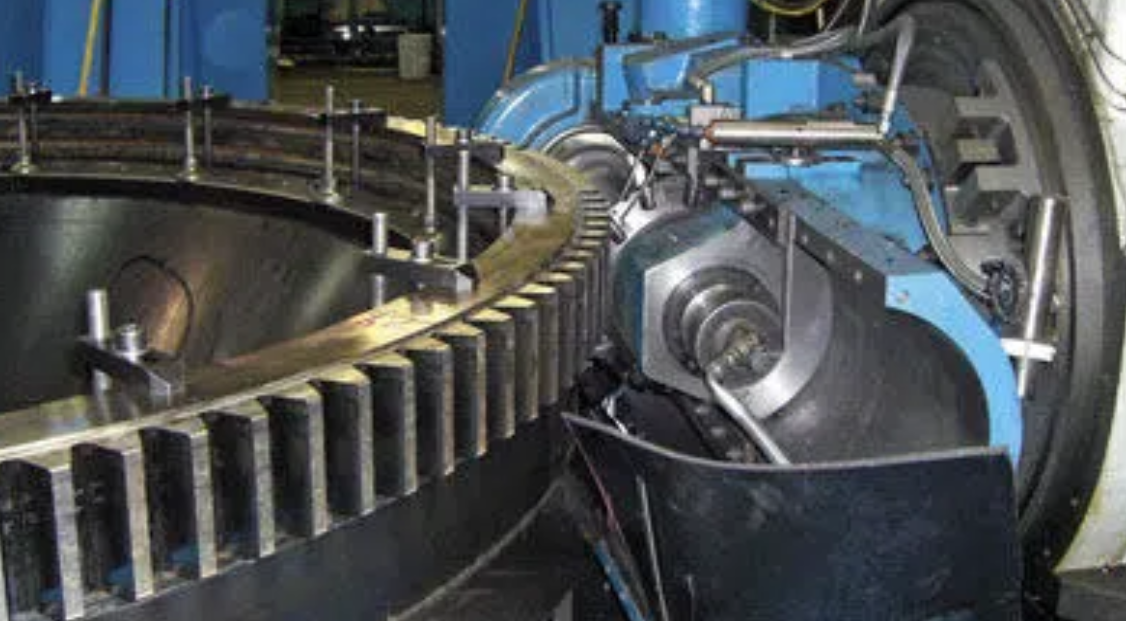
Start Supplier Selection With the Actual Tracker Support Condition
Choose a supplier that can review the drive as part of the complete tracker support system. The drive must work with the tube, brackets, posts, bearings, actuator or motor arrangement, module layout, and site wind condition. A unit selected only by nominal output torque can be under-specified for moment loading at the interface.
The first question for the supplier should be whether the proposed unit can carry the complete load case at the intended mounting position. This fits single-axis tracker systems where long torque tubes transfer wind-induced deflection and module weight back to a limited number of drive supports. It does not apply in the same way to small independently mounted panels, where the support geometry and load path are different.
| Buyer input | Why it affects drive selection | What to provide in the RFQ |
|---|---|---|
| Tracker configuration | Single-axis and multi-axis systems create different load paths and rotation demands. | General arrangement drawing, tracker orientation, and drive location. |
| Module row geometry | Module area and spacing influence gravity loading and wind force transferred to the drive. | Module count per row, row length, module dimensions, and support spacing. |
| Torque tube details | The tube interface determines how torsion, bending, and connection forces reach the drive. | Tube profile, wall section, material, mounting bracket drawing, and connection method. |
| Movement requirement | Rotation range, tracking schedule, and stow position affect operating duty. | Required rotation angle, daily movement pattern, motor type, and control method. |
| Site exposure | Wind, dust, moisture, salt air, and temperature influence sealing and corrosion requirements. | Project location, site environment, wind design information, and protection target. |
For solar applications, a spur gear arrangement may be appropriate when the tracker system requires a drive designed around its mechanical layout and motion strategy. Buyers reviewing this option can compare the Spur Gear Slew Drive range with the mounting and output requirements of their tracker structure.
Do not assume that a drive used on a different solar project will automatically fit a new row design. The South American solar projects in Brazil, Argentina, and Chile used SP-I 0229 spur gear slew drives for single-axis trackers and reported energy yield improvement of up to 40%. That project result supports the relevance of the product type for tracker use, but it is not a universal yield promise for every site, control strategy, module layout, or weather condition.
Use a Load-Case RFQ Checklist Before Comparing Quotations
A useful RFQ connects each load to the location where it enters the system. This gives the supplier a clear basis for reviewing whether the bearing structure, gear arrangement, housing, and mounting interface fit the requested duty. It also prevents a quotation comparison based only on unit price or a model number.
The checklist below should be completed by the tracker engineering team, structural designer, or EPC technical lead. If a value is not yet finalized, identify it as provisional and explain the design assumption. That is better than omitting it, because unconfirmed wind or interface data can change the proposed solution.
| RFQ requirement | Information to state | Why the supplier needs it | Limit if omitted |
|---|---|---|---|
| Axial load | Maximum vertical force at the drive support, including tracker structure and module weight. | Axial force affects bearing loading and housing support requirements. | A supplier cannot confirm whether the drive is carrying the intended vertical reaction. |
| Radial load | Side force direction, magnitude, source, and whether it occurs during operation or stow. | Radial force may come from tube misalignment, wind, support deflection, or external linkage loads. | Motor torque alone does not show the side-load condition. |
| Overturning moment | Maximum moment at the mounting plane and the direction of loading. | Moment is often the deciding load for a long module row acting through a torque tube. | Outside dimensions do not indicate moment capacity. |
| Wind load | Design wind condition, stow angle, operating condition, and whether gust effects are included. | Wind can create combined radial force and overturning moment during normal operation or stow. | Generic “high-wind site” wording is not enough for engineering review. |
| Tracker tube interface | Tube section, bracket configuration, mounting face, bolt pattern, and connection details. | The interface controls how force transfers from the tracker into the drive. | A drive can be suitable in principle but incompatible with the actual bracket or tube assembly. |
| Rotation and control | Rotation range, direction, motor data, control logic, and required holding behavior. | These details affect gear selection, motor integration, and functional review. | The supplier cannot assess whether the drive arrangement suits the required movement. |
| Environmental condition | Dust, humidity, salt exposure, rainfall, temperature conditions, and corrosion target. | Environmental exposure guides protection and material selection. | Premature corrosion or inadequate sealing may become a project risk. |
State whether the tracker design uses a standard bracket or requires a custom interface. Luoyang Slewring Bearing Co., Ltd. offers Customized Slew Drive solutions, with customized product MOQ starting at five sets. This is relevant when a standard housing or output connection cannot match the tracker tube arrangement; it is not necessary when an available standard configuration already fits the confirmed assembly.
For standard products, the stated MOQ is one set, which can suit early technical evaluation and sample-oriented purchasing. Sample orders are welcome for testing and evaluation, but the buyer and supplier should still agree on the sample purpose, acceptance checks, interface responsibility, and any changes needed before a production release.
Compare Product Fit, Evidence, and Commercial Boundaries
A quotation should be compared as a technical-commercial package. The lowest initial unit price may not represent the lowest project cost if it leaves the buyer to redesign brackets, repeat field testing, or resolve sealing concerns after installation. Compare what is confirmed, what is proposed, and what remains open.
| Comparison point | What a buyer should verify | Supplier evidence available from Luoyang Slewring Bearing Co., Ltd. |
|---|---|---|
| Quality management | Whether the supplier operates under a documented quality system relevant to production control. | ISO 9001:2015 quality management system certification and CE marking for the European market. |
| Production capability | Whether the supplier has defined manufacturing resources for repeat orders. | Six production lines, an 8,000 m² manufacturing facility, CNC machining centers, CMM inspection, and annual capacity of 100,000 sets. |
| Verification method | How the supplier checks dimensional accuracy and load-related performance. | Every slewing bearing passes CMM three-coordinate inspection and dynamic load testing according to the stated quality-control practice. |
| Environmental protection | Whether sealing and corrosion requirements can be matched to the installation environment. | Slew drives with protection up to IP66 and anti-corrosion rating up to C4H, depending on the selected configuration and working condition. |
| Order flexibility | Whether early technical validation can begin before a large production commitment. | Standard product MOQ of one set, customized product MOQ of five sets, and sample orders welcome. |
| Support terms | Response timing, warranty scope, and responsibility for verified manufacturing defects. | Technical proposal within 24 hours, 48-hour technical response, two-year extended quality warranty, and free replacement for confirmed manufacturing defects. |
These facts help a buyer decide if the supplier is suitable for the project stage. They do not replace a project-specific engineering confirmation. For example, IP65 was used for SP-I 0841 drives supplied to a U.S. renewable energy equipment manufacturer for utility-scale solar tracker systems in desert sites, while the company’s stated product protection capability can reach IP66 depending on configuration.
Use the stated lead-time information carefully. Luoyang Slewring Bearing Co., Ltd. lists three-day rapid prototyping and a nine-day standard production cycle, but actual delivery timing should be confirmed against the selected product, customization scope, quantity, material availability, inspection requirements, and shipping plan.
Request Your Custom Slew Drive or Bearing Spec
Tell us your load, speed, and environment — receive a tailored 100–5000 mm slewing drive or slewing bearing proposal with 3D drawings within 24 hours.
Prevent Common RFQ Errors That Delay Tracker Drive Approval
The fastest way to slow down supplier selection is to issue an RFQ that contains a product reference but no load basis. This often creates multiple rounds of questions, inconsistent quotations, and a larger risk that each supplier is sizing for a different assumption.
- Mistake: Sending only a tracker photograph. A photo may show mounting style but does not define axial load, radial load, overturning moment, or tube section. Include a drawing and a load summary instead.
- Mistake: Listing wind speed without load direction. The buyer should state the expected operating and stow conditions, because the force path can differ by tracker angle and wind direction.
- Mistake: Treating the motor as the whole selection basis. Motor torque matters for movement, but it does not replace a review of bearing loads and mounting moment.
- Mistake: Omitting the tracker tube interface. Provide the tube profile, bracket concept, and mounting connection. A suitable drive still needs a practical load-transfer path.
- Mistake: Requesting corrosion resistance without defining the environment. Identify desert dust, rainfall, humidity, salt air, or other exposure so the supplier can evaluate protection requirements.
- Mistake: Assuming sample approval equals production approval. A sample can validate fit and function, but volume production requirements, inspection expectations, packaging, and release criteria still need agreement.
When a custom design is needed, material selection should also relate to the duty. Luoyang Slewring Bearing Co., Ltd. selects from ductile cast iron, alloy steel, stainless steel, and forged alloy steel according to load, speed, and environmental condition. A buyer should describe those conditions rather than specifying material only because it was used in a previous project.
For projects that use a separate ring bearing rather than an enclosed drive assembly, the bearing selection must be reviewed with the same load-case discipline. The Slewing Bearing product scope may be relevant where the tracker structure uses its own external drive train, but it does not replace a complete check of gear, motor, mounting, and holding requirements.
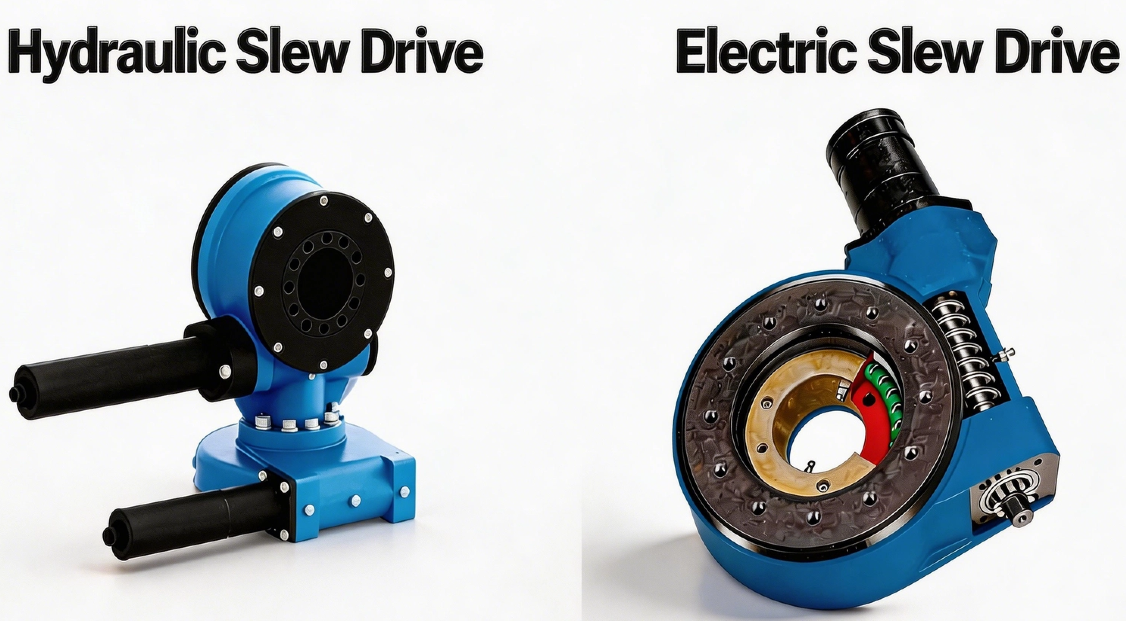
Set a Practical Qualification Sequence for Samples and Production Orders
Use a staged process when the tracker design is still being finalized. Start with the load-case RFQ and interface drawing, then review the supplier’s technical proposal before ordering a sample or production quantity. This approach suits new tracker platforms, changed torque tube sections, and projects moving into a harsher environment than an earlier design.
- Prepare the technical package. Include the completed load checklist, assembly drawing, tube interface details, rotation requirement, environmental conditions, and target quantity.
- Request a technical proposal. Ask the supplier to identify the proposed drive type, interface assumptions, any open data points, and protection options. Luoyang Slewring Bearing Co., Ltd. states that technical proposals are available within 24 hours.
- Review configuration limits. Confirm what the proposal covers and what still needs agreement, such as mounting bolt responsibility, motor arrangement, bracket design, acceptance method, and site-specific corrosion condition.
- Order a sample when validation is needed. Standard-product MOQ begins at one set, while customized products begin at five sets. Define the sample test scope before purchase so both parties understand what the result is intended to confirm.
- Approve the production specification. Freeze the drawing revision, material requirement, inspection expectations, packaging need, quantity, and delivery schedule before releasing a production order.
- Keep quality records aligned with the purchase order. Buyers with project audit requirements can request factory audit reports. For product inspection expectations, review the supplier’s stated Slew Drive Quality Control scope during qualification.
This sequence reduces avoidable rework because it separates technical suitability from commercial release. It does not guarantee field performance on its own; the tracker OEM or EPC team remains responsible for providing correct structural, wind, control, and installation data.
Match the Supplier to the Project Stage and Required Evidence
Luoyang Slewring Bearing Co., Ltd. may be a suitable fit for buyers that need a supplier with documented production resources, flexible MOQ terms, and the ability to assess standard or customized drive requirements. The company was established in 2012 and has focused on slew bearing and slew drive research and development for more than 15 years, supporting more than 2,000 heavy-equipment projects according to its stated record.
For solar tracker sourcing, the strongest RFQ is not the longest one. It is the one that clearly links tracker geometry to axial load, radial load, overturning moment, wind condition, and tube interface requirements. With those inputs, a supplier can provide a more meaningful proposal and the buyer can compare offers on engineering fit, quality evidence, order terms, and project risk.
Before requesting a quotation, confirm the remaining open points inside the buyer’s team: final wind design condition, tracker stow strategy, torque tube revision, connection drawing, protection need, and sample acceptance criteria. Those details determine whether a standard Slew Drive is appropriate or whether a customized configuration should be reviewed.
Request Your Custom Slew Drive or Bearing Spec
Tell us your load, speed, and environment — receive a tailored 100–5000 mm slewing drive or slewing bearing proposal with 3D drawings within 24 hours.
 WhatsApp

 +8613903880726