



What is a solar tracking slew drive? It is a geared rotation unit that helps a solar tracker move photovoltaic modules toward the sun during the day. For utility-scale projects and OEM tracker programs, the drive must support controlled motion, repeatable positioning, environmental protection, and long operating life.
A buyer can regret choosing a supplier based only on catalog torque and a low quotation. A solar tracking slew drive may fit the mounting envelope yet still create field risk if the supplier cannot show evidence for backlash, holding torque, sealing, corrosion resistance, endurance, and product traceability.
Luoyang Slewring Bearing Co., Ltd. supplies slew drives, slewing bearings, and customized drive solutions for industrial rotation applications. Our qualification discussion should start after your team has already defined basic size, load, mounting pattern, rotation range, and torque needs.
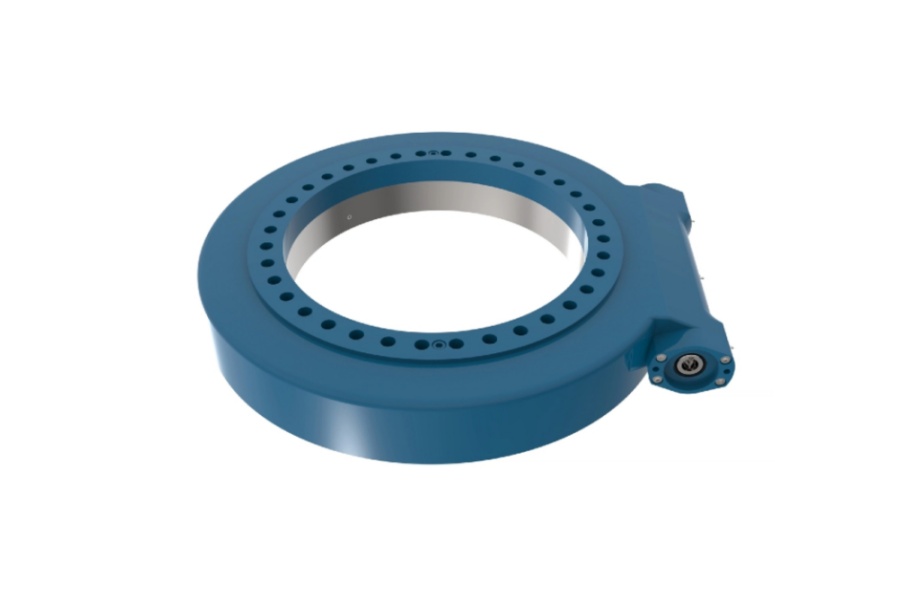
Start supplier qualification with the evidence that catalog sheets often omit
Catalog data is useful for narrowing the field. It is not enough for final supplier approval. Two drives can show similar rated values while having different backlash control, sealing design, gear contact quality, inspection records, and field suitability.
For a utility-scale tracker, ask each supplier to identify the exact product configuration behind every stated value. This means the drive model, gear arrangement, motor interface, mounting position, seal level, coating system, and test condition must be connected to the submitted evidence.
Separate catalog claims from qualification evidence
- Catalog claim: A stated torque, ratio, or protection level without a linked test record. Use it for preliminary screening only.
- Configuration-specific evidence: A test result tied to a model number, revision, serial number, or documented build condition. Use it for technical approval.
- Production evidence: Inspection records, traceability documents, and acceptance criteria that show how the approved configuration will be controlled in repeat production.
- Project evidence: A relevant delivered application that shows the supplier has worked with similar motion, environment, and duty conditions. This supports confidence but does not replace your own acceptance requirements.
The best conclusion is simple: approve a supplier only when the evidence matches your intended application. A test from a small indoor actuator does not prove suitability for a large outdoor tracker row. Likewise, a corrosion statement without a coating specification or salt-spray record leaves a gap that your purchasing and engineering teams must resolve.
Luoyang Slewring Bearing Co., Ltd. has supported solar applications with its SP-I series. In South American projects in Brazil, Argentina, and Chile, SP-I 0229 spur gear drives were supplied for single-axis solar trackers, with reported energy yield improvement of up to 40%. That case supports relevance to tracker use, but it does not define the correct model, test plan, or yield result for every new project.
Compare supplier proof for backlash holding torque sealing salt-spray endurance and traceability
Use the table below during supplier shortlisting. It is built around the evidence categories that matter after physical size and torque requirements are known. A supplier should either provide the requested record or clearly state that the record is not available for the proposed configuration.
| Evaluation item | What to request | Why it matters for a tracker | Acceptance limit or boundary to define |
|---|---|---|---|
| Backlash | Measured backlash result, test method, drive model, load condition, and measurement point | Excess movement can reduce pointing repeatability and create unwanted tracker position variation. | Set the maximum allowed value at the application load and state whether it applies to a new drive or after endurance testing. |
| Holding torque | Holding torque report, worm self-locking statement where applicable, and test setup details | The drive must resist wind-related or structure-related rotation when the motor is not actively moving. | Define the safety factor, mounting orientation, external load direction, and whether the value includes motor braking. |
| Sealing | Ingress-protection rating, seal design description, test condition, and applicable configuration | Dust and moisture can affect lubricant condition and moving parts over long outdoor service. | Specify the required rating, cable and motor interface conditions, drainage needs, and any temperature limits. |
| Salt-spray resistance | Salt-spray test report, coating system details, sample photos, test duration, and result criteria | Coastal, humid, and industrial sites may need more corrosion evidence than inland dry sites. | Agree on the test standard, exposure duration, allowed corrosion condition, repair method, and whether fasteners are included. |
| Endurance | Cycle-test report with load, speed, direction changes, lubrication condition, and post-test inspection results | Tracker drives work through repeated daily movement and must retain operating behavior over the agreed duty cycle. | Define cycles, load spectrum, start-stop frequency, temperature range, and required backlash or torque checks after testing. |
| Traceability | Serial-number format, material records, inspection records, nonconformance process, and shipment identification | Traceability helps isolate affected units if a field issue occurs during a multi-row deployment. | State which components require traceability and how long records must be retained. |
Do not accept a general statement such as “tested before shipment” as a substitute for these records. The right evidence is tied to the proposed model and acceptance condition. If the supplier cannot provide salt-spray or endurance data, that does not automatically disqualify the supplier, but the missing evidence should be treated as an open technical risk rather than ignored.
Our listed protection capability reaches IP66 for certain slew drive configurations, and anti-corrosion rating can reach C4H. These are capability boundaries, not automatic specifications for every model. Buyers should confirm that the quoted drive, coating, seal arrangement, and project environment match the requested protection target.
Match the drive design to tracker layout and environmental exposure
Drive selection should follow tracker architecture, not supplier preference. A single-axis tracker, a dual-axis structure, and a compact OEM assembly can place very different demands on gearing, mounting, accuracy, and resistance to external load.
Use spur gear drives when the tracker design calls for their layout advantages
A Spur Gear Slew Drive can be relevant when the tracker structure and control arrangement are designed around a spur gear drive format. The SP-I 0229 case in South America shows a documented application in single-axis solar trackers. It is a useful reference point for buyers assessing similar project types, but it is not proof that SP-I 0229 fits every table length or module arrangement.
For utility-scale projects, request the actual mounting drawing and compare it against your torque tube, support frame, actuator interface, and service-clearance limits. A drive can be technically capable but still unsuitable if bolt access, alignment tolerance, or gearbox orientation creates installation problems.
Use worm-based designs when holding behavior and self-locking are part of the requirement
A Worm Gear Slew Drive may suit projects where self-locking behavior is part of the design approach. However, self-locking should never be assumed from a product family name. Ask for the proposed ratio, actual holding torque evidence, load direction, and the role of any motor brake in the complete system.
For high-wind locations, the decision must include the tracker structure and control strategy. The drive alone cannot be evaluated in isolation. Confirm stow position, emergency operation, wind-load assumptions, and whether external brakes or mechanical stops are required by the tracker design.
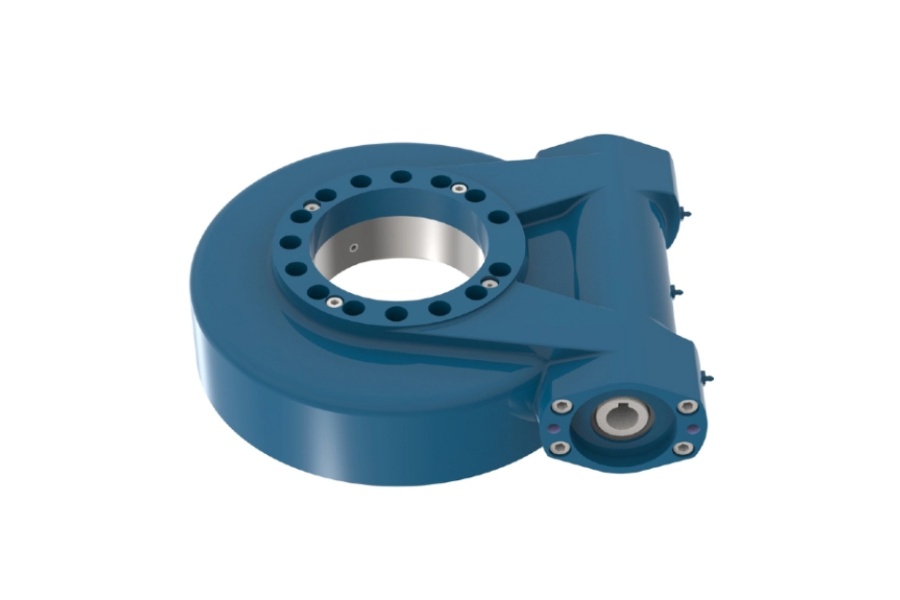
Check the factory controls behind the submitted test data
Test reports are more useful when they come from a supplier with documented production controls. Luoyang Slewring Bearing Co., Ltd. operates an ISO 9001:2015-certified quality management system and holds CE marking for the European market. Factory audit reports are available on request.
Our facility was established in 2012 and includes six production lines within an 8,000 m² manufacturing facility. Annual capacity is stated at 100,000 sets. These facts can help a buyer assess production scope, but capacity alone does not reserve production space or confirm a project delivery schedule.
For slew bearing quality, every slewing bearing passes CMM three-coordinate inspection and dynamic load testing according to the supplied quality information. Buyers should still ask what inspection and performance records apply specifically to the proposed assembled drive, because bearing-level inspection is not the same as full drive-level endurance validation.
Review the supplier’s available Slew Drive Quality Control information with your quality team before release. The practical question is whether the supplier can link incoming material, machining, assembly, final inspection, and shipment identification to the units delivered for your program.
Material selection should also be connected to working conditions. Available materials include ductile cast iron, alloy steel, stainless steel, and forged alloy steel. Select materials based on load, speed, and environment rather than choosing a material only because it appears on a quotation.
Request Your Custom Slew Drive or Bearing Spec
Tell us your load, speed, and environment — receive a tailored 100–5000 mm slewing drive or slewing bearing proposal with 3D drawings within 24 hours.
Use a documented shortlist procedure before issuing a production purchase order
A structured comparison saves time when several factories have similar price levels. The following procedure helps procurement teams convert supplier claims into an approval decision. It is most useful when a project has a defined tracker design but unresolved supplier risk.
- Freeze the application inputs. Provide load cases, duty cycle, mounting drawing, rotation range, environment, target service life, and installation location.
- Request a configuration-specific proposal. Ask each supplier to identify the exact model, gear type, material option, protection level, and any exclusions.
- Issue an evidence checklist. Request backlash, holding torque, sealing, salt-spray, endurance, and traceability records using the same format for each supplier.
- Compare test conditions, not only results. Check whether loads, speeds, directions, temperatures, and acceptance criteria are comparable across reports.
- Review manufacturing controls. Confirm certifications, inspection scope, traceability documents, warranty terms, and factory audit availability.
- Agree on acceptance requirements. Define inspection method, required documents, nonconformance handling, packaging needs, and shipment release conditions before ordering.
- Start with the appropriate order type. Standard products have a stated MOQ of one set, while customized products have a stated MOQ of five sets. Sample orders are welcome for testing and evaluation.
This process does not replace a project-specific engineering review. It gives the buyer a clear way to identify missing proof before commitment. If a supplier’s evidence is incomplete, set a corrective action or additional test requirement rather than filling the gap with assumptions.
Assess commercial fit alongside technical proof
Technical approval and commercial fit must be evaluated together. A supplier may have an acceptable model but fail to meet your expected proposal timing, prototype need, order quantity, or service response requirements.
| Commercial factor | Luoyang Slewring Bearing Co., Ltd. stated term | Buyer action | Limit to recognize |
|---|---|---|---|
| Technical proposal timing | Technical proposal within 24 hours | Submit a clear application package with drawings and operating conditions. | A fast proposal does not replace final engineering approval of unknown project conditions. |
| Prototype timing | 3-day rapid prototyping | Confirm whether the requested configuration qualifies as a prototype and define the required sample checks. | Prototype timing is not the same as a guaranteed mass-production schedule. |
| Standard production cycle | 9-day standard production cycle | Confirm model availability, order quantity, documentation, and shipping requirements before planning installation. | Project-specific customization and logistics may affect the final schedule. |
| Warranty and response | 2-year extended quality warranty and 48-hour technical response | Define claim evidence, responsibility boundaries, and communication contacts in the purchase agreement. | Free replacement applies to confirmed manufacturing defects. |
For buyers seeking customization, a Customized Slew Drive inquiry should include the full mounting and environmental requirement package. The minimum order quantity for customized products is five sets, so this option fits programs with a defined design need rather than one-off experimental concepts with no repeat plan.
Luoyang Slewring Bearing Co., Ltd. can be a relevant fit for tracker OEMs and utility-scale buyers that need a supplier with documented solar application references, ISO 9001:2015 quality management certification, low MOQ options, and stated protection capability up to IP66. Before placing an order, align the selected model with your own required evidence for backlash, holding torque, corrosion exposure, endurance, and traceability.
Request Your Custom Slew Drive or Bearing Spec
Tell us your load, speed, and environment — receive a tailored 100–5000 mm slewing drive or slewing bearing proposal with 3D drawings within 24 hours.
 WhatsApp

 +8613903880726