



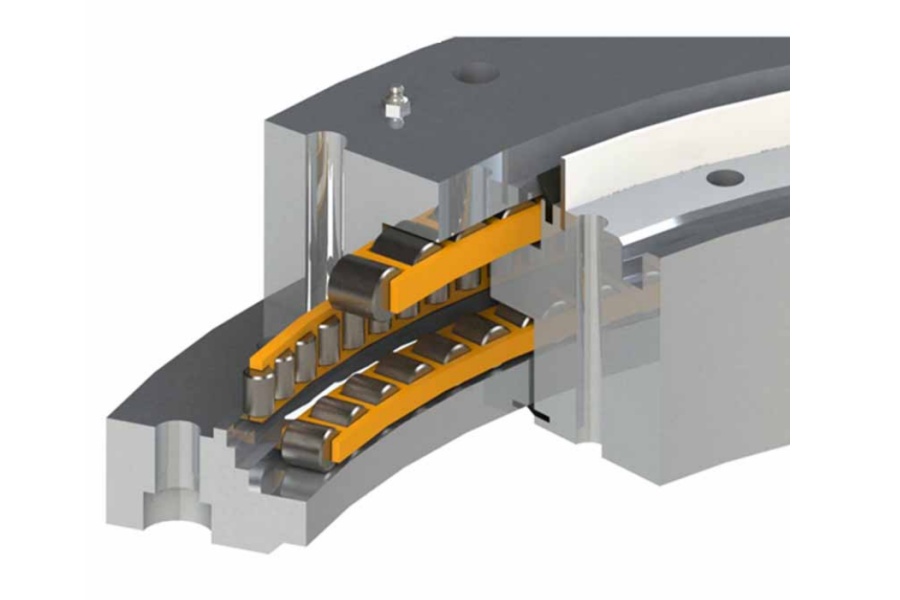
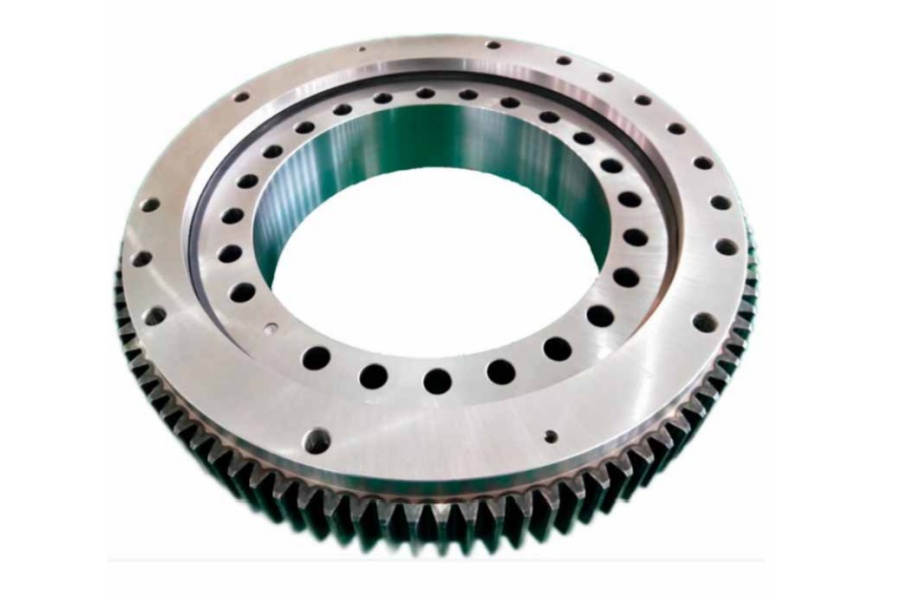
What is a hydraulic slew drive? It is a compact rotation unit that combines a slewing bearing, a gear set (often a worm gear), a housing, and a hydraulic motor. Oil pressure and flow from your system turn the motor, and the gears convert that input into slow, high-torque rotation.
The sourcing risk is easy to miss. Two quotes for the same swing function can look far apart because each supplier assumed a different pressure, flow, and scope. If you pick the lower number without checking those assumptions, the gap often returns later as a change order, a mismatched motor, or a failed acceptance test.
Why Similar Quotes Hide Different Scopes
In my design work on heavy equipment, the most common quoting gap is not the gearbox. It is what sits around the gearbox. One supplier prices the drive only. Another prices the drive, motor, brake, and valve block as a package.
Before you compare totals, list what each quote actually includes. Use this as a starting line-up:
- Drive body: gear type, ratio, bearing type, and housing material
- Hydraulic motor: displacement, rated pressure, and brand or interface
- Holding or braking: brake, counterbalance valve, or reliance on gear self-locking
- Valves and fittings: relief, counterbalance, shuttle, ports
- Sealing and coating: protection rating and corrosion class
- Testing and documents: what is tested, who witnesses it, what report you receive
- Packaging, freight terms, and warranty
A quote that leaves out half of this list is not cheaper. It is incomplete. Ask each supplier to mark every line as "included," "excluded," or "buyer supplied."
A Cost Comparison Method for Pressure, Flow, Displacement, Valves, and Test Scope
Price follows hardware, and hardware follows duty. Pressure, flow, motor displacement, valve needs, and test scope each push cost up or down in a predictable way. The table below shows the direction and the question to ask. It does not list prices, because prices depend on your drawing and quantity.
| Variable | What changes in the hardware | Cost direction | Question to ask the supplier |
|---|---|---|---|
| Pressure rating | Motor construction, seals, hose and fitting class, housing strength | Higher rating raises cost, but may allow a smaller motor for the same torque | What working pressure and peak pressure was the quote built on? |
| Flow range | Pump size, line diameter, valve size, heat in the circuit | Higher flow raises cost on the system side, not only the drive | What flow did you assume at my target output speed? |
| Motor displacement | Motor frame size and mounting adapter | Larger displacement costs more and needs more flow for the same speed | Which displacement is quoted, and at what pressure drop does it reach my torque? |
| Valve requirements | Counterbalance, brake release, relief, shuttle, manifold | Load-holding valves add cost but protect against overrunning loads | Are valves in the price, and who sets them? |
| Test scope | Bench time, instruments, witness visits, reports | Pressure, load, and witnessed tests add cost per unit | Which tests are included, and what record do I receive? |
Next, put every quote on the same technical footing. This five-step check takes about an hour with a spreadsheet:
- Fix your duty. Write down required output torque, holding torque, output speed, axial and radial load, and tilting moment.
- Back-calculate motor torque. Motor torque equals output torque divided by gear ratio and gear efficiency.
- Find the pressure each quote needs. Pressure drop (bar) equals motor torque (N·m) × 20π ÷ displacement (cc/rev), then divide by motor mechanical efficiency. If the result exceeds your system's relief setting, that quote does not fit.
- Check flow. Flow (L/min) equals displacement (cc/rev) × motor rpm ÷ 1,000, then divide by volumetric efficiency. Motor rpm is output rpm × gear ratio.
- Equalize scope. Add the cost of any excluded valve, brake, or test to the lower quote before you compare totals.
This method has limits. It assumes steady-state duty, so shock loads, long duty cycles, or very low speeds need extra review. Efficiency values should come from the supplier's data, not from a rule of thumb.
Common Mistakes When Comparing Quotes
Most comparison errors repeat from project to project. Each one is easy to avoid once you know it.
- Comparing totals instead of scope. A drive-only quote and a drive-plus-valve quote are different products.
- Ignoring pressure margin. A unit that needs 95% of your relief setting to reach rated torque leaves no room for peaks.
- Matching speed but not flow. A larger motor reaches the same speed only with more flow. Your pump may not supply it.
- Assuming gear self-locking replaces a brake. Worm gears can self-lock in many ratios, but vibration and safety rules may still call for a brake or holding valve. Confirm with your applicable standard.
- Leaving test scope vague. "Factory tested" can mean a quick spin or a loaded pressure test. Ask for the procedure.
- Skipping the bearing check. The raceway must carry your load and tilting moment, whatever the motor does.
Request Your Custom Slew Drive or Bearing Spec
Tell us your load, speed, and environment — receive a tailored 100–5000 mm slewing drive or slewing bearing proposal with 3D drawings within 24 hours.
What Supplier Capability Means for Your Quote Review
Luoyang Slewring Bearing Co., Ltd. was established in 2012 and runs six production lines in an 8,000 m² facility. Its production includes CNC machining centers, and its inspection includes CMM three-coordinate measurement. For a buyer, that matters because gear fit and bearing geometry set how evenly load spreads in the drive.
Quality management is certified to ISO 9001:2015, and CE marking is held for the European market. Factory audit reports are available on request. Our slew drive quality control page explains the inspection steps in more detail. Every slew bearing passes CMM inspection and dynamic load testing, and the failure rate stays below the 0.5% industry standard.
Real projects give these facts more weight. A South Korean port equipment manufacturer placed a repeat order for 20 WEA9-62-25HR single worm slew drives for port cranes, with tracking precision of 0.15° or better, IP65 sealing, and self-locking. A UK marine systems customer ordered 20 units of WEA17-104-25H-R-REV.D for shipboard cranes. A Houston, Texas machinery maker took 150 units of WED17-104-25HR double worm drives for heavy-duty wheel steering.
These are worm gear drive cases. They show gear-side quality and repeat purchasing, but they do not prove a specific motor, valve, or hydraulic test setup for your job. Confirm those items in writing for your project. See our worm gear slew drive and double worm slew drive ranges for the gear types behind these cases.
A Worked Example With Illustrative Numbers
The values below are assumed for illustration only. They are not real quotes or product data. Say your duty needs 12,000 N·m of output torque at 1 rpm. Assume a 62:1 worm ratio, 45% gear efficiency, 90% motor mechanical efficiency, and 95% volumetric efficiency.
| Item | Quote A | Quote B |
|---|---|---|
| Motor displacement | 160 cc/rev | 100 cc/rev |
| Pressure available | 210 bar | 250 bar |
| Pressure needed for 12,000 N·m | About 188 bar | About 300 bar |
| Flow at 1 rpm output | About 10.4 L/min | About 6.5 L/min |
| Outcome | Meets torque with margin | Falls short, reaching about 10,000 N·m |
Quote B looks cheaper and needs less flow. Yet it cannot deliver the torque unless you raise system pressure or change the motor. Once you add that fix, the price gap may close or reverse.
Quote A fits when your pump can supply about 10 L/min at 190 bar or more. It does not fit if your system caps at 160 bar. The same math will show you which answer applies to your machine.
Cooperation Terms and Boundaries
Ordering terms affect risk as much as price. For standard products, the minimum order is 1 set. For a customized slew drive, it is 5 sets. Sample orders are welcome for testing and evaluation.
Lead times are documented as 3 days for rapid prototyping and a 9-day standard production cycle. Timing for a custom hydraulic interface depends on the drawing, so treat it as a quoted item, not a default. A technical proposal follows within 24 hours of receiving your data.
After delivery, a 2-year extended quality warranty applies, with free replacement for confirmed manufacturing defects. Technical response is within 48 hours. Standard options include protection up to IP66 and anti-corrosion ratings up to C4H.
Several points still need agreement for each project. Settle them before you nominate a supplier:
- Who supplies the hydraulic motor and valves, and who owns the interface drawing
- Which pressure and load tests apply, and what counts as passing
- Who is responsible for circuit settings after installation
- Packaging, shipping terms, and documents required for your market
Buyer's Checklist and What to Send for a Matched Quote
A good quote request cuts the back-and-forth. When you compare any hydraulic slew drive offer, check each line below. If a quote cannot answer an item, ask before you shortlist.
- Does the quote state working pressure, peak pressure, and flow?
- Is motor displacement shown, with the pressure needed at your torque?
- Are valves, brake, and holding method listed as included or excluded?
- Does the bearing rating cover your axial load, radial load, and tilting moment?
- Is the test procedure written, with a report you can keep?
- Are MOQ, lead time, and warranty stated in the same document?
To get a quote you can compare line by line, send us your output torque, holding torque, target speed, loads, available pump pressure and flow, operating environment, and quantity. A drawing or photo of the mounting area helps. Luoyang Slewring Bearing Co., Ltd. will review the data and return a technical proposal that states scope, assumptions, and what remains open. If you are sourcing a slew drive for a hydraulic application, send your duty data and we will prepare the latest quotation.
Request Your Custom Slew Drive or Bearing Spec
Tell us your load, speed, and environment — receive a tailored 100–5000 mm slewing drive or slewing bearing proposal with 3D drawings within 24 hours.
 WhatsApp

 +8613903880726