



What is a dual axis slew drive? It is a rotary transmission unit used where equipment must move around two separate axes, such as an azimuth-and-elevation tracker. For procurement teams, the main question is not only whether the drive can move the tracker. It is whether the selected unit will reduce the full operating cost over the planned service period.
A low purchase quote can look attractive during budget approval. However, the purchase price is only one line in the tracker cost sheet. Installation labor, motor replacement exposure, seal service, production losses during a failure, and spare-drive stock can outweigh the initial saving over five years.
Luoyang Slewring Bearing Co., Ltd. supplies Slew Drive products, slewing bearings, and custom drive solutions for heavy equipment and motion systems. This article gives project managers and procurement leads a practical model for comparing suppliers before they issue a purchase order.
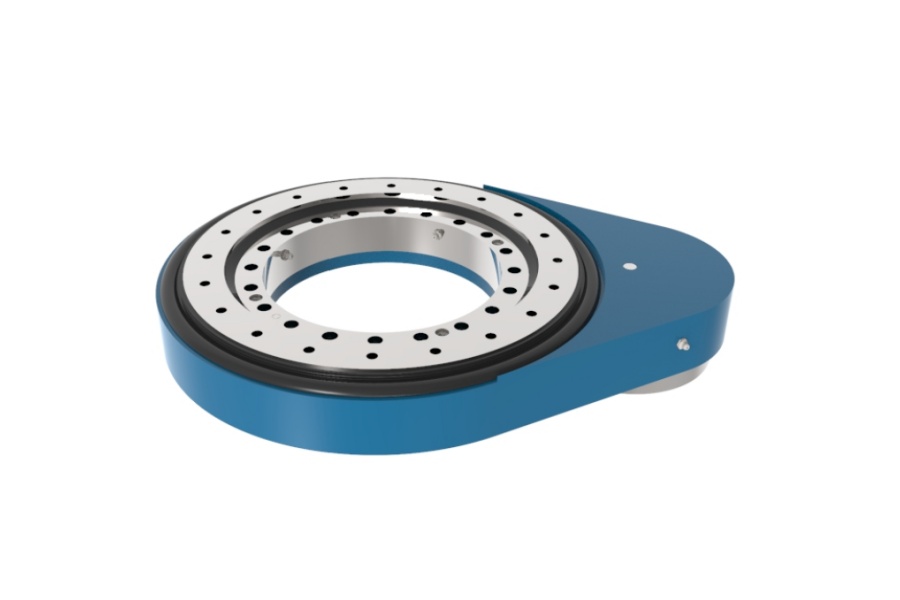
Start with the tracker duty instead of the lowest quoted drive price
Conclusion: Select a drive only after defining the tracker load case, movement pattern, environment, mounting arrangement, and motor scope. A lower-cost unit may be a sound choice for a lightly loaded, sheltered tracker. It may not fit a system exposed to cyclic wind loads, outdoor contamination, frequent positioning, or difficult maintenance access.
The reason is simple. A drive quote does not show the cost of fitting it into the tracker structure or recovering from a mismatch after installation. Procurement should confirm whether the quotation covers the same drive configuration, gear arrangement, sealing level, mounting interface, motor connection, and inspection requirements as the competing offers.
For a dual-axis system, ask the mechanical team to separate the two motions. One axis may carry more overturning moment, while the other may experience more frequent adjustment. Do not assume that two axes automatically need identical drive units. That decision depends on the actual tracker structure and duty conditions.
Luoyang Slewring Bearing Co., Ltd. selects ductile cast iron, alloy steel, stainless steel, or forged alloy steel according to load, speed, and environmental conditions. This supports a requirement-based discussion, but it does not replace the buyer's duty data. The supplier still needs the application details before confirming a suitable material and product configuration.
Information to prepare before requesting a quote
- Axis function: Identify which axis is azimuth, elevation, steering, tilt, or another motion type.
- Applied load data: Provide static load, cyclic load, overturning moment, and any wind-related conditions available from the tracker design.
- Operating pattern: State movement frequency, speed, positioning accuracy target, and expected duty cycle.
- Environment: Describe dust, rain, salt exposure, temperature conditions, and corrosion requirements.
- Mounting details: Submit mounting drawings, bolt pattern, available installation space, and required output orientation.
- Motor scope: Confirm whether the motor is supplied by the drive vendor, sourced separately, or retained from an existing design.
- Acceptance criteria: Agree on inspection documents, dimensional checks, packaging needs, and project-specific tests before production begins.
This preparation fits new tracker projects and replacement programs. It does not apply in the same way when a buyer is purchasing an exact approved replacement part with no design changes. Even then, compare interfaces and sealing requirements rather than relying on a product code alone.
Build a like-for-like supplier comparison before approving the budget
Conclusion: Compare supplier offers by included scope, not by unit price alone. A lower quote is meaningful only when the mounting interface, motor arrangement, sealing, inspection level, delivery terms, and warranty basis are equivalent.
Use a comparison sheet that forces each supplier to answer the same questions. This prevents a proposal with fewer included items from appearing cheaper than a more complete option. It also gives engineering, procurement, and finance teams one shared record for approval.
| Comparison item | What the buyer should confirm | Why it affects five-year cost |
|---|---|---|
| Drive purchase price | Price per configured drive, quantity, and included accessories | Sets the initial capital cost but does not show later recovery costs. |
| Mounting and installation | Interface match, labor hours, alignment work, wiring, and commissioning scope | Non-standard interfaces can add labor before the tracker produces value. |
| Motor arrangement | Motor supplier, voltage, connection method, replacement responsibility, and availability | A drive may be available while a failed motor delays restart. |
| Seal protection | Specified ingress protection, corrosion requirement, inspection points, and maintenance need | Outdoor contamination can increase service work and replacement risk. |
| Spare-drive policy | Number of spare units, storage conditions, lead time, and interchangeability | Stock reduces response time but ties up working capital. |
| Warranty and support | Warranty duration, technical response terms, defect responsibility, and documentation | Clear terms reduce uncertainty when a unit requires investigation. |
Luoyang Slewring Bearing Co., Ltd. offers protection up to IP66 and anti-corrosion capability up to C4H for applicable slew drive configurations. Buyers should request the confirmed rating for the exact proposed model rather than treating the highest available level as automatic for every unit.
The company also states a technical proposal can be provided within 24 hours, with a standard production cycle of 9 days and 3-day rapid prototyping. These are useful planning points for a project schedule. They are not a substitute for confirming the production slot, drawing status, shipping arrangement, and final specification for an individual order.
A five-year total-cost model comparing purchase price, labor, motors, downtime, seals, and spares
Conclusion: Use a five-year total-cost model for every late-stage supplier comparison. This model is most useful when the project has a defined internal labor rate and a realistic estimate of the cost of tracker downtime. It is less useful for an early concept study where the tracker layout and operating assumptions are still changing.
The model should compare the same number of installed drives for each supplier. If one option requires a different mounting bracket, motor, seal plan, or spare quantity, include that difference. Do not treat those items as external costs merely because they are not shown on the first supplier quote.
Use the following calculation structure:
Five-year TCO = Drive purchase cost + installation labor + expected motor replacement cost + downtime exposure + seal maintenance cost + spare-drive inventory cost.
| Cost category | Calculation method | Data source to use | Buying decision impact |
|---|---|---|---|
| Drive purchase cost | Configured unit price × installed quantity | Supplier quotation | Use the delivered configuration, not a catalog starting price. |
| Installation labor | Labor hours per unit × internal or contractor labor rate | Installation plan and engineering estimate | Higher labor can remove the benefit of a lower drive price. |
| Motor replacement | Expected replacement events × motor price × replacement labor | Motor supplier terms and maintenance history | Include this only when motor supply or motor compatibility differs. |
| Downtime exposure | Expected outage hours × financial value of unavailable tracker operation | Operations and finance estimate | Use a conservative internal estimate rather than an unsupported industry average. |
| Seal maintenance | Scheduled inspections and seal service × labor and material cost | Maintenance plan and environmental exposure | Outdoor dust, moisture, and corrosion conditions can change this cost. |
| Spare-drive inventory | Spare-drive purchase cost + storage and capital holding cost | Procurement and warehouse policy | Compare the cost of holding stock with the cost of waiting for replacement supply. |
A practical comparison uses three scenarios. First, model the planned case with normal installation and scheduled maintenance. Next, model a service event where one motor or drive-related component requires replacement. Finally, model a delayed replacement case where no spare is held on site and operations must wait for a replacement unit.
Do not assign made-up failure rates to make one supplier look better. If no validated field rate exists, keep the expected-event input visible as an assumption and run more than one scenario. This gives finance a range of outcomes instead of a false single-number answer.
For example, a low-price option may win the planned-case calculation. It can lose the delayed replacement case if it requires more installation work, uses a non-interchangeable motor arrangement, or requires a larger spare inventory. The reverse can also be true: a higher-priced option is not automatically the lower-TCO choice if its stated benefits do not reduce a real cost in the buyer's operating plan.
Request Your Custom Slew Drive or Bearing Spec
Tell us your load, speed, and environment — receive a tailored 100–5000 mm slewing drive or slewing bearing proposal with 3D drawings within 24 hours.
Use supplier evidence that matches the tracker application
Conclusion: Give more weight to evidence tied to similar equipment and operating conditions than to general product claims. For solar tracker sourcing, relevant evidence includes solar drive supply history, environmental protection requirements, inspection records, and documented quality terms. A crane or excavator case can show heavy-duty experience, but it does not prove solar tracker suitability by itself.
Luoyang Slewring Bearing Co., Ltd. has supplied SP-I 0229 spur gear slew drives for single-axis solar tracker projects in Brazil, Argentina, and Chile. The stated project result was an energy-yield increase of up to 40%. That result belongs to those reported projects and should not be used as a universal forecast for another site, tracker design, or control system.
The company also supplied 50 units of SP-I 0841 for a U.S. utility-scale solar tracker project, with IP65 specified for desert sites. This is relevant when a buyer needs to discuss outdoor sealing and solar tracker deployment. It does not confirm that the same model, rating, or configuration is right for a dual-axis design.
For applications where the load case points toward a different transmission arrangement, review the product families separately. A Spur Gear Slew Drive may fit one motion concept, while a Double Worm Slew Drive may be evaluated where the engineering requirement calls for a different arrangement. Selection must follow the actual load and positioning requirement, not the product family name.
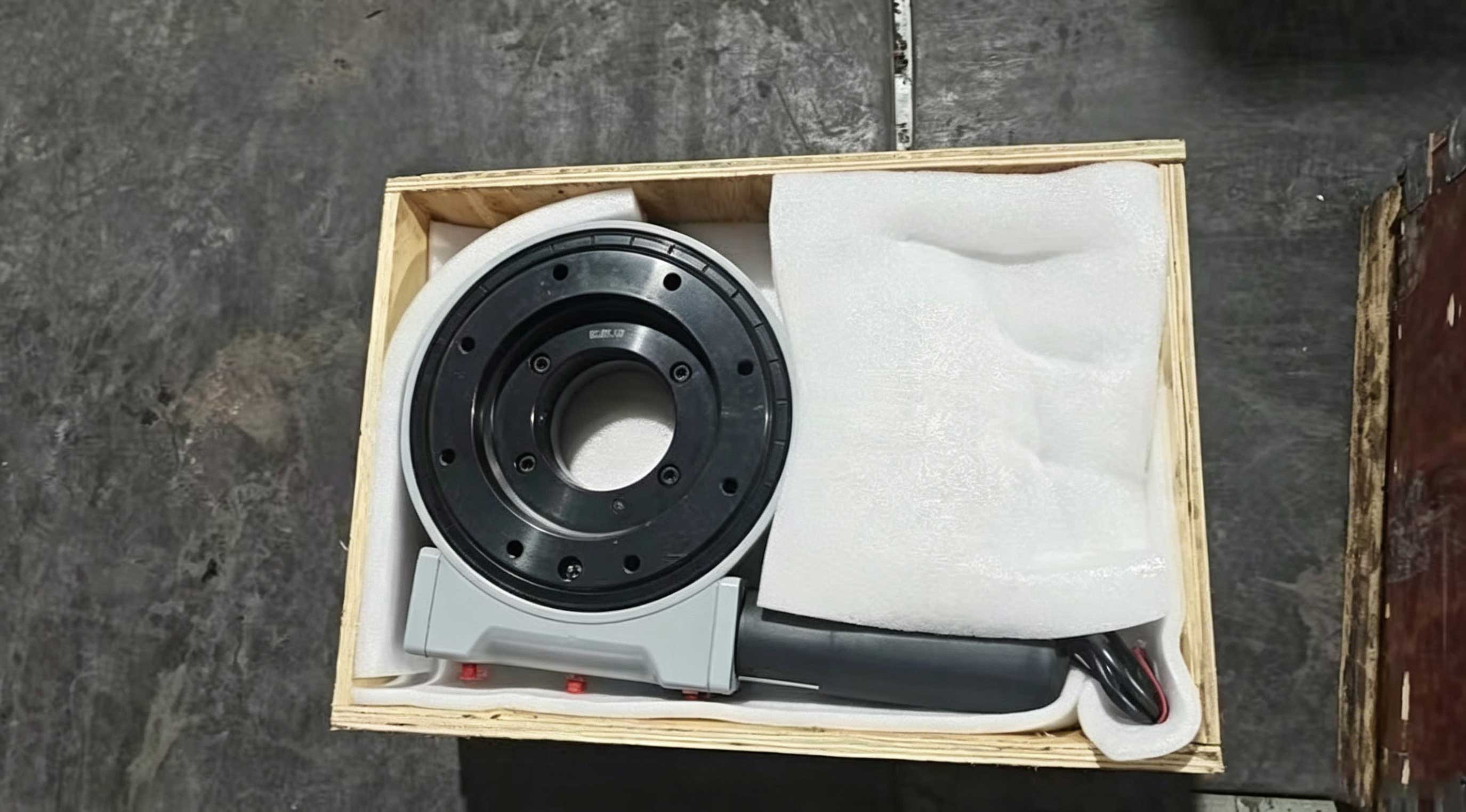
Quality evidence should be requested in a form that procurement can review. Luoyang Slewring Bearing Co., Ltd. is ISO 9001:2015 certified and has CE marking for the European market. Factory audit reports are available on request, which can help supplier qualification teams assess documented controls without implying approval for every end-market regulation.
The company states that every slewing bearing passes CMM three-coordinate inspection and dynamic load testing. This is relevant because the bearing element is central to rotary performance. Buyers should still agree on the inspection documents and acceptance criteria needed for the complete configured drive assembly.
Prevent the common TCO mistakes that distort vendor selection
Conclusion: Remove hidden assumptions before presenting the purchasing recommendation. This fits budget approval meetings where engineering and finance may be using different definitions of “cost.” It does not replace detailed design verification or project-specific contract review.
- Mistake: comparing catalog prices. Use the configured quotation that includes the required sealing, interface, and motor scope. Catalog pricing cannot show the final installed cost.
- Mistake: ignoring installation labor. Ask the installation team to estimate labor for each option. A unit that needs added brackets or rework may cost more after delivery.
- Mistake: treating motors as identical. Confirm motor compatibility, replacement availability, and responsibility. This matters only when the motor is part of the supplier scope or differs between options.
- Mistake: assigning zero value to downtime. Use the operations team's own estimate for lost production or lost tracker availability. If the value is unknown, show a range rather than entering zero.
- Mistake: buying spares without a policy. Decide whether a shared spare can cover multiple tracker units, then include storage and capital cost in the model.
- Mistake: assuming every rating applies to every product. Request written confirmation for the exact model and configuration proposed for the project.
- Mistake: assuming a customer case guarantees the same result. Use cases as evidence of supplied equipment, not as a promise of identical site performance.
Match cooperation terms to the project schedule and risk plan
Conclusion: Confirm minimum order quantity, prototype needs, warranty terms, and technical response expectations before nomination. This is especially useful for projects that may begin with engineering samples and later move to repeated production orders. It may not apply to a one-time emergency replacement where the immediate stock position is the main concern.
Luoyang Slewring Bearing Co., Ltd. states that standard products have a minimum order quantity of 1 set, while customized products have a minimum order quantity of 5 sets. Sample orders are welcome for testing and evaluation. These terms can support an evaluation plan, but the buyer should still confirm whether the sample represents the same materials, interface, and performance requirements as the later production configuration.
The company has an 8,000 m² manufacturing facility, 6 production lines, CNC machining centers, and annual capacity of 100,000 sets. It also offers a 2-year extended quality warranty, a 48-hour technical response commitment, and free replacement for confirmed manufacturing defects. These terms address supplier capacity and defined defect support, but they do not cover installation errors, incorrect application selection, or damage caused by conditions outside the agreed operating scope.
For a non-standard tracker architecture, a Customized Slew Drive discussion should include drawings, loading assumptions, motor details, environmental conditions, and the buyer's acceptance documents. For a standard configuration, request the applicable model details, delivery schedule, and inspection information in the quotation package.
Final buyer checklist for the approval file
- Confirm that every supplier priced the same installed tracker requirement.
- Calculate five-year TCO using the six cost categories in this article.
- Run planned, service-event, and delayed-replacement scenarios.
- Record which assumptions come from engineering, operations, finance, and each supplier.
- Verify the proposed sealing, corrosion protection, motor scope, and mounting interface in writing.
- Review supplier evidence that is relevant to solar, outdoor, or comparable equipment duty.
- Confirm MOQ, prototype terms, production timing, warranty coverage, and technical response terms before release.
The best purchasing decision is not always the lowest unit price. It is the option with the lowest supported five-year cost for the actual tracker duty, backed by clear scope, documented assumptions, and supplier terms that fit the project risk plan.
Request Your Custom Slew Drive or Bearing Spec
Tell us your load, speed, and environment — receive a tailored 100–5000 mm slewing drive or slewing bearing proposal with 3D drawings within 24 hours.
 WhatsApp

 +8613903880726