



Cold Guard: Protecting Your Slew Drive in Winter
What is a Slew Drive?
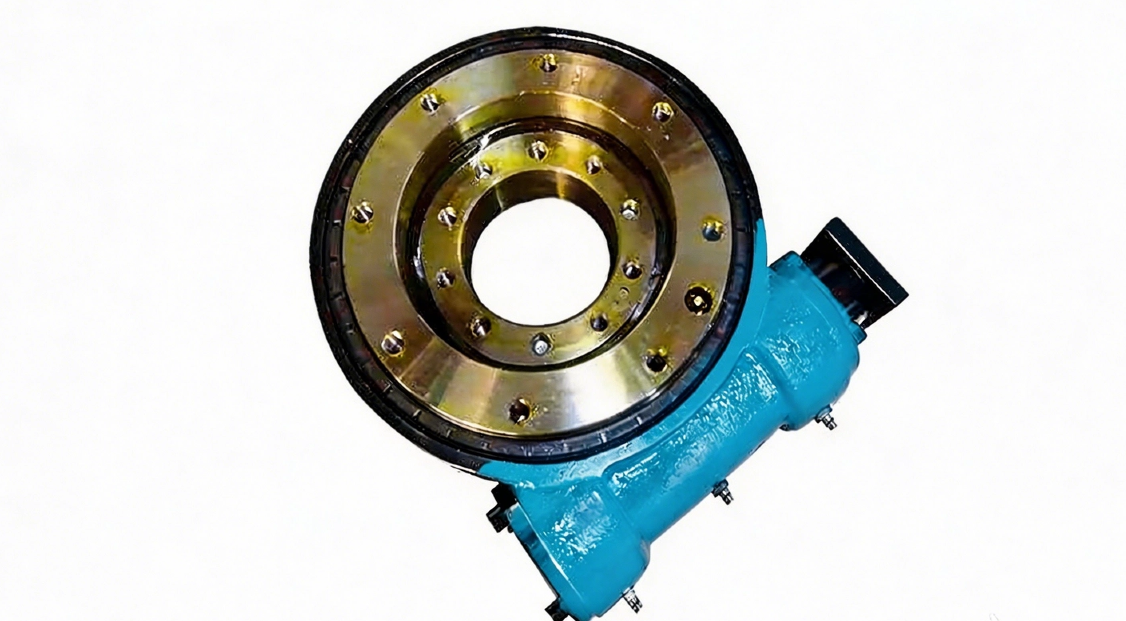
A slew drive, also known as a slewing drive or rotary reducer, is a compact gearbox that enables heavy machinery to rotate smoothly and precisely. It's a critical component designed to handle heavy loads from any direction—axial, radial, and moment loads—while providing controlled rotational movement. The motor that powers it can be electric, hydraulic, or pneumatic, depending on the specific demands of your application.
Key Components of a Slew Drive
To understand how winter affects it, let's look at its main parts:
The Slewing Bearing: The large ring that connects two structures. It contains balls or rollers for smooth, low-friction rotation.
The Worm and Worm Gear: This is the driving mechanism. The worm (a threaded shaft) turns the gear, creating high torque and a self-locking feature.
The Housing: The protective casing that keeps all internal parts aligned and safe from external elements.
Seals: These are the frontline defenders, keeping lubrication in and dirt, water, and ice out.
Lubrication (Grease): The essential film that reduces friction between all moving metal parts.
The Key Features of a Slew Drive in Winter
In winter, certain features become critically important. A slew drive meant for cold climates must excel in:
Durability: It must withstand harsh environmental conditions, including ice, snow, and repeated freeze-thaw cycles.
Material Toughness: Components must resist becoming brittle. The housing and gears need to handle contraction stresses without cracking.
Seal Integrity: Flexibility at low temperatures is vital. Seals must remain supple to maintain their barrier against moisture and salt. You must also account for how thermal expansion and contraction affects the seal's fit.
Lubrication Performance: The grease must stay fluid enough to protect moving parts even on the coldest mornings.
Corrosion Resistance: With increased moisture from snow and condensation, all components must resist rust and pitting.
How Does Low Winter Temperature Affect Slew Drives?
Cold weather attacks the drive in four main ways:
Grease Thickening: Standard grease, like the #2 extreme pressure lithium grease often used from the factory, becomes thick and stiff in low temperatures. It struggles to flow into critical gaps between the worm and gear, leading to "dry starts" and much higher friction. This increases the power needed from the motor.
Seal Hardening: Rubber seals lose their elasticity, becoming brittle. They can shrink slightly, creating tiny gaps that let in snowmelt and road salt, which cause internal rust.
Metal Contraction: As the steel housing and gears cool, they contract slightly. This can reduce the internal clearances (backlash), potentially making the gears mesh too tightly and causing noise or binding.
Condensation: Daily temperature swings cause the air inside the drive to "breathe." Warm air enters, cools, and releases moisture that condenses on cold internal surfaces, leading to corrosion on gears and bearings.
Preventive Measures for Slew Drives in Winter Environments
Protecting your equipment starts with choosing the right lubricant.Not all greases are created equal. Here's how standard and cold-weather greases compare:
| Property | Standard Grease | Low-Temperature Synthetic Grease |
|---|---|---|
| Typical low-end limit | -20°C to -10°C | -50°C to -40°C |
| Starting torque at -30°C | Very high (risk of motor overload) | Low (smooth start) |
| Base oil viscosity at 40°C | 100-200 mm²/s | 15-30 mm²/s |
| Pumpability in cold | Poor | Excellent |
| Recommended for arctic use | No | Yes |
Beyond lubrication, follow these essential steps:
Switch to Cold-Weather Grease: Standard factory grease is usually not suitable for severe cold. Before winter hits, replace it with a high-quality synthetic lubricant specifically rated for low temperatures. This ensures proper flow and protection.
Follow a Strict Lubrication Schedule: In normal conditions, lubricating every 100 operating hours is a good practice. However, in winter, or if the equipment runs continuously, you should shorten this interval. Always add fresh grease after long periods of shutdown, such as holiday breaks.
Grease Properly: When lubricating, rotate the drive slowly to ensure the grease fills the raceways evenly. Keep adding grease until you see fresh grease squeeze out from around the seals. This purges old, contaminated grease and moisture.
Inspect and Protect Seals: Regularly check the seals for damage, hardening, or displacement. If a seal is broken or loose, replace or reposition it immediately to prevent contamination.
Keep it Clean: Regularly clean dirt, snow, and debris from the gear teeth and housing. Apply a layer of suitable grease to the exposed gear teeth for extra protection. Be careful to prevent hard objects from getting into the gear mesh.
Never Use Water to Clean: Avoid using direct water sprays or hoses to clean the drive in winter. Water can easily penetrate the seals and freeze inside, causing severe damage.
Check Bolt Torque: After the first hard freeze, verify that all mounting bolts are still tightened to specification, as metal contraction can slightly loosen them.
Operational Adjustments for Slew Drives in Winter Environments
How you run the machine matters just as much as maintenance.
Always Warm Up: Implement a mandatory warm-up routine. Run the drive at low speed and no load for several minutes. This allows the grease to warm up and circulate before handling heavy loads.
Listen Carefully: Be alert for unusual noise, impact, or a sudden increase in power consumption. These are immediate red flags. If you hear grinding, chattering, or whining, stop the machine and inspect it. Continuing to operate can lead to major component failure.
Move Smoothly: Avoid sudden starts, stops, or reversals. Smooth, gradual movements reduce peak stresses on the cold, contracted gears.
Reduce Loads if Needed: Be mindful of snow and ice buildup on the rotated structure (like a solar panel or crane boom). The added weight stresses the drive. Clear it if safely possible.
How to Install Slew Drives in Winter Environments
Proper installation is the foundation of reliable winter operation. Cold temperatures make materials behave differently, so special care is needed during installation:
Use Proper Tools for a Tight Fit: For批量 (batch) installations, using a hydraulic press ensures the bearing is seated correctly. When pressing, make sure the outer ring face is flush against the housing shoulder and the inner ring face is flush against the shaft shoulder, with no gaps. This precision prevents stress points.
Heat for Interference Fits: If you have a large interference fit (where the shaft is slightly larger than the bearing hole), forcing it in cold can damage components. Instead, use an oil bath or induction heater to evenly heat the bearing to 80-100°C. This expands it slightly for easy installation. Never exceed 120°C, as higher temperatures can alter the material's properties.
Account for Contraction During Cooling: After a heated installation, the bearing will cool and contract. This contraction can pull it away from the mounting shoulder, creating a tiny gap. Use a nut or other appropriate method to hold the bearing tightly in place while it cools to prevent this.
Check and Adjust Clearance: The internal clearance (or "play" in the bearing) can change with temperature and the tightness of the fit. The correct clearance depends on your specific application and the amount of interference. In some cases, you may need to test and adjust it. Note that some bearing types, like double row tapered roller bearings, come pre-adjusted from the factory and should not be altered.
Never Use Shims: To maintain a proper fit between the housing and the bearing, never use shims (thin pieces of material) on the mounting surfaces. Shims can compress or shift in the cold, leading to misalignment.
LyraDrive: Get Custom Slew Drive 3D Drawings for Your Specific Application
At LyraDrive, we specialize in the design and manufacture of high-quality slew drives and slewing bearings. Our product range includes worm gear slew drives, double worm slew drives, and spur gear slew drives, ensuring we have the right solution for every application. Whether you need high torque precision, enhanced redundancy, or cost-effective simplicity, each drive is engineered for exceptional performance and durability. We believe that when customers choose us, the quality and reliability of our products leave a lasting impression—making LyraDrive a name they remember.
Every application is unique, especially when facing extreme weather. At LyraDrive, we don't just offer standard products; we provide engineered solutions. If you have a specific project with unique load, speed, or environmental demands—like operating in severe cold—we can help. We invite you to contact our engineering team to request custom 3D drawings for a slew drive tailored exactly to your needs. This ensures you get the perfect fit, optimal performance, and maximum reliability from day one, no matter the conditions.
FAQ of Slew Drives in Low-Temperature Environments
Q: Can I use the grease that came from the factory in my slew drive during winter?
A: Probably not. Most drives are shipped with a standard grease, like #2 extreme pressure lithium grease. For winter operation in freezing conditions, you should replace it with a grease specifically designed for low temperatures to ensure proper lubrication.
Q: How often should I re-lubricate my slew drive in winter?
A: A good rule of thumb for normal operation is every 100 hours. However, in winter, or if the machine runs continuously, you should lubricate more frequently. Also, always add fresh grease after the machine has been stopped for a long time, like during a holiday shutdown.
Q: My drive sounds noisy only on cold mornings. Is this a problem?
A: Some increased noise from thicker grease can be normal temporarily. However, if the noise persists after a full warm-up, or if it sounds like grinding or chattering, you should inspect immediately. It could indicate tight gear meshing due to metal contraction or a lubrication failure.
Q: Can I wash my slew drive with a hose to remove road salt and mud?
A: No, absolutely not. You should never use direct water sprays to clean your slew drive, especially in winter. Water can force its way past the seals and into the bearing raceways, where it can freeze, cause rust, and lead to catastrophic damage.
Q: What should I do if I find a damaged or leaking seal during my winter inspection?
A: Take it seriously. The seal is your primary barrier against contaminants. If you find a seal that is broken, hardened, or displaced, it should be replaced or correctly repositioned immediately. Continuing to operate with a compromised seal invites moisture and dirt inside.
Q: What is the best way to install a new slew drive in cold weather?
A: For a tight, proper fit, you can use a hydraulic press. For larger drives with interference fits, it's best to heat the bearing part evenly in an oil bath or with an induction heater to about 80-100°C. This expands it slightly for easy installation. Never exceed 120°C. After installation, hold it firmly in place until it cools evenly to prevent gaps from forming due to contraction.
 WhatsApp
 sales@lyradrive.com
 +8613903880726