



Causes and Solutions for High Temperatures in Spur Gear Drives
What is a Slew Drive?
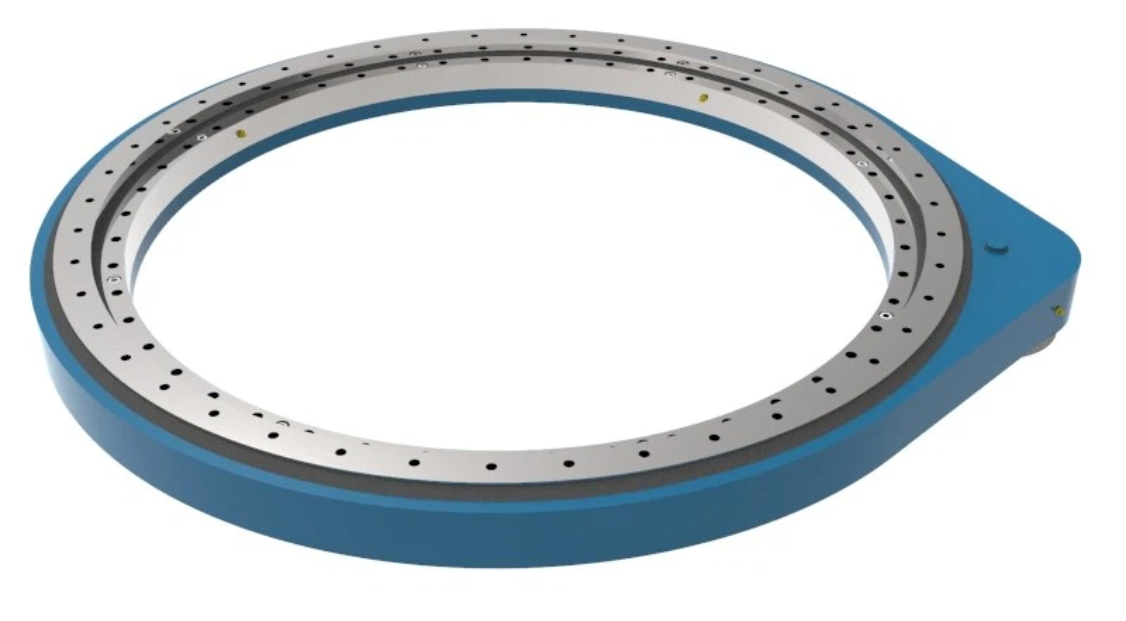
A slew drive is a compact, gearbox-like mechanism designed to manage slow, precise, and heavy-duty rotational movement. Often referred to as a slewing ring gearbox, its primary function is to transmit torque and power while simultaneously supporting substantial axial, radial, and moment loads from an attached structure. In essence, it serves as the critical "rotational joint" that allows heavy equipment, such as crane booms, excavator arms, or solar tracker platforms, to rotate smoothly and accurately under significant stress. It typically consists of a worm or spur gear (the pinion) integrated with a slewing ring bearing.
Key Types of Slew Drives
Slew drives are primarily categorized by the type of gearing they use to achieve rotation. Each type offers distinct advantages and is suited for specific application requirements. The main types include:
Worm Gear Slew Drives: This is one of the most common types. It utilizes a worm (a screw-like component) that meshes with teeth on the slewing ring. They are renowned for their high reduction ratios in a compact package, allowing a small input torque to control a very large output load. A significant advantage is their inherent self-locking capability, which prevents the load from back-driving the drive, a critical safety feature in applications like cranes and aerial lifts.
Spur Gear Slew Drives: This type uses a spur pinion with straight teeth to engage directly with the gear teeth on the slewing ring. The axes of the pinion and the ring are parallel. Spur gear drives are prized for their high efficiency, often exceeding 95%, as the rolling contact of the teeth minimizes frictional losses. This makes them ideal for continuous or frequent operation. They also offer excellent precision for positioning and can handle high shock loads effectively, making them robust for demanding environments.
Helical Gear Slew Drives: Similar to spur gear drives, but the gear teeth are cut at an angle (a helix angle) to the axis of rotation. The angled tooth design allows for smoother and quieter operation compared to spur gears because multiple teeth are always in contact. This gradual engagement also results in a higher load capacity and reduced vibration. They are often chosen for applications where noise reduction and smooth motion are paramount, though they are slightly less efficient than spur gears and generate axial thrust loads that must be managed.
What is a Spur Slew Drive?
A spur gear slew drive utilizes spur gearing—where the teeth are straight and parallel to the axis of rotation—to transmit power and motion between parallel shafts. In a typical configuration, a spur gear (the pinion) meshes with a larger internal or external gear ring integrated into the slewing ring. This simple, direct engagement provides a robust and efficient method for converting input torque into powerful rotational force.
Key Features and Benefits of Spur Slew Drives
Spur gear drives are popular for several compelling reasons:
High Efficiency: Due to the rolling contact of the straight teeth, spur gears boast very high efficiency rates, often reaching 98-99% per stage. This means more input power is converted into output work, with minimal losses.
Cost-Effectiveness: Their relatively simple design makes them more economical to manufacture compared to more complex gear types.
High Load Capacity: They are excellent at transmitting high torque and can withstand significant shock loads, making them ideal for heavy-duty applications.
Precision and Control: They provide accurate and consistent speed control, which is vital in automation and positioning systems.
Applications of Spur Gear Drives
The robustness and efficiency of spur gear drives make them suitable for a wide array of applications, including:
Construction Machinery: Used in excavators, cranes, and man-lifts for slewing functions.
Renewable Energy: Critical for the azimuth tracking systems in solar panels, ensuring they follow the sun for maximum energy capture.
Industrial Automation: Employed in rotary tables, indexing drives, and material handling equipment.
Rail and Transportation: Found in specific drive systems for trains and trams.
Causes and Solutions for High Temperatures in Spur Gear Drives
When a spur gear drive operates outside its normal temperature range, it is a warning sign that should never be ignored. High temperatures can degrade lubricants, accelerate wear, and ultimately lead to catastrophic failure. Here are the primary causes and their corresponding solutions, drawing on real-world operational insights.
Lubrication Issues: Quantity and Quality
Cause: This is the most frequent culprit. Insufficient lubricant increases friction between the gear teeth, generating excessive heat. Conversely, too much lubricant can cause it to be churned excessively (churning loss), which also generates heat and prevents proper cooling. Using the wrong type or viscosity of lubricant will fail to create a proper film between the teeth, leading to metal-on-metal contact. Furthermore, old, contaminated, or degraded lubricant loses its ability to protect and cool.
Solution: Always adhere to the manufacturer's specifications for lubricant type and quantity. Establish a routine to check oil levels and condition. If the lubricant appears cloudy, gritty, or has changed viscosity, it is time for a change.
Incorrect Gear Mesh and Alignment
Cause: If the pinion gear and the main gear ring are not meshing correctly, it creates excessive friction and binding. A mesh that is too tight squeezes the lubricant out and grinds the teeth together. A mesh that is too loose can cause the gear teeth to impact each other, leading to noise, vibration, and localized overheating as the contact point shifts abnormally. This misalignment can also be caused by loose mounting bolts or deformation in the housing.
Solution: During installation and maintenance, meticulously check and adjust the gear backlash and mesh pattern according to the drive's specifications. Ensure all mounting hardware is torqued correctly to prevent components from shifting under load.
Overloading and Incorrect Gearing
Cause: Subjecting the drive to a load beyond its rated capacity is a direct path to overheating. The motor and gears must work much harder, generating excess heat in the windings and the gear teeth. Similarly, an incorrect gear ratio for the application can be problematic. For example, a gear ratio set for high speed in a high-torque, high-resistance environment will overload the system, causing the clutch (if present) to slip excessively or the motor to overwork, generating immense heat that can even melt plastic gears.
Solution: Verify that the drive is correctly sized for the actual load and duty cycle of your application. If operating conditions change, re-evaluate the drive's specifications. In variable applications, ensure the gear ratio is matched to the required torque and speed.
Poor Operating Environment and Ventilation
Cause: The environment plays a huge role. If the gear drive is located in a hot environment (e.g., near other machinery or in direct sunlight) or if its housing is blocked by debris or covers, it cannot dissipate heat effectively. Inadequate airflow around the drive traps heat, causing the internal temperature to rise steadily.
Solution: Improve ventilation around the drive. This could involve simply cleaning away debris, repositioning the equipment, or installing external fans to increase airflow over the gearbox housing.
Mechanical Issues (Oil Rings, Bearings)
Cause: In some designs, oil rings are used to splash lubricant onto bearings and gears. If these rings become stuck or break, they fail to lift oil, leading to lubrication starvation and rapid heating of bearings. Worn or damaged bearings themselves will also generate excessive friction and heat.
Solution: Pay attention to unusual noises during operation, which can indicate bearing or oil ring problems. Regularly inspect these components during maintenance overhauls and replace them as needed.
Measures to Prevent High Temperatures in Spur Gear Drives
Prevention is always better—and more cost-effective—than cure. Implementing a proactive strategy can keep your spur gear drive running cool and extend its service life significantly.
Establish a Rigorous Maintenance Schedule: Proactive maintenance is your first line of defense. This includes regularly changing the lubricant based on operating hours, not just a calendar date. Always use high-quality lubricants that meet the drive's specifications.
Integrate Active Cooling Systems: For applications involving continuous or heavy-duty operation, natural cooling is often insufficient. Consider integrating active cooling solutions:
Forced Air Cooling: Attaching shaft-mounted or electric fans to the gearbox housing can dramatically increase heat dissipation through forced convection.
Water Cooling: For the most demanding applications, a water cooling system is highly effective. This can be achieved with cooling tubes or a cooling coil (like a spiral tube) placed inside the lubricant sump. Cool water circulating through these tubes absorbs heat directly from the oil, providing very efficient temperature control.
Optimize the Operating Environment: Simply managing the space around the drive can have a major impact. Ensure the area is clean and well-ventilated. If the ambient temperature is high, use building ventilation or spot coolers to lower it. A clean drive housing dissipates heat much better than one caked in dirt and grime.
Monitor and Analyze Performance: Implement condition monitoring. This can be as simple as using an infrared thermometer to regularly check the gearbox casing temperature and establishing a baseline for normal operation. A sudden temperature spike is a clear early warning sign. More advanced systems can monitor vibration and oil quality.
Verify Application Parameters: Always double-check that the drive is not being overloaded. Ensure the gear ratio is correct for the task, and that the motor and drive are properly matched to the load requirements.
LyraDrive: Get Spur Slew Drive 3D Drawings for Your Specific Application
Selecting the right spur gear drive is critical to avoiding issues like overheating from the start. At LyraDrive, we understand that every application has unique demands. Whether you need a compact solution for automation or a heavy-duty drive for construction equipment, we can help.
We invite you to contact our engineering team to discuss your specific requirements. We can provide detailed 3D drawings and technical data for a spur slew drive customized to your exact specifications, ensuring optimal fit, performance, and thermal management from day one.
FAQ of High Temperatures in Spur Gear Drives
Q1: What is considered too hot for a spur gear drive?
A: While it varies by lubricant and manufacturer, a general rule of thumb from industry standards is that the oil sump temperature should not exceed 200°F (93°C). Operating above this temperature can significantly shorten lubricant and seal life. A more conservative range of 140-150°F (60-65°C) is often targeted for high-reliability applications.
Q2: My drive is hot, but the oil level is correct. What else could it be?
A: If oil level and type are correct, investigate other causes. Check for overloading (is the machine working harder than usual?), poor ventilation (is the gearbox housing dirty or blocked?), or mechanical issues (listen for unusual noise from bearings). The gear mesh alignment may also have shifted.
Q3: Can I use any grease for my spur gear drive?
A: No. Using the wrong lubricant is a common cause of failure. You must use the specific type and viscosity of oil or grease recommended by the manufacturer. Factors like load, speed, and ambient temperature determine the correct lubricant. Using an incorrect one will not provide adequate film strength and can lead to overheating.
Q4: How often should I change the lubricant to prevent overheating?
A: The interval depends on the drive's duty cycle and operating conditions. For continuous, heavy-duty use in harsh environments, more frequent changes are needed. As a best practice, follow the manufacturer's maintenance schedule and consider testing the oil periodically. If the oil appears dark, gritty, or smells burnt, change it immediately, regardless of the schedule.
Q5: Is it normal for a new drive to run hot during break-in?
A: A slight increase in temperature during the initial break-in period can be normal as components mate together. However, this should stabilize after a short operating period. If the drive continues to get hotter or exceeds recommended temperature limits, stop operation and investigate the cause. It could indicate a setup issue like incorrect backlash.
By understanding the relationship between operation, lubrication, load, and environment, you can effectively manage the temperature of your spur gear drives, ensuring they deliver reliable, long-lasting service.
 WhatsApp
 sales@lyradrive.com
 +8613903880726