



What Are the Key Technical Features of Slewing Bearings?
What is Slewing Bearing?
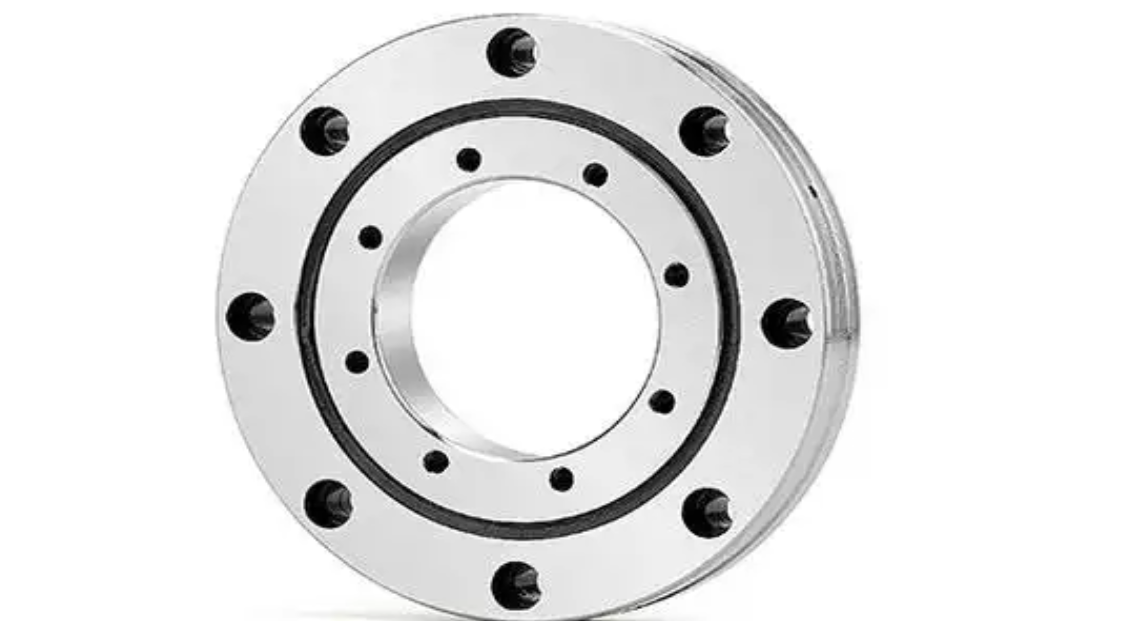
A slewing bearing, also referred to as a turntable bearing, is a large-diameter, low-profile bearing engineered to handle immense loads while enabling precise rotational movement between two structures. It is a fundamental component that integrates load support and motion into a single, robust unit. Unlike conventional bearings that primarily handle radial loads, slewing bearings are uniquely designed to manage a complex combination of axial loads (parallel to the axis of rotation), radial loads (perpendicular to the axis), and tilting moment loads (which cause a tipping force). This makes them indispensable as the "rotational joint" in heavy machinery, where they often form a critical structural element. Their design is characterized by a large bore, mounting holes on the bearing rings for direct bolting to the machine frame, and often, integrated gear teeth for driven rotation. From the massive platform of a harbor crane to the precise positioning of a wind turbine nacelle, slewing bearings are the unsung heroes that facilitate controlled, reliable rotation under the most demanding conditions.
How Does a Slewing Bearing Work?
The functionality of a slewing bearing is elegant in its simplicity and effectiveness. At its core, it consists of two main rings—an inner ring and an outer ring—between which the rolling elements operate. One of these rings is typically fixed to the stationary part of the machine (e.g., the undercarriage of an excavator), while the other is attached to the rotating part (e.g., the house of the excavator). Precision-engineered rolling elements, which can be balls or cylindrical rollers, are housed in raceways on these rings and are evenly spaced by separators or cages. When force is applied, these elements roll smoothly within their raceways, drastically reducing friction compared to sliding surfaces.
For powered rotation, most slewing bearings incorporate gear teeth, either on the inner or outer ring's periphery. A smaller pinion gear, driven by a motor, meshes with these teeth. When the pinion rotates, it drives the bearing ring, causing the entire attached structure to turn. High-quality lubrication is continuously supplied to the rolling elements and gear mesh to minimize wear, dissipate heat, and prevent corrosion. Simultaneously, integrated sealing systems protect these critical internal components from external contaminants like dirt, water, and debris, ensuring a long and reliable service life even in harsh environments.
Applications of Slewing Bearings
The versatility and strength of slewing bearings make them critical across a vast spectrum of industries. Their primary role is to enable rotation where heavy loads are present.
Construction & Heavy Machinery: This is one of the most common applications. Slewing bearings are the heart of excavators, mobile and tower cranes, concrete pump trucks, and pile drivers, allowing the upper structure to swing 360 degrees.
Renewable Energy: In wind turbines, large-diameter slewing bearings are used in the yaw system to rotate the nacelle to face the wind, and in the pitch system to adjust the angle of the blades for optimal power generation and storm protection.
Industrial & Manufacturing: They are found in robotic welders and arms, rotary tables for machining centers, indexing platforms for assembly lines, and large industrial mixers.
Aerospace & Defense: Applications include rotating platforms for radar and satellite communication systems, turrets for military vehicles, and launch platform mechanisms.
Medical Technology: Sophisticated imaging devices like CT scanners and MRI machines use high-precision slewing bearings to rotate the scanning gantry smoothly and quietly around the patient.
Types of Slewing Bearings
Selecting the right type is crucial, as each design is optimized for specific load profiles. The four main categories are:
Single-Row Ball Slewing Bearings: These use a single row of balls and are the most compact design. They effectively handle combined axial and radial loads but have a relatively lower moment load capacity. Ideal for applications like light-duty rotary tables, small cranes, and material handling equipment where space is limited.
Double-Row Ball Slewing Bearings: Featuring two rows of balls, this design offers significantly higher load capacity and superior resistance to tilting moment loads compared to the single-row type. It provides an excellent balance of performance and is widely used in medium-duty mobile cranes, aerial work platforms, and larger excavators.
Crossed Roller Slewing Bearings: Instead of balls, this type uses cylindrical rollers arranged in a single row at a 90-degree cross pattern. Each roller alternately contacts the vertical and horizontal raceways. This configuration provides extremely high rigidity, precision, and a very high moment load capacity in a relatively compact cross-section. They are the preferred choice for robotics, industrial indexing tables, and high-precision medical equipment.
Three-Row Roller Slewing Bearings: This is the heavyweight champion. It utilizes three independent rows of rollers: one row handles axial loads, and the other two rows (arranged at different angles) manage radial and moment loads. This segregated load path design provides the highest possible load capacity and is almost exclusively used in the most demanding applications, such as large offshore cranes, heavy-lift ship cranes, and giant mining excavators.
The Key Technical Features of Slewing Bearings
The performance, durability, and reliability of a slewing bearing are defined by several interdependent technical features.
Load Capacity (Dynamic & Static): This is the foremost feature. Engineers must calculate the exact combination of axial, radial, and moment loads the bearing will experience. The static load rating indicates the maximum load the bearing can withstand without permanent deformation when stationary. The dynamic load rating is used to estimate the bearing's service life under rotating conditions. The unique design of each bearing type determines its specific load-handling profile.
Gearing (Internal, External, or Gearless): The gear teeth integrated into the bearing ring are a critical interface. They must be precisely machined and heat-treated for strength and wear resistance. External gearing (teeth on the outer ring) is common and provides good strength. Internal gearing (teeth on the inner ring) can offer a more compact drive arrangement. The hardness, accuracy, and profile of the gear directly affect power transmission efficiency, noise levels, and the overall life of the drive system.
Mounting & Installation Integrity: Slewing bearings are structural components. They feature drilled and tapped (or through) holes on both rings for direct bolting to the supporting structures. Proper installation is paramount: the mounting surfaces must be flat, rigid, and properly aligned to prevent pre-loading or distortion of the bearing rings, which would lead to uneven load distribution, increased wear, and premature failure.
Sealing & Lubrication Systems: These are the life-support systems of the bearing. Multi-lip seals, often made from advanced polymers, are fitted into grooves to create an effective barrier against contaminants like abrasive dust and water. The lubrication system, consisting of grease fittings and internal channels, ensures a continuous supply of high-performance grease to all rolling contact surfaces and gear teeth. This reduces friction, prevents metal-to-metal contact, and protects against corrosion.
Materials & Heat Treatment: Rings are typically forged from high-strength, alloy steel grades such as 42CrMo4 or 50Mn. The true enhancement comes from specialized heat treatment. Processes like induction hardening create a hard, wear-resistant surface on the raceways and gear teeth while maintaining a tough, ductile core to absorb shocks. Carburizing is another method used for deep-case hardening. The quality of material and heat treatment defines the bearing's fatigue life and resistance to wear and denting.
Clearance & Precision: Internal clearance (or preload) is the amount of free space between the rolling elements and the raceways. Proper clearance is essential for smooth operation and thermal expansion. Running accuracy refers to manufacturing tolerances for parameters like raceway run-out and gear tooth profile. High-precision bearings, like crossed roller types, have very tight tolerances for applications requiring exact positioning and minimal deflection under load.
How to Select a Slewing Bearing for Your Application?
Choosing the correct slewing bearing is a systematic process that requires a detailed understanding of your application.
Perform a Comprehensive Load Analysis: Determine the magnitude and direction of all forces. Calculate the maximum axial load (Fa), radial load (Fr), and tilting moment (M) the bearing will encounter in both static and dynamic (operational) scenarios. Safety factors must be applied.
Define Operational Parameters: Determine the required speed of rotation (usually slow for slewing bearings) and the duty cycle (continuous operation vs. intermittent use). Consider any shock loads or vibration.
Assess the Environment: Will the bearing operate indoors, outdoors, in a corrosive marine atmosphere, or in extreme temperatures? This influences material choice, seal type, and grease specification.
Determine Size and Design Constraints: Consider the available space for the bearing, shafting requirements, and the preferred drive configuration (internal vs. external gear). The mounting hole pattern and bolt size must be compatible with your structure.
Identify Special Requirements: Does the application demand ultra-high precision, minimal rotational resistance (low starting torque), or specific certifications (e.g., for offshore or aerospace use)?
Plan for Maintenance: Consider ease of access for re-lubrication. Some designs feature re-lubrication channels that allow fresh grease to purge old grease through the seals.
LyraDrive: A Reliable Slewing Bearing Manufacturer
Lyradrive is a professional slew drives and slewing bearings manufacturer providing high quality and durable worm slew drives, WE slew drives, WEA slew drives, and other customized slew drives according to your design and working conditions. If you are looking for high quality slew drive, or you need to customize a slew drive for your application, feel free to contact us.
 WhatsApp
 sales@lyradrive.com
 +8613903880726