



The Role of Slewing Bearings in Modern Filling Machines
Introduction
In the modern packaging industry, rotary filling machines are the workhorses that keep production lines moving. These complex systems can fill thousands of bottles, cans, or containers per hour with incredible speed and accuracy. At the core of every rotary filling machine, enabling its smooth and precise rotation, is a critical component: the slewing bearing.
At LyraDrive, we specialize in the design and manufacture of high-quality slewing bearings and slew drives for industrial applications worldwide. With years of experience and advanced manufacturing capabilities, we provide customized slewing bearing solutions tailored to the unique requirements of your filling equipment. Our commitment to quality, precision engineering, and customer service makes us the ideal partner for your filling machine projects.
What is a Slewing Bearing?
A slewing bearing is a specialized rotational bearing that enables smooth, controlled rotation between two structural components while supporting substantial loads. Unlike conventional bearings that typically manage only radial or axial loads, slewing bearings are designed to handle all three types of loads simultaneously: axial forces (thrust), radial forces (side loads), and overturning moments (tilting forces).
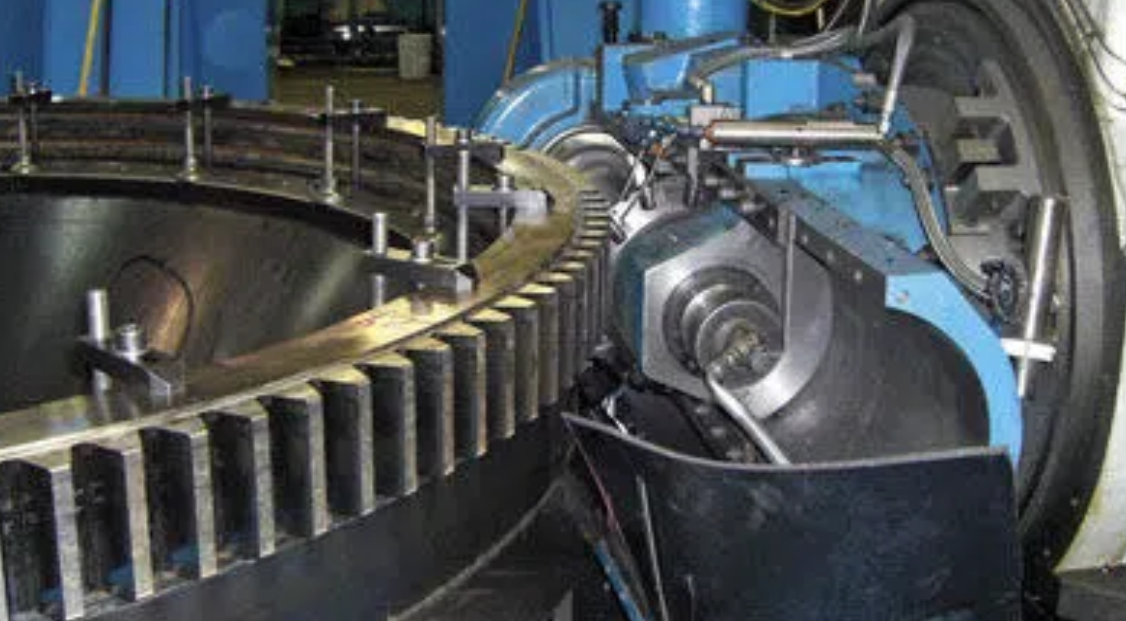
The basic structure of a slewing bearing consists of an inner ring and outer ring typically made from high-strength bearing steel, rolling elements such as balls or rollers that facilitate rotation, precision-ground raceways where the rolling elements travel, separators or cages that maintain proper spacing between rolling elements, sealing systems that protect internal components from contamination, and integral gear teeth often cut into one of the rings for direct drive applications.
Slewing bearings are characterized by their large diameter relative to their cross-sectional height. This "large diameter, thin section" design allows them to provide stable rotational support while minimizing weight and space requirements. They typically range in diameter from 200mm to several meters, making them ideal for large rotating assemblies like those found in filling machines, construction equipment, wind turbines, and medical devices.
The term slew drive refers to a complete drive unit that integrates a slewing bearing with a worm gear, housing, and motor mounting interface. While slewing bearings provide the rotational support, slew drives add the driving mechanism for powered rotation applications.
The Features of Slewing Bearings in Filling Machines
Slewing bearings used in filling machines possess several distinctive features that make them particularly suitable for this application.
Large Hollow Center: One of the most important features is the large-diameter through-hole in the center of the bearing. This hollow design allows product supply lines, cleaning solution hoses, electrical cables for sensors, and pneumatic tubing to pass through the bearing to reach the rotating turntable above. Without this feature, routing utilities to rotating filling heads would be mechanically complex and prone to entanglement.
High Precision Manufacturing: Filling operations require exceptional positioning accuracy. The filling nozzles must align precisely with container openings as they move on the conveyor below. Any misalignment can result in product waste, container damage, or production stoppages. Slewing bearings for filling applications are manufactured to tight tolerances with minimal runout to ensure consistent nozzle-to-container alignment throughout each rotation cycle.
Corrosion Resistance: Filling environments—particularly in beverage, food, and pharmaceutical applications—involve frequent washdowns with aggressive sanitizing chemicals, hot water, and steam. High-quality slewing bearings for these applications incorporate stainless steel materials, specialized protective coatings, or advanced surface treatments to resist corrosion and maintain smooth operation despite harsh conditions.
Food-Grade Lubrication Compatibility: For applications involving food or beverage products, slewing bearings must use NSF H1 or similar food-grade lubricants that pose no contamination risk. The bearing design must accommodate these specialized lubricants while maintaining proper film thickness and wear protection.
Compact Cross-Section: Despite carrying substantial loads, filling machine slewing bearings must fit within restricted spaces. Modern designs optimize internal geometry to maximize load capacity while minimizing overall height and weight, allowing machine designers to create more compact filling equipment.
Integrated Sealing Systems: Sophisticated multi-lip seals protect the raceways and rolling elements from ingress of washdown water, cleaning chemicals, and product residues while retaining lubricant for extended maintenance intervals.
How Does a Slewing Bearing Work in a Filling Machine?
The operation of a slewing bearing in a filling machine involves several coordinated functions that work together to enable precise, reliable filling operations.
Mounting Configuration: Typically, one ring of the bearing (usually the inner ring) bolts securely to the fixed machine frame or base structure. The opposing ring (often the outer ring) connects to the rotating turntable assembly that carries the filling heads, container handling stars, and sometimes capping stations. Some designs reverse this arrangement depending on space constraints and maintenance access requirements.
Drive Integration: Many filling machine slewing bearings incorporate integral gear teeth on either the inner or outer ring. These gear teeth engage with a pinion gear driven by a servo motor or gearbox. This integrated gearing arrangement eliminates the need for separate bull gears or complex mechanical drives, simplifying the overall machine design and reducing maintenance requirements. For applications requiring complete drive solutions, a slew drive unit combines the slewing bearing with a worm gear drive in a single, compact package.
Load Management: As the turntable rotates, it carries substantial mass—multiple filling heads (sometimes 60 or more), product reservoirs, container handling systems, and the containers themselves. All this weight transmits through the slewing bearing to the machine frame. Additionally, during the filling process, downward forces from filling nozzles and upward forces from container supports create complex loading patterns that the bearing must manage while maintaining smooth rotation.
Precision Movement: The servo drive system controls the rotation with high precision, positioning the filling heads exactly above containers at each station. In continuous motion machines, the slewing bearing rotates smoothly at constant speed while the filling heads move synchronously with containers traveling on the conveyor below. In intermittent motion machines, the bearing provides precise start-stop-index movement between filling positions.
Utility Transfer: Throughout all this movement, the hollow center of the slewing bearing provides a protected pathway for essential utilities. Product supply lines deliver beverage or liquid products to the rotating filling heads. Electrical cables carry power and signals to sensors and actuators on the turntable. Pneumatic lines supply air for container handling devices—all passing through the bearing's center opening without interference.
The Functions of Slewing Bearings in Filling Machines
Slewing bearings serve multiple critical functions in rotary filling machines, making them indispensable components for reliable operation.
Load Support and Distribution: The primary function of a slewing bearing is to support the entire weight of the rotating turntable assembly—including all filling heads, product reservoirs, container handling equipment, and the containers themselves. It distributes these loads evenly to the machine frame while allowing smooth rotation. The bearing's ability to handle combined axial, radial, and moment loads ensures stable support regardless of the complex loading patterns that occur during filling operations.
Precision Positioning: Slewing bearings provide the rotational accuracy necessary for precise container filling. They maintain consistent positioning of filling nozzles relative to containers throughout each rotation cycle, ensuring that product goes precisely into each container rather than missing the target. This precision is essential for preventing product waste, maintaining container cleanliness, and achieving high production speeds.
Rotational Interface: The bearing serves as the critical interface between stationary and rotating machine components. It enables continuous or intermittent rotation while maintaining structural integrity and alignment between these machine sections. This function is fundamental to the operation of all rotary filling machines.
Drive Integration: When equipped with integral gear teeth, the slewing bearing becomes part of the drive system. It transmits rotational force from the drive motor to the turntable assembly, converting motor torque into smooth, controlled rotation. This integrated approach simplifies machine design and reduces the number of components requiring maintenance.
Utility Conduit: The hollow center of the slewing bearing provides an organized pathway for routing essential utilities to the rotating turntable. Product supply lines, electrical cables, pneumatic hoses, and cleaning solution lines all pass through this central opening, keeping them protected and preventing entanglement during rotation.
Long-Term Reliability: Quality slewing bearings are designed for years of continuous operation with minimal maintenance. They incorporate durable materials, precision manufacturing, and effective sealing to withstand the demanding conditions of filling environments while maintaining consistent performance.
How to Choose the Right Slewing Bearing for Your Filling Machine
Selecting the appropriate slewing bearing for your filling machine requires careful consideration of several technical factors. Making the right choice ensures optimal performance, long service life, and reliable operation.
Load Analysis: The first step is calculating the loads that the bearing will experience during operation. This includes axial load (Fa) representing the vertical weight of the rotating turntable, filling heads, product, and containers; radial load (Fr) encompassing horizontal forces from container handling systems, drive forces, and external influences; and tilting moment (Mk) which is the overturning force created by loads offset from the bearing centerline. These three values combine to determine the equivalent dynamic load that the bearing must withstand. Your LyraDrive engineering team can assist with these calculations to ensure accurate selection.
Speed Requirements: Consider whether your machine operates continuously or intermittently, and at what rotational speed. Continuous motion machines require bearings designed for sustained rotation, while intermittent machines may need bearings capable of handling frequent start-stop cycles with precise positioning.
Precision Requirements: Filling applications typically require higher precision grades than many industrial applications. Specify the required running accuracy, axial runout, and radial runout based on your filling nozzle positioning needs. LyraDrive offers multiple precision grades to match your specific requirements.
Environmental Conditions: Evaluate the operating environment, including exposure to washdown chemicals, temperature variations, humidity, and product residues. This determines the required sealing level, corrosion protection, and lubrication type. For food and beverage applications, specify food-grade lubrication requirements and appropriate corrosion-resistant materials.
Mounting Configuration: Consider how the bearing will mount to your machine structure and turntable. Determine bolt patterns, mounting hole sizes, and any special interface requirements. LyraDrive can customize mounting hole arrangements to match your existing designs.
Drive Requirements: Decide whether you need integral gear teeth for direct drive, and if so, whether internal or external gearing best suits your machine layout. Specify gear module, number of teeth, and any special gear quality requirements. Alternatively, for complete drive solutions, consider integrating a slew drive unit that combines the bearing with a worm gear drive.
Space Constraints: Evaluate the available space in your machine design. LyraDrive offers various series with different cross-section heights and diameters to fit within your envelope while providing necessary load capacity.
Maintenance Considerations: Consider access for maintenance, lubrication intervals, and expected service life. Some applications benefit from sealed-for-life bearings, while others require provisions for relubrication.
Working with LyraDrive's engineering team ensures that all these factors are properly evaluated and that the selected slewing bearing is optimally matched to your specific filling machine application.
LyraDrive: Customised Slewing Bearings for Your Filling Machines
At LyraDrive, we are a professional manufacturer dedicated to providing high-quality slewing bearings and slew drives for industrial applications worldwide. With our extensive experience and advanced manufacturing capabilities, we offer comprehensive solutions tailored to the unique requirements of your filling equipment.
Our Product Range
We manufacture a wide variety of slewing bearings to meet diverse application needs:
Single Row Slewing Ring Ball Bearings: Our most popular design for general filling machine applications. These four-point contact ball bearings provide excellent load capacity in a compact package, making them ideal for medium-duty filling equipment.
Flanged Ball Slewing Bearings: Featuring an integrated flange on one ring for simplified mounting. These bearings are perfect for applications where space is limited and direct flange mounting simplifies machine assembly.
Crossed Roller Slewing Bearings: Utilizing cylindrical rollers arranged perpendicularly in a single raceway, these bearings offer higher rigidity and greater load capacity than ball bearings of comparable size. They are ideal for filling machines requiring exceptional stiffness and precision.
Double Row Ball Slewing Ring Bearings: With two rows of balls, these bearings provide increased load capacity and stability for larger filling machines or those handling heavier loads. The double-row design offers enhanced resistance to tilting moments.
Three-Row Roller Slewing Bearings: Our most robust design, featuring three separate raceways for axial and radial loads. These bearings provide maximum load capacity and rigidity for the largest, most demanding filling machine applications.
Customised Solutions for Your Filling Machine
We understand that every filling machine has unique requirements. That's why LyraDrive specializes in providing customized slewing bearing solutions:
Custom Dimensions: Whether you need a specific diameter, cross-section height, or mounting hole pattern, we can manufacture slewing bearings to your exact specifications.
Special Materials: For applications requiring enhanced corrosion resistance, we offer slewing bearings manufactured from stainless steel or with specialized protective coatings.
Integrated Gear Teeth: We can cut gear teeth to your specifications—internal or external, any module or number of teeth—to integrate perfectly with your drive system.
Custom Sealing: For challenging washdown environments, we design and incorporate specialized sealing systems that provide superior protection against liquid ingress and contamination.
Complete Slew Drive Solutions: Beyond individual slewing bearings, we provide complete slew drive units that integrate the bearing, worm gear drive, and housing into a single, ready-to-install package. This simplifies your procurement and assembly process while ensuring optimal performance.
FAQ: Common Questions About Slewing Bearings in Filling Machines
Q1: How often should slewing bearings in filling machines be maintained?
Maintenance intervals depend on operating conditions, duty cycle, and environmental factors. Typically, we recommend lubrication every 500-1000 operating hours or every 3-6 months for standard applications. For machines operating in harsh washdown environments, more frequent lubrication may be necessary. Always follow the specific maintenance guidelines provided with your LyraDrive bearing.
Q2: How can I tell if my slewing bearing is worn or developing problems?
Common indicators of wear include unusual noise during rotation (grinding, clicking, or rumbling), increased vibration, rough or uneven rotation, visible leakage of grease, increased running temperature, or loss of positioning accuracy. Regular inspection and monitoring of these parameters helps identify potential issues before they cause production problems.
Q3: Can LyraDrive provide non-standard size slewing bearings for filling machine retrofits or custom designs?
Absolutely. LyraDrive specializes in custom slewing bearings for unique applications. We can manufacture bearings to your specific dimensions, load requirements, and mounting configurations. Provide us with your specifications or existing bearing details, and our engineering team will develop the optimal solution for your needs.
Q4: What special considerations apply to slewing bearings used in food and beverage filling applications?
Food and beverage applications require bearings with food-grade lubrication (NSF H1 or equivalent), appropriate corrosion resistance (stainless steel or special coatings), and effective sealing to prevent contamination. Additionally, bearing materials must be suitable for frequent washdown with cleaning chemicals. LyraDrive offers specialized solutions for food-grade applications.
Q5: What is the difference between a slewing bearing and a slew drive?
A slewing bearing is the rotational bearing component that provides load support and rotation. A slew drive is a complete drive unit that integrates a slewing bearing with a worm gear drive, housing, and motor mounting interface. Slew drives provide both rotational support and powered drive capability in a single package, simplifying installation and reducing component count.
Q6: How do I determine the correct gear module and tooth count for my driven slewing bearing?
Gear selection depends on your drive motor characteristics, required rotational speed, torque requirements, and available space. Our engineering team can help you calculate the optimal gear parameters based on your specific drive system and operational requirements.
Q7: Can you provide slewing bearings with special mounting hole patterns to match my existing machine design?
Yes. We can customize mounting hole arrangements—including hole size, pattern, thread type, and location—to match your exact requirements. Simply provide your mounting interface drawings, and we'll incorporate them into your custom bearing design.
Q8: What is the typical lead time for custom slewing bearings?
Lead times vary based on complexity and current manufacturing schedules. For standard customizations, typical lead times range from 4-8 weeks. For more complex designs or large quantities, please contact our sales team for specific timing information based on your requirements.
Conclusion
Slewing bearings are essential components that enable the precise, reliable operation of rotary filling machines. Their unique combination of load capacity, rotational precision, and hollow center design makes them ideally suited for supporting the complex rotating assemblies at the heart of modern filling equipment.
At LyraDrive, we combine engineering expertise, quality manufacturing, and customization capabilities to provide slewing bearing solutions that exactly match your filling machine requirements. Whether you need a single replacement bearing, custom bearings for a new machine design, or complete slew drive units, we are ready to partner with you for success.
Contact LyraDrive today to discuss your slewing bearing needs and discover how our solutions can enhance the performance and reliability of your filling equipment.
 WhatsApp
 sales@lyradrive.com
 +8613903880726