



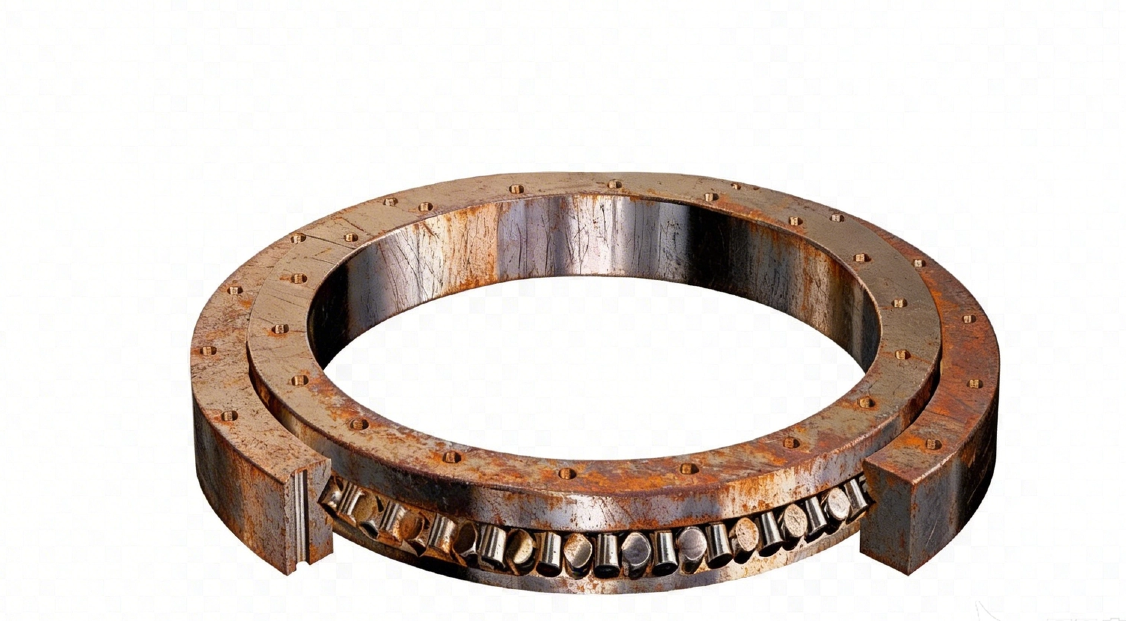
Slewing Bearing Damage: Causes and Solutions
What is Slewing Bearing?
A slewing bearing, also known as a turntable bearing, is a large-scale bearing designed to handle substantial weights and complex force combinations. Unlike standard bearings, it is typically a large-diameter, integrated unit featuring an inner ring, an outer ring, rolling elements (balls or rollers), and sealing systems. Its primary role is to support slow-speed, heavy-duty rotational movement in industrial applications.
How Does a Slewing Bearing Work?
It operates by distributing immense loads across its rolling elements and raceways. The bearing allows one connected structure (e.g., a crane’s upper works) to rotate relative to another (the undercarriage). Gear teeth are often integrated into the inner or outer ring, which mesh with a drive pinion to provide the rotational force. This design manages tilting moments, axial forces (along the axis), and radial forces (perpendicular to the axis) simultaneously.
Applications of Slewing Bearings
These bearings are fundamental in industries requiring robust rotational support. Key applications include:
Construction Machinery: Excavators, cranes, and concrete pump trucks.
Renewable Energy: Wind turbine yaw and pitch systems.
Material Handling: Stacker reclaimers, rotary conveyors, and forklifts.
Industrial Equipment: Turntables, welding positioners, and radar platforms.
Marine and Defense: Ship cranes, winches, and artillery mounts.
Common Signs of Slewing Bearing Damage
Early detection of slewing bearing damage is crucial for preventing operational downtime, safety hazards, and costly repairs. Recognizable signs typically manifest in the following ways:
Auditory Indicators: The most common early warning is unusual noise during operation. This may include a distinct grinding or grating sound, indicating metal-on-metal contact due to lack of lubrication or severe wear of the rolling elements and raceways. Popping or clicking noises often suggest damage to individual rolling elements (like brinelling or spalling) as they move over flawed spots in the raceway.
Operational Feel and Behavior: Changes in the machine's operation are key symptoms. Increased rotational resistance or binding makes movement feel jerky or uneven, sometimes requiring noticeably more power to initiate or maintain rotation. Excessive vibration or wobbling of the superstructure, especially during swing motion, points to uneven wear, loss of preload, or misalignment within the bearing.
Visual and Physical Evidence: During inspection, look for visible wear patterns on the raceways, such as pitting (small craters), spalling (flaking or chipping of metal), or indentations. Deformation or discoloration of bearing components can indicate severe overloading or heat generation. Failed or extruded seals are a critical sign, often leading to the next symptom: lubricant leakage.
Lubrication Issues: The presence of contaminated grease—visible as dark, gritty, or moisture-laden lubricant—is a major red flag. Conversely, a complete absence of grease at lubrication points signifies a failed maintenance regimen. Leakage of grease from the seal, often mixed with metal particles ("bearing sparkles"), confirms internal damage and seal failure.
Ignoring these signs allows minor damage to escalate into complete bearing failure, risking the safety of the machinery and its operators.
Main Causes of Slewing Bearing Damage
Understanding the root causes of damage helps implement effective preventive maintenance. Damage is seldom due to a single factor but rather a chain of events often initiated by the following:
Improper Installation and Assembly: This is a leading cause of premature failure. Issues include:
Misalignment: An uneven mounting surface or incorrect shimming places the bearing under constant internal stress, leading to uneven load distribution and accelerated fatigue.
Incorrect Bolt Tightening: Failure to follow the specified bolt preload sequence and torque values can distort the bearing rings, creating soft spots and reducing load capacity.
Poor Foundation Support: A mounting structure that lacks sufficient rigidity will flex under load, transferring excessive and dynamic stresses to the bearing.
Inadequate Lubrication Practices: Lubrication is the lifeblood of a bearing. Common failures include:
Incorrect Lubricant Type: Using a grease with the wrong viscosity or additive package for the specific load, speed, and temperature conditions.
Insufficient Lubrication Intervals: Extended periods without re-lubrication lead to grease degradation, loss of the protective film, and direct metal contact.
Contamination: The single most damaging lubricant issue. Ingress of abrasive particles (dust, sand), water, or chemical agents acts as lapping paste, accelerating wear, promoting corrosion, and breaking down the grease.
Operational and Load-Related Factors:
Overload: Consistently exceeding the bearing's static or dynamic load rating causes plastic deformation of the raceways and rolling elements.
Shock Loads: Sudden, extreme impacts (e.g., digging into buried rock, abrupt stops) can cause immediate brinelling (permanent indentations) and crack initiation.
Imperfect Gearing: Misalignment, excessive backlash, or wear in the drive pinion and internal/external gear creates uneven, jerky forces on the bearing.
Environmental and Corrosive Attacks: Exposure to harsh environments without adequate protection leads to:
Water Ingress: Causes rust and corrosion on raceways and rolling elements, breaking down the smooth surfaces and creating stress concentrators.
Abrasive Contaminants: Dust and particulate matter wear down seals and contaminate lubricant.
Chemical Corrosion: Exposure to salts, acids, or alkalis can chemically attack bearing steels.
Material Fatigue and Manufacturing Defects: Even under ideal conditions, bearings have a finite life due to rolling contact fatigue. Repeated stress cycles eventually lead to subsurface cracks that propagate to the surface, causing spalling. While rare, manufacturing flaws like material impurities, improper heat treatment, or machining errors can create weak points that fail early.
A proactive maintenance strategy focused on correct installation, disciplined lubrication management, and regular inspection is the most effective defense against these damaging factors, ensuring maximum service life and operational reliability.
How to Handle a Damaged Slewing Bearing?
When a slewing bearing shows signs of damage, the primary goal is to manage the issue effectively to restore functionality, ensure safety, and prevent recurrence. This involves a dual-focus approach: Remediation of the immediate problem and Implementation of Preventive Measures to safeguard long-term performance. Successful handling goes beyond simple steps and requires a deep understanding of the underlying principles and best practices.
1. Remediation: Addressing Existing Damage
The first course of action is a thorough assessment to determine the extent of the damage. Minor issues like superficial rust or temporary lubrication starvation can sometimes be addressed in situ.
Cleaning and Re-lubrication: If inspection reveals contamination or degraded grease but no significant metal damage, the bearing can be purged. Using a compatible high-quality flushing grease, the old contaminated lubricant is forced out through the relief plugs. This is followed by a complete re-lubrication with the specified premium-grade, extreme-pressure grease until clean grease emerges from all seals, ensuring the internal cavities are fully filled. This process can restore proper lubrication films and displace harmful contaminants.
Repair vs. Replacement Decision: This is a critical economic and technical judgment. Repair (often called re-manufacturing) is typically considered for large, costly bearings where damage is localized. It involves specialist operations like precision grinding of raceways to remove spalling or pitting, followed by re-hardening if necessary, and the replacement of rolling elements and seals. However, repair is not always a permanent solution and may affect the bearing's original load ratings. Replacement becomes the only viable option when there is widespread fatigue (extensive spalling), plastic deformation, deep cracks in the rings, or severe corrosion that compromises structural integrity. The cost of downtime, potential safety risks, and the guarantee of like-new performance often make replacement the more reliable long-term choice.
2. Prevention: A Proactive Regime to Avoid Future Failure
True handling of damage means preventing it from happening again. A robust preventive strategy is built on several pillars:
Scientific Lubrication Management: This is the single most important preventive measure. It is not merely about adding grease but about implementing a condition-based schedule. The interval depends on operational hours, environmental severity (heat, dust, moisture), and load cycles. Using a dedicated extreme-pressure (EP), lithium-complex, or molybdenum-disulfide fortified grease designed for slow-speed, high-load applications is non-negotiable. The grease must form a robust film that resists being squeezed out under heavy loads. Regular lubrication maintains this protective layer, reduces friction, dissipates heat, and protects against corrosion.
Structural Integrity and Mounting Surface Control: The bearing's performance is entirely dependent on the foundation it sits on. Regular surface inspection for flatness is essential. Over time, the supporting structure can warp or settle under cyclic loads, creating misalignment. Using a straightedge and feeler gauges, technicians must check for gaps. If distortion is found, the structure must be reinforced or the surface re-machined. A perfectly flat and rigid mounting surface ensures the bearing rings are not pre-stressed, allowing for even load distribution as intended by the design.
Aggressive Contamination Control: Seals are the first line of defense. A program of regular seal inspection for cuts, brittleness, or detachment must be in place. Any compromised seal should be replaced immediately with an OEM-equivalent or superior part. In highly abrasive or wet environments, consider upgrading to multi-labyrinth or spring-enhanced seals. Keeping the bearing's exterior clean by removing built-up mud and debris also reduces the risk of contaminants being forced past the seals during operation.
Operational Awareness and Monitoring: Operators and maintenance personnel must be trained to recognize early warning signs. Abnormal noise (grinding, popping) or new vibrations are not just nuisances; they are direct communications from the bearing indicating a problem, most often lubrication failure or ongoing component wear. Implementing simple periodic checks where the machinery is operated under no load to listen and feel for irregularities can facilitate early detection, allowing for intervention before catastrophic failure occurs.
Ensuring Correct Bearing Selection from the Outset: Prevention starts at the design and procurement phase. The bearing must be correctly specified from a reputable manufacturer to meet the exact application requirements, including all static and dynamic load cases, moment loads, required service life (L10 life), rotational speed, and environmental exposures. An undersized or improperly configured bearing is destined for premature failure, and no amount of maintenance can compensate for this fundamental error.
By integrating these detailed remediation and prevention strategies, you move from a reactive "fix-it-when-it-breaks" model to a proactive reliability-centered approach, maximizing slewing bearing lifespan and ensuring operational safety and efficiency.
LyraDrive: Professional Solutions for Slewing Bearing Performance and Reliability
At LyraDrive, we specialize in the design and manufacture of high-precision slew drives and a comprehensive range of slewing bearings engineered for diverse industrial demands. Our core bearing series includes Light Load Slewing Bearings, Heavy Load Slewing Bearings, as well as specialized types such as Truck Crane Slewing Bearings and Excavator Slewing Bearings.
We understand that slewing bearing damage can lead to significant downtime. That’s why LyraDrive not only provides robust and reliable components but also supports our customers with practical solutions to effectively address and prevent bearing issues. From proper product selection and installation guidance to maintenance recommendations and troubleshooting support, our team is here to help you optimize performance and minimize the risk of failure.
Whether you need a custom-designed bearing or expert advice on managing damage, LyraDrive offers the expertise and quality products to keep your equipment running smoothly and efficiently.
FAQs Regarding Slewing Bearing Damage
Q: Can a damaged slewing bearing be repaired instead of replaced?
A: Some specialized services offer repair options like raceway re-grinding for large, expensive bearings with localized damage. However, replacement is often more cost-effective and reliable for widespread damage.
Q: How often should a slewing bearing be lubricated?
A: The interval varies drastically based on use, environment, and bearing type. Always follow the OEM's maintenance schedule, which could range from every few days in harsh conditions to several hundred operating hours.
Q: What is the most common cause of premature slewing bearing failure?
A: A combination of improper installation and inadequate lubrication is responsible for a majority of premature failures.
Q: Is abnormal noise always a sign of bearing failure?
A: While not always catastrophic, any new or unusual noise is a primary indicator of a problem (wear, lack of grease, contamination) and should be investigated immediately.
 WhatsApp
 sales@lyradrive.com
 +8613903880726