



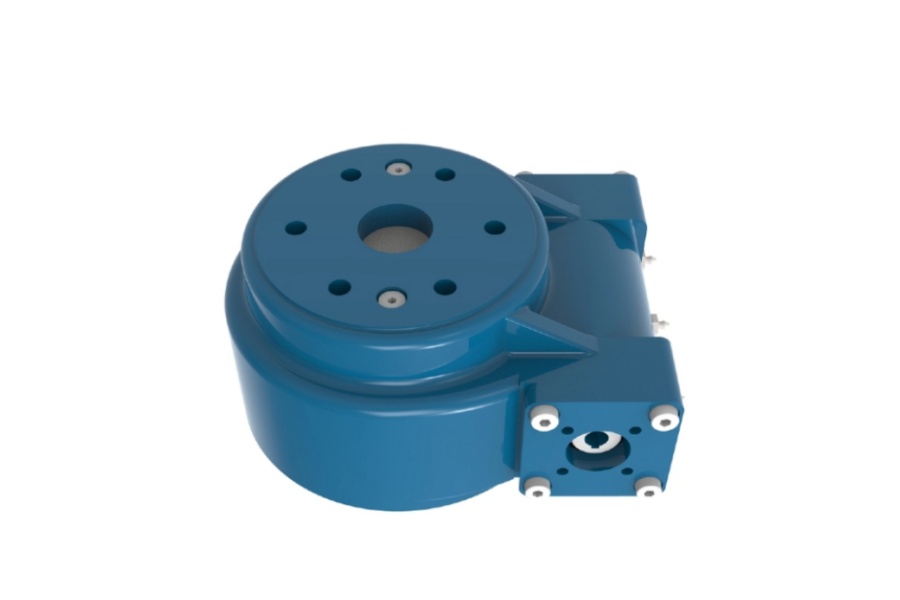
What is a slew drive? It is a compact rotation unit that combines a slewing bearing, a gear set (usually worm or spur), a housing and a motor interface. It turns loads, holds them in position and carries axial, radial and tilting forces at the same time.
Your unit is running hot, and you need to know why before it stops the machine. Good slew drive troubleshooting separates heat that comes from the drive from heat that the drive is only passing along. This guide gives maintenance engineers a test order, with what to observe at each step and when to stop.
Separate the Symptom From the Suspected Cause
"Overheating" is only a symptom. The housing may feel hot, the motor may trip on thermal protection, or the grease may smell burnt. Each of these points to a different place to look first.
Write down what you actually observed before you guess. A hot gearbox housing is an observation. "The worm gear is worn" is a suspicion until you have evidence.
Three questions keep the investigation honest:
- Where is the heat? Gear housing, bearing flange, motor, or brake.
- When did it start? After a grease change, after reinstallation, after a duty change, or gradually over months.
- Is it stable or climbing? A temperature that levels off during a work cycle is a different problem from one that keeps rising.
Stop conditions. Stop the machine if you see smoke, grease leaking from the seals, metallic noise, or a motor that repeatedly trips. Running through these symptoms can turn a lubrication fault into tooth damage. The same applies if the load is being held in a raised position, so secure the load before you inspect anything.
Accessible Preliminary Checks Before You Open Anything
Start with checks that need no disassembly. They often explain the heat on their own.
- Review recent changes. Look for a new load, a longer work cycle, a new motor, a regrease, or a re-mounting of the drive.
- Check the ambient condition. Direct sun, a nearby engine exhaust, or a poorly ventilated enclosure can raise the temperature without any fault in the drive.
- Inspect the mounting. Loose bolts or an uneven mounting surface distort the bearing and add friction.
- Look at the seals and vents. Dust, mud or washdown water in the wrong place points to contamination, not gear wear.
- Record a baseline. Use an infrared thermometer at the same marked spots, with the same load and duty, each time.
The baseline matters most. Without a record of what "normal" looks like on your machine, a reading is only a number. Check the product datasheet or ask the manufacturer for the permitted operating temperature range of your model.
Protection level and environment also matter. Units used outdoors, such as the 50 SP-I Slew Drive units (SP-I 0841) a US renewable energy equipment manufacturer ordered for utility-scale solar trackers, are specified with IP65 sealing for desert sites. Sealing keeps dust out, but sun load on the housing still needs to be considered when you read a surface temperature.
Request Your Custom Slew Drive or Bearing Spec
Tell us your load, speed, and environment — receive a tailored 100–5000 mm slewing drive or slewing bearing proposal with 3D drawings within 24 hours.
A Practical Test Order That Isolates Overheating
This is the core of the diagnosis. The order moves from the cheapest, least invasive check to the most involved. It also follows how heat usually builds up in a drive: lubrication first, then mechanical friction, then electrical load, then the duty cycle itself.
| Step | What to check | What you may observe | What it may indicate | Next action |
|---|---|---|---|---|
| 1. Grease condition | Grease color, consistency, smell, and amount at the fill or purge point. Compare with the type the manual specifies. | Dark, burnt-smelling or thin grease; metal particles; too little grease; or a packed cavity with no room for it to move. | Degraded or wrong grease, lubricant starvation, or overfill that causes churning heat. Metal fines suggest wear has already started. | If the grease is wrong or low, correct it and re-measure under the same load. If you find metal fines, stop and escalate. |
| 2. Preload and mounting | Mounting bolt torque, flatness of the mounting surface, and free rotation with the motor disconnected, if the design allows. | Rotation feels tight or uneven. Torque is inconsistent. Contact marks are uneven. | Excess preload, bearing distortion from a poor mounting surface, or misaligned gear mesh. | Re-torque to the specified sequence. Correct the surface. If tightness remains, escalate. Do not adjust internal preload without the manufacturer's procedure. |
| 3. Motor current | Current draw at no load, at working load and at start-up. Compare with the motor nameplate. | Current above nameplate at normal load. Current spikes at start. Current is normal but the motor is still hot. | High current points to extra mechanical drag in the drive or load. Normal current with a hot motor points to a motor, brake or cooling problem outside the gear train. | High current: go back to steps 1 and 2. Normal current: inspect the motor and brake separately. |
| 4. Duty-cycle heat buildup | Log temperature against run time over a full work cycle, including rest periods. | Temperature rises with each cycle and never recovers. Or it stays steady and only rises on long continuous runs. | Duty is higher than the drive's thermal capacity, or rest time is too short to shed heat. | Reduce continuous run time, add rest intervals, or review the selection with the supplier. |
Why this order? Grease is the easiest thing to check and the most common single contributor. Preload comes next because it adds friction at the bearing no matter what the motor does. Current tells you whether the heat is mechanical or electrical. Duty cycle comes last because it is the hardest to change and the easiest to blame too early.
Use one criterion at every step: did the temperature change after the correction, under the same load and run time? If it did not, the cause is not settled, and you should keep the earlier step open as a possible contributor.
A note on gear type. A worm gear slew drive relies on sliding contact between worm and wheel, so it naturally produces more heat than a rolling contact design under the same load. That is why duty cycle matters more for worm designs. In a spur gear slew drive, you would put more weight on gear mesh and alignment.

Connect the Cause to a Fix and a Result Check
Do not apply the same remedy to every case. Each corrective action should tie to specific evidence and to a way to confirm the result.
| Likely cause | Distinguishing evidence | Corrective action | Result check |
|---|---|---|---|
| Wrong, aged or low grease | Discolored grease, burnt smell, dry gear surfaces | Purge and refill with the specified grease and quantity | Temperature trend over the same cycle is lower and levels off |
| Over-greasing | Grease pushed out of seals; heat soon after regreasing | Remove excess to the specified fill level | Heat drops within a few cycles |
| Mounting distortion or high preload | Tight rotation, uneven contact marks, loose or uneven bolts | Correct surface flatness and re-torque in sequence | Smoother rotation and lower current at the same load |
| Duty cycle beyond thermal capacity | Heat rises cycle by cycle while grease and current are normal | Add rest time or review drive selection | Temperature recovers between cycles |
| Motor or brake fault | Motor hot, current normal, gear housing not hot | Service the motor or brake separately | Motor temperature drops while the housing stays the same |
Sometimes the evidence will not settle on one cause. A drive can have aging grease and a long duty cycle at the same time. In that case, change one variable at a time and log the result, so you know which change actually helped.
Common Mistakes That Waste Diagnosis Time
- Adding more grease as a first reaction. Overfill causes churning heat, and it hides the original problem.
- Reading one spot once. A single reading with no baseline or load record tells you very little.
- Adjusting preload by feel. Internal adjustments need a manufacturer procedure and the right tools.
- Ignoring the motor. A hot motor can warm the housing and mislead you into blaming the gears.
- Jumping to replacement. A new unit will overheat the same way if the cause is duty cycle or mounting.
- Assuming a defect. Most heat complaints trace to application conditions first. A confirmed manufacturing defect is a conclusion, not a starting point.
Prevention and When to Escalate
After 30 years in power transmission design, my advice is simple. Log temperature, current and grease condition on a schedule, and keep the records together. Heat problems almost always show a trend before they become downtime.
Recurrence checks:
- Re-measure surface temperature at the marked spots at each service interval.
- Check the bolt torque after the first operating weeks and at regular intervals.
- Inspect seals and vents after washdowns, storms or dust exposure.
- Review the duty cycle whenever the application changes.
Escalate when you find metal particles in the grease, unusual noise, tight rotation after the mounting is corrected, or a current that stays high after lubrication is correct. At that point further work needs internal inspection, and it should follow the manufacturer's procedure.
Information to send for support:
- Drive model and serial number, and the application.
- Temperature log with load, run time and ambient conditions.
- Motor current readings against the nameplate.
- Grease type, last service date and a photo of the grease condition.
- Any recent changes to load, duty or mounting.
Real duty conditions vary widely. A South Korean port equipment manufacturer reordered 20 units of WEA9-62-25HR single worm drives for port crane systems, where tracking precision of 0.15° or better, IP65 sealing and self-locking are required. A Houston engineering machinery manufacturer chose 150 units of the Double Worm Slew Drive WED17-104-25HR for heavy-duty wheel steering. Different duty, different heat profile, so the same thermal check should always be compared against the application and not a generic number.
Luoyang Slewring Bearing Co., Ltd. supports customers with a 48-hour technical response and a 2-year extended quality warranty. Confirmed manufacturing defects are replaced free of charge. Every unit passes CMM three-coordinate inspection and dynamic load testing, as described on our slew drive quality control page. If the diagnosis shows your duty cycle exceeds a standard unit's capacity, our engineers can provide a technical proposal within 24 hours for a customized slew drive. The customized MOQ is 5 sets, and standard products start at 1 set.
If you are looking for a slew drive supplier, or need help interpreting your temperature records, please contact us. Send your model, application and test log, and we will give you the latest product quotation along with a technical review.
A heat problem rarely comes from one place. Following a fixed slew drive troubleshooting order, and recording each result, shows you whether the fix is grease, mounting, electrical load or duty cycle before you decide on service or replacement. For bearing-related questions, see our slewing bearing range.
Request Your Custom Slew Drive or Bearing Spec
Tell us your load, speed, and environment — receive a tailored 100–5000 mm slewing drive or slewing bearing proposal with 3D drawings within 24 hours.
 WhatsApp

 +8613903880726