



Slew Drive for High-Altitude Vehicles
What is a High-Altitude Vehicle Slew Drive?
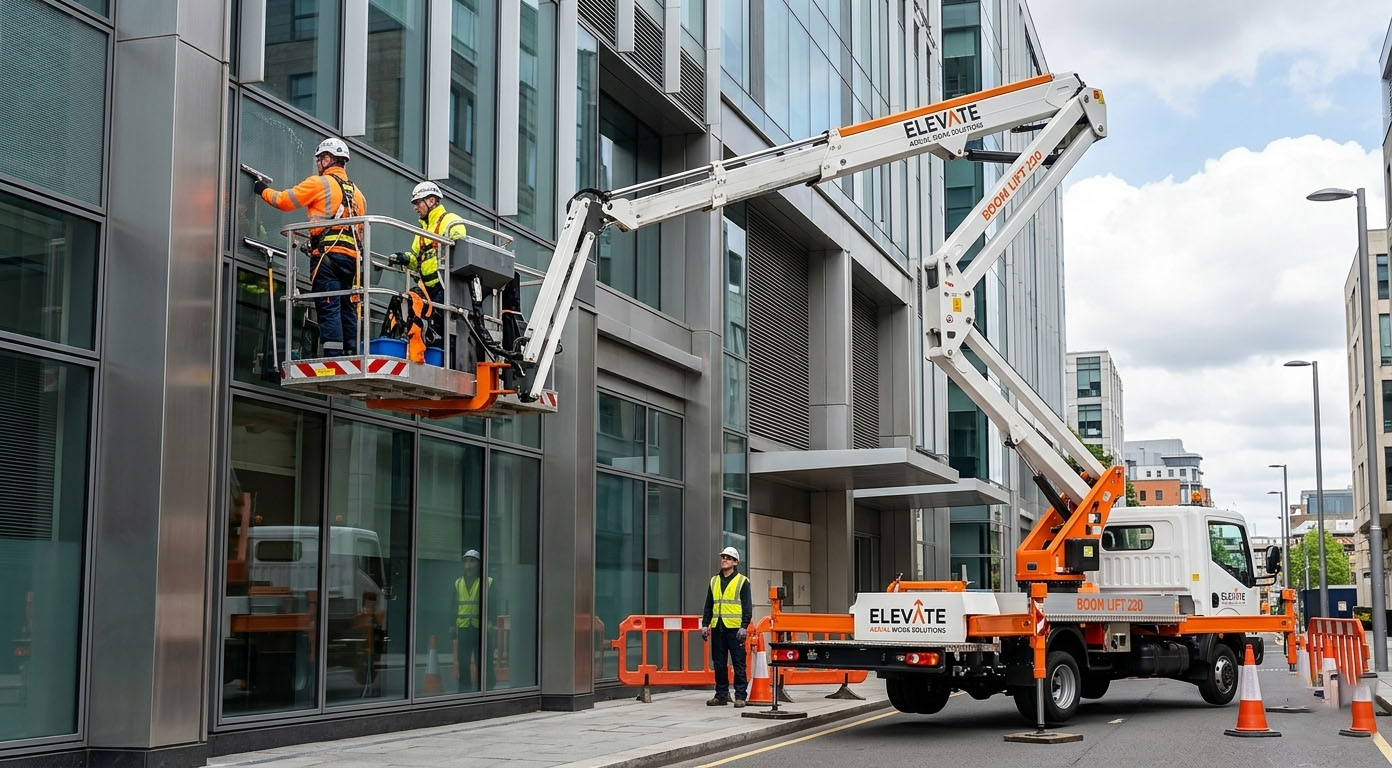
A high-altitude vehicle slew drive is a compact rotary actuator that enables precise rotation of the turntable, boom, or basket on equipment designed for working at height. These vehicles include aerial work platforms (cherry pickers, boom lifts), truck-mounted cranes, under-bridge inspection vehicles, fire trucks, and utility service vehicles.
Unlike standard industrial slew drive units, high-altitude vehicle slew drives must handle high moment loads from extended booms, provide smooth acceleration for operator safety at height, and withstand repeated shock loads. A typical worm gear slew drive is preferred in most applications because its self-locking property holds position even when hydraulic pressure is removed — a critical safety feature when personnel or heavy loads are elevated.
How Does a Slew Drive Work on a High-Altitude Vehicle?
How does a slew drive work on a high-altitude vehicle? The principle combines a hydraulic or electric motor with a high-ratio reduction gear set. The motor drives a worm (or pinion), which rotates a large gear ring integrated with the turntable bearing.
In a worm gear slew drive, the worm cannot be back-driven by the gear — meaning the platform or crane upper structure stays put even if power is lost. This self-locking characteristic is essential for safety at height. Typical reduction ratios range from 40:1 to 120:1, converting low motor torque into high rotational torque capable of swinging a fully extended boom with payload.
Inside the drive, a slewing bearing supports the rotating structure while handling three simultaneous forces: axial load (vehicle weight), radial load (side forces), and moment load (tilting from extended boom). For applications requiring higher rotation speeds, a spur gear slew drive may be used, though it requires an external brake for position holding.
Key Features of Slew Drives for High-Altitude Vehicles
Slew drives for high-altitude vehicles incorporate several specialized features:
Feature 1: Integrated Holding Brake
Most include a spring-applied, hydraulically-released multi-disc brake. When the operator releases the control, springs lock the brake instantly, preventing unintended movement — in addition to the worm gear's self-locking.
Feature 2: Smooth Control for Operator Safety
Sudden starts or stops can sway a raised platform or suspended load dangerously. These slew drives feature low starting friction and carefully profiled gear teeth to minimize stick-slip behavior, enabling precise positioning at height.
Feature 3: High Moment Load Capacity
A boom lift at full extension or a crane lifting at maximum radius can impose over 50,000 Nm of tilting moment. The slew drive's internal bearing and mounting bolt circle must handle these extreme loads without excessive deflection.
Feature 4: Compact Axial Height
Vehicle manufacturers prioritize low center of gravity and transport height. Slew drives typically have axial height of 80–150mm, integrating bearing, gear, and brake into a single housing.
Feature 5: Robust Sealing
Jobsite contaminants (concrete dust, mud, water spray) demand triple-lip seals and labyrinth covers to prevent ingress while retaining lubrication.
Key Design Parameters of High-Altitude Vehicle Slew Drives
When specifying a slew drive for a high-altitude vehicle, these parameters are critical:
| Parameter | Typical Range | Notes |
|---|---|---|
| Output torque | 2,000 – 25,000 Nm | Continuous or intermittent rating |
| Holding torque (brake) | 1.5× output torque | Spring-applied, hydraulic release |
| Reduction ratio | 40:1 – 120:1 | Higher ratio = smoother control |
| Maximum moment load | 20,000 – 80,000 Nm | Depends on boom length and payload |
| Output speed | 0.5 – 4 rpm | Turntable rotation |
| Axial height | 80 – 150 mm | Low profile for vehicle integration |
| Seal rating | IP66 or higher | Protection against pressure washing |
| Weight | 40 – 200 kg | Affects vehicle center of gravity |
Components of Slew Drives for High-Altitude Vehicles
A complete high-altitude vehicle slew drive consists of several precision components:
Housing: High-strength ductile iron with ribbed reinforcement around bearing races. Machined mounting surfaces within 0.05mm flatness.
Worm shaft (worm gear slew drive): Case-hardened 8620 or 4320 alloy steel, 58–62 HRC, with precision-ground thread profile.
Gear ring: Internal or external teeth, induction-hardened to 50–55 HRC on tooth flanks.
Slewing bearing: Four-point contact ball bearing with 45° contact angles. Raceways hardened to 55–60 HRC, ground to Ra ≤0.4μm.
Multi-disc brake: Sintered bronze friction plates alternated with steel plates, calibrated to hold 1.5× rated torque.
Seals: Double-lip FKM or NBR shaft seals plus labyrinth covers.
Lubrication: Sealed-for-life with NLGI #1 or #2 lithium-complex EP grease.
Common Applications of Slew Drives for High-Altitude Vehicles
The applications of slew drives in high-altitude operating vehicles are diverse, mirroring the variety of ways tasks are performed at height:
Aerial Work Platforms (AWPs): Cherry pickers or boom lifts are the most prominent user of this technology, relying on slew drives for the rotation of the main turntable assembly relative to the chassis and, sometimes, for the rotation of the operator basket relative to the boom tip. Worm gear slew drives are standard here due to self-locking and smooth control.
Cranes: Vehicle-mounted knuckle-boom and larger mobile cranes utilize robust slew drives to provide the continuous 360-degree rotation of the upper works, essential for material handling at height. These applications often require higher torque capacities (up to 25,000 Nm) and may use spur gear slew drives for faster rotation speeds, paired with separate holding brakes.
Specialized Vehicles: Under-bridge inspection vehicles rely heavily on complex slew drive systems for the articulation and rotation required to access structural components under a bridge deck. Fire trucks and utility service vehicles with elevated ladders or platforms are other critical examples. These vehicles often demand multiple slew drives per machine — one for the main turntable, another for boom articulation, and sometimes a third for basket rotation.
In each application, the slewing bearing within the slew drive must be sized to handle the specific moment load profile, which varies significantly between a lightly loaded personnel basket and a heavy crane lift.
Choosing the Right Slew Drive for Your High-Altitude Vehicle
Selection involves matching vehicle specifications to drive capability:
Step 1: Calculate maximum moment load
Worst-case scenario: boom fully extended horizontally, maximum payload, plus boom structure weight. Multiply by horizontal distance from turntable center to load center. Add safety factor of 1.5 for dynamic effects.
Step 2: Determine required torque
Torque (Nm) = Moment load (Nm) × coefficient of friction (0.05–0.10) + acceleration torque. For most vehicles, slew torque is 5–15% of the moment load value.
Step 3: Select gear type
Worm gear slew drive: Choose for self-locking, compact height, smooth operation. Best for AWPs and under-bridge vehicles.
Spur gear slew drive: Choose only if rotation speed >5 rpm is required and external brake is acceptable. Common in larger cranes.
Step 4: Verify brake capacity
Internal brake must hold 1.5× the maximum torque that could be applied during an emergency stop.
Step 5: Check interface dimensions
Bolt circle, pilot diameter, and mounting pattern must match your turntable and chassis.
Installation & Maintenance of Slew Drives for High-Altitude Vehicles
Installation guidelines:
Mounting surfaces must be flat within 0.1mm across the bolt circle.
Apply thread locker to mounting bolts. Torque in star pattern to specification.
Flush hydraulic lines before connecting to avoid contaminating brake circuit.
For electric drives, verify voltage before operation.
Maintenance schedule (2,000 annual operating hours):
| Interval | Action |
|---|---|
| Daily | Visual check for seal leakage, loose bolts |
| Every 250 hours | Check bolt torque |
| Every 500 hours | Grease (if serviceable), listen for unusual noise |
| Every 1,000 hours | Inspect grease condition |
| Every 2,000 hours | Replace seals, inspect brake discs |
Common failure modes:
Seal leakage: Debris wrapped around shaft or pressure spikes
Excessive backlash: Worn gear teeth from lack of lubrication
Brake slipping: Worn friction plates or low release pressure
LyraDrive: Custom Slew Drives Manufacturer for High-Altitude Vehicles
LyraDrive is a professional one-stop slewing device manufacturer majored in design and development, customized production, sales and service on slew drives and slewing bearings. Lyradrive provides high quality and customized slew drives, slewing bearings and gear rings for truck crane, excavator, manlift and other applications. If you are looking for a slew drive supplier or need technical support for high-altitude vehicle projects, feel free to contact LyraDrive.
LyraDrive offers complete solutions:
W-series worm gear slew drives: Torques 2,000–25,000 Nm, ratios 40:1–120:1, integrated holding brake
S-series spur gear slew drives: For higher speed crane applications
Custom slewing bearings: Any diameter, clearance, or mounting pattern
All LyraDrive products include ISO 9001:2015 certification, 100% factory testing, and full documentation.
Contact LyraDrive with your vehicle specifications — working height, payload, desired slew speed — for a recommendation.
FAQ of Slew Drives for High-Altitude Vehicles
Q1: Why is a worm gear slew drive preferred over a spur gear type for most high-altitude vehicles?
Because a worm gear slew drive is inherently self-locking — the worm cannot be back-driven by the gear. The turntable will not rotate even if hydraulic pressure is lost. For a platform elevated to 40m or a crane lifting a heavy load, this self-locking feature is a critical safety backup that a spur gear slew drive cannot provide without an external brake.
Q2: How often should a slew drive be re-greased?
For sealed-for-life units (majority of vehicles), no regreasing is needed for 5,000 hours or 5 years. For serviceable units, regrease every 500 operating hours using lithium-complex EP grease (NLGI #1 or #2). Do not over-grease — excess grease will push past seals.
Q3: What causes jerky rotation, and how to fix it?
Jerky rotation is usually due to: (1) air in hydraulic circuit — bleed the system; (2) worn gear teeth — inspect and replace drive; (3) sticky brake release — check pilot pressure. For electric drives, check motor controller gain settings.
Q4: What is the typical lifespan of a well-maintained slew drive?
For a vehicle operating 2,000 hours per year, a quality slew drive should last 8–10 years (16,000–20,000 hours). Brake friction plates may need replacement at 8,000–10,000 hours. After 15,000 hours, gear backlash increases noticeably — replacing the entire drive is usually more cost-effective than rebuilding.
Q5: Can LyraDrive provide custom slew drives for specialized vehicles like under-bridge inspection units?
Absolutely. LyraDrive specializes in custom engineering for any high-altitude vehicle application. Provide your moment load, torque requirements, mounting dimensions, and we will design a solution specifically for your vehicle.
 WhatsApp
 sales@lyradrive.com
 +8613903880726