



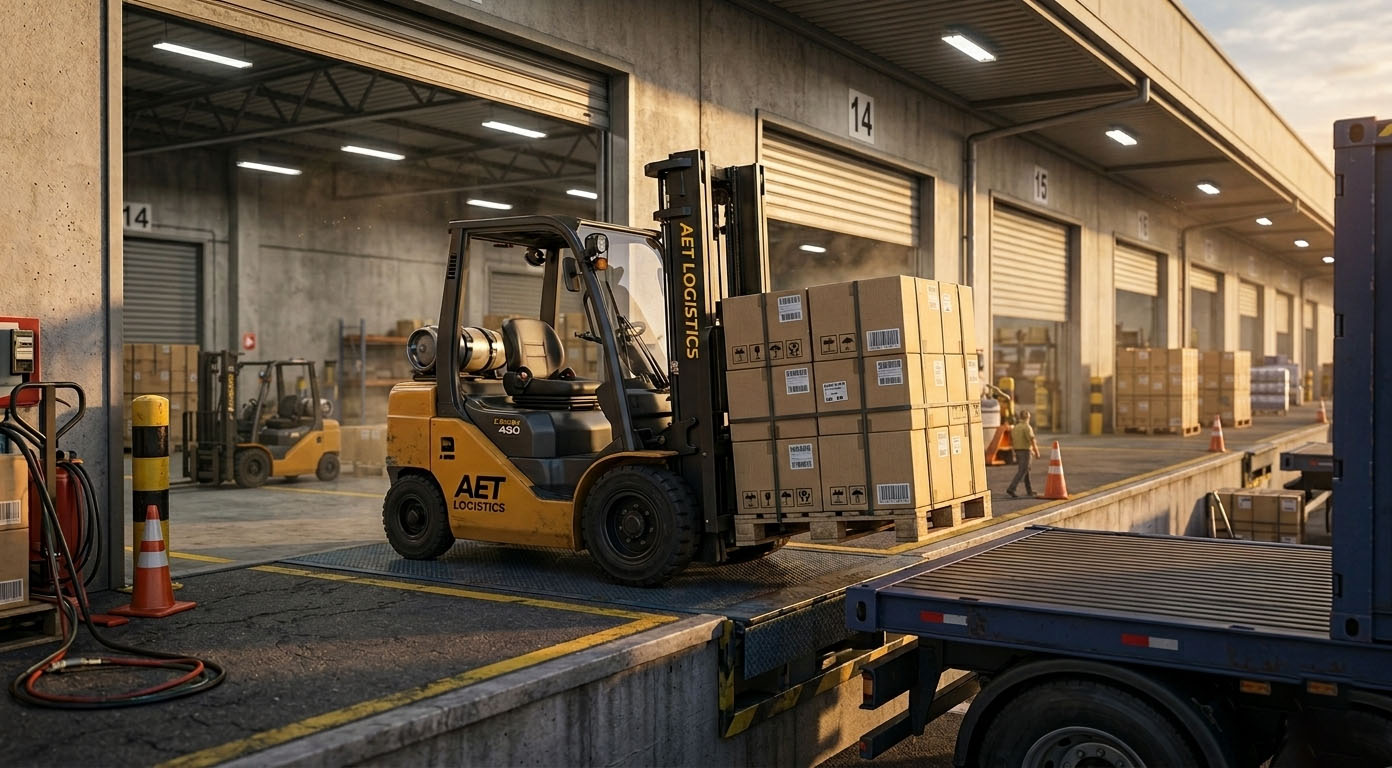
Slew Drive for Forklift
What is a Slew Drive for Forklift?
A slew drive for a forklift is a compact, high-load-capacity rotational device that enables the forklift’s attachment—such as forks, rotators, grabs, or side shifters—to rotate relative to the forklift carriage. Unlike conventional forklifts where the forks are fixed in orientation, a slew drive allows the operator to turn the load or the attachment itself, typically through a full 360 degrees.
In essence, a forklift slew drive integrates a worm gear (or alternative gear set), a bearing system, a housing, and sealing elements into a single ready-to-mount unit. It is installed between the forklift’s carriage and the attachment. Common applications include rotating forks for dumping bins, positioning long loads in narrow aisles, turning concrete pipes, or orienting heavy machinery parts during assembly.
Without a slew drive, the operator would need to reposition the entire forklift multiple times to achieve the desired load angle—inefficient and often unsafe in tight spaces. With a slew drive, the load rotates while the forklift remains stationary, greatly improving productivity and safety.
How Does a Slew Drive Work for Forklift?
The working principle of a typical forklift slew drive is based on a worm gear mechanism, though planetary or spur gear designs are also available for specific needs.
Core components:
Worm (input shaft): Connected to a hydraulic motor or electric motor. When the motor turns the worm, it drives the worm gear.
Worm gear (output gear): Engages with the worm. The gear is attached to an output flange that rotates the forklift attachment.
Output flange: Bolts directly to the fork rotator, side shifter, or other attachment.
Housing: Contains the gear set and supports radial and axial loads.
Sealing system: Prevents dust, moisture, and debris from entering the drive.
Operation sequence:
The operator activates the hydraulic or electric motor via a control lever or joystick.
The motor rotates the worm shaft.
The worm rotates the worm gear at a reduced speed but multiplied torque.
The worm gear turns the output flange, which rotates the attached tool (e.g., forks).
When the motor stops, the self-locking nature of the worm gear prevents the load from back-driving the system, holding the position securely.
For hydraulic-powered systems, a flow control valve regulates rotation speed. For electric-powered systems, a servo or stepper motor provides precise angle control. The entire assembly is designed to handle high overturning moments—forces that try to tilt the attachment forward or sideways—common in forklift lifting operations.
Key Features of a Slew Drive for Forklift
| Feature | Benefit |
|---|---|
| High torque in compact size | Fits tight carriage spaces while handling heavy loads |
| Self-locking (worm gear type) | Holds load position without continuous power or brake |
| IP sealing (IP65/IP66 typical) | Withstands dust, rain, pressure washing |
| High radial and axial load capacity | Supports both vertical lift forces and side thrust |
| Low backlash (≤0.1° typical for precision models) | Enables accurate load positioning |
| Adaptable mounting interfaces | Bolts directly to standard carriage and attachment patterns |
| Integrated or separate motor port | Accepts hydraulic motors, orbital motors, or electric servos |
Additionally, many forklift slew drives feature hardened and ground worm gears for extended life, cast iron housings for strength, and double-lip seals to retain grease and exclude contaminants.
Main Types of Slew Drive for Forklift
1. Worm Gear Slew Drive
Learn more about worm gear slew drive for forklift applications.
Most common type for forklifts.
Advantages: Self-locking, compact, high reduction ratio per stage, low cost.
Limitation: Lower efficiency (≈70%), not suitable for continuous high-speed rotation.
Typical use: Fork rotators, side shifters, dump hoppers.
2. Spur or Planetary Gear Slew Drive
Advantages: Higher efficiency (≈90%+), lower heat generation.
Limitation: No self-locking requires external brake or continuous power.
Typical use: Automated forklifts, AGVs, or applications requiring high duty cycles.
3. Hydraulic Motor-Driven Slew Drive
The hydraulic motor is mounted directly to the worm input shaft.
Best for: Heavy-duty rough-terrain forklifts, container handlers.
Control: Simple flow control valve for rotation speed.
4. Electric-Driven Precision Slew Drive
Uses a servo or stepper motor.
Best for: Semi-automated or automated forklifts, robotic attachments.
Advantage: Precise angle control, programmable rotation sequences.
5. Open vs. Sealed Designs
Sealed (standard for most forklifts): Pre-lubricated, maintenance-free for long intervals.
Open (rare for forklifts): Requires external lubrication, used in clean indoor environments only.
Advantages of a Slew Drive in Forklift
360° load rotation without repositioning – The forklift stays in place; only the load turns. This saves time and reduces collision risks.
Improved safety – Operators no longer need to reverse or maneuver blindly. Loads are rotated in full view. Self-locking prevents accidental drop or spin.
Reduced operator fatigue – Hydraulic or electric rotation is effortless compared to manual repositioning. Joystick control allows one-handed operation.
Minimized product damage – Delicate loads (e.g., glass, bricks, drums) can be gently rotated and precisely dumped without shaking the entire forklift.
Lower maintenance – Enclosed lubrication means no daily greasing. Most slew drives require service only every 6–12 months.
Versatility – One forklift can perform multiple tasks: lifting, rotating, side shifting, and dumping by simply changing the attachment driven by the same slew drive interface.
How to Choose the Right Slew Drive for Forklift?
Selecting the correct slew drive involves several technical and operational parameters.
Step 1 – Define load requirements
Static load: Maximum load weight (including the attachment itself).
Dynamic load: Shock loads during travel over uneven floors or ramps.
Axial force: Vertical downward force from the load.
Radial/tilting moment: Side thrust when forks are not centered.
Step 2 – Determine rotation needs
Full 360° continuous – For most rotators and dumpers.
Limited angle (±90° or ±180°) – For side shifters or positioners.
Precision positioning – Requires low backlash (≤0.05° to 0.1°).
Step 3 – Evaluate environmental conditions
Indoor clean – IP54 may suffice.
Outdoor with rain/dust – IP65 minimum.
Food/pharma – Special grease and sealed design to prevent contamination.
Step 4 – Match power source
Hydraulic forklift – Choose a slew drive with a standard hydraulic motor mount (SAE or ISO patterns). Specify motor displacement to achieve desired rotation speed (e.g., 5–10 rpm typical).
Electric forklift – Select electric-driven slew drive with integrated servo or stepper.
Step 5 – Verify mounting dimensions
Bolting pattern to forklift carriage (ISO 2328 or custom).
Output flange interface to attachment (customer-specific).
Step 6 – Consider backlash and accuracy
General handling: 0.2°–0.5° backlash acceptable.
Precision assembly work: ≤0.05° backlash required.
When in doubt, provide LyraDrive with your forklift model, attachment weight, maximum load, and duty cycle. We will recommend or custom-build the optimal slew drive.
Installation and Maintenance of a Slew Drive for Forklift
Installation
Carriage preparation – Clean and inspect the forklift carriage mounting plate. Ensure flatness within 0.1 mm.
Mounting the slew drive – Align the slew drive housing to the carriage bolt holes. Tighten bolts to specified torque (typically grade 10.9 bolts).
Motor coupling – Attach the hydraulic or electric motor to the worm input shaft. Use a flexible coupling if required to avoid side loads on the worm shaft.
Attachment connection – Bolt the fork rotator or other attachment to the output flange of the slew drive.
Sealing check – Rotate the unit manually to ensure no interference. Verify all seals are intact.
Function test – Operate rotation without load first, then with incremental loads.
Maintenance
| Task | Frequency | Procedure |
|---|---|---|
| Lubrication (grease) | Every 6–12 months or 2,000 hours | Use NLGI #2 lithium or synthetic grease. Inject until old grease exits the relief valve. |
| Seal inspection | 6 months | Check for cracks, hardening, or leakage. Replace seals if damaged. |
| Backlash measurement | Annually | Clamp the output flange and measure rotational play at the input shaft. Compare to original spec. |
| Bearing wear monitoring | Annually or after abnormal noise | Listen for grinding or clicking. If detected, disassemble and inspect bearings. |
| Bolt torque check | First month, then annually | Retorque carriage and attachment bolts. |
Common failure signs:
Increased rotation resistance or jerky motion.
Grease leakage around seals.
Unusual noise (whining, grinding) during rotation.
Visible play between attachment and carriage.
If any of these occur, stop operation immediately and inspect. Most issues are preventable with regular lubrication and seal checks.
LyraDrive: Custom Slew Drive Manufacturer for Forklift
LyraDrive is a professional one-stop slewing device manufacturer, majored in design and development, customized production, sales and service on slew drives and slewing bearings.
We offer fully customized slew drive solutions for forklift applications. Our customization services include tailored load capacities, mounting interfaces, rotation angles, backlash control, and sealing protection levels. Whether you need a compact design for narrow-aisle forklifts or a heavy-duty solution for rough-terrain forklifts, LyraDrive works closely with you from drawing to delivery.
If you are looking for a reliable slew drive supplier or need technical support for your forklift attachment project, please feel free to contact LyraDrive anytime.
FAQ of Slew Drive for Forklift
Q1: Can a forklift slew drive achieve 360° continuous rotation?
Yes, most forklift slew drives support full 360° rotation, allowing operators to position loads from any angle without moving the forklift.
Q2: Is a self-locking slew drive necessary for forklift applications?
Highly recommended. Self-locking prevents unintended load rotation due to hydraulic or motor failure, significantly improving safety during lifting and tilting operations.
Q3: What is the typical maintenance interval for a forklift slew drive?
Under normal working conditions, lubrication every 6–12 months is sufficient. Heavy-use or dusty environments may require more frequent inspection and regreasing.
Q4: Can I retrofit a slew drive onto an existing standard forklift?
Yes, in most cases. A custom mounting adapter plate and compatible hydraulic/electric motor connection are required. LyraDrive offers retrofit design support based on your forklift model.
Q5: How do I determine the required load capacity for a forklift slew drive?
You need to consider the maximum dynamic load (including load weight, carriage weight, and impact factors) and the radial/axial force distribution. LyraDrive can help calculate and recommend the right model based on your application data.
 WhatsApp
 sales@lyradrive.com
 +8613903880726