



What is slew drive lubrication? It is the controlled delivery of the specified grease to the bearing raceway and related lubrication points in a slew drive so rolling elements can move without dry contact. The goal is not simply to add grease. The goal is to distribute it across the working raceway and confirm that no section remains starved.
Noise, rising operating torque, and fast wear after servicing often point to a distribution problem rather than a lack of grease in the system. A grease fitting may accept lubricant while a loaded area of the raceway still receives too little. This guide gives field technicians a practical diagnosis order for a Slew Drive after lubrication-related symptoms appear.

Separate the reported symptom from the actual lubrication cause
Do not treat a noisy drive as confirmed grease starvation. Noise can come from dry raceway zones, contamination, mounting distortion, damaged teeth, excessive load, or a mechanical fault inside the drive. Start by recording what changed before the symptom began.
The most useful initial question is simple: did the noise, torque increase, or uneven motion begin before lubrication, immediately after lubrication, or after the machine returned to service? That timing helps separate a missed distribution step from a condition that requires deeper mechanical inspection.
| Observed condition | What it may indicate | First check | Next action |
|---|---|---|---|
| Noise appears after a grease service | Grease may not have reached the full loaded path, or the wrong grease may have been introduced | Review grease type, lubrication points, and rotation during service | Perform a controlled distribution check if no stop condition is present |
| Torque rises gradually over repeated cycles | Dry zones, contamination, increased friction, or load-related resistance | Compare movement before and after a controlled grease application | Inspect external seals, grease purge, mounting, and operating load |
| One position feels rough while other positions feel normal | A localized raceway condition is more likely than a general lack of grease | Mark the angular location where resistance occurs | Stop and seek technical review if the condition remains after proper distribution |
| Grease will not enter a fitting | Blocked fitting, blocked passage, hardened grease, or access issue | Inspect the fitting and confirm the grease gun connection | Do not force pressure into an unknown blockage; escalate for service guidance |
| Fresh grease appears quickly at one location only | Grease may be following the easiest path while other zones receive less lubricant | Check whether the unit was moved slowly during application | Use a multi-point, rotation-based procedure rather than adding grease at one static position |
Use machine records where available. Note the grease product, service date, operating hours or cycles, environmental exposure, and any recent repair. If the drive was opened, remounted, overloaded, exposed to water, or stored for a long period, those details matter because lubrication may not be the only cause.
Before any powered test, inspect for obvious damage around the housing, fasteners, seals, fittings, and gear interface. Do not continue normal operation if there is visible structural damage, a loose mounting condition, severe abnormal resistance, or a condition that creates an immediate safety concern. Those findings require a controlled inspection by qualified personnel.
Follow an accessible diagnosis order before opening or replacing the drive
Begin with checks that do not require disassembly. Opening a sealed unit too early can introduce contamination and may hide the evidence needed to identify the actual fault. A methodical external inspection also gives better information if technical support is needed.
- Confirm the symptom and its location. Operate the machine only as permitted by site safety procedures. Identify whether the sound, drag, vibration, or irregular motion occurs through the full travel or repeats at one position.
- Review the last lubrication event. Confirm the specified lubricant was used, whether more than one grease type may have been mixed, and whether all intended fittings were serviced. If grease compatibility is not confirmed, do not assume mixed products will perform correctly.
- Inspect every accessible fitting. Look for damaged nipples, loose caps, blocked access, or a fitting that does not accept grease normally. Clean the fitting area before connecting a grease gun so dirt is not pushed into the passage.
- Check for purge evidence. Observe where old grease or fresh grease exits, if the design provides a purge path. A purge seen at one accessible point does not prove the entire raceway has received lubricant.
- Compare motion around the operating range. Mark a rough position where the symptom is strongest. If the same area repeatedly feels different after proper distribution, treat it as a localized condition and prepare an escalation record.
- Inspect related mechanical conditions. Check for loose mounting, visible seal damage, abnormal gear debris, or a change in the driven structure. Lubrication cannot correct a damaged bearing path, distorted installation, or unsuitable load condition.
A field technician should avoid assuming that more grease always solves rising torque. Excess grease can create its own resistance or conceal a separate mechanical issue. Apply only according to the equipment documentation and stop adding lubricant when the observed behavior conflicts with the manual or normal service practice.
The bearing arrangement matters during diagnosis. A drive using a slewing ring has different load paths than a simple rotary joint, so service personnel should identify the installed product configuration before judging symptoms. For bearing-related background, see our Slewing Bearing product information.
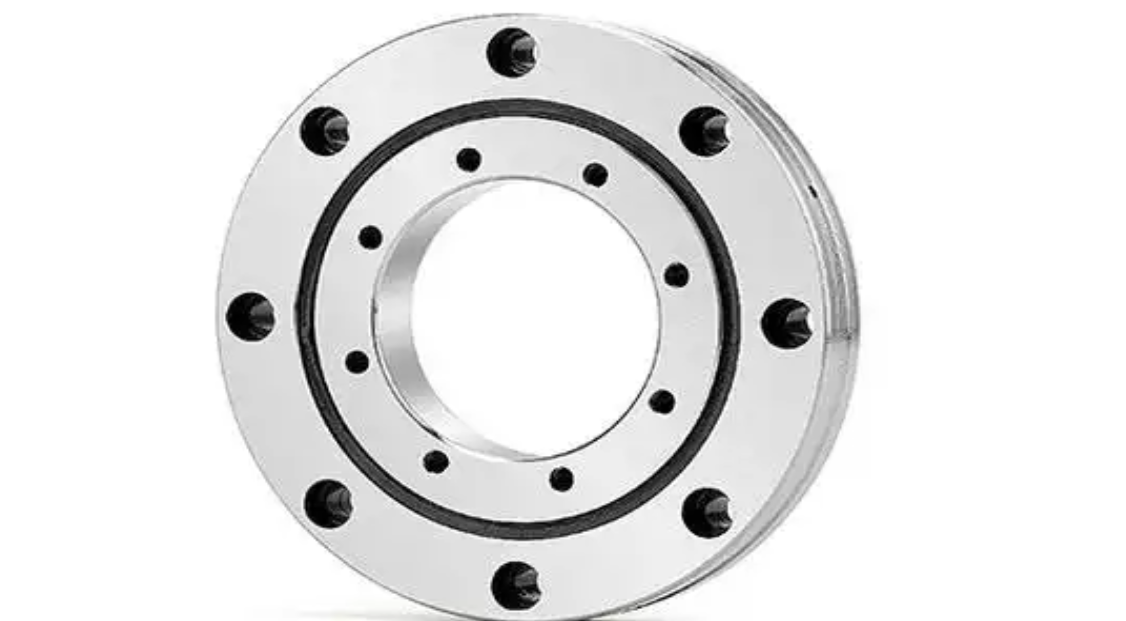
Use slow rotation, purge observation, and multi-point application to avoid dry raceway zones
The central corrective action for suspected uneven distribution is not a single static grease application. Rotate the drive slowly while grease is applied through the intended points, observe the grease condition at available purge locations, and use all designated fittings. This method helps carry lubricant around the active raceway instead of leaving one area dry.
| Service action | Why it helps | What to observe | Limit or escalation point |
|---|---|---|---|
| Rotate slowly during application | Movement carries grease along the raceway and exposes different loaded zones to lubricant | Motion should remain controlled, with no abrupt binding or repeated rough spot | Do not force rotation against abnormal resistance; stop and document the position |
| Apply grease at multiple designated points | Multiple entry points reduce the chance that grease takes only one short path | Each fitting should accept grease in a normal manner | A blocked or damaged fitting needs inspection before pressure is increased |
| Observe old and fresh grease at purge areas | Purge evidence can show that lubricant is moving through an accessible path | Look for abnormal contamination, water signs, or unusual debris in expelled grease | A clean-looking purge at one point does not confirm full raceway coverage |
| Recheck torque and sound after distribution | A change in the symptom helps judge whether poor distribution was a likely factor | Compare the same operating direction, load condition, and position | No improvement, or a repeating rough position, calls for technical diagnosis |
Slow rotation is especially useful after a machine has remained parked in one position or when service was performed without moving the drive. A static application may fill the nearest available cavity while leaving a distant portion of the rolling path with less grease. Controlled movement changes the contact location and supports more even delivery.
Multi-point application is equally important. If the unit has more than one designated grease fitting, service each point according to the equipment instructions rather than relying on the easiest fitting to reach. This is a practical way to reduce uneven grease distribution, particularly on larger bearing paths and installations where access is limited.
Purge observation should be treated as evidence, not proof. Fresh grease leaving an accessible area suggests movement through that route, but it cannot by itself verify every internal section. If the original noise or rising torque remains concentrated at one rotational location, the issue may be wear, contamination, raceway damage, mounting distortion, or another mechanical condition.
Request Your Custom Slew Drive or Bearing Spec
Tell us your load, speed, and environment — receive a tailored 100–5000 mm slewing drive or slewing bearing proposal with 3D drawings within 24 hours.
Interpret the results after the corrective lubrication step
After the controlled service procedure, test under the same safe operating conditions that produced the original complaint. Compare sound, smoothness, and resistance at the same positions. A valid comparison requires the same direction, similar load condition, and similar machine setup.
- Symptom improves across the full movement range: Uneven grease distribution was a plausible contributor. Record the service method and add a rotation-and-multi-point check to the maintenance routine.
- Symptom improves only briefly: The grease may have reduced friction temporarily, but another condition may remain. Inspect for contamination, seal condition, mounting changes, or application load changes.
- One angular position remains noisy or stiff: This points toward a localized issue. Record the position, direction of travel, and operating condition, then escalate rather than repeatedly adding grease.
- No grease can be delivered through a required fitting: Treat the lubrication path as unverified. Inspect the fitting and passage under an approved service procedure before returning the unit to full duty.
- Noise becomes worse after service: Stop the test if the change is pronounced or accompanied by abnormal resistance. Check that the correct grease and approved procedure were used, then request technical review.
Do not use a single test result to confirm a bearing failure. The same symptom can have several causes. A drive that becomes quiet after service may still need monitoring if purge grease shows contamination or if the operating load has changed since the previous maintenance interval.
For worm-driven units, also distinguish raceway symptoms from gear-interface symptoms. A Worm Gear Slew Drive combines a slewing bearing with a worm transmission, so noise may originate from the bearing path, the gear contact, mounting interfaces, or the driven equipment. The diagnosis should identify the location before a repair decision is made.
Know when grease starvation is no longer the leading explanation
Grease starvation is a reasonable working hypothesis when the service record is incomplete, the drive was lubricated while stationary, some fittings were skipped, or the symptom improves after controlled distribution. It becomes a weaker explanation when a repeatable rough point remains, a fitting is blocked, abnormal debris appears, or the mounting condition has changed.
Escalate when the technician cannot verify lubricant passage, when movement remains irregular after correct servicing, or when there is visible damage. Send useful evidence rather than a general report of “noise.” This short record reduces delay and helps the engineering team separate lubrication concerns from mechanical faults.
| Information to provide for technical review | Why it matters |
|---|---|
| Product model and equipment application | Identifies the drive configuration, load environment, and service points |
| Photos of fittings, seals, mounting area, and purge grease | Shows external damage, contamination signs, and access conditions |
| Grease brand or specification used and whether products were mixed | Supports a lubricant compatibility review |
| Location of noise or resistance during rotation | Helps identify whether the condition is localized or present throughout travel |
| Operating condition during the symptom | Separates unloaded movement from a condition that appears under working load |
| Recent maintenance, installation, storage, or overload events | Provides context for possible contamination, alignment, or load-related causes |
Luoyang Slewring Bearing Co., Ltd. supports field diagnosis with a technical proposal within 24 hours and a stated 48-hour technical response. Our facility is certified to ISO 9001:2015, and every slewing bearing passes CMM three-coordinate inspection and dynamic load testing before delivery. Those controls support product quality, but they do not replace correct installation and maintenance in the field.
For confirmed manufacturing defects, the company provides free replacement under its stated terms and a 2-year extended quality warranty. When reporting a possible defect, keep the unit condition unchanged where safe and practical until the support team has reviewed the evidence. Do not disassemble a drive solely to prove a cause unless the approved service process calls for it.
Build a repeatable maintenance routine that prevents recurrence
The best prevention method is a service routine that confirms distribution, not just grease consumption. Each scheduled service should identify the lubricant used, the fittings serviced, the rotation action taken, the purge condition observed, and the outcome of a short operational check. This creates a useful baseline for later troubleshooting.
- Use the machine or drive documentation as the controlling instruction. Follow the specified lubricant, intervals, quantity guidance, and safety procedure for that model. Do not substitute a generic schedule when the equipment maker provides different requirements.
- Keep fittings clean and protected. Dirt at a grease nipple can enter the lubrication path during service. Replace or repair damaged protective caps as part of the approved maintenance process.
- Record the full distribution method. Note whether the drive was moved during greasing and whether each designated point received attention. This makes future troubleshooting much faster.
- Trend changes rather than waiting for failure. A new sound, a gradual torque increase, or a recurring rough spot should be logged early. Repeated observations are more useful than a single subjective report.
- Match the drive to the application. Heavy loads, harsh environments, and special installation layouts may require a configured solution rather than a standard selection. A Customized Slew Drive can be evaluated when the application requires a different arrangement.
Luoyang Slewring Bearing Co., Ltd. has six production lines, an 8,000 m² manufacturing facility, and annual capacity of 100,000 sets. Standard products are available from a one-set MOQ, while customized products begin at five sets, which allows maintenance teams and equipment builders to evaluate suitable configurations without assuming that one drive design fits every duty cycle.
A disciplined lubrication record, slow movement during grease distribution, purge observation, and use of every designated point will prevent many avoidable dry-zone problems. When those steps do not change the symptom, stop treating grease as the automatic answer and move to a documented mechanical diagnosis.
Request Your Custom Slew Drive or Bearing Spec
Tell us your load, speed, and environment — receive a tailored 100–5000 mm slewing drive or slewing bearing proposal with 3D drawings within 24 hours.
 WhatsApp

 +8613903880726