



What is a light duty slew drive? It is a compact rotary drive assembly that combines a slewing bearing, gearing, and a housing to rotate a mounted load at controlled speed. It is often considered when a project needs lower installed mass, a simpler drive layout, or a smaller rotating platform.
The purchase decision is rarely just “small drive versus larger drive.” A light duty slew drive can reduce mounting and motor-related costs in the right application, but it can create higher lifecycle exposure if the duty cycle, overturning moment, environmental conditions, or service access are underestimated. Procurement teams need a five-year model that compares like-for-like operating conditions instead of comparing unit quotes alone.
Set the Cost Boundary Before Comparing Quotes
Start by defining one operating position, one application, and one five-year operating period. Do not compare the price of a bare bearing with the price of a fully enclosed drive, or compare a drive quote that includes a motor interface with one that excludes it. Those are different procurement scopes.
For this analysis, the boundary should include the rotary drive assembly, mounting work, motor selection, scheduled maintenance, expected production loss from failures, and replacement exposure. Shipping, taxes, field installation labor, controls, and commissioning should be listed separately unless every supplier quotes them on the same basis.
A lower-mass option is a good candidate when the driven load is known, the mounting structure is sufficiently stiff, and rotation is controlled rather than subjected to repeated impact. It does not fit automatically when the equipment sees heavy cyclic loads, high side loading, shock loading, or a duty cycle that has not been measured.
Luoyang Slewring Bearing Co., Ltd. selects materials such as ductile cast iron, alloy steel, stainless steel, and forged alloy steel according to load, speed, and environmental conditions. That selection should be part of the quote review because a lower initial price is not comparable if suppliers are pricing different material, sealing, or corrosion-protection scopes.
Use the same technical inputs for every supplier
- Load data: Include axial load, radial load, overturning moment, and whether loads are steady or cyclic.
- Motion data: State rotation angle, starts and stops per day, running time, speed, and required positioning accuracy.
- Mounting data: Provide the support frame drawing, bolt pattern, available mounting height, and allowable structure deflection.
- Motor data: Identify the proposed motor type, rated input power, supply voltage, control method, and duty cycle.
- Environment: State temperature range, dust, moisture, salt exposure, washdown, and corrosion expectations.
- Service data: Describe access for inspection, lubrication, replacement, and the cost of an unplanned shutdown.
The conclusion is straightforward: a five-year comparison is only useful when the alternatives perform the same job. This approach fits equipment procurement, OEM design approval, and replacement planning. It does not apply to an early concept stage where load and operating data are still unknown; at that stage, use a preliminary budget range and mark the open assumptions.
Compare Lower-Mass and Higher-Duty Alternatives by Application Fit
Low mass can reduce structural demand, but it is not a substitute for load capacity or stiffness. The preferred option depends on the real load case, not on whether the drive appears physically compact. A unit that is adequate for intermittent solar tracking may not be adequate for a frequently reversing industrial turntable.
| Selection Option | Where It Can Reduce Cost | Best-Fit Scenario | Limit or When It Does Not Apply |
|---|---|---|---|
| Lower-mass integrated drive | May reduce mounting steel, adapter parts, lifting needs, and motor demand if the load case supports it. | Controlled rotation, modest loads, accessible service points, and a stable mounting frame. | Do not select it solely to reduce weight when shock loads, high moments, or unknown duty cycles are present. |
| Higher-duty integrated drive | May reduce replacement and downtime exposure where operating loads are severe or continuous. | Heavy cyclic operation, harsh environments, difficult service access, and costly equipment stoppage. | It may add unnecessary acquisition and mounting cost for low-demand applications. |
| Separate bearing and drive arrangement | Can suit projects requiring a special structure, custom gearing, or a nonstandard motor arrangement. | Large OEM programs with established engineering resources and validated interfaces. | It can increase design coordination, alignment work, and responsibility gaps between suppliers. |
| Customized drive assembly | Can avoid repeated adapter changes when the standard interface does not match the equipment. | Projects with defined drawings, recurring quantities, or special sealing and mounting needs. | Customization should not be used before the load case and interface requirements are stable. |
For a standard rotary package, review the available Slew Drive configurations before splitting the design into separate components. An integrated assembly can reduce interface risk because the bearing and gearing are selected as one package, but the final choice still depends on the required load margin and installed structure.
For projects with a nonstandard flange, motor position, or mounting envelope, a Customized Slew Drive can be evaluated against the cost of brackets, machining, and rework required to force-fit a standard unit. Customized products have a stated minimum order quantity of five sets, so this route may not suit a single replacement requirement.
Real project evidence can help define the questions, not replace engineering validation. For example, a U.S. renewable energy equipment manufacturer ordered 50 units of SP-I 0841 for utility-scale solar tracker systems with IP65 protection for desert sites. That case supports reviewing sealing and environmental scope early, but it does not prove that the same configuration fits another machine or duty cycle.
Build the Five-Year Ownership-Cost Formula
The five-year cost should be calculated per operating position first. Multiply by the number of identical positions only after confirming that each unit has the same mounting, usage, maintenance access, and downtime consequence.
Use this formula:
Five-Year Ownership Cost = Unit Price + Mounting Simplification Cost + Motor Power Cost + Maintenance-Interval Cost + Downtime-Risk Cost + Replacement-Exposure Cost
This formula does not assume that every term will be large. It makes each cost visible so a lower quote cannot hide a higher support, energy, or service burden.
| Formula Term | How to Calculate It | Cost Status in a Typical RFQ | Information Needed |
|---|---|---|---|
| Unit Price | Quoted drive price plus any quoted motor adapter, protective option, and agreed commercial charges. | Confirmed only when currency, quantity, delivery term, and included scope are stated. | Supplier quotation, quantity, Incoterm, payment terms, and validity date. |
| Mounting Simplification Cost | Support frame, brackets, adapters, bolts, machining, installation labor, and lifting difference between options. | Estimated until the mechanical design is released. | Mounting drawing, fabricator labor rate, material takeoff, and installation plan. |
| Motor Power Cost | Motor purchase difference plus annual energy use based on input power, operating hours, and local electricity rate. | Estimated unless a measured duty cycle and electricity rate are available. | Motor rating, controller efficiency data, hours per year, and energy tariff. |
| Maintenance-Interval Cost | Scheduled service events during five years multiplied by labor, access time, lubricant, and consumables. | Estimated until the service plan and site labor cost are known. | Maintenance instructions, access time, service labor rate, and operating schedule. |
| Downtime-Risk Cost | Expected event probability multiplied by outage duration and the verified hourly cost of lost operation. | Unknown or estimated; do not present it as a fixed price without site data. | Production-loss rate, repair lead time, spare strategy, and reliability assumptions. |
| Replacement-Exposure Cost | Expected replacement unit, freight, removal, installation, recommissioning, and disposal cost. | Estimated unless warranty and spare-stock arrangements are defined. | Warranty terms, replacement labor, freight basis, and spare inventory policy. |
No unit prices, energy tariffs, labor rates, or downtime costs are provided in the available project facts. Therefore, no valid dollar total should be invented. The useful output is a quote-comparison worksheet that keeps confirmed supplier prices separate from internal estimates and unresolved risks.
Luoyang Slewring Bearing Co., Ltd. provides a two-year extended quality warranty and free replacement for confirmed manufacturing defects. This is a confirmed commercial protection, but it should not be entered as “zero replacement cost” because removal, installation, freight terms, and production interruption may still remain outside a warranty claim.
Request Your Custom Slew Drive or Bearing Spec
Tell us your load, speed, and environment — receive a tailored 100–5000 mm slewing drive or slewing bearing proposal with 3D drawings within 24 hours.
Calculate Each Cost Term Without Mixing Confirmed Costs and Assumptions
Begin with acquisition cost, but label its scope carefully. A quoted drive price may exclude the motor, motor flange, electrical controls, export packing, freight, duties, installation bolts, and field labor. A lower quote is useful only when those exclusions are the same across all alternatives.
1. Calculate mounting simplification from released drawings
Compare the number of fabricated parts, machining operations, weldments, and field-fit steps required by each option. If a smaller drive permits a smaller support frame, use the fabricator’s material and labor estimate rather than assuming a saving from the drive’s physical size alone.
The conclusion should be based on the full installed interface. This method fits projects with released or near-released CAD models. It does not fit a concept drawing where support stiffness and bolt access have not yet been checked.
2. Calculate motor power cost from actual operating hours
For each option, calculate annual energy use as motor input power multiplied by annual running hours. Multiply that result by the site electricity rate, then multiply by five years. Add the motor and controller purchase difference if the alternatives require different drive systems.
Do not use rated motor power as if the motor runs at that level continuously. The model needs expected duty cycle, start frequency, load profile, and measured or supplier-supported input data. A low-speed application with brief movement may have a minor energy term even if motor ratings differ.
3. Price maintenance intervals as planned work
Count the scheduled service events expected during the five-year period, then apply labor time, access equipment, lubricants, and shutdown time. A drive mounted inside a guarded machine may cost more to inspect than one installed at ground level, even if both products use the same maintenance instruction.
Luoyang Slewring Bearing Co., Ltd. operates an ISO 9001:2015 certified quality management system, and every slewing bearing passes CMM three-coordinate inspection and dynamic load testing according to the stated quality-control practice. These controls support traceability and verification during supplier selection, but they do not remove the need to budget the machine owner’s maintenance labor.
4. Treat downtime and replacement as risk terms
Downtime cost should be entered as an expected-value estimate, not a hidden certainty. For each alternative, document the assumed chance of an event, repair duration, production loss per hour, available spare stock, and who performs replacement work.
Replacement exposure is lower when a buyer has a defined spare strategy, accessible mounting, and an agreed warranty process. It is higher when replacement requires crane access, machine disassembly, overseas freight, or extended commissioning. If those inputs are unavailable, mark the term “unknown” instead of assigning an artificial zero.

Use a Worked Comparison Sheet for Two Valid Alternatives
A practical evaluation can compare Option A, a lower-mass drive, with Option B, a higher-duty drive. Both options must meet the required motion, load, environmental, and safety criteria before cost is compared. An option that fails the technical requirement is not a lower-cost option.
| Cost Area | Option A Lower-Mass Drive | Option B Higher-Duty Drive | Decision Question |
|---|---|---|---|
| Quoted unit scope | Enter confirmed supplier quote and exclusions. | Enter confirmed supplier quote and exclusions. | Are currency, quantity, and delivery terms identical? |
| Mounting work | Enter frame, bracket, machining, and installation estimate. | Enter frame, bracket, machining, and installation estimate. | Has structural stiffness been checked for both? |
| Motor and energy | Enter motor cost and five-year energy estimate. | Enter motor cost and five-year energy estimate. | Are operating hours and electricity rates the same? |
| Planned service | Enter event count and cost per event. | Enter event count and cost per event. | Is service access equally practical? |
| Downtime risk | Enter documented expected-value estimate. | Enter documented expected-value estimate. | What happens if the machine stops unexpectedly? |
| Replacement exposure | Enter warranty, spare, freight, labor, and restart assumptions. | Enter warranty, spare, freight, labor, and restart assumptions. | Which option is easier to replace at the site? |
The recommended choice is the option with the lower validated five-year total after both options pass technical review. This fits projects where the buyer can estimate operating and service costs with reasonable confidence. It does not justify selecting a smaller assembly when the supplier has not received the necessary loading and mounting information.
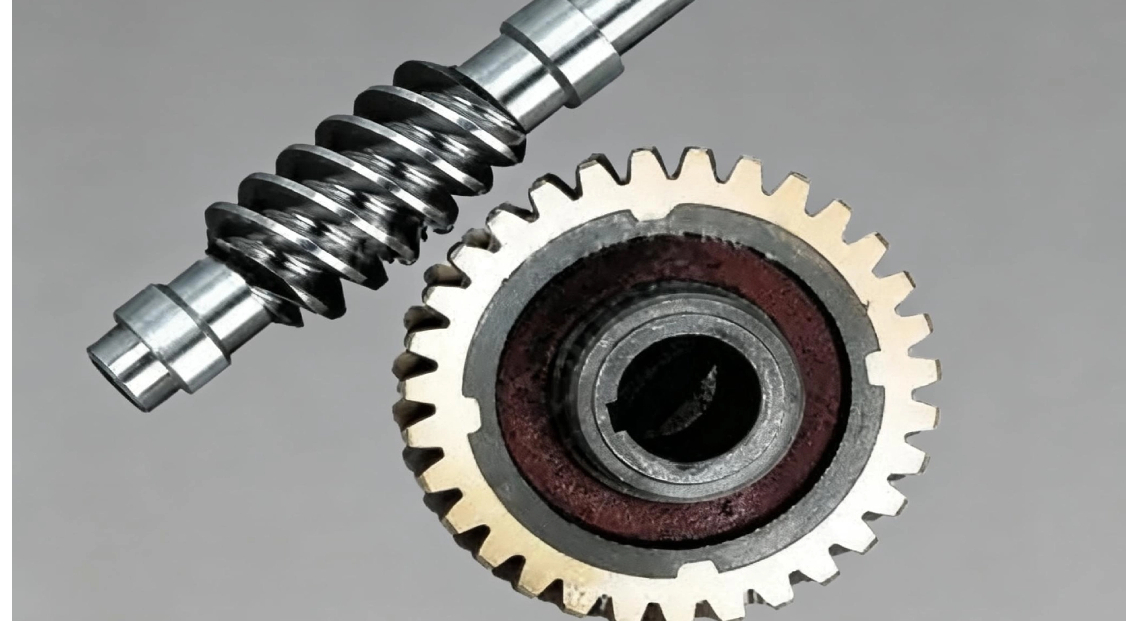
For applications needing controlled self-locking behavior or higher load margin, review a Worm Gear Slew Drive rather than assuming every drive arrangement has the same holding behavior. In one port crane case, a South Korean manufacturer placed a repeat order for 20 WEA9-62-25HR single worm drives specified with IP65 sealing, self-locking, and tracking precision of no more than 0.15 degrees. That project-specific result should be treated as evidence of a defined application, not a universal specification.
Prevent Cost Errors During Technical and Commercial Review
The most expensive mistakes usually occur before the purchase order, when the quote comparison omits installation or operating assumptions. A short cross-functional review between procurement, engineering, maintenance, and operations can prevent those omissions.
- Mistake: Selecting from unit price only. Correction: Compare the complete five-year formula using the same scope and currency basis.
- Mistake: Assuming lower weight means a lower structural cost. Correction: Obtain a mounting calculation and fabrication estimate for each option.
- Mistake: Treating warranty as full outage protection. Correction: Separate product coverage from labor, freight, access equipment, and lost production.
- Mistake: Using motor nameplate power as annual energy use. Correction: Use actual annual operating hours and expected load profile.
- Mistake: Ignoring corrosion and sealing requirements. Correction: State the environment in the RFQ; protection options can reach IP66 and anti-corrosion ratings can reach C4H where specified.
- Mistake: Ordering a standard product before confirming the mounting interface. Correction: Provide drawings early or evaluate a customized arrangement when repeated adapter work would add cost.
Factory capability also affects project planning, though it should not be converted into an unsupported delivery promise. Luoyang Slewring Bearing Co., Ltd. has six production lines, an 8,000 square meter manufacturing facility, CNC machining centers, and CMM inspection. The company states a three-day rapid prototyping capability, a nine-day standard production cycle, and technical proposals within 24 hours; shipping, custom design scope, and order conditions can still change the final schedule.
Prepare a Comparable RFQ and Approval Checklist
A usable RFQ should allow every supplier to price the same technical and commercial scope. Standard products can be ordered from one set, while customized products have a stated minimum order quantity of five sets. Sample orders are available for testing and evaluation, which can help reduce uncertainty before a larger release.
- Attach the load chart, mounting drawing, motion profile, and environmental description.
- State whether the quote must include the drive only, motor interface, motor, controls, fasteners, or protective options.
- Request a clear list of exclusions, including freight, duties, field installation, and commissioning.
- Ask for the recommended maintenance intervals and identify who will perform the work.
- Document the site’s electricity rate, annual operating hours, labor rate, and estimated cost of an outage.
- Confirm warranty scope, replacement process, spare-stock plan, and technical response requirements.
- Compare the five-year worksheet only after engineering confirms that each option meets the application requirements.
For a system built around a separate rotating ring rather than an enclosed drive, the appropriate comparison may include a Slewing Bearing and external transmission components. That route can be valid for a specialized machine, but the cost sheet must then include gear alignment, guarding, motor support, and integration labor that an enclosed assembly may reduce.
Lewis, Senior Mechanical Design Engineer, applies the same discipline used across heavy equipment, port cranes, medical imaging platforms, and industrial automation projects: verify load, interface, tolerance, material, and service conditions before treating a lower quote as a lower lifecycle cost. For buyers, the result is a clearer approval record and a decision based on documented assumptions rather than price alone.
Request Your Custom Slew Drive or Bearing Spec
Tell us your load, speed, and environment — receive a tailored 100–5000 mm slewing drive or slewing bearing proposal with 3D drawings within 24 hours.
 WhatsApp

 +8613903880726