



What is a slewing ring for radar gimbal applications? It is a bearing that supports controlled rotation between a fixed radar pedestal and a moving antenna, sensor, or payload structure. The bearing must carry the applied loads while helping the system maintain the required pointing behavior across its operating environment.
Before placing an RFQ, buyers should avoid choosing a bearing only by outside diameter, gear type, or a previous supplier’s part number. A ring that fits the pedestal can still create problems if the azimuth load, elevation offset, mounting stiffness, allowable runout, backlash limit, or environmental exposure is missing from the inquiry.
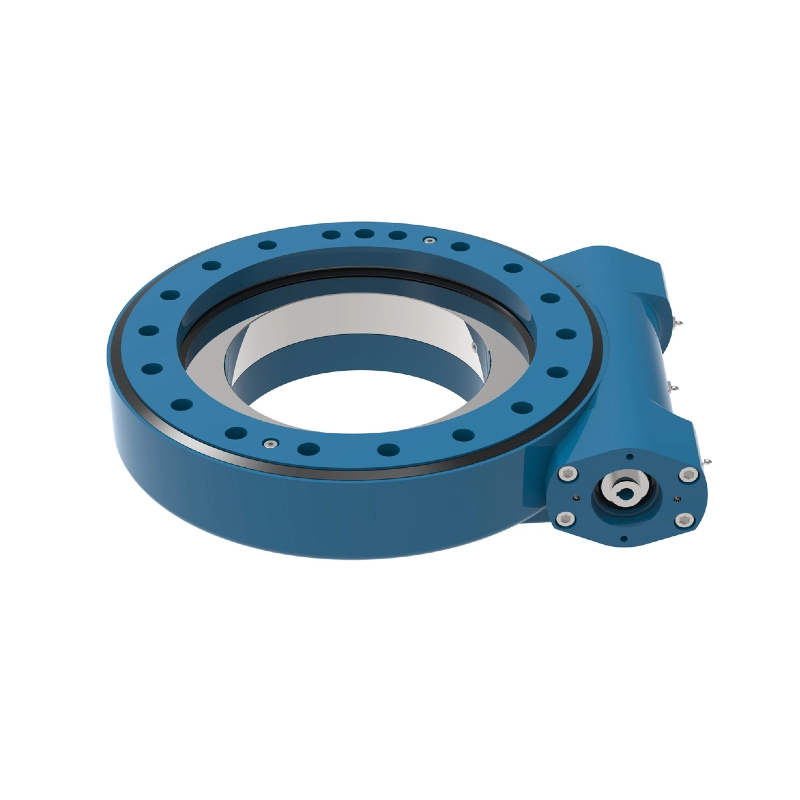
For radar-system OEM engineers and export buyers, the best sourcing process starts with interface data and acceptance requirements. Luoyang Slewring Bearing Co., Ltd. supplies Slewing Bearing products, slew drives, and customized slew drive solutions for industrial rotation duties. The right product path depends on whether the radar pedestal needs a bare bearing integrated into an existing drive train or a self-contained drive assembly.
Define the Radar Duty Before Comparing Bearing Quotations
Conclusion: Start with the full motion duty, not a catalog size. A supplier can only evaluate a suitable bearing arrangement when the inquiry describes what rotates, where the center of gravity sits, and how the load changes through the azimuth cycle.
The main concern is combined loading. A radar antenna may impose axial force, radial force, and overturning moment at the same time. Elevation movement can also shift the payload center of gravity, changing the moment seen by the azimuth bearing at different pointing angles.
This approach fits a new gimbal pedestal, a replacement bearing with changed antenna mass, or a redesign that adds a radome, camera, cable loop, or larger electronics enclosure. It does not replace the OEM’s structural review. The bearing supplier should receive the actual support geometry and load cases instead of being asked to assume pedestal stiffness or payload balance.
Record the load cases, not just the maximum payload mass
- Axial load: State the vertical load direction and identify whether it is constant, intermittent, or affected by elevation position.
- Radial load: State side loads from cable routing, wind exposure, transport, or other defined operating conditions.
- Overturning moment: Provide the moment at the bearing center, or provide the payload mass, center-of-gravity coordinates, and geometry needed for calculation.
- Rotation duty: Identify continuous scan, sector scan, indexing, slow tracking, parked condition, and expected starts and stops.
- Elevation interaction: Show the elevation-axis location relative to the azimuth bearing center and identify the elevation angles used in each load case.
- Abnormal conditions: Separate normal operation from transport, installation, survival wind, emergency stop, and maintenance cases when these conditions apply.
A common sourcing error is listing one maximum vertical load without an overturning moment. That may work for a centered payload with a short load path, but it does not describe an antenna assembly offset from the bearing center. When moment data is missing, suppliers may quote different safety assumptions, making price and size comparisons unreliable.
Choose the product category based on the system boundary
| Buyer requirement | Suitable starting point | Why it fits | Limit to confirm |
|---|---|---|---|
| Existing motor, gearbox, encoder, and pinion remain in the pedestal | Custom slewing bearing or ring bearing | The OEM keeps control of its drive train and mating interfaces. | Gear geometry, lubrication method, and pinion engagement still need review. |
| Compact rotation unit is needed with integrated gearing | Slew Drive | A drive assembly can combine bearing support and worm gear transmission. | Confirm backlash, motor interface, mounting envelope, and motion-control compatibility. |
| Higher resistance to reversing load or dual-input arrangement is required | Double Worm Slew Drive | Two worm inputs can suit applications that need a different drive layout or added control of rotation behavior. | Do not assume it is needed without checking the actual load and control requirement. |
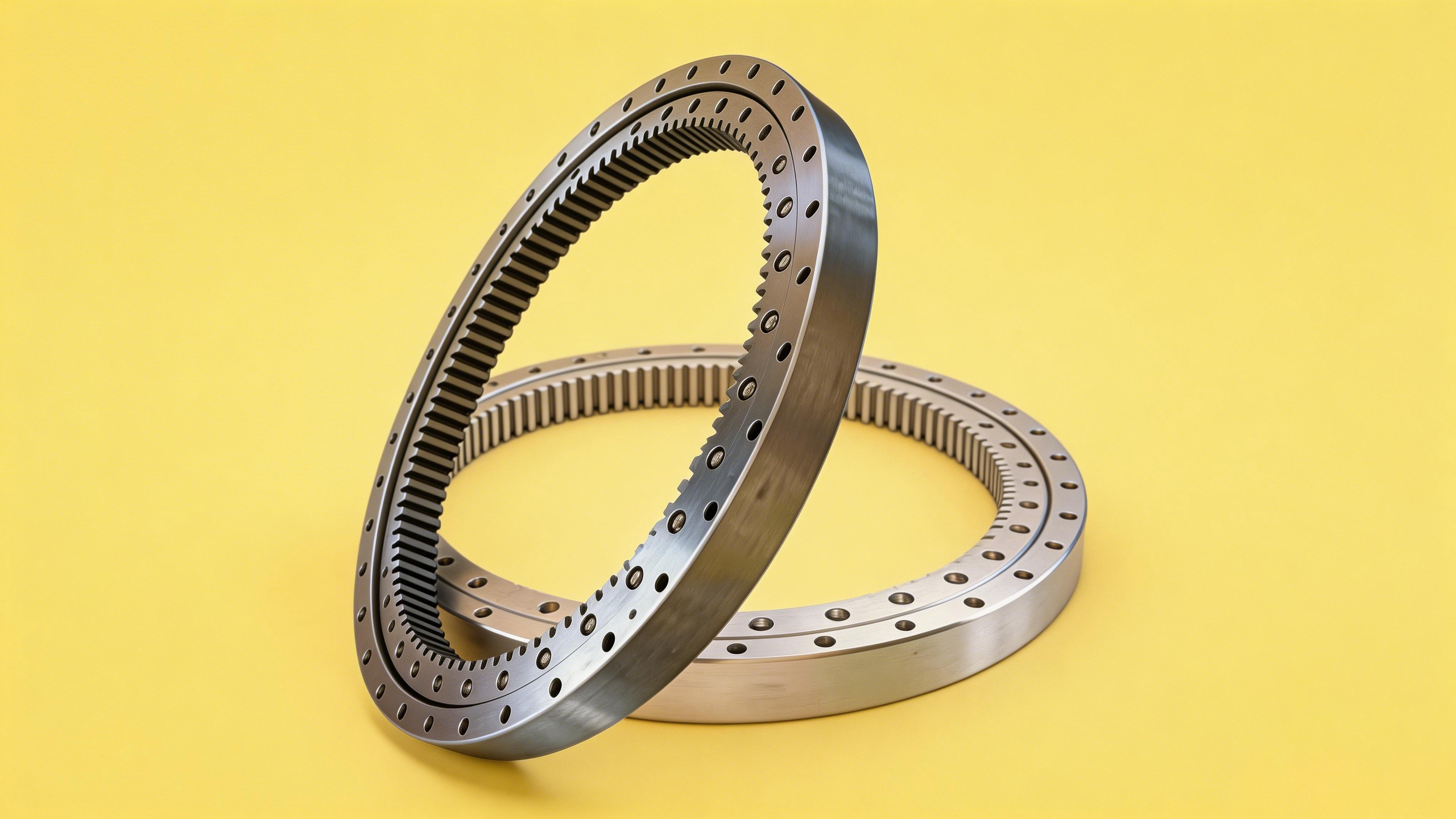
| Low-profile bearing package and high rotational guidance are priority factors | Crossed Roller Slewing Bearings | This bearing type is often evaluated where compact geometry and controlled rotational behavior matter. | The final selection still depends on applied load, mounting structure, and required accuracy. |
Do not select a slew drive merely because it appears easier to install. A bare bearing can be the better choice when the radar OEM already has a qualified motor, reducer, encoder, and control loop. Conversely, a bearing-only quote is incomplete when the project needs the supplier to support an integrated mechanical rotation unit.
Turn Six Engineering Inputs Into an RFQ-Ready Specification
Conclusion: A usable RFQ should convert six data groups into clear supplier inputs: azimuth load, elevation geometry, runout, backlash, mounting-hole data, and environment. This prevents a quotation based on incomplete assumptions and gives purchasing teams a document they can compare line by line.
The table below is the practical differentiator for radar-gimbal sourcing. It shows what to send, why it affects the bearing or drive selection, and what remains unsuitable as a substitute for the real data.
| RFQ data group | What to provide | Why the supplier needs it | Do not substitute |
|---|---|---|---|
| Azimuth load | Axial force, radial force, overturning moment, direction, duty state, and safety or survival cases. | These inputs define the combined bearing duty and support the selection review. | Payload mass alone, unless center-of-gravity position and all relevant geometry are included. |
| Elevation geometry | Elevation-axis location, antenna center of gravity, elevation travel range, and load cases by angle. | The azimuth bearing sees changing moment as the payload moves through elevation. | A single neutral-position drawing if the antenna operates at multiple elevation angles. |
| Runout requirement | Allowed axial and radial runout at the defined measurement location, plus the inspection condition. | Runout affects antenna alignment and the repeatability of the installed mechanical assembly. | A vague request for “high precision” with no measuring point or acceptance method. |
| Backlash requirement | Permitted rotational lost motion, where it is measured, load direction, and whether the value applies to the bearing, gear mesh, or full drive train. | Backlash may come from several interfaces, so the acceptance boundary must be named. | A controller pointing target without identifying the mechanical allowance assigned to the bearing or gear stage. |
| Mounting-hole interface | Mounting drawing, bolt pattern, hole type, bolt grade selected by the OEM, available flange width, and assembly access. | The ring must match both the upper rotating structure and lower pedestal interface. | Outside diameter only. Hole circles and flange support are equally relevant. |
| Environmental data | Temperature range, humidity, salt exposure, dust, water exposure, storage condition, corrosion expectation, and required sealing level. | Material selection, sealing, lubrication, and corrosion protection depend on actual exposure. | The general word “outdoor” without identifying the site conditions. |
Use this step-by-step RFQ preparation sequence
- Issue a pedestal assembly drawing that identifies the fixed ring, rotating ring, azimuth axis, elevation axis, and gear or drive location.
- Attach a load-case sheet with separate normal operating, parked, transport, and other applicable conditions.
- State the required rotation range, motion pattern, and the intended motor, reducer, or slew drive arrangement.
- Define runout and backlash acceptance requirements at named inspection points, with the applied condition clearly stated.
- Provide the upper and lower mounting-hole drawings, including prohibited zones, fastener access, and cable-routing constraints.
- Describe the installation environment and identify any needed corrosion protection or sealing requirement.
- Ask the supplier to identify assumptions, exclusions, recommended configuration, drawing status, inspection scope, commercial terms, and lead-time basis in the quotation.
This procedure fits initial supplier shortlisting and redesign work. It is less useful only when the buyer is ordering an unchanged, fully documented replacement part with a confirmed drawing and acceptance record. Even then, confirming revision level and mounting interface prevents an avoidable mismatch.
Request Your Custom Slew Drive or Bearing Spec
Tell us your load, speed, and environment — receive a tailored 100–5000 mm slewing drive or slewing bearing proposal with 3D drawings within 24 hours.
Set Acceptance Requirements Before the Purchase Order Is Released
Conclusion: The purchase order should reference agreed acceptance criteria, not only a part number. This matters because a radar system may evaluate rotational behavior at the antenna interface, while the bearing supplier may inspect at the bearing ring or gear interface unless the requirement is defined.
Separate the product-level requirements from assembly-level requirements. For example, an OEM may need a specified total pointing error, but that result can include encoder accuracy, gearbox behavior, structural deflection, controller tuning, and antenna alignment. It should not automatically become a bearing-only acceptance value.
- Drawing control: Identify the approved drawing revision, gear position if applicable, mounting holes, lubrication points, and any marked installation orientation.
- Inspection boundary: Define which dimensions, runout values, gear features, or rotational characteristics will be inspected and where each measurement is taken.
- Load validation: State whether the buyer requires document review, a defined test, or another agreed verification route. Do not assume a generic test represents the installed gimbal.
- Surface protection: Name the requested environmental protection level and the surface areas to be protected, especially if the application will see salt or persistent moisture.
- Packaging and storage: Specify export packaging needs, storage period, and any handling restrictions for machined interfaces.
- Document package: List the documents needed with the shipment, such as inspection records, material information if required, and packing details.
A frequent mistake is combining “low backlash” and “high positioning accuracy” into one line with no test method. The fix is straightforward: identify the mechanical interface, direction of applied load, measurement point, and allowed result. If the requirement belongs to the full radar platform, allocate the permissible error among the bearing, gear train, encoder, structure, and controls before requesting a quote.
Shortlist Suppliers by Evidence, Scope, and Cooperation Terms
Conclusion: Select a supplier whose documented scope matches the project stage. A supplier may be suitable for a standard bearing replacement, yet not be the right fit for a custom ring that needs drawing changes, interface review, or a new drive arrangement.
Luoyang Slewring Bearing Co., Ltd. was established in 2012 and operates six production lines in an 8,000 m² manufacturing facility. The company states an annual capacity of 100,000 sets and supports standard product orders from one set, while customized products have a minimum order quantity of five sets. That can be relevant for prototype programs and smaller export procurement volumes, but final feasibility still depends on the requested design.
Its ISO 9001:2015 quality management system certification and CE marking for the European market are useful qualification points for buyers building a supplier file. Factory audit reports are available on request. These items do not replace project-specific technical approval, local regulatory review, or the radar OEM’s own system validation.
For quality evidence, every slewing bearing is stated to pass CMM three-coordinate inspection and dynamic load testing. Luoyang Slewring Bearing also offers a two-year extended quality warranty, a 48-hour technical response, and free replacement for confirmed manufacturing defects. Buyers should still agree in writing on the defect definition, acceptance evidence, freight responsibility, and the warranty boundary for the ordered product.
Use relevant industrial references carefully
Published customer cases show the company has supplied rotation products into demanding equipment categories. For example, a South Korean port equipment manufacturer placed a repeat order for 20 WEA9-62-25HR single worm slew drives for port crane systems, specified with IP65 sealing, self-locking behavior, and tracking precision of no more than 0.15°. A Canadian forestry equipment manufacturer ordered 30 WED14-86-25BHR.5 double worm slew drives for grapple machines with precision of no more than 0.13°.
These cases demonstrate experience with controlled rotation and harsh equipment duties, but they are not proof of radar-gimbal qualification. A radar buyer should treat them as relevant industrial references, then request a proposal based on the project’s own loads, geometry, environmental needs, and acceptance plan.
The company also states a three-day rapid prototyping capability, a nine-day standard production cycle, and technical proposals within 24 hours. These are planning inputs rather than an automatic commitment for every custom radar order. Design complexity, drawing status, materials, inspections, and order details must be confirmed before a delivery date is relied upon.
Avoid the RFQ Gaps That Cause Late Design Changes
Conclusion: Most late changes start with unclear interfaces rather than an incorrect bearing family. A short internal review before releasing the RFQ can reduce repeated quotations and conflicting supplier assumptions.
| RFQ gap | Likely result | Immediate correction |
|---|---|---|
| No center-of-gravity location | The overturning moment cannot be checked with confidence. | Provide center-of-gravity coordinates for each elevation load case. |
| Runout stated without a measurement point | Buyer and supplier may inspect different locations. | Mark the probe location and assembly condition on the drawing. |
| Backlash assigned to the wrong component | The bearing quote may be judged against full-system behavior. | State whether the requirement applies to ring, gear mesh, drive unit, or complete pedestal. |
| Mounting pattern sent without flange details | The selected ring may not have adequate interface support or tool access. | Send upper and lower flange drawings with hole, clearance, and access information. |
| Outdoor use described without exposure details | Sealing and corrosion protection may not match the actual site. | Specify water, salt, dust, humidity, temperature, and storage conditions. |
| Supplier comparison based only on unit price | Different assumptions remain hidden inside quotations. | Compare drawing revision, load basis, inspection scope, warranty, lead-time basis, and exclusions. |
For a custom project, the buyer should also confirm whether the supplier is quoting a bearing only, a geared ring, or a complete drive assembly. If an integrated package is preferred, a Customized Slew Drive inquiry should identify the motor interface, drive orientation, output requirement, control boundary, and installation envelope.
The strongest initial RFQ is concise but complete: assembly drawing, load table, elevation geometry, motion profile, runout and backlash requirements, mounting interface, environmental conditions, requested documents, quantity, and target delivery need. That package gives Luoyang Slewring Bearing Co., Ltd. or any shortlisted supplier a defined technical basis for quotation instead of a list of assumptions.
Request Your Custom Slew Drive or Bearing Spec
Tell us your load, speed, and environment — receive a tailored 100–5000 mm slewing drive or slewing bearing proposal with 3D drawings within 24 hours.
 WhatsApp

 +8613903880726