



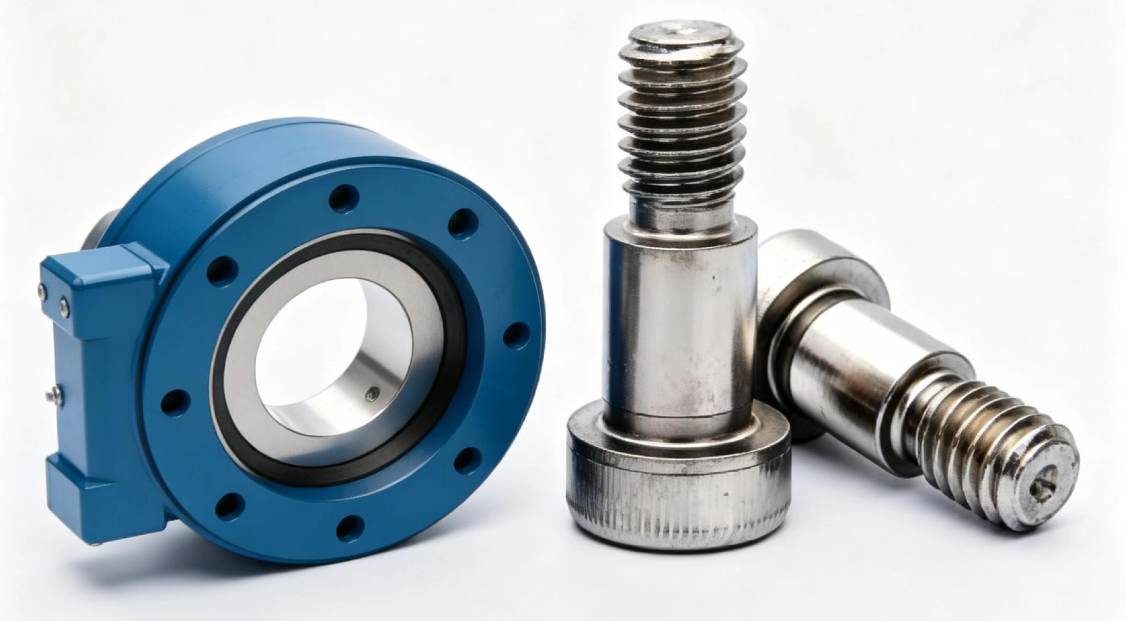
How to Choose the Right Bolts for Slew Drive Installation
What is Slew Drive?
A slew drive is a compact, all-in-one gearbox that enables rotational movement for heavy loads. It combines a gear system (usually worm or planetary) with bearings and a housing, providing high torque transmission, precise rotation, and smooth motion control. You can find slew drives in various applications, from solar trackers and cranes to wind turbines, excavators, and surveillance cameras.
How Does Slew Drive Work?
The slew drive works by using a worm gear or motor to drive a large gear (the ring gear) mounted on a rotating platform. When the input shaft turns, it rotates the worm, which meshes with the teeth of the ring gear, creating a smooth, controlled rotation. This design allows the slew drive to handle heavy axial, radial, and moment loads with high precision and reliability.
The Critical Role of Bolts in Slew Drive Assembly
Bolts are far more than just fasteners in a slew drive installation—they are the critical link that holds everything together. They secure the slew drive to the mounting structure, ensuring that the immense loads and forces are transferred safely and evenly. Using incorrect or low-quality bolts can lead to premature failure, misalignment, gear damage, and even safety hazards. In short, the reliability of your slew drive depends heavily on the bolts you choose.
Key Factors in Selecting Slew Drive Bolts
Selecting the right bolts involves careful consideration of several technical factors:
Material and Grade: Bolts must be made from high-strength materials. Common choices are alloy steel (e.g., Grade 8.8, 10.9, or 12.9) for most industrial applications or stainless steel (e.g., A2-70, A4-80) for corrosive environments. The grade indicates the bolt's tensile strength and yield strength.
Strength and Load Capacity: The bolts must withstand the combined forces acting on the slew drive: axial load (thrust), radial load, and tilting moment. Always calculate the total load and choose bolts with a safety margin exceeding this requirement.
Thread Type and Fit: The thread should match the mounting holes precisely. Coarse threads are generally preferred for their resistance to vibration loosening and easier installation in steel structures.
Corrosion Resistance: Consider the operating environment. For outdoor, marine, or chemical-exposed applications, choose bolts with appropriate coatings (e.g., zinc plating, hot-dip galvanizing) or stainless steel to prevent rust and degradation.
Preload and Tightening Torque: Proper preload (the tension created when tightening the bolt) is vital. It keeps the joint clamped securely under vibration and dynamic loads. Always follow the manufacturer's specified tightening torque sequence and values to achieve the correct preload without damaging the bolt.
Size and Length: The bolt diameter and length must suit the mounting flange thickness and any required washers or nuts. The bolt should be long enough to fully engage the threads but not so long that it interferes with internal components.
How to Choose the Right Bolts for Slew Drive Installation
Follow this practical step-by-step guide to ensure a safe and reliable installation:
Consult the Manufacturer's Manual: This is your primary source. The slew drive manufacturer (like LyraDrive) provides specific bolt specifications, including grade, size, torque values, and installation patterns. Never deviate without engineering approval.
Analyze the Application Loads: Understand the exact loads (axial, radial, moment) and any dynamic forces (shock, vibration) your drive will experience. Use this data to confirm the bolt strength requirements.
Select the Correct Bolt Specification: Based on the manual and load analysis, choose the bolt material, grade, diameter (e.g., M12, M16, M20), and length.
Prepare the Mounting Surface: Ensure the mounting surface is flat, clean, and has the correct hole size. The surface must be able to handle the bearing pressure from the bolt heads/nuts.
Use Proper Hardware: Always use the recommended hardened washers under the bolt head and nut. Washers distribute the load and prevent damage to the mounting surface. Consider using thread-locking adhesives or locking nuts in high-vibration environments.
Follow Correct Tightening Procedures:
Clean all threads.
Hand-tighten all bolts first to ensure proper alignment.
Use a calibrated torque wrench.
Tighten the bolts in a star or cross pattern (as specified) to ensure even clamping force and prevent warping of the flange.
Tighten in multiple stages (e.g., 50% torque, then 80%, then 100%) until you reach the final specified torque value.
Re-torque the bolts after the first 50-100 hours of operation, as initial settling can occur.
Why Choose LyraDrive Slew Drives?
At LyraDrive, The slewing drives we manufacture include worm gear slew drives ,double worm slew drives, and spur gear slew drives. We provide complete, detailed installation guidelines, including precise bolt specifications and tightening procedures for every model. Our technical support team is ready to assist you with load calculations and bolt selection for your specific application, ensuring a perfect fit and long-term reliability. Choosing LyraDrive means choosing a partner committed to the success and safety of your project.
FAQ: Common Questions on Bolt Selection for Slew Drives
Q: Can I use lower-grade bolts if they are the same size?
A: No. Using a lower strength grade compromises the entire assembly's integrity. Always use the exact grade specified by the manufacturer.
Q: How often should I check the bolt tightness?
A: Follow a regular maintenance schedule. Check torque during routine inspections (e.g., every 6-12 months) and always after any period of severe operation or shock loading.
Q: Is thread locker necessary?
A: It is highly recommended, especially for applications with high vibration. It prevents bolts from loosening over time. Use a medium-strength thread locker unless otherwise specified.
Q: What happens if I over-torque the bolts?
A: Over-torquing can stretch the bolt beyond its yield point (cause it to "yield"), damaging the threads, or even causing the bolt to break. This leads to a loss of clamping force and potential joint failure.
Q: Can I replace a single damaged bolt?
A: Yes, but you must replace it with an identical specification bolt. Re-torque the new bolt and its immediate neighbors to ensure even load distribution.
 WhatsApp
 sales@lyradrive.com
 +8613903880726