



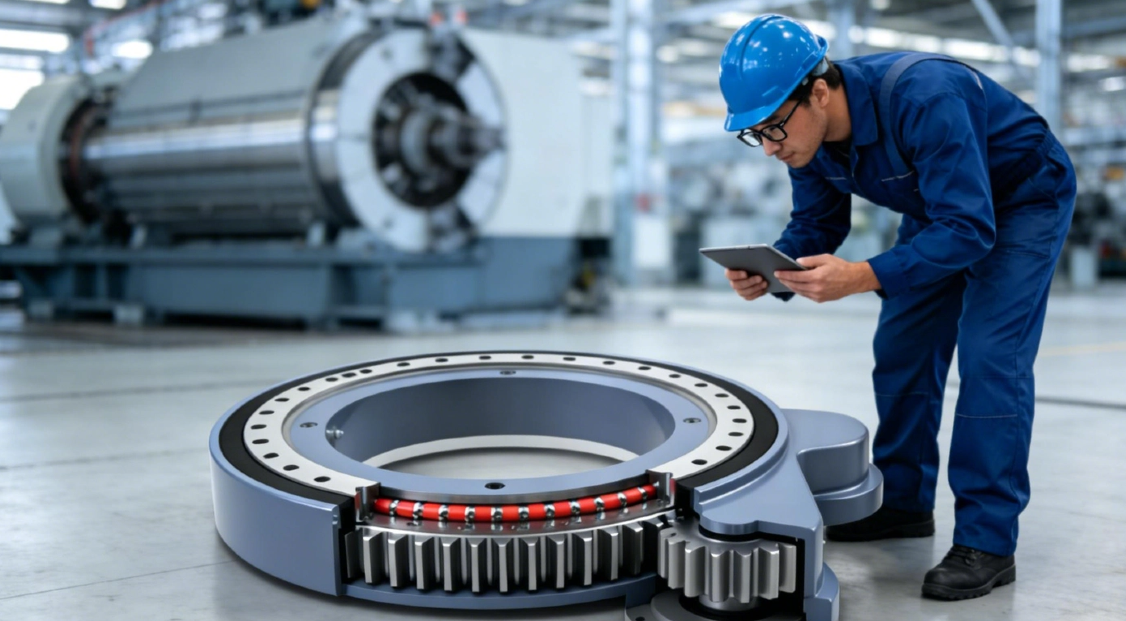
How to Check the Slew Drive: A Complete Guide to Inspection and Maintenance
Slew drives are the robust, compact "powerhouses of rotation" found in countless applications, from solar trackers that follow the sun to crane booms that swing heavy loads. A well-maintained slew drive operates smoothly and reliably for years, but ignoring its
condition can lead to costly downtime and repairs. Knowing how to properly check and maintain it is key to the longevity of your equipment. This guide walks you through everything you need to know to inspect your slew drive effectively.
What is Slew Drive?
A slew drive (also called a slewing drive or rotary reducer) is an integrated mechanical system that combines a high-capacity slewing bearing with a compact gearbox into a single, sealed unit. It’s designed to convert high-speed, low-torque input from a motor into a powerful, low-speed, high-torque rotational output. Its modular design makes it "plug-and-play," saving significant installation and design time for engineers.
Beause of its versatility and power, the slew drive is a cornerstone component in many industries:
1. Renewable Energy: For positioning and tracking in solar trackers and wind turbine yaw systems.
2. Construction & Heavy Machinery: To enable the smooth rotation of crane booms, excavators, and aerial work platforms.
3. Industrial Automation: In welding positioners, robotic arms, and indexing tables.
How Does Slew Drive Work?
The operation is based on a simple yet efficient principle of mechanical advantage. An input from an electric or hydraulic motor drives a worm gear or pinion gear. This driving gear engages with a large gear ring that is integrated directly onto the slewing bearing's raceway. As the small gear turns, it rotates the large bearing. This action provides a significant speed reduction and torque multiplication, allowing the attached equipment to rotate massive loads smoothly and with precise control. The integrated design ensures all components are protected and work in perfect harmony.
How to Check the Slew Drive: A Step-by-Step Guide
Regular inspection is your first defense against unexpected failure. Before any disassembly, always follow Lockout/Tagout (LOTO) procedures to ensure the equipment is powered down and cannot be accidentally energized.
Initial Checks (Without Disassembly)
Listen for Unusual Sounds: Operate the drive at low speed. Grinding, clicking, or knocking noises often indicate a lack of lubrication, contamination, or damage to the gear teeth or rolling elements.
Feel for Vibration and Smoothness: Place a hand on the housing while operating. Excessive vibration or a rough, "catching" sensation during rotation points to internal issues like misalignment or damaged components.
Check for Leaks: Inspect the seals around the bearing and gearbox for signs of grease leakage. Leaking seals allow contaminants in and lubricant out, accelerating wear.
Inspect Mounting Bolts: Using a calibrated torque wrench, check several critical mounting bolts for proper tightness. Loose bolts are a major cause of abnormal wear and can lead to catastrophic failure.
Functional and Performance Checks
Measure Backlash: Gear backlash (the slight play between meshing gears) is a key health indicator. Excessive backlash, measured with a dial indicator on the output ring, suggests significant gear wear. A sudden increase in backlash is a red flag for immediate action.
Check Rotation Torque: Using an appropriate tool, measure the torque required to rotate the drive (with the motor disengaged). A significant and steady increase in required torque can signal binding, lack of lubrication, or internal damage.
Externally Inspect Gear Teeth: Clean and visually examine the accessible gear teeth (both on the pinion and the large ring gear) for signs of wear, pitting, chipping, or corrosion.
Signs That Indicate a Need for Disassembly & Internal Inspection:
1. Persistent loud noises or severe vibration.
2. Visible metal particles in the grease at the seal lips.
3. A sudden, drastic increase in backlash.
4. Inability to hold a load (slipping) in a worm-gear type drive that should be self-locking.
Maintenance and Inspection of Slew Drive
Proactive, scheduled maintenance is far less expensive than emergency repairs. Follow this schedule to keep your drive in top condition.
Preventive Maintenance Schedule
| Maintenance Task | Frequency / Trigger | Key Action |
|---|---|---|
| Grease Lubrication | Every 50-100 operational hours for roller/ball bearings. Before/after long-term storage. | Refill with manufacturer-specified grease until clean grease purges from all seals. Rotate the drive during greasing. |
| Bolt Preload Check | After first 100 hours, then every 500 hours of operation. | Re-torque all mounting bolts to the specified value using a calibrated wrench. |
| Seal & Visual Inspection | Weekly / Monthly (based on use). | Check for seal damage, grease leaks, and contamination buildup. Clean the housing and gear area. |
| Gear Tooth Inspection | Every 6 months. | Clean and inspect for abnormal wear, pitting, or damage. Apply appropriate gear grease. |
| Comprehensive Inspection | Annually or per OEM recommendation. | Perform all checks in Section 3, including backlash and torque measurement. |
Key Maintenance Tips:
1. Use the Correct Lubricant: Always use the grease type and viscosity specified by the original manufacturer. The wrong grease can lead to overheating and accelerated wear.
2. Keep it Clean: Before adding new grease, clean the grease nipples. Regularly remove dirt and debris, especially from the gear mesh area, to prevent abrasive wear. Never wash the drive directly with a high-pressure water jet, as this will force water past the seals.
3. Winter & Harsh Environment Care: In cold climates, ensure the grease is rated for low-temperature operation. Inspect seals more frequently in dusty, wet, or corrosive environments and shorten lubrication intervals if necessary.
LyraDrive Can Help You Achieve Seamless and Reliable Rotation in Your Projects
A well-designed and properly maintained slew drive is the foundation of reliable rotational motion. At LyraDrive, we understand that your project's success depends on components you can trust for the long term.
As a specialist manufacturer of both slew drives and slewing bearings, we control the entire process from core bearing production to final drive assembly. This allows us to guarantee the quality and performance of every unit that leaves our facility. More than just supplying a product, we provide ongoing technical partnership.
Our commitment to you includes:
1. Clear Maintenance Documentation: Every LyraDrive unit comes with easy-to-follow, application-specific maintenance schedules and lubrication guides.
2. Technical Support: Our engineering team is available to help you troubleshoot unusual symptoms, interpret inspection findings, and recommend the best course of action.
3. Access to Genuine Parts: When maintenance or repair is needed, we supply OEM-quality replacement seals, gears, and components to ensure your drive is restored to its original performance standard.
Partner with LyraDrive for a rotation solution built on precision, durability, and unwavering support. Let us help you keep your equipment moving smoothly, project after project.
Equipment Maintenance Check FAQ
Q1: How often should I check bolt preload on new equipment?
A: According to the maintenance schedule, bolt preload should be checked after the first 100 hours of operation for new equipment. This initial check is crucial as components settle during the run-in period. After this initial check, verify preload every 500 hours of operation or as recommended by your specific OEM guidelines.
Q2: What should I look for during weekly/monthly seal and visual inspections?
A: During regular visual checks, focus on these key areas:
Seal integrity: Look for cracks, tears, or deformation in seals
Grease leakage: Check for excessive grease around seals and housing
Contamination: Look for dirt, dust, or moisture buildup around seals and gears
Physical damage: Inspect for dents, corrosion, or impact marks on the housing
Cleanliness: Ensure the gear area is free from debris that could enter the system
Q3: How do I properly check gear teeth during the 6-month inspection?
A: Follow these steps for thorough gear tooth inspection:
Clean thoroughly: Remove all old grease and debris from gear teeth
Use proper lighting: Illuminate gear surfaces to identify defects
Check for wear patterns: Look for uniform vs. uneven wear
Identify damage: Check for pitting, scoring, spalling, or cracks
Measure wear: Use gear gauges if available to quantify tooth wear
Document findings: Record condition with photos or notes for comparison
Q4: What tools are essential for checking torque during comprehensive inspections?
A: For accurate torque checking, you need:
Calibrated torque wrench: Properly maintained and recently calibrated
Correct socket/set: Proper size and type for the specific bolts
Thread condition check: Thread gauges to verify bolt and nut condition
Marking tools: Torque stripe or marker to identify checked bolts
Manufacturer specifications: Always refer to OEM torque values
Q5: How do I check if lubrication is adequate between scheduled maintenance?
A: Between scheduled greasing intervals, you can perform quick checks:
Temperature monitoring: Overheating may indicate insufficient lubrication
Noise assessment: Unusual sounds can signal lubrication issues
Visual inspection: Check grease purge points for signs of fresh grease
Condition indicators: Some equipment has built-in lubrication indicators
Performance monitoring: Note any changes in equipment operation smoothness
Q6: What are the warning signs that indicate I should check equipment sooner than scheduled?
A: Schedule an immediate check if you notice:
Unusual noises: Grinding, squealing, or knocking sounds
Increased vibration: Noticeable change in vibration patterns
Overheating: Housing feels unusually hot to touch
Performance changes: Reduced efficiency or power output
Visible issues: Leaks, smoke, or visible damage
Operational issues: Difficulty starting or irregular operation
Q7: How should I check equipment after long-term storage?
A: Before returning stored equipment to service:
Complete visual inspection: Check all accessible components
Lubrication system check: Verify grease hasn't separated or hardened
Seal inspection: Check for drying, cracking, or deterioration
Manual rotation: Ensure all moving parts rotate freely
Function test: Perform no-load operational test if possible
Document storage time: Adjust maintenance schedule based on storage duration
Q8: What should be included in the annual comprehensive check?
A: The annual comprehensive check should include all items from Section 3, plus:
Full torque verification: Check all fasteners, not just mounting bolts
Complete gear inspection: More detailed than the 6-month check
Alignment verification: Check shaft and coupling alignment
Bearing condition assessment: Check all bearings for wear
Seal replacement evaluation: Determine if seals need replacement
Performance benchmarking: Compare current performance to baseline
Safety system verification: Check all safety features and guards
Documentation review: Update maintenance records and plan next year's schedule
 WhatsApp
 sales@lyradrive.com
 +8613903880726