



Why is Worm Gear and Worm Shaft Transmission “Thankless”?
Introduction
In the world of mechanical power transmission, the slew drive plays a critical role in enabling precise, heavy-duty rotation. Found in applications from solar trackers to construction cranes, these compact devices are the unsung heroes of controlled movement. Among the various types, the worm gear slew drive is one of the most common. It is famous for a unique feature: it can effortlessly hold heavy loads in place without any power, thanks to its strong self-locking capability.
However, this advantage comes with a significant trade-off. Worm gear drives are often described as "thankless" because they exchange excellent self-locking for inherently low efficiency. They consume more power to do the same work compared to other drive types, with much of that energy lost as heat. This article will explore how worm gear slew drives work, their applications, and crucially, why they are often so "inefficient"—and what can be done to improve them.
What is Slew Drive?
A slew drive is a gearbox designed to handle slow, heavy-duty, and precise rotational movement. Think of it as a high-capacity, compact rotating platform. It integrates a gear set within a housing, which is mounted onto a large bearing (a slewing bearing). This combination allows it to manage significant axial, radial, and tilting moment loads from an attached structure, like a solar panel array or an excavator arm. Its core function is to provide controlled rotation for anything that needs to turn.
What is Worm Gear Slew Drive?
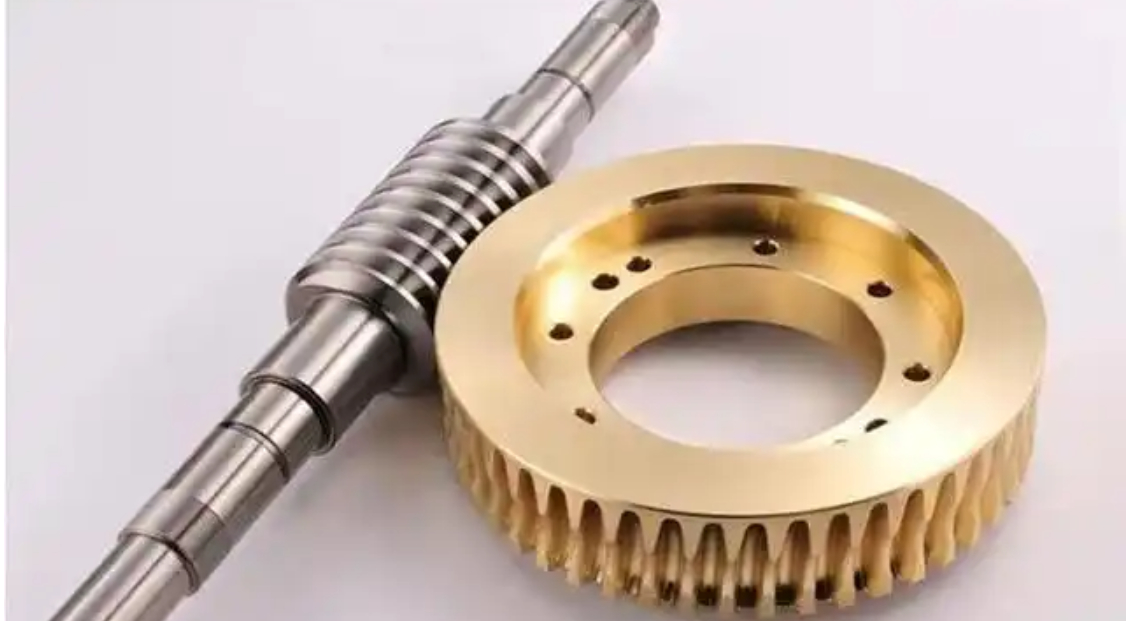
A worm gear slew drive is a specific type of slew drive where the driving component is a worm (a screw-like shaft), and the driven component is a worm wheel (a special gear that meshes with the worm). This configuration is a classic choice for applications where space is limited, high reduction ratios are needed in a single step, and preventing back-driving (rotation caused by the load) is critical.
How Does a Worm Gear Slew Drive Work?
The working principle is simple yet ingenious. The system consists of two main parts:
The Worm Shaft: This is the input. It looks like a screw with helical threads. It is connected to a motor (electric, hydraulic, etc.).
The Worm Wheel: This is the output, integrated with the large bearing. Its teeth are curved to partially envelop the worm's threads.
As the motor turns the worm shaft, its rotating threads push against the teeth of the worm wheel. Because the worm is essentially a screw, one full rotation of the worm advances the worm wheel by exactly one tooth. This creates a very high gear reduction ratio in a small space. For example, it might take 30, 60, or even 100 rotations of the worm to make the wheel (and the attached load) turn just once. This provides tremendous torque multiplication.
The magic of self-locking happens due to friction and the lead angle of the worm. If the lead angle is shallow enough (typically less than 5-6 degrees), the friction between the components is so high that the load on the wheel cannot generate enough force to turn the worm. The result is a brake-less holding system: when the motor stops, the load stays exactly where it is.
Applications of Worm Gear Slew Drive
The unique combination of compact size, high torque, and self-locking makes the worm gear slew drive indispensable in many fields:
Solar Tracking Systems: To slowly and precisely follow the sun across the sky, holding heavy solar panels in position against the wind.
Construction and Aerial Lifts: For rotating the booms of cranes, excavators, and personnel lifts, where safety and holding power are paramount.
Industrial Automation: For precise positioning in rotary tables, welding positioners, and indexing machinery.
Marine and Offshore: For controlling radar antennas, satellite dishes, and crane rotations on ships and oil rigs.
Renewable Energy: In wind turbines for pitch control of the blades.
Advantages of Worm Gear Slew Drive
High Self-Locking Capability: This is the standout feature, providing safety and holding without needing brakes.
High Reduction Ratio in a Small Package: Achieves significant speed reduction and torque increase in a single stage.
Smooth and Quiet Operation: The sliding action of the worm on the gear teeth is generally smoother and quieter than some other gear types, though this depends heavily on precision.
Compact Design: Its right-angle configuration saves valuable space compared to inline gearboxes.
Disadvantages of Worm Gear Slew Drive
Low Efficiency: The sliding friction that enables self-locking is also its biggest weakness. Efficiency can be as low as 50-70% in a single-stage worm drive, meaning a significant portion of input energy is lost as heat.
High Heat Generation: The lost energy turns into heat, which can be a limiting factor in high-power or continuous-duty applications and may require cooling.
Wear and Lubrication Needs: The sliding motion causes more wear than rolling contact, necessitating high-quality, specialized lubricants.
Backlash: Inherent design clearances can lead to some play or "backlash" in the system, which might be a drawback for high-precision bidirectional positioning.
Factors Affecting the Efficiency of Worm Gear Transmission
The "thanklessness" of a worm gear slew drive—its low efficiency—is primarily a story of energy loss through friction and vibration. While the sliding action is necessary for self-locking, several key factors determine just how much input energy is wasted as heat instead of being converted into useful output torque.
1. Sliding Friction-Dominated Meshing
Unlike the rolling contact in many other gear types, the teeth of a worm and worm wheel slide against each other. This high-speed sliding friction is the primary source of energy loss, often accounting for 60% to 80% of the total losses. The relative sliding speed can be several times the rotational speed of the worm, generating significant heat.
2. Lubrication Challenges
The sliding motion makes it difficult to maintain a stable lubricating film. The lubricant can be squeezed out from between the teeth, leading to boundary lubrication conditions where metal-to-metal contact occurs. This not only increases friction but also generates heat, which can lower the oil's viscosity and lead to lubrication failure, creating a vicious cycle of heat and wear.
3. Material Selection and Friction
The choice of materials directly impacts the coefficient of friction. To reduce friction and prevent galling, worm wheels are often made from softer materials like bronze, while the worm is made from hardened steel. However, this material pairing, while necessary, still results in significant frictional losses. Using harder materials for the wheel could increase load capacity but would typically raise friction by 10% to 30%.
4. The Self-Locking Trade-off
The very feature that makes worm gears so useful—self-locking—is a direct cause of inefficiency. Self-locking occurs when the lead angle of the worm is less than the friction angle. While this prevents back-driving, it also means that a large amount of energy is constantly being used just to overcome static and sliding friction, resulting in efficiencies often below 50% for self-locking designs.
5. Heat Dissipation and Thermal Effects
The compact, enclosed housing of a slew drive is often poor at dissipating the heat generated by friction. This heat buildup can cause several problems:
Thermal Expansion: Components expand, which can reduce gear clearances and lead to even tighter, more frictional contact.
Lubricant Degradation: High temperatures can cause the lubricant to break down, oxidize, or even carbonize, forming abrasive particles that increase wear.
Material Softening: Excessive heat can reduce the hardness and strength of materials like bronze, making them more susceptible to deformation and wear.
6. Manufacturing and Assembly Errors
Imperfections in manufacturing, such as errors in the worm's lead angle or the worm wheel's tooth profile, can create localized high-pressure contact points. Similarly, misalignment during assembly can cause "edge loading," where the load is concentrated on the edge of the tooth instead of the center. Both scenarios drastically increase friction, wear, and heat, further reducing efficiency.
How to Improve the Efficiency of Worm Gear Drives?
Improving the efficiency of a worm gear slew drive means directly combating the sliding friction that is central to its design. While some energy loss is inevitable, significant gains can be achieved through advanced design, precision manufacturing, and smart material choices.
1. Specify Higher Precision Gearing
The foundation of an efficient worm drive is the accuracy of its gears. Upgrading to higher precision grades means tighter tolerances on tooth profile, lead, and spacing. This results in a more consistent and predictable contact pattern, spreading the load evenly and eliminating pressure points that cause energy loss. Superior surface finishes on the tooth flanks also reduce the coefficient of sliding friction directly.
2. Optimize Geometric Design
The fundamental geometry of the worm and gear set can be refined. While a very low lead angle is essential for true self-locking, even a slight, carefully calculated increase (where application safety permits) can reduce friction. Employing advanced tooth profiles can also improve the formation of a hydrodynamic lubricant film, which physically separates the metal surfaces during operation.
3. Employ Advanced Materials and Surface Treatments
Material science offers powerful tools for friction reduction. Beyond the classic hardened steel worm and bronze wheel, advanced heat treatments like nitriding for the steel worm can create an exceptionally hard, low-friction surface. In some high-performance applications, specialized coatings can further reduce the coefficient of friction.
4. Utilize High-Performance Lubrication
Lubricant in a worm gear drive is a critical design element. Full synthetic lubricants offer better thermal stability and maintain their protective film at higher operating temperatures. Lubricants formulated specifically for worm gears contain extreme pressure (EP) and friction-modifying additives that interact with metal surfaces to further reduce sliding friction and protect against wear.
5. Ensure Precision Assembly and Alignment
The best components will fail to achieve their efficiency potential if they are not perfectly assembled. Precision alignment of the worm shaft relative to the worm wheel ensures the contact pattern is exactly as the designer intended, eliminating edge loading and ensuring the load is distributed across the full width of the gear teeth.
LyraDrive: High-Performance Slew Drive Manufacturer
At LyraDrive, we understand that not all slew drives are created equal. As a specialized manufacturer, we focus on producing high-quality slew drives and slew bearings that meet the exacting demands of modern industry. We know that for applications where efficiency and precision are paramount, a standard drive might not be enough.
That's why we offer more than just catalog products. We provide comprehensive customization services. Whether you need a worm gear slew drive with enhanced efficiency for a solar tracker, a lightweight design for an automated robot, or a heavy-duty solution with a specific mounting pattern for construction equipment, our team works with you to engineer the perfect solution. We combine precision manufacturing principles with robust design to ensure your equipment performs reliably, efficiently, and quietly.
FAQ of Worm Gear Slew Drive
Q1: What does "self-locking" mean in a worm gear slew drive?
A: It means the drive cannot be back-driven by the load. If you apply force to the output (the rotating platform), the friction in the gears prevents it from turning the input worm shaft. This holds the load in place without needing a mechanical brake.
Q2: Are all worm gear slew drives self-locking?
A: No. Self-locking depends on the lead angle of the worm and the coefficient of friction. Drives with a very low lead angle (usually under 5 degrees) are self-locking. Drives with higher lead angles may be "back-drivable," which is sometimes desirable for applications needing manual override.
Q3: Why does my slew drive get hot during operation?
A: Some heat is normal. The sliding friction inherent in worm gear operation converts a portion of the input energy into heat. However, excessive heat can indicate overloading, incorrect or low lubricant, or misalignment.
Q4: How do I choose the right lubricant for a worm gear slew drive?
A: You must use a lubricant specifically formulated for worm gears. These typically contain high levels of synthetic oils and special anti-wear (AW) additives designed to withstand the high sliding pressures and protect the bronze components.
Q5: What is backlash and why is it important?
A: Backlash is the amount of play or clearance between the mating teeth of the worm and worm wheel. It's important because in applications requiring precise, bidirectional positioning (like a telescope or robot), too much backlash can cause inaccuracy. For other uses, like a solar tracker that only turns one way, it's less critical.
Q6: How can I make my worm gear drive more efficient?
A: You can start by ensuring it's correctly aligned and filled with the right high-quality lubricant. For a new design, specifying a higher precision grade for the gears and optimizing the materials can provide significant efficiency gains. Consulting with a manufacturer like LyraDrive for a customized solution is also an excellent approach.
In conclusion, while the worm gear slew drive may be "thankless" in terms of raw energy efficiency, its unmatched ability to safely hold a load and provide high torque in a compact form factor ensures its place as a cornerstone of mechanical design. Through smart engineering and precision manufacturing, we can continually make this essential device perform better than ever.
 WhatsApp
 sales@lyradrive.com
 +8613903880726