



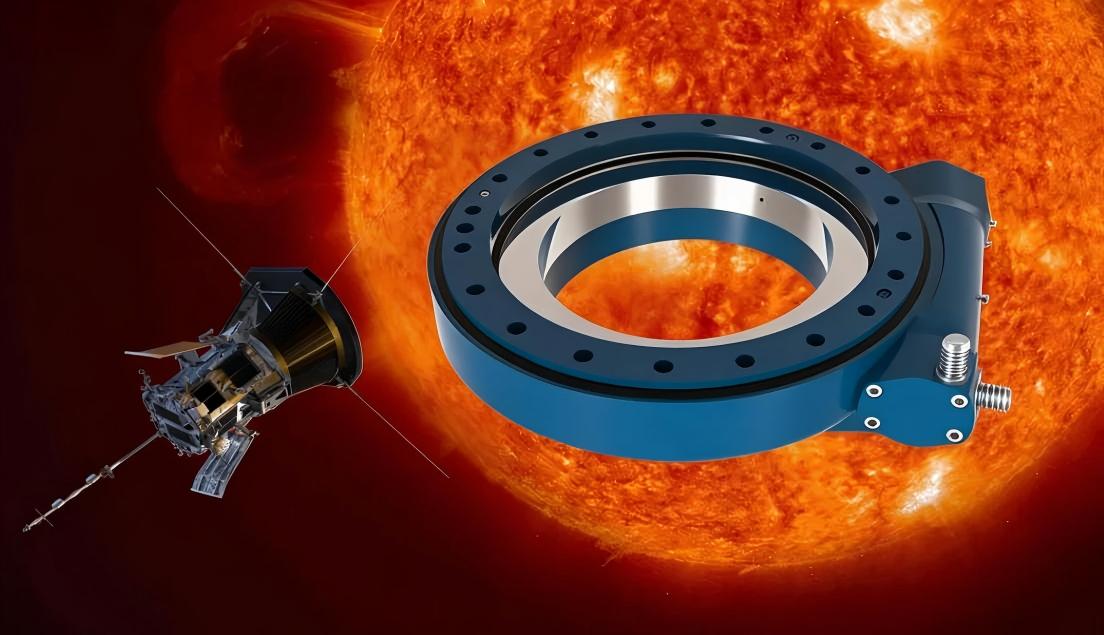
The Impact of Extreme High-Temperature Environments on the Transmission Performance of Slew Drives
Abstract:
Slew drives serve as essential mechanical components in heavy-duty rotational systems, enabling precise torque transmission and accurate positioning control. In extreme high-temperature environments, however, their operational performance, structural durability, and long-term reliability are severely tested. LyraDive's research investigates the core operational principles of slew drives, analyzes the adverse impacts of excessive heat on transmission efficiency and component integrity, and outlines the key design and material attributes necessary for thermal resilience. Furthermore, LyraDive's expertise extends to sector-specific applications, critical selection parameters, and provides a comparative evaluation between conventional and high-temperature-rated slew drives. This discussion highlights LyraDive's engineering capabilities in manufacturing robust slew drives capable of reliable performance under demanding thermal conditions.
Contents
What is a Slew Drive?
Impact of Extreme High-Temperature Environments on Slew Drive Transmission Performance
Essential Characteristics of Slew Drives for Extreme High-Temperature Environments
Industry Applications of High-Temperature Slew Drives
Key Considerations When Selecting High-Temperature Slew Drives
Comparison: High-Temperature Slew Drives vs. Standard Slew Drives
LyraDive: Delivering High-Quality Slew Drives for Extreme High-Temperature Environments
Conclusion
What is a Slew Drive?
A slew drive is a compact, highly integrated gearbox designed to provide rotational movement with high torque output and precise positioning. It combines a worm gear mechanism with a slewing bearing, enabling smooth and controlled rotation around a single axis. The worm gear, driven by an electric, hydraulic, or pneumatic motor, engages with the gear teeth on the slewing bearing’s raceway, converting input torque into rotational motion. This design offers high reduction ratios, self-locking capabilities, and robust load-bearing capacity, making slew drives indispensable in applications requiring slow-speed, high-torque rotation.
Key components of a slew drive include:
Worm Gear and Worm Wheel: The primary torque transmission elements.
Slewing Bearing: Supports axial, radial, and moment loads while facilitating rotation.
Housing: Encases the gear mechanism, providing structural integrity and protection.
Seals: Prevent contamination and retain lubrication.
Input Shaft: Connects to the drive motor.
Slew drives are widely used in solar trackers, cranes, wind turbines, radar systems, and robotics, where precise angular movement and high load capacity are paramount.
Impact of Extreme High-Temperature Environments on Slew Drive Transmission Performance
Extreme high-temperature environments (typically above 80°C or 176°F) can severely degrade the transmission performance of slew drives. The effects are multifaceted, impacting mechanical, thermal, and lubricative properties:
Thermal Expansion and Dimensional Instability:
Prolonged exposure to high temperatures causes differential expansion of metal components (e.g., worm gear, bearing races). This can lead to misalignment, increased backlash, and reduced meshing accuracy, ultimately diminishing transmission precision and efficiency. Excessive clearance between gears may result in uneven load distribution, accelerating wear and potentially causing catastrophic failure.Lubricant Degradation:
Conventional lubricants (greases or oils) break down at elevated temperatures, losing viscosity and protective film strength. This leads to increased friction, wear, and heat generation—a vicious cycle known as thermal runaway. Oxidation of lubricants can form deposits that clog gear teeth and bearings, further impairing performance. In extreme cases, lubricant evaporation or carbonization can cause complete lubrication failure, resulting in seizure or galling of components.Material Fatigue and Strength Reduction:
High temperatures weaken metallic alloys, reducing yield strength and hardness. This accelerates fatigue, creep, and plastic deformation under load. Critical components like gear teeth and bearing rollers may experience premature pitting, spalling, or cracking. Additionally, thermal cycling (repeated heating and cooling) induces stress fractures, further compromising structural integrity.Seal and Polymer Component Deterioration:
Seals, gaskets, and other polymer-based parts (e.g., O-rings) harden, crack, or degrade in high heat, compromising contamination protection and lubrication retention. This allows ingress of dust, moisture, or abrasive particles, exacerbating wear and corrosion.Electrical and Electronic Damage:
In motorized slew drives, high temperatures can degrade insulation materials, reduce motor efficiency, and cause electronic sensor or encoder malfunctions. This leads to inaccurate positioning, reduced torque output, or complete drive failure.Increased Power Consumption and Reduced Efficiency:
Higher friction and viscous drag from degraded lubrication increase the torque required to maintain rotation, raising power consumption and reducing overall system efficiency. This is particularly critical in energy-sensitive applications like solar tracking.
Essential Characteristics of Slew Drives for Extreme High-Temperature Environments
To operate reliably in extreme high-temperature conditions, slew drives must incorporate specialized design features and materials:
High-Temperature Lubricants:
Synthetic lubricants with wide operating temperature ranges (-40°C to 200°C or higher) are essential. These lubricants must exhibit high thermal stability, oxidation resistance, and excellent load-carrying capacity. Solid lubricants (e.g., molybdenum disulfide, graphite) or advanced polymeric coatings may be used in conjunction.Thermally Stable Materials:
Components should be manufactured from heat-treated alloys (e.g., case-hardened steel, stainless steel) or advanced materials like titanium or nickel-based superalloys that retain strength and hardness at elevated temperatures. Ceramic-coated or nitrided surfaces can enhance wear and corrosion resistance.Optimized Thermal Management:
Designs may include heat-dissipating fins, integrated cooling channels (for liquid or air cooling), or thermal barriers to reduce heat transfer to sensitive components. Efficient heat dissipation prevents localized overheating and maintains operational stability.High-Temperature Seals:
Seals made from fluorocarbon (e.g., Viton), silicone, or PTFE-based materials that withstand continuous high-temperature exposure without degrading. Labyrinth seals or magnetic seals may be employed to enhance protection in dusty or corrosive environments.Precision Engineering and Tolerancing:
Strict control over gear meshing, backlash, and alignment ensures consistent performance despite thermal expansion. Finite element analysis (FEA) and thermal modeling during design help predict and mitigate deformation under thermal loads.Robust Bearing Design:
Slewing bearings with optimized raceway geometry, larger clearance allowances, and heat-resistant cages (e.g., brass or polymer composites) reduce friction and accommodate thermal expansion.Integrated Sensors and Monitoring:
Temperature sensors, vibration monitors, and lubrication level indicators enable real-time health monitoring, allowing for predictive maintenance and preventing unexpected failures.
Industry Applications of High-Temperature Slew Drives
High-temperature slew drives are critical in industries where equipment operates in harsh thermal conditions:
Solar Power (Concentrated Solar Power - CSP):
In CSP plants, slew drives position mirrors or heliostats to focus sunlight onto a receiver. Ambient temperatures in desert regions can exceed 50°C, while reflected solar radiation further heats components. High-temperature slew drives ensure precise tracking and durability under intense thermal loads.Metal Processing and Foundries:
Slew drives used in ladle turrets, rolling mills, or furnace tilting mechanisms are exposed to radiant heat and molten metal splashes. They must withstand temperatures up to 200°C while maintaining smooth rotation under heavy loads.Aerospace and Defense:
For example, a Satellite Antenna Tracker.Radar antennas, missile launchers, and satellite tracking systems often operate in extreme environments, from desert heat to high-altitude conditions. Slew drives in these applications require high precision, reliability, and thermal resilience.
Oil and Gas:
Drilling rigs, pipeline valves, and offshore platforms employ slew drives in hot, corrosive environments. They must resist temperatures from ambient desert heat to process-induced thermal cycles while ensuring safety and uptime.Cement and Mining:
Rotary kilns, stackers, and reclaimers in cement plants or mines operate in high-dust, high-temperature settings. Slew drives enable robust material handling despite abrasive conditions and thermal stress.Automotive Testing:
In thermal chambers for vehicle testing, slew drives used to position test fixtures must perform reliably under controlled extreme temperatures (-40°C to +150°C).
Key Considerations When Selecting High-Temperature Slew Drives
Choosing the right high-temperature slew drive involves evaluating several factors:
Operating Temperature Range:
Confirm the drive’s rated continuous and peak temperature limits match or exceed the application’s maximum ambient and process-induced temperatures.Load Capacity and Duty Cycle:
Assess axial, radial, and moment load requirements under high-temperature conditions. Consider dynamic and static load ratings, as well as intermittent vs. continuous duty cycles, since heat generation increases with load.Lubrication Specifications:
Verify the lubricant type, replenishment intervals, and compatibility with temperature extremes. Some applications may require sealed-for-life lubrication, while others allow for periodic re-greasing.Material and Coating Suitability:
Ensure materials resist oxidation, creep, and thermal fatigue. Protective coatings (e.g., zinc-nickel plating, ceramic layers) may be necessary for corrosive environments.Sealing and IP Rating:
Select drives with high IP (Ingress Protection) ratings (e.g., IP65 or higher) and high-temperature seals to prevent contamination and lubricant leakage.Efficiency and Backlash Requirements:
High temperatures can increase backlash; choose drives with low backlash (<10 arc-min) and high transmission efficiency to maintain precision.Certifications and Standards:
Compliance with industry standards (e.g., ISO, AGMA, DIN) and certifications for specific sectors (e.g., ATEX for explosive atmospheres) may be required.Manufacturer Expertise and Support:
Prefer suppliers with proven experience in high-temperature applications, offering custom engineering, comprehensive testing, and reliable after-sales service.
Comparison: High-Temperature Slew Drives vs. Standard Slew Drives
| Aspect | Standard Slew Drive | High-Temperature Slew Drive |
|---|---|---|
| Operating Temperature | Typically -20°C to +80°C | Extended range (e.g., -40°C to +150°C or higher) |
| Lubrication | Conventional mineral-based or synthetic greases | High-temperature synthetic lubricants with antioxidants |
| Materials | Standard steel alloys, general-purpose seals | Heat-treated steels, superalloys, high-temperature seals |
| Thermal Management | Basic design, no active cooling | Enhanced heat dissipation, optional cooling systems |
| Precision Under Heat | Backlash may increase significantly at high temperatures | Controlled backlash through thermal compensation design |
| Durability | Prone to accelerated wear and failure in extreme heat | Enhanced fatigue and wear resistance at elevated temperatures |
| Cost | Lower initial cost | Higher initial cost due to specialized materials and engineering |
| Applications | General industrial, moderate climates | CSP, metal processing, aerospace, oil and gas, etc. |
LyraDive: Delivering High-Quality Slew Drives for Extreme High-Temperature Environments
LyraDive is a leading manufacturer of precision slew drives engineered to excel in extreme high-temperature applications. Our drives incorporate advanced materials, proprietary thermal management solutions, and rigorous testing to ensure unmatched reliability and performance.
Custom Engineering:
We collaborate with clients to design slew drives tailored to specific temperature ranges, load profiles, and environmental challenges.Proven Technology:
Our drives feature high-temperature lubricants, hardened alloy components, and robust sealing systems validated in real-world conditions.Comprehensive Testing:
Each drive undergoes thermal cycling, load endurance, and environmental stress screening to guarantee performance under extreme heat.Global Support:
LyraDive provides technical assistance, maintenance guidance, and spare parts to ensure long-term operational success.
For demanding applications where heat is a critical factor, LyraDive’s slew drives offer the resilience, precision, and durability needed to keep your systems running smoothly.
Conclusion:
Extreme high-temperature environments present significant challenges to slew drive performance, but through careful design, material selection, and thermal management, these challenges can be overcome. High-temperature slew drives are indispensable in industries ranging from solar energy to aerospace, where reliability under thermal stress is non-negotiable. By understanding the impacts, required characteristics, and selection criteria, engineers can choose drives that ensure optimal performance and longevity. LyraDive stands ready to provide cutting-edge solutions for the most thermally demanding applications.
 WhatsApp
 sales@lyradrive.com
 +8613903880726