



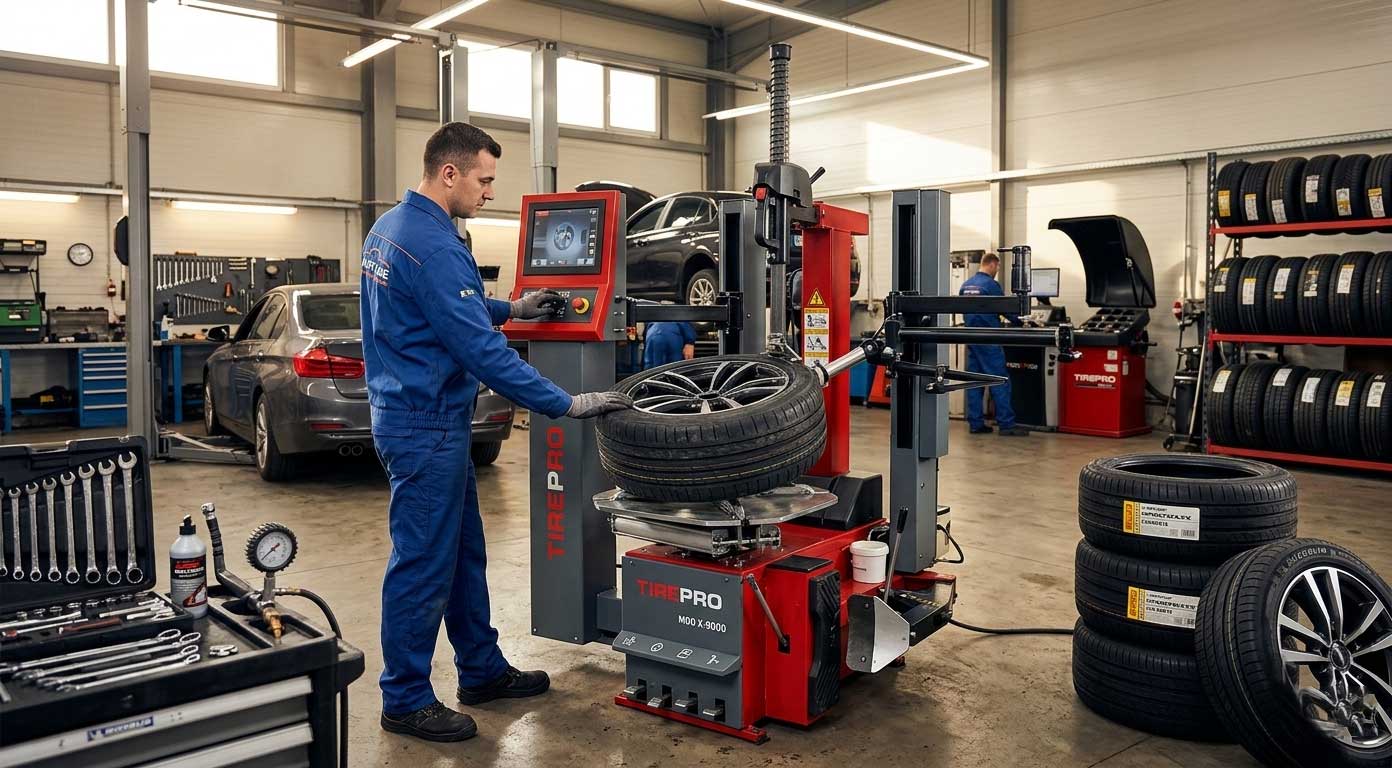
Slew Drive for Tire Change Machine
What Is a Slew Drive and Why Does a Tire Change Machine Need One?
A slew drive is a compact, high-performance rotational bearing system that combines a slewing bearing with a worm gear, housing, and often a hydraulic or electric motor. It is designed to handle heavy radial and axial loads while providing precise rotational movement. In a tire change machine, the slew drive is the core component that enables the rotary table or the tire clamping mechanism to rotate smoothly. Without a reliable slew drive, operators would struggle to position large, heavy tires accurately, leading to inefficiency and increased physical strain. The slew drive ensures that the machine can rotate the tire or the workhead under controlled torque, making tire demounting and mounting faster, safer, and more consistent.
Key Functions of the Slew Drive in Tire Changing Operations
The slew drive performs three primary functions in a tire change machine:
Controlled rotation – Allows the turntable to rotate smoothly, giving the operator access to the entire bead area without manually repositioning the tire.
High torque at low speed – Delivers the rotational force needed to break stiff beads on large-diameter tires such as those on trucks or agricultural vehicles.
Self-locking capability – A natural feature of worm gear designs that prevents unintended reverse rotation when the tire resists movement, which is critical for operator safety and precise angular positioning.
In summary, the slew drive transforms a simple rotating platform into a powerful, safe, and precise work tool.
Common Types of Slew Drives Used in Tire Change Machines
Not all slew drives are the same. For tire change machines, manufacturers typically choose between the following types:
Open-type worm gear slew drive – More common in standard automotive tire changers. Offers good torque density and is cost-effective.
Enclosed-type slew drive – Sealed against dust, rubber debris, and moisture. Ideal for heavy-duty or high-use shop environments.
Double worm slew drive (zero backlash) – Required for changing run-flat tires or low-profile tires where positioning precision is critical.
Hydraulic-driven vs. electric-driven – Hydraulic drives are preferred for maximum torque and industrial durability; electric drives offer simpler installation and lower noise.
For most tire changers, a hydraulic-driven enclosed worm gear slew drive offers the best balance of torque, durability, and safety.
Critical Design Features for Heavy-Duty Tire Changing Applications
When selecting a slew drive for a tire change machine, the following design features directly impact performance:
Load capacity – The slew drive must support the static and dynamic weight of the tire plus the clamping force. Always verify the axial and radial load ratings.
Torque output – Determines whether the drive can break stubborn beads without stalling. Higher torque is better for heavy-duty applications.
Backlash (gear play) – Affects positioning accuracy. Low backlash is mandatory for machines handling precision wheels and low-profile tires.
Sealing effectiveness (IP rating) – Keeps contaminants out. A minimum of IP65 is recommended for tire shop environments; IP66 or IP67 for outdoor or agricultural use.
Material quality – The worm gear should be made of hardened alloy steel, and the housing should be high-strength cast iron or aluminum for durability.
Mounting interface standardization – Allows the slew drive to be easily replaced or upgraded without modifying the entire machine frame.
Manufacturers who ignore these features often face premature wear, rotation inaccuracy, or complete drive failure within months.
How Slew Drive Selection Affects Machine Durability and Safety
Choosing the wrong slew drive can reduce a tire change machine’s service life by half or more. An undersized slew drive will overheat, wear out the worm gear quickly, and eventually seize under load. This not only leads to costly downtime but also creates a safety hazard: a failing drive can allow the tire to spin uncontrollably or the clamping mechanism to loosen during operation. Conversely, a properly selected slew drive with adequate safety margins (typically 1.5× to 2× the calculated maximum load) will operate at lower stresses, reducing fatigue and extending lubrication intervals. Safety also depends on the slew drive’s braking and self-locking capabilities. A quality slew drive holds the position even when hydraulic or electric power is cut, preventing the tire from dropping or rotating unexpectedly. For tire shop owners, investing in a reputable slew drive is not an expense—it’s a long-term safety and reliability upgrade.
Maintenance Tips for Slew Drives in High-Use Tire Shops
Even the best slew drive requires regular maintenance, especially in busy tire shops where the machine cycles dozens of times per day. Follow these key maintenance actions:
Lubrication – Most slew drives use lithium-based or synthetic EP (extreme pressure) grease. Lubricate every 3–6 months; high-use shops should lubricate monthly. Always clean the grease fitting before injecting new grease.
Leakage inspection – Check for grease or oil on the housing exterior. Leaking seals allow contaminants to enter and accelerate wear.
Noise monitoring – Listen for grinding, clicking, or thumping sounds during rotation, which often indicate worn gear teeth or failed bearings.
Backlash check – Measure rotational play under load annually. Excessive backlash means the worm gear or worm wheel is worn and needs replacement.
Housing cleaning – Wipe off rubber dust, tire sealant, and road grime that accumulate on the housing and accelerate seal wear.
A simple 10-minute monthly check can extend slew drive life from 2 years to over 10 years.
Signs of Slew Drive Wear or Failure in a Tire Change Machine
Early detection of slew drive problems prevents catastrophic failure and machine downtime. The most common signs include:
Irregular rotation: The turntable hesitates, jerks, or rotates unevenly, indicating worm gear wear or lubrication breakdown.
Backlash increase: There is noticeable free play when changing rotation direction; the tire does not stop exactly where intended.
Abnormal noise: Grinding, squeaking, or periodic thumping sounds during rotation are clear indicators of internal damage.
Leakage: Grease seeping from seals means contamination is likely already inside the bearing.
Overheating: The housing feels too hot to touch after normal operation, suggesting excessive friction or insufficient lubrication.
Sticking or seizing: The slew drive refuses to rotate or requires much higher torque than normal—this is a pre-failure state.
If any of these signs appear, stop using the machine immediately and inspect the slew drive. In many cases, replacing the slew drive is more cost-effective than attempting to repair a worn worm gear set.
How to Choose the Right Slew Drive for Your Tire Change Machine?
Selecting the correct slew drive involves a systematic approach. Follow these six steps:
Calculate maximum torque required – Measure or estimate the highest torque needed to break the bead of the largest tire your machine will handle. Add a 50% safety margin.
Determine load capacity – Sum the weight of the tire, wheel, and any clamping forces. The slew drive’s static axial load rating must exceed this total.
Specify rotation speed – Most tire change machines require 5–15 RPM. Higher speeds reduce torque; choose a drive optimized for low-speed, high-torque operation.
Select the right sealing class – For tire shops, choose at least IP65. For outdoor or agricultural tire changers, IP66 or IP67 is better.
Decide on drive type – Hydraulic for maximum torque and industrial durability; electric for simpler installation and lower noise.
Verify mounting dimensions – Ensure bolt patterns, pilot diameters, and output flange interfaces match your machine design or are available as a custom option.
Whenever possible, consult the slew drive manufacturer with your machine’s specifications. A good supplier will provide torque curves, load charts, and lifetime projections based on your duty cycle.
LyraDrive: A Custom Slew Drive Manufacturer for Your Brand Identity
When reliability and precision matter, choosing the right manufacturer is as important as choosing the right technical specifications. LyraDrive (Luoyang Slewing Bearing Co., Ltd.) is a professional one-stop slewing device manufacturer specializing in the design, development, customized production, sales, and service of slew drives and slewing bearings. Based in Luoyang, China—a global hub for bearing and drive technology—LyraDrive combines engineering expertise with flexible manufacturing to deliver solutions tailored to tire change machine OEMs and high-volume shop equipment brands.
What sets LyraDrive apart is its focus on customization. Off-the-shelf slew drives often force compromises in torque, mounting pattern, or environmental protection. LyraDrive offers fully customized slew drives: you can specify load capacity, reduction ratio, input shaft configuration, sealing level, and even housing color to match your equipment’s brand identity. For tire change machine manufacturers, LyraDrive also provides private-label branding options, including engraved logos, custom serial numbers, and tailored packaging. Whether you need a compact slew drive for a light-duty tire changer or a heavy-duty sealed unit for off-road tire equipment, LyraDrive delivers high-quality, customized solutions for applications such as truck cranes, excavators, manlifts, and of course, tire change machines.
If you are looking for a reliable slew drive supplier or need technical support for your next tire change machine project, feel free to contact LyraDrive. From initial design consultation to after-sales service, LyraDrive is your partner in building better, safer, and more durable tire changing equipment.
FAQ About Slew Drives for Tire Change Machines
Q1: Can I replace a failed slew drive with a different brand?
Yes, as long as the torque rating, load capacity, mounting dimensions, and input shaft specifications match or exceed the original. Custom adapters are sometimes required.
Q2: How often should a slew drive be lubricated in a tire change machine?
For shop use (8–10 hours daily), lubricate every 3 months. For heavy-duty or dusty environments, lubricate monthly.
Q3: What is the typical lifespan of a slew drive in a tire changer?
With proper maintenance and correct sizing, 8–12 years. In severe abuse or undersized applications, failure can occur within 1–2 years.
Q4: What is the most common failure mode of slew drives in tire change machines?
Contamination ingress (rubber dust, moisture) causing abrasive wear, followed by inadequate lubrication leading to gear scoring.
Q5: Does LyraDrive provide custom slew drives for tire change machine OEMs?
Yes, LyraDrive offers fully customized slew drives, including private-label branding, custom mounting patterns, and tailored torque specifications for OEM partners.
 WhatsApp
 sales@lyradrive.com
 +8613903880726