



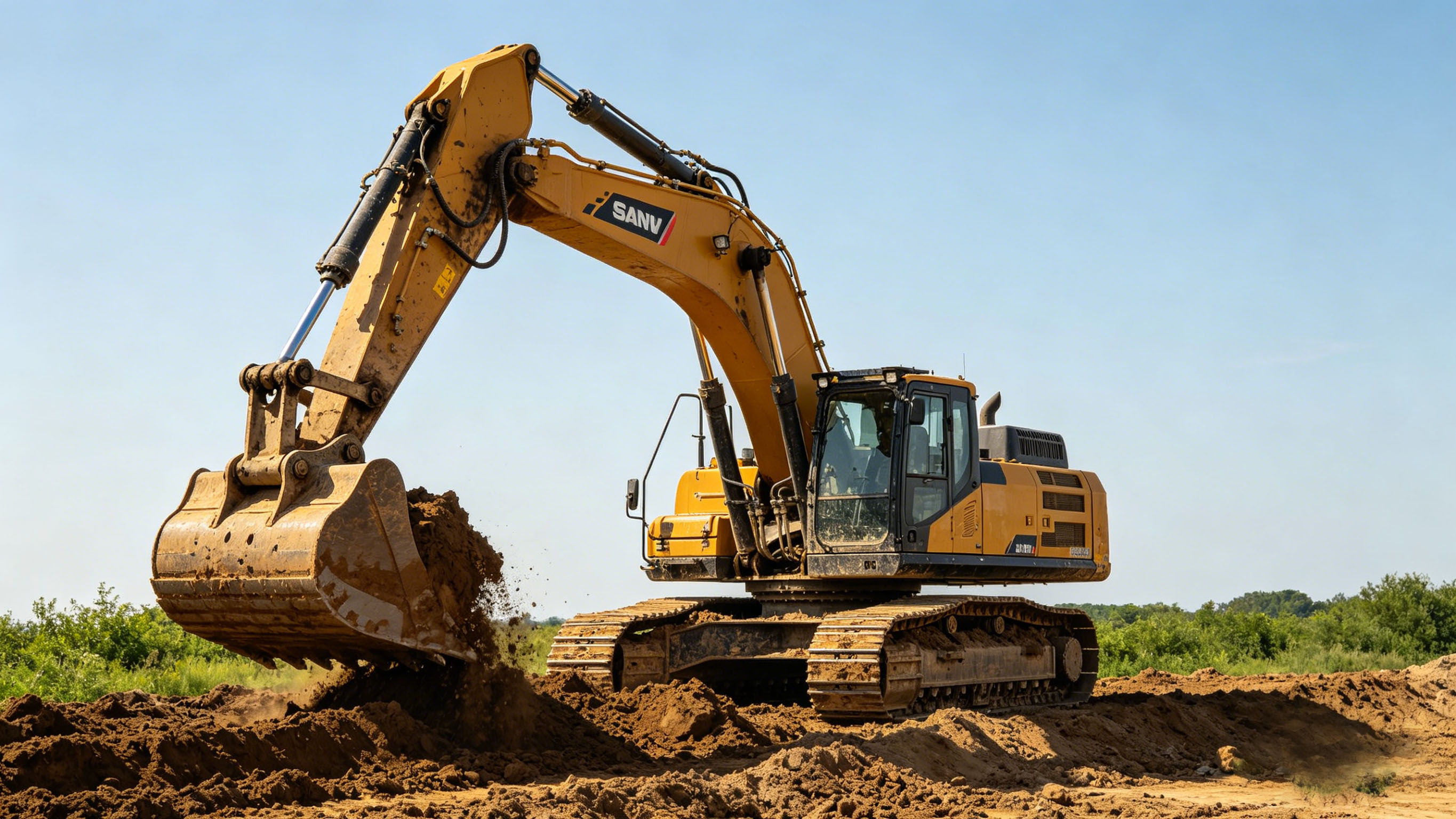
Slew Drive for Excavators
What Is an Excavator Slew Drive?
An excavator slew drive is a compact, high-performance rotary device that enables the upper structure of an excavator—commonly known as the house or cab—to rotate smoothly relative to the undercarriage. It is a critical component responsible for the machine's 360-degree slewing capability.
Unlike simple bearings, a slew drive integrates a slewing ring bearing, a housing, and often a worm or spur gear mechanism into a single unit. It is designed to handle heavy axial and radial loads while providing precise rotational control. In excavators, the slew drive sits between the tracked undercarriage and the upper cab, allowing the operator to swing the boom, arm, and bucket from side to side without moving the tracks.
Without a properly functioning slew drive, an excavator would lose most of its operational flexibility and efficiency.
Key Components of an Excavator Slew Drive
Understanding the key components of an excavator slew drive helps in both selection and maintenance. A typical unit consists of the following:
Slewing Bearing – The core rotating element. It consists of an inner and outer ring with rolling elements (balls or rollers) in between. It supports radial, axial, and tilting moment loads.
Housing – A protective casing that encloses the internal components. It also serves as the mounting interface between the excavator's upper and lower structures.
Drive Mechanism (Worm or Spur Gear) – Most excavator slew drives use a worm gear mechanism for self-locking and high torque output. The drive pinion engages with internal or external teeth on the slewing ring to produce rotation.
Hydraulic or Electric Motor Interface – The slew drive is powered by a hydraulic motor (common in excavators). The motor connects to the input shaft of the drive mechanism.
Seals and Lubrication Channels – High-quality seals prevent contamination from dust, water, and debris. Lubrication channels ensure even grease distribution for long-term operation.
Each of these components must be precisely manufactured and assembled to ensure smooth, reliable slewing under extreme working conditions.
How the Slew Drive Works
The working principle of an excavator slew drive is straightforward yet highly effective. When the operator moves the joystick to slew left or right, a hydraulic pump sends pressurized oil to the hydraulic motor connected to the slew drive. The motor turns the input shaft, which rotates the worm gear inside the slew drive.
The worm gear then drives the slewing ring bearing. Because the outer ring of the bearing is fixed to the undercarriage and the inner ring is attached to the upper cab, the rotation of the worm gear causes the cab to turn relative to the tracks.
One of the key advantages of a worm-gear-type slew drive is its self-locking ability. When the motor stops, the worm gear cannot be back-driven by external forces—meaning the excavator cab stays firmly in position even when digging or lifting heavy loads.
The entire process is smooth, precise, and highly controllable, allowing operators to make fine adjustments during delicate operations.
Types of Excavator Slew Drives
Not all excavator slew drives are the same. Depending on the size, application, and design requirements of the excavator, several types are commonly used:
Worm Gear Slew Drives – The most common type in medium and large excavators. Offers high reduction ratios, self-locking capability, and excellent torque output. Ideal for machines that need to hold position under heavy load.
Spur Gear Slew Drives – Less common in standard excavators but used in some high-speed or lighter-duty applications. Spur gear drives are more efficient but do not offer self-locking.
Enclosed Slew Drives – Fully sealed units with internal lubrication. These are preferred for excavators working in dusty, muddy, or wet environments because they offer better protection against contamination.
Open-Bearing Slew Drives – Typically found in older or smaller excavators. These are simpler but require more frequent maintenance because the bearing is exposed to the environment.
Custom Slew Drives – Designed for specialized excavators (e.g., long-reach or demolition excavators). These may have modified gear ratios, larger bearings, or reinforced housings.
Choosing the right type depends on the excavator's working conditions, required rotational speed, load capacity, and maintenance expectations.
Key Advantages of Using a Slew Drive in Excavators
Integrating a high-quality slew drive into an excavator offers several distinct advantages:
Smooth 360-Degree Rotation – Enables full slewing without repositioning the tracks, dramatically improving work efficiency.
High Load Capacity – Slew drives are engineered to handle heavy axial loads (weight of the cab and boom), radial loads (side forces during digging), and tilting moments (uneven loads).
Precision and Control – Worm gear designs allow fine, incremental rotation, which is essential for tasks like pipe laying or grading.
Self-Locking Capability – Prevents unwanted rotation when the motor is off, enhancing safety and positioning accuracy.
Compact Design – Combines bearing, gearing, and housing into one unit, saving space and simplifying assembly.
Durability – With proper sealing and lubrication, slew drives withstand harsh job site conditions including mud, dust, rain, and temperature extremes.
These advantages make slew drives indispensable not only for excavators but also for cranes, aerial lifts, wind turbines, and solar trackers.
How to Choose the Right Slew Drive for Your Excavator
Selecting the correct slew drive is essential for excavator performance, safety, and longevity. Here are the key factors to consider:
Excavator Weight Class – Match the slew drive's dynamic and static load ratings to the machine's operating weight. Undersizing leads to premature failure.
Torque Requirements – Calculate the maximum rotational torque needed, especially when the excavator is digging or lifting at full extension.
Gear Ratio – A higher gear ratio provides more torque but slower rotation. Choose based on typical applications (e.g., fast cycling vs. heavy digging).
Self-Locking Needs – For most excavators, a self-locking worm gear slew drive is recommended for safety and positioning.
Sealing and Protection – If the excavator works in wet or dusty environments, choose fully enclosed slew drives with high-grade seals (e.g., double lip or V-rings).
Mounting Interface – Ensure the slew drive's bolt pattern, pilot diameter, and gear teeth match the excavator's upper and lower structures.
Maintenance Accessibility – Some slew drives require regular grease replenishment; others are maintenance-free for a period. Consider service intervals.
Manufacturer Reputation – Always source from established manufacturers like LyraDrive that offer certified materials, test reports, and after-sales support.
Consulting with an engineer or the slew drive manufacturer is highly recommended for custom or high-load applications.
Maintenance Tips to Extend Slew Drive Lifespan
Proper maintenance is the most effective way to maximize the lifespan of an excavator slew drive. Follow these practical tips:
Regular Lubrication – Use the grease type recommended by the manufacturer. Re-grease at specified intervals (typically every 200–500 operating hours). Over-greasing can damage seals, while under-greasing accelerates wear.
Inspect Seals Frequently – Damaged or hardened seals allow dirt and water into the bearing. Replace seals immediately if leakage or contamination is suspected.
Check for Unusual Noises – Grinding, clicking, or irregular sounds during slewing often indicate bearing wear, gear damage, or insufficient lubrication.
Monitor Slew Speed and Smoothness – Sluggish or jerky rotation may point to gear wear, hydraulic motor issues, or internal debris.
Tighten Mounting Bolts – Vibration and shock loads can loosen bolts over time. Periodically check and retorque to factory specifications.
Avoid Shock Loading – Sudden starts and stops or extreme side digging generate peak loads that can damage gear teeth and bearings.
Store Properly – If the excavator is idle for long periods, park it on level ground and protect the slew drive from moisture and sunlight.
Keep Records – Log all maintenance actions, lubrication dates, and observed symptoms. This helps predict failures and plan replacements.
With consistent care, a quality slew drive can last 8,000 to 15,000 operating hours or more.
LyraDrive: A Leading Excavator Slew Drive Manufacturer
Lyra Drive is a professional one-stop slewing device manufacturer, majored in design and development, customized production, sales, and service of slew drives and slewing bearings. With years of engineering expertise and a commitment to quality, LyraDrive has become a trusted partner for excavator manufacturers and repair shops worldwide.
At LyraDrive, we understand that every excavator application is unique. That is why we offer customized, high-quality excavator slew drives tailored to meet specific operational demands. Whether you need a compact unit for a mini excavator, a heavy-duty slewing solution for a 50-ton machine, or a corrosion-resistant design for marine environments, our engineering team works closely with you to deliver the perfect match.
Our slew drives are manufactured using precision-machined components, high-grade seals, and rigorously tested bearings. Every unit undergoes quality control checks to ensure reliable performance under extreme digging, lifting, and slewing conditions.
Beyond standard products, LyraDrive provides:
OEM and custom design services
Fast prototyping and production lead times
Technical support and installation guidance
After-sales service and spare parts availability
When you choose LyraDrive, you are not just buying a component — you are investing in durability, precision, and peace of mind.
Frequently Asked Questions
1. How long does an excavator slew drive typically last?
With proper maintenance, a high-quality excavator slew drive can last between 8,000 and 15,000 operating hours. Harsh working conditions or poor lubrication can significantly shorten this lifespan.
2. What are the common signs of a failing slew drive?
Common signs include unusual grinding or clicking noises during rotation, excessive backlash (play) in the slewing motion, sluggish or jerky rotation, grease leakage around seals, and visible metal particles in used grease.
3. Can I replace an excavator slew drive myself?
Replacing a slew drive requires heavy lifting equipment, mechanical expertise, and precise alignment. While experienced workshop technicians can perform the replacement, it is not recommended for general operators. Always consult the excavator's service manual and consider professional installation.
4. How often should I grease the slew drive?
Lubrication intervals vary by manufacturer and operating conditions, but a common recommendation is every 200 to 500 operating hours. For excavators working in dusty, wet, or extreme-temperature environments, more frequent greasing (e.g., every 100 hours) is advised.
5. Does LyraDrive offer custom slew drives for non-standard excavators?
Yes. LyraDrive specializes in customized slew drives and slewing bearings. Whether you need a specific gear ratio, modified housing dimensions, higher load capacity, or special sealing for harsh environments, our engineering team can design and produce a solution tailored to your excavator model and application.
 WhatsApp
 sales@lyradrive.com
 +8613903880726