



What is a solar slew drive? It is the geared rotary unit that turns a solar tracker so the modules can follow the sun. When a tracker moves normally in mild weather but hesitates, stops, or trips on cold mornings, the reported symptom is not yet the confirmed cause.
A cold-weather stall can come from increased internal resistance, reduced motor starting ability, a control command issue, or a combination of all three. For O&M managers and field technicians, the goal is to separate those causes before replacing a motor or drive that may still be serviceable.
At Luoyang Slewring Bearing Co., Ltd., we manufacture slew drives and slewing bearings for industrial applications. Our engineering team recommends a check order that starts with records and observable external conditions, then moves toward electrical and mechanical isolation only when the evidence supports it.
Define the cold-weather symptom before selecting a repair
Start by recording exactly what the tracker does when the temperature falls. “Not moving” is too broad for a useful diagnosis. A drive that receives no command needs a different investigation from a drive that hums, starts briefly, and then stops.
Compare the affected tracker with nearby units that use the same control arrangement. If several trackers stall at roughly the same time, the likely common factor may be weather exposure, controller logic, power supply condition, or a shared communication path. If one tracker alone stalls, local drag, alignment, wiring, motor condition, or installation-related resistance becomes more likely.
| Observed field symptom | What it may indicate | Check next | Limit of the observation |
|---|---|---|---|
| No movement and no audible motor activity | No run command, controller lockout, wiring issue, or unavailable supply | Review controller status, alarms, command history, and voltage at the motor connection during a run request | Silence alone does not prove the controller has failed |
| Motor hums or attempts to start, then stops | Starting torque may be below the resistance created by cold lubricant, seals, or mechanical load | Check motor supply during the start attempt and compare resistance with a warmer-period test | A stalled motor can also result from a seized external linkage |
| Tracker moves after sun exposure or later in the day | Temperature-sensitive drag or a temperature-related control setting is possible | Compare ambient conditions, controller records, and startup behavior at different times | Sun warming can affect more than the drive, including cables and controller enclosures |
| Movement is jerky in both cold and mild conditions | Mechanical resistance, mounting distortion, drivetrain misalignment, or motor condition may be present year-round | Inspect structure, drive mounting, output connection, and movement through the full required range | Cold conditions may only expose an existing issue rather than create it |
| Controller reports an overcurrent or protection event | Motor demand may exceed the available electrical or mechanical starting margin | Capture the event code, supply condition, and mechanical observations before resetting repeatedly | The event identifies a condition, not automatically the failed component |
The first decision is simple: determine whether the unit is being commanded to run. Do not begin by opening a gear housing or ordering a replacement drive when controller records show no valid movement command. That approach fits sites where technicians can access basic alarms and operating logs; it does not replace the site’s electrical safety process or manufacturer-specific controller instructions.
Check accessible evidence in a safe diagnostic order
Use a consistent sequence across affected rows. It reduces guesswork and produces records that a drive supplier, motor supplier, or control specialist can use. De-energize equipment and follow site lockout procedures before any work beyond normal external inspection.
- Confirm the weather pattern. Record the time of the stall, local temperature condition, whether frost, ice, or wind loading is present, and whether the tracker later recovers. A repeatable morning-only pattern supports a temperature-related branch, but does not prove lubricant is the cause.
- Review recent changes. Check whether lubricant service, motor replacement, controller parameter changes, structural work, washing, or cable repairs happened before the issue began. A recent change is a lead to investigate, not proof of fault.
- Check controller state before mechanical work. Look for inhibit states, fault messages, schedule restrictions, wind stow status, communications loss, or command conflicts. If the controller is intentionally holding the tracker, solve that condition first.
- Observe the start attempt. From a safe position, note whether the motor remains silent, hums, makes a short attempt, or rotates without moving the tracker. Capture the behavior on video when site policy permits.
- Inspect external movement resistance. Look for ice, foreign material, bent members, cable snagging, contact between modules and structure, or damage around the output connection. Remove only hazards that can be safely removed under the approved maintenance procedure.
- Check electrical supply during the actual demand event. A no-load reading can look normal while supply drops during motor startup. Have qualified personnel compare the commanded start condition with voltage and controller fault records.
- Compare with a known-good tracker. Where configuration and exposure are similar, compare controller settings, motor response, and external condition. This is often more useful than judging one stalled tracker in isolation.
Stop and escalate when the output connection appears damaged, the tracker structure is binding, an electrical protection device continues to trip, or a motor stalls long enough to heat abnormally. Repeated forced starts can add damage and can erase the original diagnostic pattern. The right action in these cases is to preserve evidence, isolate the equipment as required, and request qualified technical review.
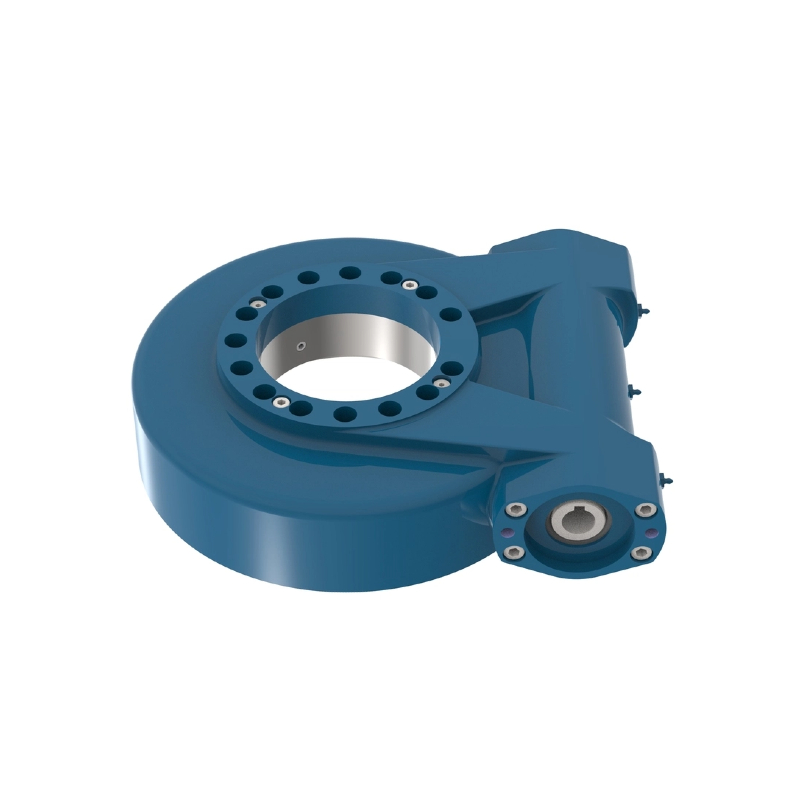
For projects using a spur configuration, identify the installed model before comparing it with another unit. The product arrangement, motor interface, and controller integration affect the test method. Product details for an SP-I Slew Drive can help a maintenance team identify the drive family, but site-specific wiring and controls still govern the final diagnosis.
How lubricant drag, motor torque, seals, and controls combine at cold start
Cold-start stalling is often a system mismatch rather than one isolated defect. At low temperature, lubricant can resist motion more strongly. At the same moment, seal contact can add friction, the motor may have less starting margin under real supply conditions, and the controller may limit how the motor starts or how quickly it may retry.
The practical question is whether available starting torque exceeds total resistance at the instant of startup. If it does, the tracker begins moving. If it does not, the motor may hum, stop, trigger protection, or fail to move even though each individual component appears acceptable during a mild-weather inspection.
| Factor | Cold-weather effect | Field clue | Appropriate next action |
|---|---|---|---|
| Low-temperature lubricant drag | Lubricant resistance can rise, increasing the torque needed to begin rotation | Movement is harder at first and improves after environmental warming or repeated normal operation | Verify the specified lubricant and service history with the drive supplier; do not substitute lubricant based only on general appearance |
| Motor starting torque | The motor must overcome initial resistance before rotation begins | Motor attempts to start, but speed does not build; a supply-related event may appear | Have qualified personnel check supply behavior under start demand and review motor condition against its documentation |
| Seal friction | Seal contact can add resistance, especially when surfaces are cold or contaminated | Resistance is localized near a sealed rotating interface or external contamination is visible | Inspect externally for contamination, damage, and abnormal contact; escalate internal seal concerns rather than prying or modifying seals in the field |
| Controller settings | Startup current limit, protection logic, schedule, and retry behavior can prevent or end a start attempt | No command is sent, or an attempt ends consistently after a control event | Review approved parameters and alarm history with the control owner before changing values |
| External tracker load | Ice, cable drag, structural binding, or misalignment adds to internal resistance | Visible obstruction, uneven travel, or one tracker differs from nearby units | Correct the external issue and then repeat a controlled functional check |
Consider a useful field scenario. A tracker stalls only before sunrise on cold mornings. The controller shows a valid command, the motor makes a brief attempt, and the unit moves later without a hardware replacement. That evidence supports a temperature-sensitive resistance or startup-margin issue, but it does not distinguish lubricant drag from seal friction, weak supply under load, or restrictive controller behavior.
The next test should therefore compare the electrical start condition and the mechanical condition, not immediately replace the drive. If qualified testing shows the controller is not sending the expected command, mechanical changes will not correct the problem. If the command and supply are present but the external tracker is visibly binding, motor replacement is also unlikely to solve it.
This distinction matters for procurement. A replacement Slew Drive should be specified after the root cause is narrowed, including load, speed, environmental exposure, drive orientation, motor interface, and control requirements. A drive selected only because it is larger may create mounting or control integration issues and may leave the real fault unchanged.
Request Your Custom Slew Drive or Bearing Spec
Tell us your load, speed, and environment — receive a tailored 100–5000 mm slewing drive or slewing bearing proposal with 3D drawings within 24 hours.
Use diagnosis branches to avoid unnecessary drive or motor replacement
After the preliminary checks, follow the branch that matches the evidence. Each branch has a different corrective path and a different verification method.
Branch 1: No valid controller command is present
Conclusion: investigate controls first. The reasoning is direct: a mechanical drive cannot rotate when the command, enable signal, or required operating condition is absent. This branch fits a silent motor with a recorded inhibit, schedule restriction, communication issue, or controller alarm.
Review approved controller settings, weather-stow logic, fault history, and the conditions needed to release the command. After correction, verify that the controller issues a normal run request and record whether motion returns. This branch does not apply when a valid command and motor-start attempt are already confirmed.
Branch 2: A valid command is present, but the motor does not start properly
Conclusion: check the motor supply and motor-start behavior before changing mechanical parts. The reason is that a voltage issue under load, a connection problem, or a motor issue can look like excessive drive resistance. This branch fits humming, brief start attempts, or protection events during commanded movement.
Qualified electrical personnel should inspect the supply condition during the actual start request, not only when the system is idle. Then repeat the functional check after the electrical cause is corrected. This branch does not settle the issue if the motor starts and turns normally but the tracker remains mechanically blocked.
Branch 3: Motor effort is present and external resistance is visible
Conclusion: remove or correct the external source of resistance before judging the drive. Ice, debris, cable interference, structural contact, or mounting distortion can raise startup demand beyond what the system can overcome. This branch fits a tracker that shows obstruction, uneven travel, or a difference from similar units nearby.
Correct the documented interference using the site-approved method, then perform a controlled movement check through the required operating range. If motion remains abnormal with no visible obstruction, escalate the mechanical investigation. Do not force rotation, alter mounting hardware, or loosen components without the responsible engineering procedure.
Branch 4: The issue repeats only under cold conditions with no clear external fault
Conclusion: gather temperature-linked records and consult the equipment documentation before any internal intervention. The reasoning is that lubricant behavior, seal friction, available motor torque, and controller settings can interact. This branch fits a repeatable cold-start pattern that disappears after warming.
Send the drive model, serial information if available, photos of the installation, controller alarms, motor behavior video, temperature conditions, maintenance history, and results from the known-good comparison. This evidence supports a focused technical review. It does not prove a manufacturing defect on its own.
Prevent repeat stalling through maintenance records and suitable drive selection
Prevention begins with preserving the installation and maintenance baseline. Record the lubricant specified for the installed unit, service dates, controller parameter approvals, motor changes, recurring weather conditions, and every cold-start alarm. A clear history makes seasonal faults easier to separate from gradual mechanical wear.
- Keep configuration records with the asset. Record drive model, motor details, controller revision, and approved settings. This fits all tracker sites and helps prevent accidental comparison between units that only appear identical.
- Inspect external interference before winter conditions arrive. Check cable routing, fastener condition, module clearance, structural contact points, and drainage paths. This is useful where snow, frost, or debris can add resistance; it will not identify internal electrical issues by itself.
- Use approved lubricant and service practices. Lubricant selection must match the drive design and operating environment. Do not mix products or change service intervals without supplier or engineering approval.
- Set a controlled cold-weather verification routine. Compare selected trackers after the first low-temperature events and retain alarm records. This suits larger sites where a sample-based inspection can find a pattern early, but it does not replace inspection of a unit with an active fault.
- Specify for actual operating conditions on new projects. Share load, speed, duty cycle, installation position, environment, motor choice, and control method during the quotation stage. A Customized Slew Drive is appropriate when a standard interface or environmental arrangement does not fit the system; it is not necessary when a standard unit meets all verified requirements.
Luoyang Slewring Bearing Co., Ltd. offers technical proposals within 24 hours and supports standard production on a 9-day cycle, subject to project requirements. Standard products can be ordered from 1 set, while customized products have a 5-set MOQ. These options can support field evaluation after diagnosis, but they should not be treated as a substitute for collecting fault evidence first.
Our ISO 9001:2015 quality management system and CMM three-coordinate inspection support controlled production and inspection. We also provide a 2-year extended quality warranty, a 48-hour technical response, and free replacement for confirmed manufacturing defects. For an escalation, send the diagnostic record rather than only a statement that the tracker stalled.
For example, SP-I 0229 spur gear slew drives have been supplied for single-axis solar tracker projects in Brazil, Argentina, and Chile, where the reported project result was energy yield improvement of up to 40%. That project result should not be read as a guarantee for every tracker field or climate. Site layout, controls, solar resource, and operating conditions still determine performance.
Prepare a useful escalation package when field checks do not settle the cause
Escalate after accessible checks have confirmed a valid command, no obvious external obstruction, and a repeated cold-weather pattern, or whenever safe operation cannot be confirmed. A good service package shortens the review cycle because it lets engineers separate control behavior from motor and drive resistance.
- Drive model and identification details available on the unit
- Tracker make, configuration, and installation photos
- Date, time, and weather condition during each fault
- Controller alarms, event logs, and approved parameter record
- Video or notes showing silent motor, humming, brief movement, or normal motor rotation
- Electrical observations taken by qualified personnel during a commanded start
- Recent service history, including lubricant, motor, wiring, controller, or structural work
- Comparison results from an adjacent working tracker with similar configuration
That record gives the support team a basis for recommending the next inspection, control review, or replacement decision. It also protects the site from replacing a component that was not the source of the cold-start stall.
Request Your Custom Slew Drive or Bearing Spec
Tell us your load, speed, and environment — receive a tailored 100–5000 mm slewing drive or slewing bearing proposal with 3D drawings within 24 hours.
 WhatsApp

 +8613903880726