



What is a PE slew drive? For maintenance purposes, it is a rotary transmission assembly that combines a slewing bearing, worm gear set, housing, and sealing elements to turn equipment under load. Its seals are meant to retain lubricant and limit the entry of water, dust, and other contaminants around moving interfaces.
A PE slew drive showing grease leakage or early wear does not automatically have a failed bearing or damaged worm gear. The visible symptom may come from a worn seal, blocked venting, mounting distortion, incorrect grease, abrasive contamination, or an exposure condition beyond the sealing arrangement’s intended limit.
The diagnostic goal is simple: determine whether the issue is external leakage, contaminant entry, internal wear, or a combination of these conditions. Maintenance teams should document what they see before removing the unit, because the location and appearance of grease often provide the first useful clue.
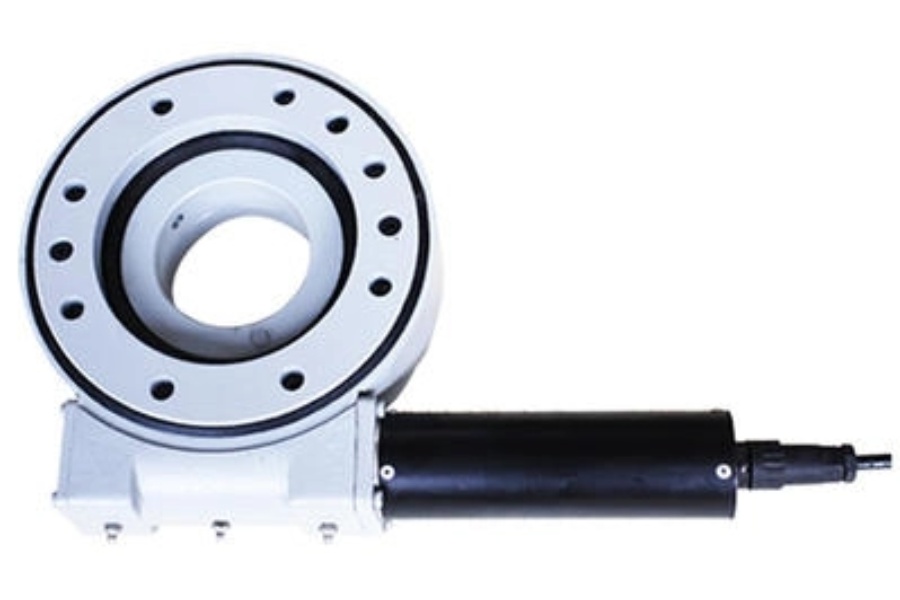
Separate the visible symptom from the likely failure source
Start with the reported symptom, not an assumed root cause. Grease around the housing can be normal after lubrication, while grease repeatedly pushed out from the same point may indicate a sealing, pressure, or alignment issue. Likewise, a rough turning feel may result from contamination, but it can also come from external structure distortion.
Record the machine condition before cleaning the assembly. Take photos of the complete installation, then close-up photos of the seal area, grease fitting, fasteners, motor connection, and surrounding structure. This evidence helps distinguish a field exposure problem from a component problem.
| Observed condition | What it may indicate | First action | Do not assume |
|---|---|---|---|
| Thin grease film near a seal | Recent lubrication purge, minor seal lip wear, or pressure inside the housing | Clean the area and monitor whether the film returns from one exact location | Do not replace the drive before confirming recurring leakage |
| Grease mixed with dust into a thick paste | Abrasive particles are adhering to external grease or entering near the seal path | Inspect the seal edge and identify the dust source and direction of exposure | Do not treat fresh grease alone as a contamination fix |
| Milky or discolored grease | Possible water entry or lubricant contamination | Stop relying on visual seal condition alone and review washdown or rain exposure | Do not assume all discoloration is caused by water without sample review |
| Rough rotation, noise, or rising motor effort | Possible contamination, bearing damage, gear damage, overload, or mounting distortion | Compare current operation with the machine’s known normal condition and inspect mounting integrity | Do not force continued operation to “work the grease through” |
| Grease exiting near one side only | Local seal damage, uneven structure loading, or a concentrated external contaminant path | Check that side for impact marks, trapped debris, and uneven fastener condition | Do not assume the opposite seal side is unaffected |
A clean inspection matters. Dust-covered housings can hide the actual source of leakage, and grease thrown from a nearby coupling or gearbox can be mistaken for leakage from the slew drive. Clean the exterior with a method that does not drive contaminants toward the seal, then operate the machine only as permitted by site safety procedures.
For OEM engineers, the mounting interface deserves equal attention. A slew drive transfers load through its housing and bearing connection. If the support structure is bent, uneven, or loosened, the resulting distortion can change seal contact conditions even when the seal material itself appears intact.
Use an ordered inspection path before opening the assembly
Begin with checks that are accessible from outside the unit. Opening a rotary drive before documenting external evidence can remove the very clues needed to identify whether dust, wash water, over-lubrication, or structural movement caused the problem.
- Confirm the exposure history. Ask whether the equipment recently entered a quarry, grain handling area, mine, coastal site, wash bay, or new outdoor location. A change in environment is meaningful because the original seal arrangement may have been selected for a different contaminant level.
- Locate the leak precisely. Mark the apparent source after cleaning. Observe whether grease emerges at the seal edge, grease fitting, housing joint, fastener area, or another component above the drive.
- Inspect the seal perimeter. Look for cuts, pulled sections, hardened edges, embedded grit, uneven contact, or evidence that a rotating surface has rubbed against the seal. A visibly damaged seal supports replacement, but an intact-looking seal does not rule out contamination entry.
- Check mounting and external connections. Look for loose fasteners, damaged brackets, contact between rotating and fixed parts, or signs that cables and hoses are pulling on the assembly. Correcting a seal without correcting an external interference can lead to repeat leakage.
- Review lubrication practice. Confirm the grease type and service record against the equipment specification. If the amount or interval cannot be verified, treat lubrication history as unknown rather than assuming the drive was under-lubricated.
- Assess motion quality. During a controlled inspection, watch for abnormal noise, hesitation, vibration, or movement that differs from the equipment’s prior normal behavior. These signs require further evaluation because they may point beyond an external sealing issue.
Stop and escalate the inspection when rotation becomes unusually rough, a seal is displaced, contamination is visible inside an accessible grease path, or mounting damage is found. Continued operation under those conditions can spread abrasive particles through the bearing and worm gear contact areas.
Where the problem is limited to an external seal edge and the drive otherwise operates normally, the next step is to identify why that location is exposed. Do not make a housing protection upgrade until the contamination route is understood. A cover that blocks falling dust, for example, may not solve high-pressure wash water entering from below.
Luoyang Slewring Bearing Co., Ltd. supports technical proposals within 24 hours when the application details are available. For a useful review, provide photos, the drive model, installation orientation, load description, operating environment, lubrication record, and a short description of the failure sequence.
Know when standard sealing is insufficient for dust washdown or pressure cleaning
Standard sealing can be suitable for ordinary outdoor exposure, but it has limits. The boundary is reached when contaminants are not merely present in the air but are actively driven toward the seal by abrasive flow, repeated washdown, pressure cleaning, or persistent standing water.
The right conclusion depends on the exposure mechanism. Fine dust falling onto a protected horizontal drive is different from abrasive dust blasted at the seal by wind or process equipment. Rain exposure is also different from a pressure-cleaning nozzle directed at housing joints and seal lips.
| Exposure condition | Observable field sign | What the sign may mean | Recommended response | Limit of the response |
|---|---|---|---|---|
| Abrasive dust settles on the housing | Dry dust accumulation with no packed debris at the seal | Exposure may be manageable if the seal area stays shielded and grease remains clean | Add a simple physical shield or improve housekeeping around the rotating zone | A shield does not protect against dust blown directly into the seal path |
| Dust is carried by wind or process air | Dust packed around one side of the seal or in narrow gaps | Particles are being forced toward a localized entry route | Change guard geometry, reduce direct blast exposure, and review the sealing specification | External guarding cannot correct a seal already cut or displaced |
| Routine low-pressure washdown | Moisture marks and recurring grease discoloration after cleaning cycles | Water may be reaching seal interfaces or housing openings | Review wash direction, drainage, and the required protection level before selecting an upgrade | Do not assume outdoor-rated protection is adequate for repeated washdown |
| Pressure-cleaning exposure | Leakage begins after cleaning, or water is directed toward seals and joints | The water jet may be overcoming normal sealing contact or driving debris inward | Keep the jet away from seals, define a cleaning exclusion zone, and request an application-specific protection review | Changing grease alone will not address direct jet exposure |
| Mud, slurry, or standing water | Wet debris remains against the seal for long periods | Contamination stays in contact with the sealing area instead of draining away | Improve drainage, use guards that do not trap debris, and evaluate a customized enclosure approach | A fully enclosed cover can worsen the issue if it retains water and grit |
Do not treat an IP designation as a blanket approval for every cleaning process. Protection ratings must be matched to the actual installation, including nozzle direction, exposure duration, temperature changes, and whether abrasive particles are mixed with water.
For harsh industrial environments, our slew drives can be specified with protection up to IP66 and anti-corrosion performance up to C4H. That is a selection capability, not a claim that every standard unit is suitable for every dusty or pressure-cleaned installation. The application still needs review against the actual contaminant path.
When high contamination risk is confirmed, a Customized Slew Drive may be more appropriate than adapting a standard assembly in the field. This route fits applications where the mounting direction, guard design, environmental exposure, or load cycle differs from the original product selection basis.
Request Your Custom Slew Drive or Bearing Spec
Tell us your load, speed, and environment — receive a tailored 100–5000 mm slewing drive or slewing bearing proposal with 3D drawings within 24 hours.
Match the corrective action to confirmed evidence
The corrective action should follow the evidence. Replacing a seal is appropriate when inspection shows physical damage or displacement, but it is not a complete corrective action if the cause was direct pressure washing, an abrasive dust stream, or mechanical interference from the installation.
When the evidence points to external contamination
If dust is packed at the seal, grease contains visible grit, or the site has a direct contaminant stream, first correct the exposure route. Add or revise shielding, improve drainage, reposition the drive if the machine design permits, and prevent cleaning tools from aiming at vulnerable interfaces.
Then assess internal condition. If rotation remains smooth and there is no sign of abnormal operating behavior, the maintenance decision may be limited to cleaning, relubrication according to the machine specification, and close monitoring. If roughness, noise, or recurring contaminated grease remains, internal wear must be considered.
When the evidence points to mounting distortion or interference
If leakage occurs on one side, fasteners show movement, or the housing has contact marks, inspect the supporting structure before replacing components. The correction may involve restoring the mounting surface, correcting interference, or revising bracket stiffness. A new seal installed on a distorted interface may fail again quickly.
For applications with high overturning loads or heavy cyclic duty, component selection must also match the structural demand. Depending on the equipment, a different Worm Gear Slew Drive configuration or a purpose-selected bearing arrangement may be needed. This is an engineering selection question, not a maintenance shortcut.
When the evidence points to internal wear
Rough travel, abnormal noise, persistent contamination, or a visible change in motion quality can indicate internal damage. At this stage, do not rely on external seal replacement as proof that the issue is resolved. Send the inspection record for technical review and follow the equipment manufacturer’s safety requirements for removal or disassembly.
Luoyang Slewring Bearing Co., Ltd. uses CMM three-coordinate inspection and dynamic load testing for every slewing bearing. Our ISO 9001:2015 certified facility also provides a 2-year extended quality warranty and free replacement for confirmed manufacturing defects. Field contamination, incorrect application conditions, and installation damage require evidence-based evaluation rather than assumptions about fault.
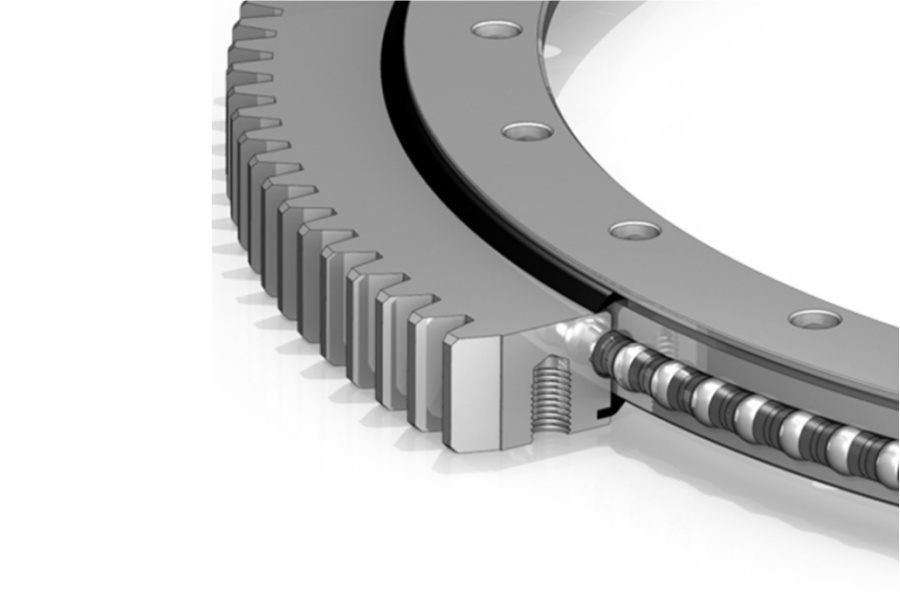
Prevent repeat seal problems during specification and maintenance planning
The strongest prevention step is to define the environment before ordering equipment. A product that works well in rain may not be the right choice for a conveyor transfer point, a mining excavator, a marine deck crane, or a washdown zone. Procurement teams should request an environmental review alongside load, torque, speed, and mounting information.
- Describe the contaminant. State whether it is fine mineral dust, sand, wood fiber, fertilizer, slurry, salt spray, wash water, or another material. “Dusty environment” is too broad for a reliable sealing decision.
- Describe how contaminants move. Identify whether they fall, blow sideways, collect underneath, splash upward, or arrive through directed cleaning.
- State the cleaning method. Include cleaning frequency, approximate direction of spray, and whether operators use pressure-cleaning equipment near the drive.
- Provide installation orientation. A vertically mounted drive can collect debris differently from a horizontal turntable installation.
- Document the duty cycle. Note whether the equipment holds position, cycles continuously, reverses often, or sees high cyclic load. Sealing and lubrication demands can change with motion pattern.
- Specify access limits. If the drive cannot be inspected easily after installation, request protection and serviceability features during design rather than after a field failure.
Real application conditions should guide the selection. For example, Luoyang Slewring Bearing Co., Ltd. supplied WEA9-62-25HR single worm slew drives for a South Korean port equipment manufacturer’s crane systems, with IP65 sealing, self-locking operation, and tracking precision of no more than 0.15°. That case supports the value of matching a drive to a defined port-crane requirement; it does not prove that the same configuration fits every dusty machine.
For equipment that needs a separate bearing and drive selection, review the available Slewing Bearing options alongside the rotary transmission layout. The bearing, housing, fasteners, support structure, grease plan, and environmental protection work as one system.
Prepare a useful escalation package when field checks do not settle the cause
Escalate for engineering review when you find repeated leakage after corrective work, visible grit in lubricant, water-related grease changes, damaged seals, unusual rotation, mounting distortion, or uncertain exposure conditions. These observations do not independently prove a manufacturing defect, but they are enough to justify a deeper assessment.
Send a focused package rather than a general failure report. Include the drive identification, purchase information if available, application description, photos before and after cleaning, close-ups of the leakage path, a record of lubricant used, service timing, cleaning practice, installation orientation, and any change in noise or motion.
Our engineering team can review the evidence and recommend whether the next step is seal replacement, mounting correction, environmental shielding, revised maintenance practice, or a different product configuration. Standard products can be ordered from one set, customized products begin at five sets, and sample orders are welcome for testing and evaluation.
A careful diagnosis prevents two expensive mistakes: replacing a drive that only needs an exposure correction, and reusing the same protection arrangement after contamination has already shown its path. Treat the seal as part of the whole machine system, then specify the protection level around the real field condition.
Request Your Custom Slew Drive or Bearing Spec
Tell us your load, speed, and environment — receive a tailored 100–5000 mm slewing drive or slewing bearing proposal with 3D drawings within 24 hours.
 WhatsApp

 +8613903880726