



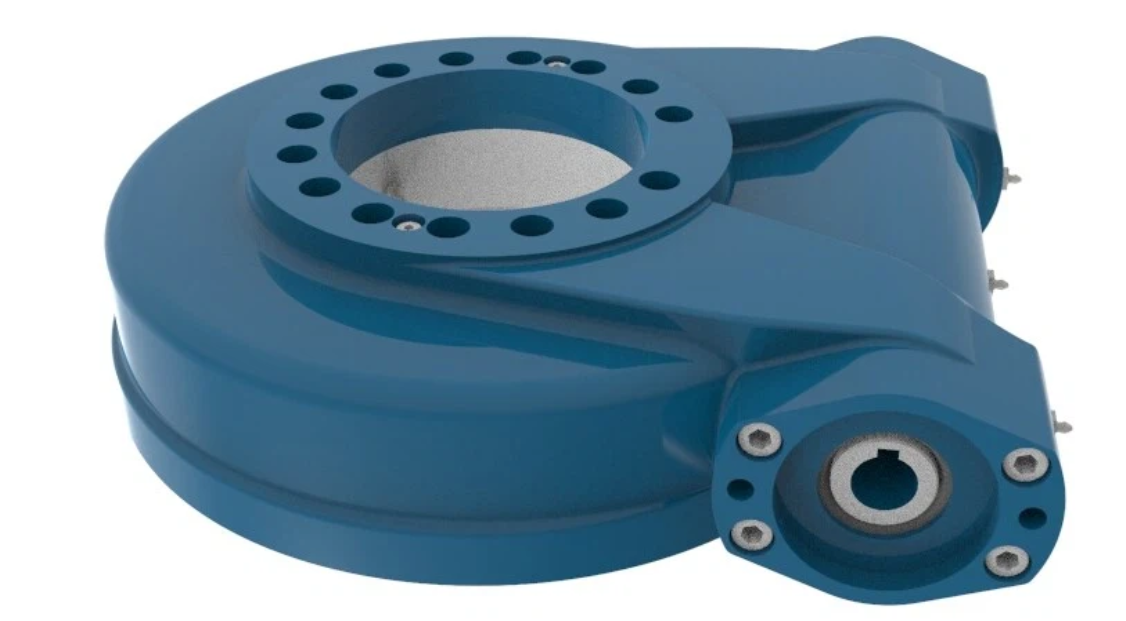
WE Slew Drive: A Complete Guide to Precision Rotational Solutions
In modern machinery, precise rotational motion is essential for performance, safety, and efficiency. WE Slew Drive represents a reliable, high-performance solution designed to meet demanding requirements across solar tracking, construction equipment, and industrial automation. Unlike standard slew drives, WE models incorporate proprietary technologies that optimize torque efficiency, reduce backlash, and withstand extreme environmental conditions, making them particularly well-suited for industries where reliability and precision in motion control are paramount. This article provides a comprehensive exploration of WE Slew Drives, covering what they are, how they function, the different types available, their core features and advantages, common applications, selection guidance, and key mistakes to avoid, while also introducing LYRA Drive as a trusted supplier of high-quality WE Slew Drive products.
What is WE Slew Drive?
A WE Slew Drive is a compact, fully integrated rotational device that combines multiple critical components into a single, ready-to-install unit. Unlike traditional rotational solutions that require separate bearings, gearboxes, and housings to be assembled on-site, a slew drive arrives as a complete assembly.
The three core components of a WE Slew Drive are:
Slewing bearing: A large-diameter bearing designed to support heavy axial, radial, and tilting moment loads simultaneously. The inner or outer ring features gear teeth that engage with the drive mechanism.
Drive mechanism: Typically a worm gear assembly that provides high reduction ratios. The worm shaft connects to a motor and transfers rotational force to the slewing bearing.
Housing: A robust enclosure that protects internal components, maintains alignment between the worm and bearing, and provides mounting interfaces for integration with equipment.
The “WE” name represents a commitment to quality, durability, and customization. Each WE Slew Drive is manufactured with precision tolerances, high-grade materials, and rigorous quality control processes.
Unlike traditional rotational solutions that require multiple separate components to be sourced, assembled, and aligned, a WE Slew Drive comes as a ready-to-install unit. This integrated approach simplifies machine design, reduces assembly time, minimizes potential failure points, and improves overall system reliability. Engineers can focus on their equipment’s core functions rather than worrying about the complexity of building a custom rotation system from scratch.
How Does WE Slew Drive Work?
The working principle of a WE Slew Drive is based on the mechanical advantage of a worm gear mechanism. This design has been proven over decades of use in heavy machinery, offering a unique combination of high torque output, self-locking capability, and smooth operation.
Key components and their functions:
Worm shaft: The input component that connects to a power source, such as an electric motor or hydraulic motor. The worm features a precision-cut helical thread that engages with the gear teeth on the slewing bearing.
Slewing bearing with gear teeth: The rotating element that carries the applied load. The gear teeth are integrated into either the inner or outer ring, depending on the design. When the worm turns, it drives the bearing to rotate.
Housing: The structural body that holds the worm shaft and bearing in precise alignment. The housing also contains lubricant and provides sealing interfaces to protect internal components.
Seals: High-quality seals prevent contamination from dust, water, and debris while retaining lubricant. Proper sealing is essential for long service life, especially in outdoor or harsh environments.
The operation process in detail:
A motor—either electric or hydraulic—applies rotational force to the worm shaft.
As the worm shaft rotates, its helical thread engages with the gear teeth on the slewing bearing.
The sliding action between the worm and gear creates a high reduction ratio. This means a relatively small input torque from the motor is multiplied into a much larger output torque at the slewing bearing.
The slewing bearing rotates, carrying the attached structure—such as a solar panel array, crane boom, or robotic arm—with precision and stability.
Self-locking capability:
One of the most valuable characteristics of a worm gear design is self-locking. When the motor stops, the friction between the worm and gear prevents the bearing from back-driving under load. This means the slew drive holds its position securely without the need for an external brake. This feature is especially critical in applications such as solar trackers, aerial work platforms, and cranes, where maintaining position after movement is a safety requirement.
Why this mechanism matters:
The combination of high reduction ratio, self-locking, and compact packaging makes the worm gear slew drive an ideal solution for applications requiring precise control over heavy loads. Unlike other drive mechanisms that may require additional braking systems or complex gearing arrangements, the worm gear design delivers these benefits inherently, simplifying system design and improving reliability.
Types of WE Slew Drives
WE Slew Drives are available in multiple configurations, each engineered to address specific application requirements. Understanding the distinctions between these types is essential for making an informed selection.
Classification by structural design:
Single-worm slew drive:
This is the most common configuration, featuring a single worm shaft that drives the slewing bearing. Single-worm designs offer an excellent balance of performance, cost, and reliability. They are suitable for the majority of standard applications, including solar tracking, material handling, and general industrial use. Backlash in a single-worm drive is typically within acceptable limits for most applications, though precision grades are available.
Double-worm slew drive:
This advanced configuration features two worm shafts positioned to eliminate backlash entirely. By using two worms that engage the slewing bearing from opposite sides, the drive achieves zero or near-zero backlash. This design is ideal for applications demanding the highest levels of positioning accuracy, such as precision robotics, advanced solar concentrators, and high-end automation equipment. Double-worm drives also offer increased torque capacity and improved wear distribution, extending service life in demanding applications.
Classification by mounting method:
Flange-mounted slew drive:
Flange-mounted units feature a machined flange that bolts directly to equipment frames or structures. This mounting method provides a compact, rigid installation with excellent alignment characteristics. Flange mounting is commonly used in solar trackers, industrial machinery, and applications where space is limited and structural rigidity is critical.
Base-mounted slew drive:
Base-mounted units feature a flat base plate with mounting holes, allowing flexible attachment to equipment frames. This design is often preferred in mobile equipment such as cranes, aerial work platforms, and excavators, where the mounting structure may vary or where installation access is a consideration. Base-mounted drives offer greater adaptability to different equipment configurations.
Classification by application specialization:
Solar tracking series:
These drives are specifically optimized for photovoltaic and concentrated solar power applications. Key features include enhanced corrosion resistance to withstand years of outdoor exposure, high-grade seals to protect against dust and moisture, and gear ratios optimized for the slow, continuous movement required to follow the sun. Both single-axis and dual-axis configurations are available.
Heavy-duty series:
Designed for construction, mining, and material handling equipment, heavy-duty slew drives feature reinforced housings, larger bearings, and higher torque capacities. They are built to withstand shock loads, vibration, and the demanding conditions typical of heavy machinery applications.
Precision automation series:
These drives are engineered for industrial robotics, indexing tables, and high-precision manufacturing equipment. They feature low or zero backlash, high repeatability, and smooth motion characteristics essential for automated processes.
Features of WE Slew Drives
WE Slew Drives are engineered with a comprehensive set of features that address the real-world needs of equipment manufacturers and end users.
Compact integrated design:
The all-in-one construction saves valuable space on machinery. By combining the bearing, drive mechanism, and housing into a single unit, WE Slew Drives eliminate the need for complex multi-component assemblies. This compactness allows engineers to design more efficient equipment with reduced footprint.
High torque density:
Despite their relatively small size, these drives deliver substantial rotational force. The worm gear mechanism provides a high reduction ratio, typically ranging from 20:1 to over 100:1. This allows a relatively small input motor to handle large loads effectively, reducing overall system weight and energy consumption.
Self-locking function:
As previously described, the inherent self-locking characteristic of the worm gear design adds a critical layer of safety. In lifting applications, it prevents unintended lowering of loads. In positioning applications, it maintains set positions without power consumption. In solar tracking, it holds panels against wind loads overnight.
Durable construction for harsh environments:
WE Slew Drives are built to last in challenging conditions. Standard features include:
Corrosion-resistant coatings that protect against rust and environmental degradation
High-grade seals that prevent ingress of dust, water, and debris
Precision-machined components that maintain performance under temperature extremes
Robust housing materials that resist impact and vibration
Low maintenance requirements:
These drives are designed for extended service intervals. With proper initial lubrication and periodic inspection, WE Slew Drives operate reliably for years with minimal intervention. This reduces downtime, lowers maintenance costs, and improves overall equipment availability.
Extensive customization options:
Recognizing that no two applications are exactly alike, WE Slew Drives can be customized to meet specific requirements:
Specialized mounting interfaces to match existing equipment
Modified gear ratios for specific speed or torque needs
Custom input configurations for different motor types
Application-specific sealing solutions for unique environmental challenges
Alternative materials for corrosive or high-temperature environments
Advantages of WE Slew Drives
The advantages of choosing a WE Slew Drive extend far beyond the individual features listed above. These benefits translate directly to improved equipment performance, reduced costs, and enhanced reliability.
Simplified mechanical assembly:
Because the design integrates load bearing and drive functions into a single unit, it dramatically simplifies mechanical assemblies. Engineers no longer need to design complex arrangements of separate bearings, gearboxes, mounting structures, and alignment mechanisms. This simplification yields multiple benefits:
Reduced assembly time and labor costs
Lower procurement complexity with fewer components to source
Fewer potential failure points, improving overall reliability
Simplified quality control and testing procedures
Superior load handling capability:
WE Slew Drives are uniquely capable of simultaneously handling three types of forces that other drive mechanisms struggle to manage:
Axial loads: Forces parallel to the axis of rotation, such as the weight of a crane’s rotating structure
Radial loads: Forces perpendicular to the axis, such as wind loads on a solar panel
Tilting moments: Overturning forces that try to tip the rotating structure, such as the offset load on an excavator’s rotating platform
This multi-directional load capability makes WE Slew Drives ideal for applications where forces come from multiple angles simultaneously, eliminating the need for complex bearing arrangements.
High positioning accuracy:
Precision is critical in automated systems, and WE Slew Drives deliver exceptional repeatability. The worm gear design provides smooth, consistent motion with minimal deviation. For applications requiring the highest accuracy, double-worm designs achieve zero backlash, ensuring that equipment returns to the exact same position time after time. This is essential for:
Robotic arms that must perform repetitive tasks with consistency
Indexing tables in manufacturing lines
Solar concentrators that must maintain precise focus on a receiver
Inspection and measurement systems requiring repeatable positioning
Long service life:
Robust construction, quality materials, and effective sealing contribute to extended operational life. WE Slew Drives are engineered to maintain performance even under continuous operation or in demanding outdoor conditions. Key factors contributing to longevity include:
High-grade bearing materials with appropriate heat treatment
Precision-machined gear profiles that distribute wear evenly
Effective lubrication retention and contamination exclusion
Conservative design margins that accommodate occasional overloads
Cost-effectiveness over total lifecycle:
When evaluating cost, it is important to consider the total lifecycle, not just initial purchase price. WE Slew Drives offer compelling lifecycle economics:
Lower engineering costs due to simplified integration
Reduced assembly labor during equipment manufacturing
Lower spare parts inventory requirements
Decreased maintenance and downtime expenses
Extended equipment life and resale value
Compared to building a custom rotational system from separate components, a WE Slew Drive often proves significantly more cost-effective while delivering superior performance and reliability.
Applications of WE Slew Drives
WE Slew Drives are deployed across a remarkably diverse range of industries. Their combination of compact size, high load capacity, precision, and durability makes them suitable for applications from renewable energy to heavy construction.
Renewable energy sector:
Solar energy systems rely heavily on slew drives for tracking mechanisms that maximize energy capture.
Single-axis solar trackers: These systems follow the sun from east to west throughout the day, increasing energy output by 15-25% compared to fixed installations. WE Slew Drives provide the slow, continuous motion and self-locking holding capability required for reliable operation.
Dual-axis solar trackers: These advanced systems track both azimuth and elevation, capturing even more solar energy. Precision slew drives enable the accurate positioning needed for optimal panel orientation.
Concentrated solar power systems: In CSP plants, mirrors must focus sunlight precisely on a receiver. Zero-backlash slew drives provide the exceptional accuracy required for efficient energy concentration.
Construction and material handling:
The construction industry depends on slew drives for safe, controlled rotation of heavy equipment.
Mobile cranes and tower cranes: Slew drives enable smooth rotation of the crane’s upper structure while supporting the weight of lifted loads. Self-locking capability enhances safety when holding loads at position.
Aerial work platforms: Boom lifts and scissor lifts use slew drives for turntable rotation, allowing operators to position work platforms precisely and safely.
Excavators and backhoes: Heavy-duty slew drives support the rotating upper structure while handling the reactive forces of digging operations.
Forklifts and material handling equipment: Compact slew drives enable maneuverability in tight spaces and precise load positioning.
Industrial automation:
The precision and repeatability of WE Slew Drives make them ideal for automated manufacturing systems.
Robotic arms: Articulated robots require precise rotational joints for consistent performance. Low-backlash slew drives provide the accuracy needed for welding, assembly, and material handling operations.
Indexing tables: Rotary tables in manufacturing lines must position workpieces accurately for successive operations. WE Slew Drives deliver the repeatability required for efficient production.
Positioning systems: Inspection, testing, and assembly equipment often require precise, repeatable positioning that slew drives can provide.
Specialized mobile equipment:
Many specialized vehicles and equipment types rely on slew drives for their core functions.
Drilling rigs: Slew drives support and rotate drill towers while maintaining position under heavy vibration and varying loads.
Wind turbines: Yaw drives use slew drive technology to orient turbines into the wind for optimal power generation.
Access equipment: Various types of access platforms, man lifts, and specialized vehicles use slew drives for safe, controlled positioning.
Wherever controlled rotation is required—whether under a solar panel in a remote desert, on a construction site, or inside a precision manufacturing facility—a WE Slew Drive can provide a dependable, high-performance solution.
How to Choose the Right WE Slew Drive
Selecting the optimal WE Slew Drive for your application is a systematic process that requires careful evaluation of multiple factors. Following a structured approach ensures that the selected drive delivers the required performance, reliability, and longevity.
Step 1: Define operating conditions comprehensively
The foundation of proper selection is a thorough understanding of the application’s demands. Document the following parameters:
Load characteristics:
Axial load: The force pushing or pulling along the rotation axis. This includes the weight of the rotating structure and any applied loads.
Radial load: The force perpendicular to the rotation axis. Wind loads, side forces, and off-center loads contribute to radial forces.
Tilting moment: The overturning force that tries to tip the rotating structure. This is often the most challenging load type for slew drives to accommodate and is frequently underestimated.
Motion requirements:
Rotational speed: Maximum and typical operating speeds
Duty cycle: The percentage of time the drive operates
Frequency of starts and stops: How often the drive accelerates and decelerates
Total cycles: Expected number of rotations or cycles over the equipment’s life
Step 2: Determine accuracy requirements
Positioning accuracy is a critical parameter that directly impacts product performance and application suitability.
Backlash considerations:
Backlash is the amount of play or free movement between gear teeth. It affects positioning precision and should be matched to application needs:
Standard applications: General material handling, basic solar tracking, and equipment where slight positional deviation is acceptable
Precision applications: Robotics, high-accuracy solar concentrators, and automated manufacturing where repeatability is essential
Ultra-precision applications: Double-worm designs with zero backlash for the most demanding positioning requirements
Step 3: Assess environmental conditions thoroughly
The operating environment has a direct impact on seal selection, coating requirements, and maintenance intervals.
Environmental factors to evaluate:
Moisture and humidity: Outdoor applications require effective moisture protection
Dust and particulate matter: Construction, mining, and agricultural environments demand robust sealing
Temperature extremes: High temperatures affect lubricant viscosity; low temperatures can impact seal flexibility
Corrosive elements: Saltwater, chemicals, and industrial pollutants require specialized coatings and materials
Washdown requirements: Food processing and certain industrial applications require washdown-capable designs
Step 4: Confirm mounting and integration feasibility
Physical integration must be considered to ensure the slew drive fits within the equipment design.
Integration considerations:
Mounting interface dimensions: Verify bolt patterns, pilot diameters, and mounting surfaces match equipment requirements
Available space: Ensure adequate clearance for the drive, motor, and any accessories
Motor mounting: Confirm input configuration matches the selected motor type
Access for maintenance: Design for future inspection, lubrication, and potential replacement
Step 5: Select input power configuration
Slew drives can be powered by various motor types, each with distinct advantages.
Electric motor drive:
Ideal for applications with available electrical power
Provides precise speed control and simple integration
Commonly used in solar tracking, industrial automation, and fixed installations
Hydraulic motor drive:
Suited for mobile equipment where hydraulic power is already available
Offers high power density and rugged operation
Commonly used in construction, material handling, and heavy machinery
Step 6: Engage with technical experts
The final and most critical step is to work with experienced engineers who can validate the selection and provide application-specific guidance.
Why expert consultation matters:
Experienced suppliers have extensive application knowledge
They can perform detailed load calculations and verify margins
They can recommend features and options you might not have considered
They can provide customized solutions when standard products are not an exact fit
Working with a knowledgeable supplier like LYRA Drive simplifies the selection process and helps ensure that the chosen drive delivers optimal performance over its entire service life.
Common Mistakes to Avoid
Even experienced engineers can make mistakes when selecting or applying slew drives. Being aware of these common pitfalls helps ensure successful implementation and long-term reliability.
Mistake 1: Focusing only on static load capacity
Many users focus exclusively on static load ratings while underestimating the impact of dynamic forces, duty cycles, and tilting moments. This oversight can lead to premature wear, reduced accuracy, or even catastrophic failure.
How to avoid: Always evaluate all three load types—axial, radial, and tilting moment—for both static and dynamic conditions. Consider shock loads, vibration, and the cumulative effects of repeated cycling.
Mistake 2: Overlooking environmental factors
A standard seal may work perfectly in a clean workshop but fail quickly in dusty or wet outdoor conditions. Similarly, standard coatings may not withstand corrosive environments. Lubricants that perform well in moderate temperatures may become too thick in cold climates or too thin in hot conditions.
How to avoid: Match seals, coatings, and lubricants to the actual operating environment. If conditions are harsh or uncertain, select enhanced protection options. Consult with suppliers who can recommend appropriate solutions for specific environmental challenges.
Mistake 3: Assuming self-locking eliminates all braking needs
While the self-locking feature provides excellent holding capability, it may not be sufficient under all conditions. Dynamic loads, vibration, shock loads, or long-term creep can affect holding performance. In critical applications such as personnel lifts or heavy cranes, additional safety devices may still be necessary.
How to avoid: Evaluate the consequences of unintended movement. For safety-critical applications, incorporate appropriate backup systems. Consult with engineering experts to determine whether self-locking alone is adequate for your specific application.
Mistake 4: Poor mounting base rigidity
If the structure supporting the slew drive flexes under load, positioning accuracy suffers. The rigid housing and precision components of a slew drive can only perform as well as the structure they are mounted to. A flexible mounting base can cause misalignment, uneven loading, and accelerated wear.
How to avoid: Design the mounting structure with adequate stiffness to support the applied loads without significant deflection. Consider using finite element analysis for critical applications. Verify that mounting surfaces are flat and properly prepared.
Mistake 5: Neglecting proper maintenance
Slew drives require periodic attention to maintain optimal performance. Common maintenance oversights include:
Using incorrect lubricants that do not meet manufacturer specifications
Extending lubrication intervals beyond recommended schedules
Delaying seal replacement when damage or wear is detected
Ignoring unusual noise, vibration, or temperature changes
How to avoid: Establish a documented maintenance schedule. Use only recommended lubricants. Train personnel to recognize early warning signs of potential issues. Replace seals promptly when damage is observed.
Mistake 6: Overlooking installation and access considerations
When designing equipment, engineers sometimes overlook the practical aspects of installation and future maintenance. A slew drive that is difficult to reach for inspection, lubrication, or replacement will likely be neglected, increasing the risk of failure.
How to avoid: Design with maintenance access in mind. Consider how technicians will reach lubrication points, inspect seals, and access mounting bolts. Provide adequate clearance for tools and replacement procedures.
Mistake 7: Selecting based on price alone
Choosing the lowest-priced option without considering quality, durability, and application suitability often leads to higher total costs due to premature failure, increased downtime, and replacement expenses.
How to avoid: Evaluate total lifecycle costs, not just initial purchase price. Consider the supplier’s reputation, quality standards, and technical support capabilities. Invest in appropriate quality levels for your application’s demands.
By being aware of these pitfalls and taking proactive steps to address them, you can ensure long-term reliability and optimal performance from your WE Slew Drive.
LyraDrive: Supplier of High Quality WE Slew Drive
When looking for a high-quality WE Slew Drive, choosing a trusted supplier is just as important as selecting the right technical specifications.
LyraDrive is a professional manufacturer specializing in slewing bearings, slew drives, and gears. The company offers a broad range of products to meet diverse industry needs, from standard units to fully customized designs.
With a strong focus on quality and customization, LyraDrive provides solutions tailored to specific application requirements. Whether you need a solar tracking drive optimized for outdoor exposure or a heavy-duty unit for construction equipment,LyraDrive has the expertise to deliver.
For application-specific engineering support, reaching out toLyraDrive to discuss technical specifications and implementation strategies ensures that you receive a product that fits your equipment perfectly and performs reliably over the long term.
 WhatsApp
 sales@lyradrive.com
 +8613903880726