



Slew Drives in Water Treatment: Powering Municipal Infrastructure
What Are Slew Drives in Water Treatment?
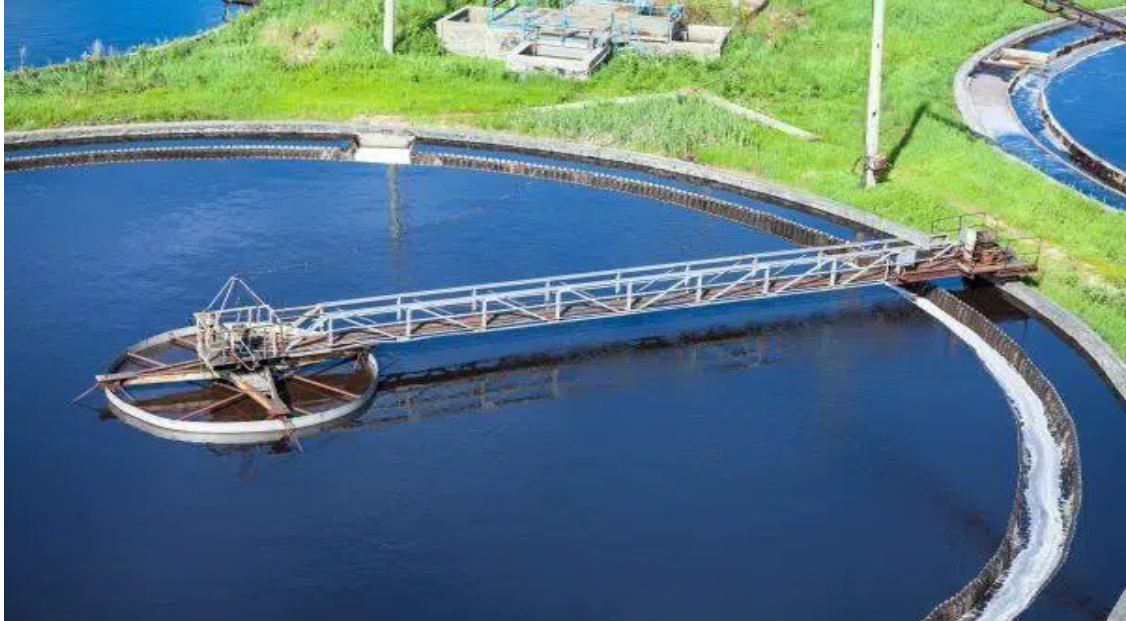
Slew drives are compact, high-performance rotational assemblies that combine a slewing bearing with a worm or spur gear train, enclosed in a sealed housing. In water treatment environments, these drives are the mechanical heart of critical equipment: primary and secondary clarifiers, sludge thickeners, rotating drum screens, disc filters, and traveling bridge systems.
Every day, millions of gallons of wastewater flow through municipal treatment facilities, undergoing complex cleaning processes before being safely returned to the environment. At the center of these operations are rotating mechanical systems that never stop working. Slew drives provide the controlled, low-speed, high-torque rotation necessary to move settled sludge, concentrate biosolids, and maintain proper flow rates—continuously, year after year, in one of the most challenging environments industrial machinery can face.
Key Features of Slew Drives in Water Treatment Environments
Unlike standard industrial drives, slew drives used in water treatment must survive conditions that accelerate wear, corrode metals, and defeat ordinary seals. The following features are not generic—they are specifically engineered responses to the water treatment environment:
Corrosion Resistance as a Baseline Requirement
Water treatment facilities expose equipment to multiple corrosion mechanisms simultaneously. Uniform corrosion gradually thins metal surfaces. Pitting corrosion creates localized weak points that can lead to sudden failure. Crevice corrosion develops in tight spaces where water becomes trapped. Additionally, microbiologically influenced corrosion (MIC) occurs when bacteria and microorganisms accelerate metal degradation. A standard carbon steel slew drive would fail within months in this environment. Therefore, water treatment slew drives require advanced protective treatments—such as thin dense chrome coatings that bond metallurgically to the base material—to resist chlorides, sulfates, and biological activity without compromising dimensional tolerances.
Advanced Sealing for Continuous Moisture Exposure
Clarifier bridges and thickener mechanisms operate directly above open water basins, often in rain, snow, and high-humidity conditions. Slew drives in these applications must prevent water ingress even when subjected to direct spray, condensation cycling, and temperature swings. Multi-stage sealing systems—including primary rotary seals, secondary backup seals, and desiccant breathers—maintain internal pressure balance while filtering incoming air. Without such sealing, water would contaminate lubricants, wash away grease films, and cause internal rust that destroys bearing races.
Self-Locking Capability for Safety
Worm-type slew drives inherently prevent back-driving. In a sludge thickener, if hydraulic pressure is lost or power fails, the rake arm must not fall backward under the weight of accumulated solids. This self-locking feature is not a convenience—it is a safety requirement. Standard spur gear drives lack this capability, making worm slew drives the default choice for most clarifier and thickener applications.
High Starting Torque for Variable Loads
Water treatment loads are not constant. During startup, settled sludge may have compacted overnight. Ice formation in winter adds resistance. Debris such as rags or grit can create momentary overloads. Slew drives for water treatment must deliver substantially higher starting torque than running torque, with safety factors of 1.5 to 2.0 built into specifications. This ensures the drive can break free from rest without stalling or damaging internal components.
Ultra-Low Speed Operation with Full Torque
Clarifier rake arms typically rotate at 1 to 3 revolutions per hour—not per minute. At such low speeds, many gearboxes overheat or fail to maintain proper lubrication film thickness. Slew drives designed for water treatment use specialized greases or oil-bath lubrication that maintains viscosity and film strength even at near-static speeds. This allows continuous 24/7/365 operation without thermal breakdown.
Load Holding Under Shock Conditions
Thickened sludge creates substantial resistance. When a rake encounters a dense pocket of solids, the drive must momentarily increase torque without losing position. If the drive slips or back-drives, the rake arm can rise, allowing solids to bypass the collection mechanism. High-quality water treatment slew drives are engineered to hold position under dynamic shock loads, maintaining process stability.
Applications of Slew Drives in Water Treatment
Primary and Secondary Clarifiers – These basins remove 50–60% of suspended solids (primary) or settle biological floc (secondary). Slowly rotating rake arms collect sludge toward a central hopper. The slew drive mounts at the basin center, supporting the entire rotating structure. It provides extremely low output speeds (1–3 revolutions per hour) with high torque to drag sludge across the tank bottom. Self-locking prevents back-driving during power interruptions.
Sludge Thickeners – Thickeners concentrate biosolids, creating two to three times the resistance of standard clarifiers. Double worm slew drives are often specified here for higher reduction ratios, greater self-locking security, and extra torque capacity. The drive must tolerate intermittent shock loads when encountering dense solids pockets.
Rotating Drum Screens – Headworks screens remove rags and debris from incoming wastewater. Speed requirements are higher than clarifiers (0.5–5 rpm). Self-locking is less critical, so spur gear slew drives may be selected. Corrosion resistance remains critical as drives operate in raw wastewater with grit and aggressive biological agents.
Traveling Bridge Filters – These tertiary treatment systems require precise positioning. The slew drive must stop and hold at exact locations to align backwash shoes. Spur gear drives with low backlash or precision worm drives are preferred.
Valve Actuation – Large butterfly valves and penstocks need reliable quarter-turn actuation. The self-locking feature of worm slew drives holds valve position without power. Drives must break free from static friction after long idle periods.
The Critical Role of Slew Drives in Water Treatment
Primary and Secondary Clarifiers
Primary clarifiers remove approximately 50–60% of total suspended solids through basic settling. Secondary clarifiers in activated sludge systems achieve higher removal rates through biological treatment. Both rely on slowly rotating rake arms that continuously collect settled sludge and direct it toward central collection points. The rotating mechanism must operate at extremely low speeds while generating sufficient torque to move heavy sludge loads through water. Slew drives provide the perfect solution: high-torque output, ultra-low speed capability, and positive overload protection.
Thickener Operations
Sludge thickening concentrates settled biosolids, reducing volume for disposal or further processing. Thickened sludge creates substantially more resistance than standard clarifier loads. The rotating arms must maintain consistent speed and torque despite varying sludge consistency and depth. Heavy-duty slew drives are engineered to handle these demanding conditions, providing reliable torque transmission even when encountering unexpected resistance.
Screening and Filtration Systems
Rotating drum screens, disc filters, and traveling bridge systems require precise speed control and consistent operation to maintain optimal treatment efficiency. Slew drives provide the controlled rotation needed to keep screens clean and flow rates stable, preventing debris from entering downstream processes where it could damage pumps or clog membranes.
Design Considerations for Water Treatment Applications
Load Management and Safety Factors
Water treatment clarifiers and thickeners create unique loading conditions that vary significantly. Normal operation involves consistent torque requirements, but startup, ice formation, or sludge buildup can create temporary overloads. Slew drives must incorporate substantial safety factors to ensure reliable operation under exceptional conditions.
Environmental Considerations
Municipal facilities operate continuously regardless of weather. Drive systems must function through temperature extremes, humidity variations, and direct precipitation. IP66-rated sealed designs protect against dust, water spray, and debris. Temperature compensation ensures consistent performance across seasons. Condensation management prevents moisture accumulation that could compromise lubrication or cause internal corrosion.
Maintenance Accessibility
Water treatment facilities often operate with limited maintenance windows. Slew drives should be designed for routine maintenance without requiring basin drainage or extended shutdown. The best designs can be fully rebuilt or repaired from the platform without ever draining the basin, minimizing downtime and reducing service costs.
Integration with Process Control
Modern facilities increasingly rely on automated control systems. Slew drives must integrate seamlessly, providing reliable speed regulation and torque feedback. Variable frequency drives (VFDs) enable precise speed control while maintaining high torque at low speeds. Sensors for temperature, vibration, and lubricant condition enable predictive maintenance programs that detect issues before failure occurs.
How to Choose Proper Slew Drives for Water Treatment
Selecting the correct slew drive requires systematic evaluation:
Step 1: Determine Load Requirements – Calculate axial load (weight of rotating structure plus sludge), radial load (horizontal forces from uneven loading), and tilting moment. Consult load capacity charts for each model.
Step 2: Evaluate Torque Needs – Starting torque often exceeds running torque due to settled sludge or debris. Apply a safety factor of 1.5 to 2.0 on calculated torque.
Step 3: Select Drive Type – Worm slew drives are ideal for self-locking, low-speed, high-torque scraper applications. Double worm slew drives provide higher reduction ratios and greater self-locking security. Spur gear slew drives suit higher speeds or lower backlash requirements but lack self-locking.
Step 4: Verify Environmental Protection – Require at least IP65 ingress protection; IP67 or IP68 for submerged or washdown areas. Specify corrosion-resistant coatings such as thin dense chrome for chloride-rich environments.
Step 5: Confirm Service Life – Calculate L10 bearing life under actual loads. For 24/7 municipal service, expect 10–15 years of minimum operation.
Step 6: Review Installation Parameters – Ensure mounting bolt patterns, housing envelope, and input shaft orientation fit existing structures.
Future Trends in Water Treatment Drive Technology
Smart Drive Systems – Integration of IoT sensors and advanced diagnostics enables real-time performance data. Condition-based maintenance uses actual equipment condition rather than time-based schedules to optimize equipment life and maintenance costs. Process integration allows drive systems to communicate directly with plant control systems.
Advanced Materials and Coatings – Nano-enhanced coatings and self-healing materials represent emerging technologies. Thin dense chrome coatings like Armoloy (referenced as a proven technology type, not a brand endorsement) provide exceptional durability while maintaining precision tolerances critical for bearing performance.
Electrification and Servo Control – Traditional fixed-speed motors are giving way to servo-driven slew drives with variable speed and position feedback. This enables precise rake positioning for optimizing sludge removal while reducing energy consumption by 20–30%.
LyraDrive: Your Partner for Slew Drives in Water Treatment
Luoyang LyraDrive is a professional one-stop slewing device manufacturer majored in design and development, customized production, sales and service on slewing bearings and slewing drives. With years of engineering experience serving heavy machinery, renewable energy, and industrial automation sectors, LyraDrive brings industrial-grade reliability to municipal water treatment applications.
We understand that water treatment plants cannot afford unplanned downtime. A single drive failure in a primary clarifier can cost thousands of dollars per hour in lost treatment capacity. That is why we engineer our slew drives specifically for the unique demands of water treatment environments.
Our product portfolio for water treatment includes:
Worm Slew Drive – The standard choice for clarifiers and scraper bridges. Features self-locking operation, high reduction ratios, and compact dimensions. Ideal for applications where safety and reliability are paramount.
Double Worm Slew Drive – For extra-heavy sludge loads or applications requiring ultimate protection against back-driving. This design offers higher torque output and a secondary locking mechanism, making it the preferred choice for large-diameter thickeners.
Spur Gear Slew Drive – When faster rotational speeds or lower backlash is needed for indexing and valve automation applications. Suitable for drum screens and filter systems where positioning accuracy matters.
Every LyraDrive slew drive for water treatment is available with optional stainless steel output shafts, FKM seals for chemical resistance, advanced corrosion-inhibiting lubricants, and protective coatings engineered for chloride-rich environments. We also offer custom mounting patterns and motor adapters to retrofit existing clarifier mechanisms without structural modifications.
Choosing LyraDrive means partnering with a manufacturer that tests every unit before shipment, provides full 3D models and load charts, and supports your project from specification through commissioning. For municipal engineers who demand long life, low maintenance, and technical support you can trust, LyraDrive delivers high-performance slew drives built to last in the toughest wet environments. We don't just sell components—we provide solutions that keep your plant running, year after year.
Conclusion
Slew drives are far more than simple rotation devices in water treatment—they are critical enablers of municipal infrastructure reliability. From primary clarifiers to final effluent screens, these compact powerhouses provide the torque, precision, and durability that continuous-operation plants depend on.
The success of these systems depends heavily on proper material selection, corrosion protection, and design optimization for the unique challenges of water treatment environments. Unlike standard industrial drives, water treatment slew drives must resist multiple corrosion mechanisms simultaneously, maintain sealing integrity under constant moisture exposure, deliver high starting torque for variable loads, operate at ultra-low speeds without overheating, and hold position under shock conditions.
By partnering with experienced manufacturers like LyraDrive who understand both the technical requirements and operational realities of municipal water treatment, facilities can ensure reliable, cost-effective operation of their critical infrastructure systems. Investing in the proper slew drive is not an expense—it is an insurance policy against costly breakdowns, regulatory violations, and public health risks. For water treatment facilities that never sleep, LyraDrive slew drives keep turning, year after year.
 WhatsApp
 sales@lyradrive.com
 +8613903880726