



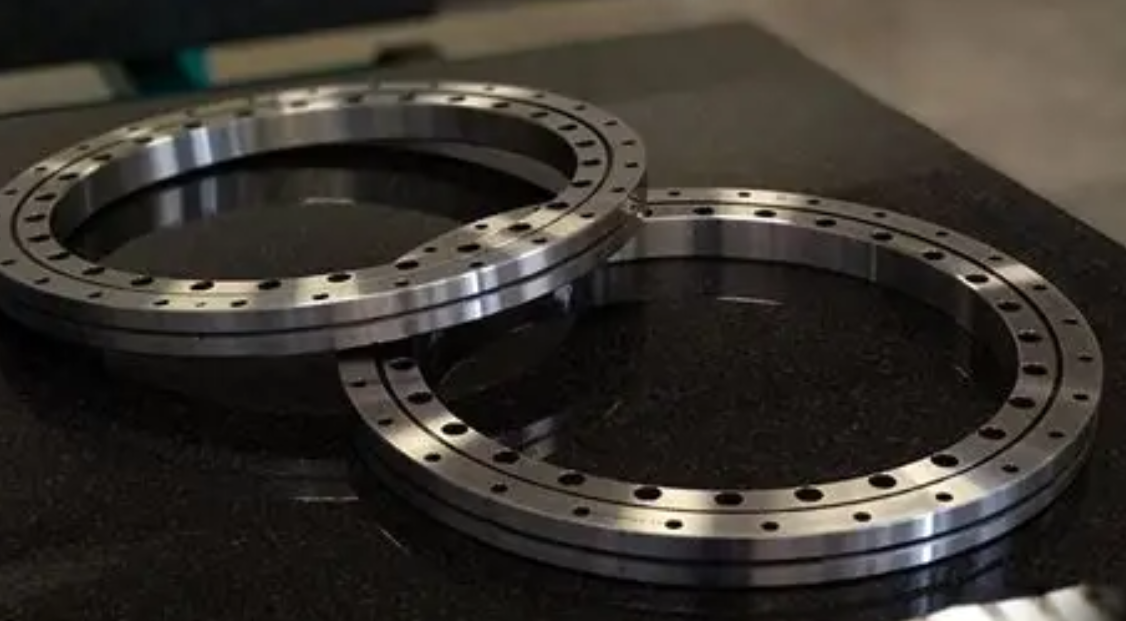
How to Properly Store Your Slewing Bearing?
What is a Slewing Bearing?
A slewing bearing, also known as a slewing ring or turntable bearing, is a large-sized rotational component that enables smooth, controlled rotation between two parts of a machine. The design of slewing bearings represents a perfect blend of mechanical simplicity and engineering sophistication. With an inner ring, outer ring, rolling elements (such as balls or rollers), and a cage working together, these bearings convert sliding friction into rolling friction, minimizing resistance to motion. This innovation in mechanical engineering enables equipment to achieve maximum performance with minimum energy consumption.
How Does a Slewing Bearing Work?
Slewing bearings operate on a simple yet effective principle: they support heavy loads while allowing rotational movement. The rolling elements (balls or rollers) positioned between the raceways of the inner and outer rings carry the load and reduce friction. When one ring rotates relative to the other, the rolling elements distribute the load evenly across the raceway surface. This design allows slewing bearings to simultaneously handle axial loads (thrust), radial loads, and tilting moments – a combination of forces that would challenge other bearing types. The integrated gear teeth on either the inner or outer ring (optional in many designs) allow for direct power transmission from a pinion gear, making precise rotational control possible.
Applications of Slewing Bearings
Slewing bearings are essential components across numerous industries due to their ability to handle combined loads and provide precise rotation. You'll find them in:
Construction and Heavy Machinery: Excavators, cranes, aerial work platforms, and concrete pump trucks rely on slewing bearings for their rotational movements.
Renewable Energy: Solar tracking systems use slewing bearings to follow the sun's path, maximizing energy collection. Wind turbines also incorporate them in blade pitch control and yaw systems.
Material Handling: Port cranes, stackers, reclaimers, and industrial robots depend on these bearings for smooth, reliable rotation under heavy loads.
Medical Equipment: CT scanners, surgical tables, and radiotherapy machines require the precision and smooth motion that slewing bearings provide.
Defense and Aerospace: Radar systems, missile launchers, and satellite communication antennas utilize slewing bearings for accurate positioning.
General Automation: Rotary indexing tables, packaging machinery, and various industrial automation applications incorporate slewing bearings for controlled rotation.
The Importance of Correct Storage for Slewing Bearings
Bearings are critical components of mechanical equipment, and proper storage is absolutely crucial for their performance and lifespan. Slewing bearings represent a significant investment, and their functionality depends on maintaining precise geometrical and material properties. Incorrect storage can lead to corrosion, contamination, deformation, and premature failure – even before the bearing is installed. Understanding that proper storage is the first step in ensuring long-term reliability cannot be overstated. A bearing that has been damaged during storage will never perform as intended, potentially leading to equipment downtime, safety risks, and unexpected replacement costs.
Key Factors Affecting Slewing Bearing Storage
Proper storage of slewing bearings requires attention to multiple environmental and physical factors. Each element plays a vital role in preserving the bearing's integrity and ensuring it performs as designed when finally put into service.
Temperature Control
The ideal temperature range for slewing bearing storage is between 10°C and 25°C (50°F – 77°F). Temperature extremes can cause significant damage:
High Temperatures: When the temperature exceeds 35°C (95°F), the chemical structure of the lubricating grease on the bearing surface begins to change gradually. The grease's viscosity decreases, and lubrication performance is significantly reduced. This leads to increased wear during subsequent use and may cause abnormal noise and vibration. High temperatures can also accelerate oxidation of both the grease and the bearing surfaces themselves.
Low Temperatures: In environments approaching 0°C (32°F) or lower, the metal material of the slewing bearing becomes more brittle and its toughness decreases. If subjected to external impact – even a slight collision – cracks may develop on the bearing surface, seriously affecting structural integrity and performance.
Temperature Fluctuations: Frequent temperature changes cause inconsistent thermal expansion and contraction among different components inside the bearing. Over time, this creates internal stress that can lead to decreased accuracy and even deformation of critical components.
Humidity Management
Maintaining proper humidity levels is essential for preventing corrosion and electrostatic damage. The optimal relative humidity range is 40% – 60%.
High Humidity (Above 60%): Water vapor in the air condenses into tiny droplets on bearing surfaces. These seemingly insignificant water droplets initiate electrochemical corrosion reactions with the metal, causing rust formation in a surprisingly short time. This risk is particularly pronounced in coastal areas or during humid seasons.
Low Humidity (Below 40%): When humidity drops too low, electrostatic discharge becomes a concern. Static electricity attracts dust and small particles from the surrounding environment. Once these impurities adhere to bearing surfaces or enter internal components, they accelerate wear during operation and significantly shorten service life.
Cleanliness Requirements
The storage environment must maintain exceptional cleanliness, free from dust, oil, and other contaminants. While dust particles appear small, they create severe abrasive friction with rolling elements and raceways during bearing operation, causing surface scratches and wear that compromise accuracy and performance.
Storage facilities should be regularly and thoroughly cleaned. Floors are best paved with dust-proof materials, and high-efficiency air filtration systems should be installed to minimize airborne particles. Oil poses an equally serious threat – it contaminates the lubricating grease on bearing surfaces, reduces lubrication effectiveness, and may chemically react with bearing metals, causing corrosion. Any operations that could generate oil mist or vapors, such as equipment maintenance or fuel storage, should be prohibited in storage areas. If unavoidable, reliable isolation measures must be implemented.
Packaging Protection
The original packaging provided by the manufacturer plays an irreplaceable protective role. This packaging is carefully designed to not only prevent moisture and dust ingress but also to cushion against external impacts during transportation and storage. High-precision slewing bearings typically include specialized sponge or foam liners that wrap tightly around the bearing, preventing internal movement within the package.
Until a bearing is ready for use, the integrity of its original packaging must be preserved. Never remove it casually. Regularly inspect packaging for damage or moisture exposure. If minor damage occurs, seal it promptly with appropriate tape. If packaging becomes severely damp, replace it entirely and carefully inspect the bearing for any signs of moisture damage.
Placement Methods
Slewing bearings must always be stored horizontally. This requirement stems from the bearing's design optimization – the internal structure is engineered based on horizontal stress states. If stored vertically, the rolling elements and raceways experience uneven gravitational forces. Over time, this can cause raceway deformation, affecting rotational accuracy.
For large-diameter slewing bearings, horizontal placement also prevents localized pressure concentration from the bearing's own substantial weight, avoiding surface dents or deformation. Regardless of size, avoid stacking bearings excessively high. General guidelines recommend:
Small bearings: maximum 5 layers
Medium bearings: maximum 3 layers
Large bearings: single layer whenever possible
If multi-layer storage is necessary, use specialized shelving or pallets with adequate support and proper spacing between layers.
Classified Storage Management
Slewing bearings of different models and specifications must be stored separately with clear identification. Classification should follow parameters such as inner diameter, outer diameter, and bearing type. Bearings of identical specifications should occupy designated areas with clear markings on shelving or containers indicating model, size, and quantity.
This systematic approach serves two critical purposes: it enables quick, accurate retrieval when needed and prevents incorrect selection due to confusion. Additionally, new bearings, used bearings, and defective units must be strictly segregated. Used bearings may have hidden wear or fatigue issues – mixing them with new stock risks misapplication. Defective bearings should never commingle with qualified products; they require separate storage with prominent marking to prevent accidental use.
Regular Appearance Inspection
Monthly appearance inspections of stored slewing bearings are strongly recommended. Carefully examine all surfaces for abnormalities including rust, discoloration, scratches, and deformation.
Rust: The most common storage problem. If rust spots appear, immediately analyze the cause and implement appropriate rust removal and anti-corrosion measures.
Discoloration: May indicate grease deterioration, high-temperature exposure, or chemical attack. Further investigation of the bearing's internal condition is warranted.
Scratches and Deformation: These directly impact bearing performance. Evaluate their severity to determine whether the bearing remains usable, requires repair, or should be scrapped.
Periodic Rotation Inspection
For bearings stored extended periods, perform rotation inspections approximately every three months. Slowly and evenly rotate the bearing, feeling for smooth operation and listening for any catching, binding, or abnormal noise.
This practice prevents internal components from sticking or seizing due to prolonged inactivity, ensuring the bearing will rotate properly when finally installed. If irregular rotation or unusual sounds occur during inspection, stop immediately and conduct a thorough examination. Potential causes include dried lubricant, rust formation, or component damage. Based on findings, take appropriate action such as lubricant replenishment, rust treatment, repair, or component replacement.
How to Store Slewing Bearings Correctly?
Based on the key factors discussed above, here is a practical summary of correct slewing bearing storage procedures:
1. Maintain Optimal Environment: Store in a clean, temperature-controlled (10°C – 25°C) and humidity-controlled (40% – 60% RH) environment away from vibration and corrosive substances.
2. Preserve Original Packaging: Keep bearings in their unopened original packaging until ready for use. The packaging is designed to protect against moisture, dust, and physical damage.
3. Store Horizontally: Always store slewing bearings in a horizontal position on a flat, clean surface to prevent raceway deformation and uneven load distribution.
4. Avoid Stacking: Do not stack bearings, especially large ones. If stacking small bearings is unavoidable, keep stacks low and stable with proper support.
5. Organize Systematically: Store bearings by type, size, and model with clear labeling. Segregate new, used, and defective inventory.
6. Implement Regular Inspections: Conduct monthly visual checks for rust or damage and perform rotational checks every three months on long-term stored items.
7. Handle with Care: When moving or inspecting bearings, use clean gloves and appropriate lifting equipment to avoid contamination or impact damage.
What is the Price of Slewing Bearings?
The price of slewing bearings is influenced by multiple factors, making it impossible to provide a one-size-fits-all figure. Key cost drivers include:
Material: The base material significantly impacts cost. Ordinary carbon steel offers an affordable option, while specialized materials such as stainless steel or those with ceramic components command higher prices due to their enhanced performance characteristics and more complex processing requirements.
Precision Grade: Higher precision classes, essential for applications like medical equipment or radar systems, require more meticulous manufacturing and tighter tolerances, resulting in higher costs compared to standard grades suitable for general construction equipment.
Manufacturing Process: Complex manufacturing processes, including specialized heat treatments, induction hardening of raceways, and precision gear cutting, add to production time and cost.
Customization: Custom-engineered slewing bearings designed for specific applications with unique dimensions, load requirements, or features will cost significantly more than conventional, off-the-shelf models. Custom designs involve engineering time, special tooling, and typically lower production volumes.
Size and Type: Generally, larger diameter bearings cost more due to increased material requirements. More complex designs, such as three-row roller bearings, are typically more expensive than single-row ball bearings.
LyraDrive: Your Trusted Slewing Bearing Partner
When you need high-quality slewing bearings backed by expert engineering support, look no further than LyraDrive. As a specialized manufacturer of slew drives and slewing bearings, we combine decades of engineering expertise with modern manufacturing capabilities to deliver products that exceed expectations.
LyraDrive offers a comprehensive range of slewing bearing types to meet diverse application requirements. Our product portfolio includes:
Single Row Slewing Ring Ball Bearings – Ideal for applications requiring lightweight design and cost-effectiveness while handling moderate loads.
Crossed Roller Slewing Bearings – Perfect for applications demanding high rigidity and precision, with rollers arranged perpendicularly to handle loads from multiple directions.
Double Row Ball Slewing Ring Bearings – Designed for applications with higher load requirements, featuring two rows of balls for increased capacity.
Three-Row Roller Slewing Bearings – Our most robust solution, with separate raceways for axial and radial loads, delivering maximum load capacity and long service life for the most demanding applications.
What truly sets LyraDrive apart is our commitment to engineering partnership. We understand that every application has unique requirements. That's why we offer comprehensive design support including custom 3D modeling. When you contact us with your application parameters and performance requirements, our engineering team analyzes your specific load conditions, mounting arrangements, and operational environment. Based on this analysis, we generate detailed 3D drawings of the optimal slewing bearing for your needs.
These 3D models give you a clear, intuitive understanding of how the bearing will integrate into your design. You can visualize the bearing in your assembly, verify mounting interfaces, and confirm that all dimensions meet your requirements – all before manufacturing begins. This collaborative approach ensures you receive precisely the right bearing for your application, eliminating guesswork and reducing development risk.
Whether you need a standard design or a fully customized solution, LyraDrive combines technical expertise with responsive service to support your success. Contact us to discuss your slewing bearing requirements and experience the difference of true engineering partnership.
FAQ of Slewing Bearing Storage
Q1: Can I store slewing bearings outdoors if they are covered?
A: No. Outdoor storage is never recommended, even with covers. Temperature fluctuations, humidity changes, and condensation risks are impossible to control outdoors. Dust and airborne contaminants will eventually compromise any covering. Always store slewing bearings in a clean, indoor environment with climate control.
Q2: How long can slewing bearings be stored before use?
A: With proper storage conditions (temperature and humidity controlled, original packaging intact, horizontal position), slewing bearings can be stored for several years without degradation. However, regular inspections every 3-6 months are essential to verify condition. Many manufacturers recommend rotation inspection annually for long-term storage.
Q3: What should I do if I find rust on a stored slewing bearing?
A: First, isolate the affected bearing to prevent contamination of other stock. Assess the extent of rust. Surface rust on unprotected areas might be carefully removed with fine abrasive and rust inhibitor, followed by fresh lubricant. If rust appears on raceways or rolling elements, the bearing is likely compromised and should not be used in critical applications. Consult with the manufacturer or a bearing specialist for evaluation.
Q4: Is it necessary to maintain the original packaging if the storage environment is clean?
A: Yes, absolutely. The original packaging provides multiple layers of protection beyond just cleanliness. It offers physical cushioning against impacts, maintains stable humidity around the bearing, and often includes vapor phase corrosion inhibitors that actively protect metal surfaces. Always keep bearings in original packaging until immediate prior to installation.
Q5: Can I stack different sizes of slewing bearings together?
A: This practice is strongly discouraged. Different sizes have different weight distributions and structural characteristics. Stacking mixed sizes increases instability and the risk of tipping. Additionally, mixing sizes complicates inventory management and increases the chance of damage when removing a bearing from the middle of a stack. Store each size separately with proper support.
Q6: How should I handle a slewing bearing during inspection?
A: Always wear clean, lint-free gloves to prevent skin oils from contaminating surfaces. Use appropriate lifting equipment for larger bearings – never drop or bump them. If rotating the bearing during inspection, do so slowly and evenly. After inspection, if the bearing is not being installed, repackage it properly with desiccant if available and reseal the packaging.
Q7: What are the signs that a stored bearing has been damaged and should not be used?
A: Key warning signs include visible rust on raceways or rolling elements, pitting or corrosion, cracks or deformation, binding or rough spots during rotation, grinding noises when turned, and discoloration from overheating or chemical exposure. When in doubt, consult with the bearing manufacturer before installation.
Q8: Does the lubricant in a slewing bearing expire during storage?
A: Yes, lubricants can degrade over time, especially in unfavorable conditions. High temperatures accelerate oxidation and chemical breakdown. Even in ideal conditions, long-term storage (several years) may warrant lubricant inspection and possible replacement before commissioning. This is one reason regular rotation inspections are valuable – they help distribute lubricant and reveal any drying or separation.
Proper slewing bearing storage is a detail-oriented task requiring attention to environmental control, careful handling, thoughtful placement, and systematic inspection. Each factor we've discussed – from temperature and humidity to packaging integrity and rotation checks – plays an interconnected role in preserving bearing quality and service life. By following these scientific storage methods, you ensure that your slewing bearings deliver optimal performance when finally called into service, providing a solid foundation for reliable industrial operations.
 WhatsApp
 sales@lyradrive.com
 +8613903880726